These paper batteries made from plants want to replace AA and AAA cells

Skye Jacobs

Posts: 2,200   +63
Staff
Forward-looking: What started as a curiosity at CES 2025 has quietly matured into one of the show's most convincing sustainability narratives a year later. Flint, the Singapore-based startup developing a fully cellulose-based paper battery, is now in production and gearing up to supply its renewable power cells to major electronics partners, including Logitech, Amazon, and Apple accessory maker Nimble.
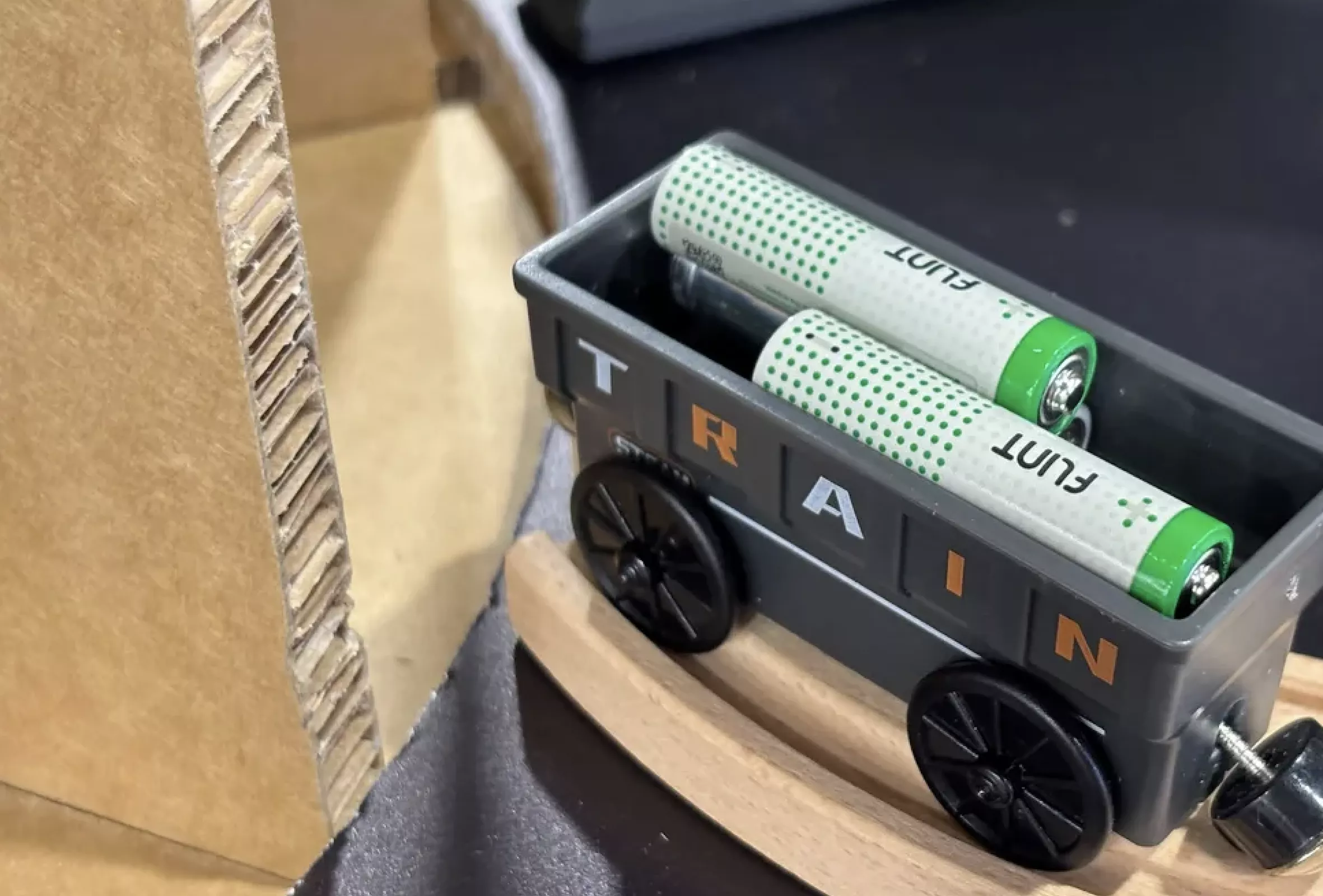
At this year's show, Flint wasn't showing off just lab prototypes. The batteries running toy trains at its booth were production-grade AA and AAA cells made from plant-based materials, not the metal-heavy chemistries that dominate today's market. Flint says those alkaline-style replacements are slated to reach consumers later in 2026, offering lifespan and voltage performance on par with conventional batteries.

Flint hasn't reinvented the form factor but the real innovation is the reengineering of materials. Instead of lithium, nickel, or cobalt, every core component – the anode, cathode, electrolyte, and separator – is derived from cellulose sourced from plants.
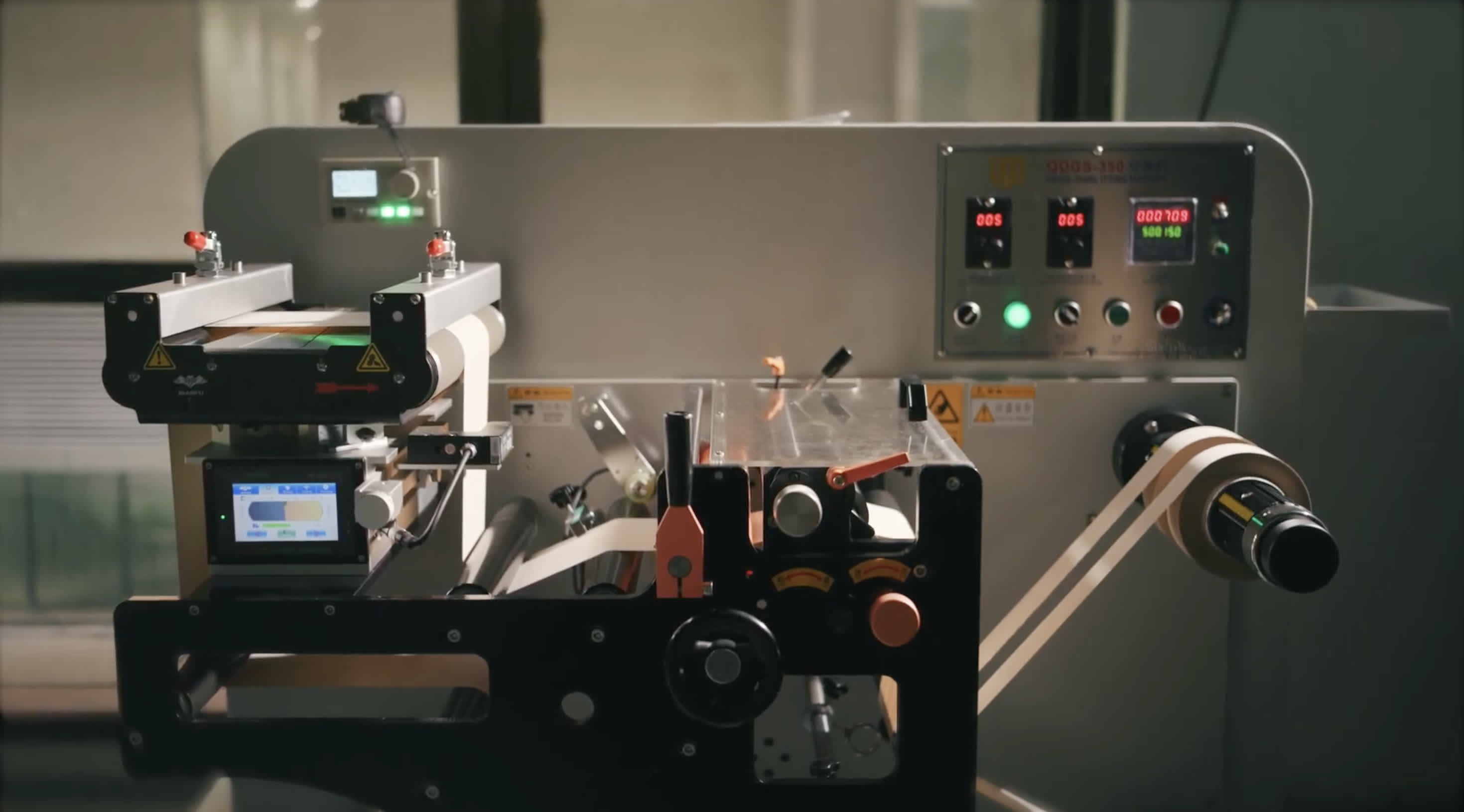
The chemical reaction depends on water-based electrolytes mixed with food-safe minerals such as zinc and manganese. The result is a fully non-toxic, biodegradable cell that avoids the pollution risks and waste-handling challenges of current battery technology.

Production is already underway in Singapore, where Flint sources cellulose from local plant species. Founder Carlo Charles told CNET that the company plans to adapt its process regionally, using available plants – including invasive species that are often considered ecological nuisances as feedstock for cellulose extraction.

The strategy could transform an environmental burden into a renewable input, with implications that stretch beyond consumer electronics.

Flint's thin, flexible paper batteries are also finding their way into slim accessories developed by sustainability-focused manufacturer Nimble, signaling that the chemistry can scale across different product categories.
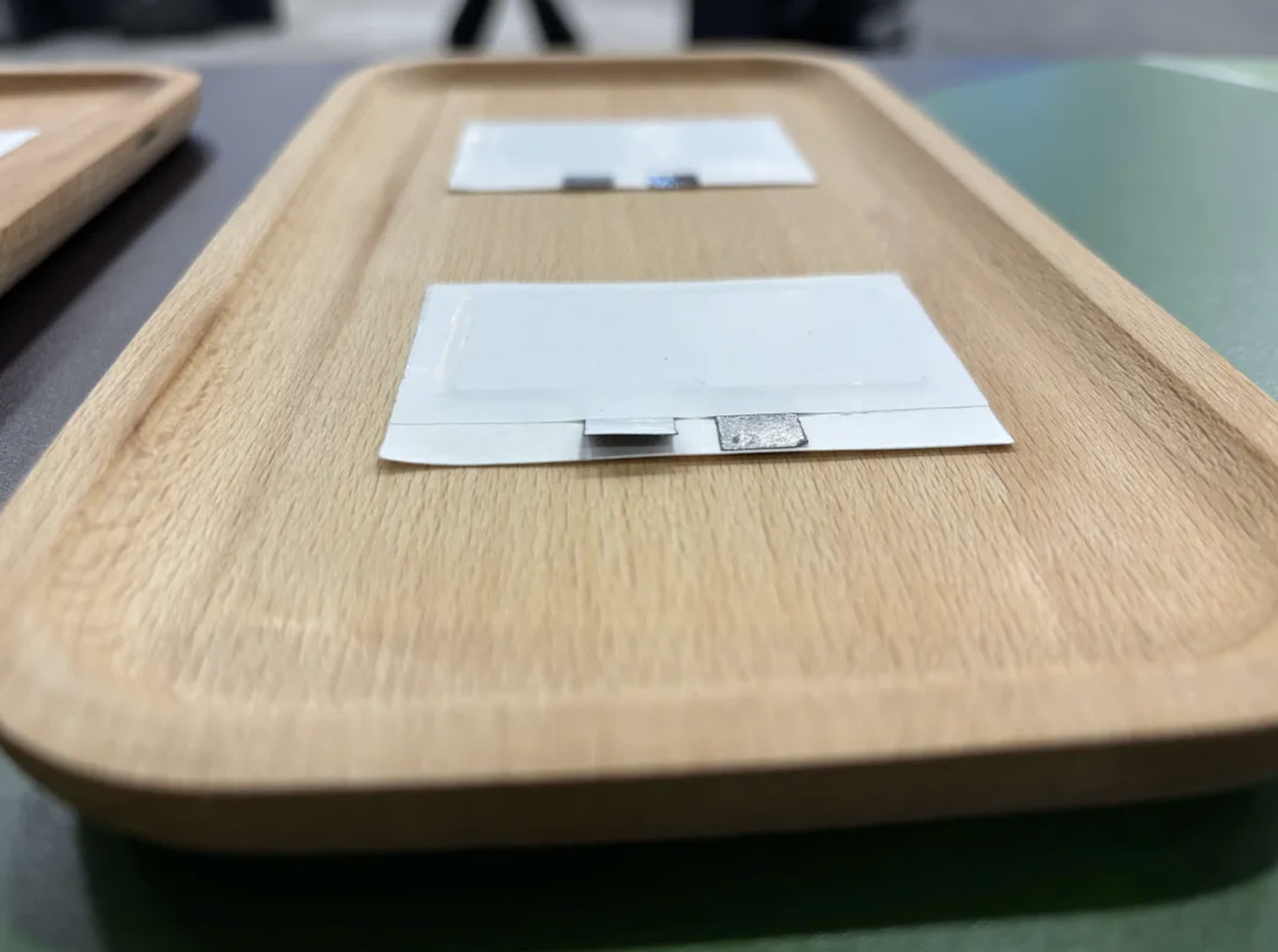
Despite their water-based design, the cells deliver stable performance under normal operating conditions while remaining safer to handle and easier to dispose of than lithium or traditional alkaline batteries. As electronics companies face growing pressure to clean up their supply chains and reduce carbon footprints, Flint's approach presents a viable route to decarbonize one of the least sustainable components in personal tech.

On a CES floor crowded with next-gen lithium cells and solid-state concepts, Flint's paper batteries stood out for a far less flashy reason: they're ready to ship.

Masthead credit: CNET

Permalink to story:

 
Yes, the world has been waiting for batteries made entirely of flammable materials. Kidding.

This article makes no sense. Alkaline batteries contain potassium hydroxide electrolyte, with a zinc negative electrode and manganese cathode.

These batteries contain [vaguely worded] 'water-based electrolyte' (uh, yeah, water is a common electrolyte base), zinc, and manganese.

Biodegradeable? Uh, I suppose, though I doubt they'd make good fertilizer as he claims, and the metals would have to be recovered to recycle - which has the same logistics problem as any other battery.

I see 'green-washing' writ all over this.
 
Anyone know of any third-party testing or independent reviews? I can’t find anything to verify numbers on energy density, cycle life, or actual biodegradability outside of company statements. I’m struggling to believe this one as it just sounds too good to be true.
 
For real ppl?! Just use the Internet or AI.
Best practice to comment on what you can be known or you actually know, not what you think you do or dont know. Just plain ridiculous.

1 they are rechargeable - so why compare to alkaline?
2 the electrolyte is reported as "contributes to full compostability, degrading harmlessly in soil alongside cellulose"
3 "The batteries fully biodegrade in soil within six weeks breaking down into harmless components without toxins"
4 zinc and manganese are abundant and also vital to plant growth - "Zinc and manganese serve as essential micronutrients for plants"
5 "Our batteries are fire-resistant, thanks to the cellulose and proprietary electrolytes used in their construction. "
 
For real ppl?! Just use the Internet or AI.
Best practice to comment on what you can be known or you actually know, not what you think you do or dont know. Just plain ridiculous.

1 they are rechargeable - so why compare to alkaline?
2 the electrolyte is reported as "contributes to full compostability, degrading harmlessly in soil alongside cellulose"
3 "The batteries fully biodegrade in soil within six weeks breaking down into harmless components without toxins"
4 zinc and manganese are abundant and also vital to plant growth - "Zinc and manganese serve as essential micronutrients for plants"
5 "Our batteries are fire-resistant, thanks to the cellulose and proprietary electrolytes used in their construction. "

Don't get me wrong, I hope these paper batteries are successful. But the issue is not clear.

1. They are intended to replace alkaline so you have compare them.
2. If they FULLY biodegrade within six weeks, then what's to prevent them from 'biodegrading' in my expensive flashlight or electronic device?
3. Zinc and manganese can be toxic, it depends on the dose.
4. Cellulose is not fire-resistant.
 
TL;DR: Flint's batteries use plant cellulose, but not solely plant material (this was more or less explained in the article).

"Paper batteries" as a concept are not entirely new. Research on paper-integrated energy storage has existed for years, with limited commercial success. I believe Flint's tech is more about the industrialization approach, but it's not the first time anyone has combined cellulose with electrochemistry.

Whether they can truly replace AA/AAA, lower carbon footprint and be biodegradable as shown in the video, at scale, remains to be seen.
 
For real ppl?! Just use the Internet or AI.
Best practice to comment on what you can be known or you actually know, not what you think you do or dont know. Just plain ridiculous.

1 they are rechargeable - so why compare to alkaline?
2 the electrolyte is reported as "contributes to full compostability, degrading harmlessly in soil alongside cellulose"
3 "The batteries fully biodegrade in soil within six weeks breaking down into harmless components without toxins"
4 zinc and manganese are abundant and also vital to plant growth - "Zinc and manganese serve as essential micronutrients for plants"
5 "Our batteries are fire-resistant, thanks to the cellulose and proprietary electrolytes used in their construction. "

Alkaline batteries are also rechargeable. Batteries don't generate electricity, they merely prime the pump for the localized charge field. This is 20-year old physics now, please try to keep up.
 
Why has the industry drug its feet for so long on getting us proper rechargeable AA/AAA batteries that put out the correct voltage? How hard can it possibly be?

Each element has an inherent electronegativity. The electronegativity differences of 2 elements directly create voltage. So ~1.5v only occurs in a handful of circumstances. And even fewer of those are solid at room temp and pressure and stable enough for hundreds of recharge cycles. That we even have a few options is pretty much a miracle as you can't just order up a new stable element with your chosen electronegativity on the Periodic Table.

The better option would be to recalibrate our devices to work at the 3.7v more commonly reached by lithium-ion batteries and everything uses a 18650 cell as a base value, and then make smaller battery sizes for smaller devices.

The 1.5v dry battery standard is a relic from a previous millennium which needs to end.
 
Don't get me wrong, I hope these paper batteries are successful. But the issue is not clear.

1. They are intended to replace alkaline so you have compare them.
2. If they FULLY biodegrade within six weeks, then what's to prevent them from 'biodegrading' in my expensive flashlight or electronic device?
3. Zinc and manganese can be toxic, it depends on the dose.
4. Cellulose is not fire-resistant.
I presume the biodegrading part occurs when soil bacteria eat the paper. Unless a flashlight has e-coli and other active bacteria, it's unlikely to happen.
 
Any type of device that holds concentrated energy should be considered flammable - some materials are also more dangerous than others when it comes to battery chemistry.

3 "The batteries fully biodegrade in soil within six weeks breaking down into harmless components without toxins"
4 zinc and manganese are abundant and also vital to plant growth - "Zinc and manganese serve as essential micronutrients for plants"
The right plants would benefit. Like always too much of 1 nutrient might disrupt growth, cause foliage issues or destroy the plant entirely.

Alkaline batteries are also rechargeable.
Exercise extreme caution reading that statement. Alkalines are NOT designed to be recharged - no warranty or insurance will cover your a$$ if something goes wrong.
 
Last edited:
Is that what passes for a train set these days? I'm not taking their demonstration seriously without little houses or trees made to scale.
 
I would use them if they are similarly priced to alkaline batteries and have the same lifespan. I don't want to be replacing batteries every few weeks because they don't have the same durability.
 
Is that what passes for a train set these days? I'm not taking their demonstration seriously without little houses or trees made to scale.
The same as before using O-27 track that was maintained with a DC power source. However, young children's Thomas the Tank Engine ran on batteries and was literally a toy.
 
Any type of device that holds concentrated energy should be considered flammable - some materials are also more dangerous than others when it comes to battery chemistry.


The right plants would benefit. Like always too much of 1 nutrient might disrupt growth, cause foliage issues or destroy the plant entirely.


Exercise extreme caution reading that statement. Alkalines are NOT designed to be recharged - no warranty or insurance will cover your a$$ if something goes wrong.
As the chemicals can vary in an alkaline solution, so can their properties. So yes, a battery made of alkaline materials can be recharged.
And having the ability to hold and release elections does not mean it will "catch" of induce a fire.
 
For real ppl?! Just use the Internet or AI.
Best practice to comment on what you can be known or you actually know, not what you think you do or dont know. Just plain ridiculous.

1 they are rechargeable - so why compare to alkaline?
2 the electrolyte is reported as "contributes to full compostability, degrading harmlessly in soil alongside cellulose"
3 "The batteries fully biodegrade in soil within six weeks breaking down into harmless components without toxins"
4 zinc and manganese are abundant and also vital to plant growth - "Zinc and manganese serve as essential micronutrients for plants"
5 "Our batteries are fire-resistant, thanks to the cellulose and proprietary electrolytes used in their construction. "
Trying to enter consumer battery market this late in the game I would be rizzing up the marketing as much as possible too!
 
Back