Thief designer says the graphics arms race should have stopped at Alan Wake... in 2010

Alfonso Maruccia

Posts: 2,720   +1,039
Staff
Graphics Matter: One of the original designers of Thief has some rather peculiar ideas about graphics in games. Randy Smith thinks the industry should have stopped advancing graphics around 2010 rather than spending massive amounts of money to relentlessly push photorealism in major AAA projects.
Randy Smith knows a thing or two about game design. The developer worked extensively on the Thief series before funding indie studio Tiger Style in 2008.

Most recently, Smith shared his thoughts on how studios should approach graphics fidelity in games. Spending increasingly enormous sums of money chasing extreme photorealism isn't worth it, the designer said in a recent interview.

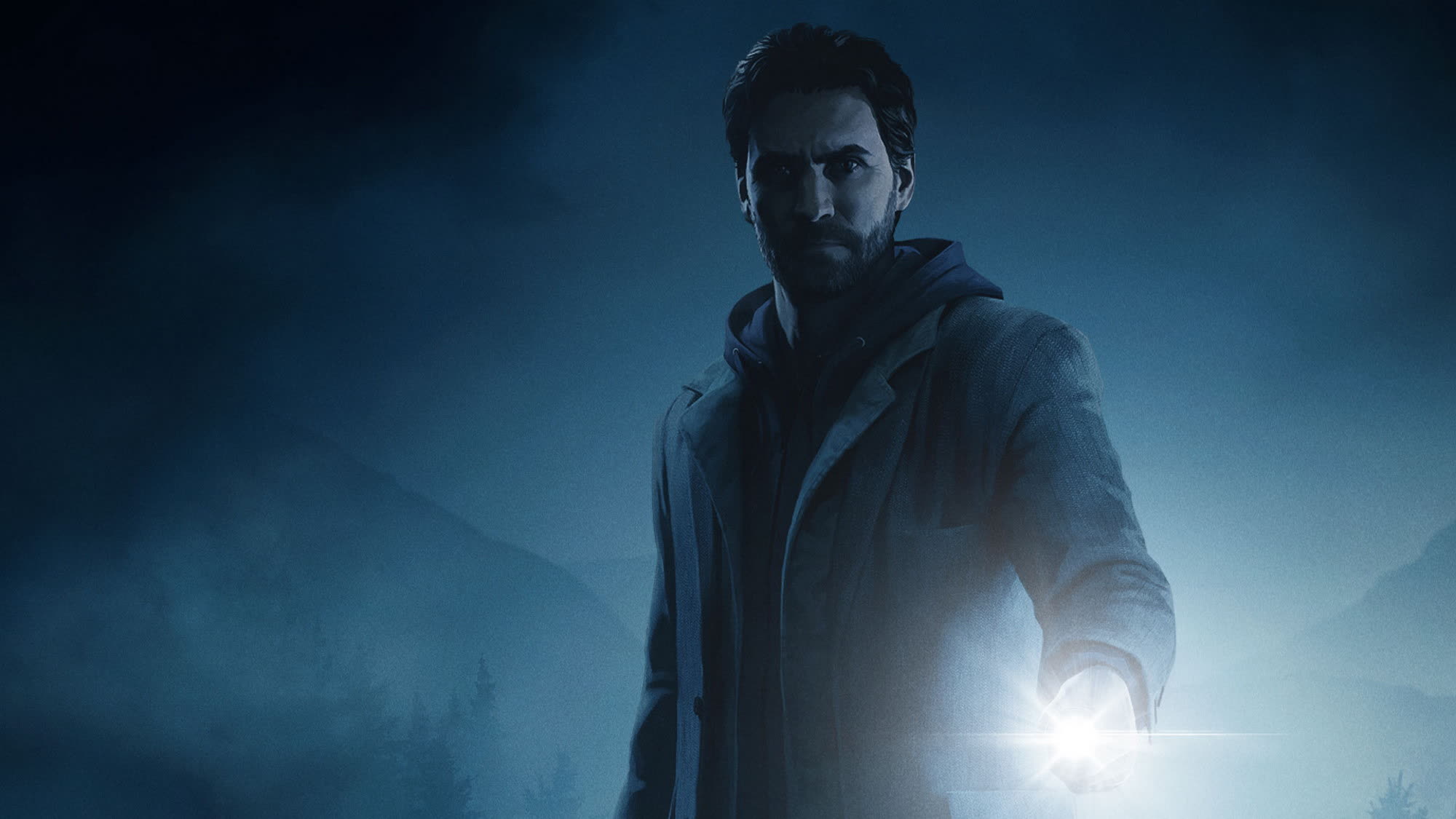
Smith's idea about graphics fidelity is apparently that the entire industry should have stopped with Alan Wake. In 2010, Remedy released its supernatural action-adventure cult classic to positive reviews, with the game eventually selling millions of copies. Its graphics were photorealistic enough that players could "100%" feel like part of the virtual world.

"I see that I'm going to an island in the Pacific Northwest. Why do we need more graphics? Because they just cost a ton. Like, I 100% get it. I've got the vibe. It feels right. What else are we doing with this graphics arms race, right," Smith said during the interview.

Any additional effort beyond that level of photorealism is just "gravy," the designer said. Graphics have now become a massive part of a game's development budget, but they mostly don't serve any meaningful purpose anymore. The "spectacle" of increasingly impressive graphics fidelity would certainly benefit "immersive sim" games such as Thief or Deus Ex: Mankind Divided, but Smith doesn't think it is required to build a great interactive experience in which players can freely experiment with the game's world.

Smith's argument comes with an implicit criticism of the ballooning budgets required for graphically intensive games. The designer cited Ghost of Tsushima and the upcoming GTA VI as examples of games designed to be big enough to entice both the general public and gamers. In the end, the increased graphics budget might overestimate the number of people interested in photorealistic immersive sims.

Smith's opinion about graphics is certainly controversial, and most likely wrong. Every gamer on the planet has their own idea of what constitutes the "best game graphics," while game engines such as Unreal Engine and idTech have made enormous progress in recent years, both in graphics and simulation complexity.

Smith is likely – and willingly – confusing photorealism with art direction, with the latter being the really important part of the equation. While it includes some undeniably dated graphics assets, I consider FromSoftware's Elden Ring to be the most visually spectacular experience I will ever see on a screen in my life.

Permalink to story:

 
The graphics are only an issue if the gameplay suffers as a result, which we see happening quite often and that blame lies squarely on the shoulders of management. Bad companies make bad games because their heads are in the wrong places. Simple as, also purely subjective.
 
Not sure why the author felt compelled to add the last 2 paragraphs… but Smith is NOT wrong… at least not in his general point. Where the graphics “cutoff” is is open to debate - but it’s not wrong to think that a game needs to be FUN before it needs to “look good”.

If a game is fun to play, it doesn’t need to look photorealistic.
 
There is a possibility that studios are rational, and that they are putting out the graphics that consumers demand. If you drop two modern shooters side by side and one of the games has noticeably better graphics, then you can bank on the game with lesser graphics not selling well. All it takes is for a handful of "influencers" to jump on the hate bandwagon, and the sentiment of young consumers will be easily swayed.

I do think that some studios could lean more into "cartoony" graphics so they can spend their development time on gameplay and story, though. One of my most played games is Deep Rock Galactic, and in my opinion the graphics are perfect for what the game is.
 
Recently I've been playing back through the "Dishonored" franchise. These "old" games look plenty fine to me, as do many other games of the time period. Sometimes I can start an older game and look at it and it looks like a big turd, but the more you play it, you stop noticing sub-par graphics - IF the game is good.
 
Not sure why the author felt compelled to add the last 2 paragraphs… but Smith is NOT wrong… at least not in his general point. Where the graphics “cutoff” is is open to debate - but it’s not wrong to think that a game needs to be FUN before it needs to “look good”.

If a game is fun to play, it doesn’t need to look photorealistic.
It can be objectively demonstrated that Smith is wrong by comparing Alan Wake with later graphics.
 
Replaying Doom 3 this past month with the dhewm3 update, I am quite stunned at how good the graphics are, in particular the lighting and shadows, and despite the ugly, squarish models.
Atmosphere is a part of graphical presentations, one that developers ignore today. We were so obsessed with rendering every pimple and nose hair, nobody stopped it ask if this made the presentation better.

The OG black flag is more fun and engaging then any of the new games despite looking quite old.
It can be objectively demonstrated that Smith is wrong by comparing Alan Wake with later graphics.
And how, pray tell, can you objectively prove that Alan wake 2s graphics are not the correct stoping point of graphical evolution?
 
I think the author and some of the commenters may be overthinking what he meant. My interpretation was simply that graphics had already reached the point where they were immersive enough, and that the industry would have been better off investing more in gameplay rather than continually chasing marginal graphical improvements.

I don't know if I agree Allen Wake was the threshold, but I partially agree with the premise. Some of my favorite games were made decades ago, when graphics were nowhere near what they are today. Yet I remember them as incredible experiences because of the gameplay and how well it worked with the technology available at the time.

Once I'm immersed in a game, the graphics tend to fade into the background and I just enjoy playing. My brain just fills in the gaps of scene quality. Sure, realistic visuals are impressive at first, but they aren't what keeps me engaged.

The bigger issue is that the cost of developing cutting-edge graphics and the increasingly expensive hardware required to run them has reached a point of diminishing returns. The visual improvements are often incremental, while gameplay innovation has lagged behind.
 
Back