This solar-powered desalination device turns seawater into drinking water, can also extract lithium

Skye Jacobs

Posts: 2,026   +59
Staff
Forward-looking: At the University of Rochester, a research team is rethinking desalination by approaching it as a materials science challenge as much as a water treatment problem. Instead of relying on high-pressure filtration or energy-intensive distillation, the researchers developed a solar-powered device featuring laser-textured metal panels that control both seawater evaporation and the movement of dissolved salts.
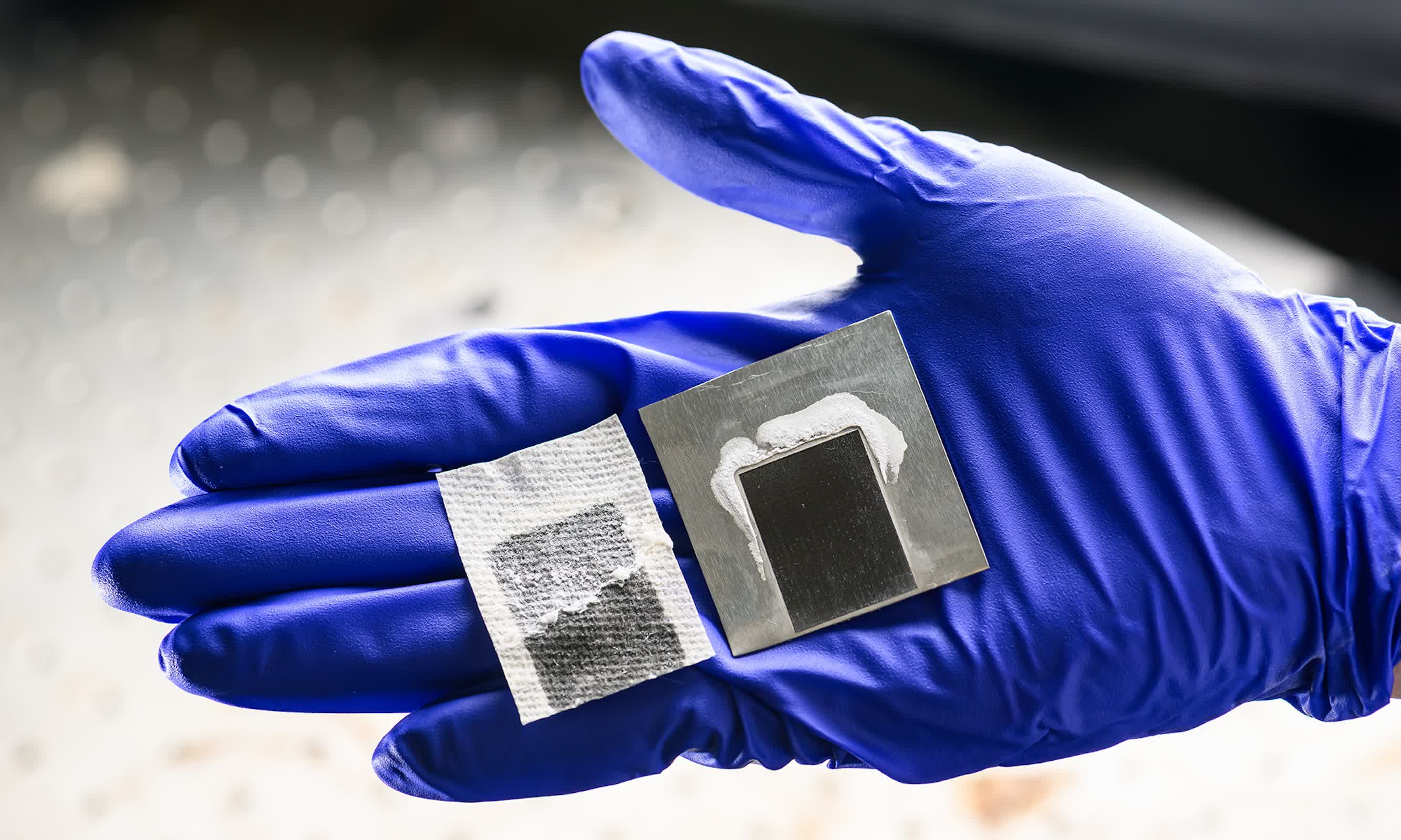
The work, led by Chunlei Guo, a professor of optics and physics, centers on a specially treated surface known as superwicking black metal. The material is created by texturing a metal surface with femtosecond laser pulses, altering its structure at microscopic scales. This process gives the surface two key properties: it absorbs nearly all incoming sunlight and draws water across itself in a thin, continuous film.

Once seawater spreads across this active region, solar energy drives evaporation. The resulting vapor is collected as fresh water. What sets the system apart is how it manages the salts left behind. Rather than allowing them to accumulate and degrade performance – a common challenge in desalination – the design actively transports them away from the evaporation zone.

The team achieves this by combining precise surface patterning with basic fluid dynamics. The laser-etched grooves guide dissolved minerals outward, while evaporation itself helps drive their movement.
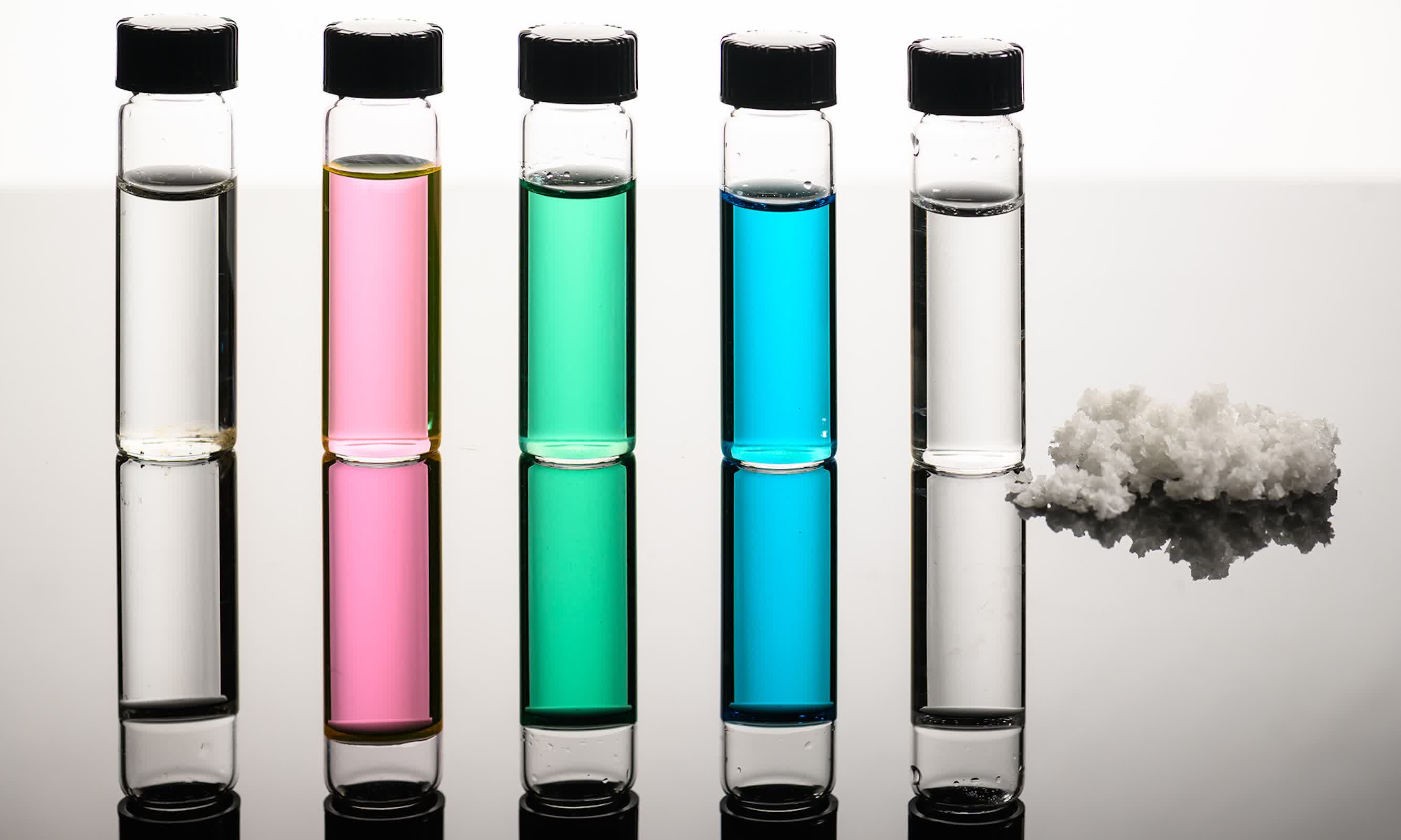
Guo compares the mechanism to a familiar phenomenon. "If you drop coffee on a surface, eventually the water evaporates and there's a ring left at the outer edge that is the concentrated coffee particles," he says. "We use that same principle to advance the salts to the passive region."

This "coffee ring effect" becomes a functional part of the system. As water evaporates, salts are carried outward and deposited in designated passive areas, keeping the active region clear. The result is a surface that effectively cleans itself during operation.

That detail matters because real seawater is more complex than the simplified solutions often used in laboratory testing. While sodium chloride forms relatively loose crystals that do not fully block water flow, other minerals – particularly magnesium and calcium – can form dense, hard deposits. Over time, these deposits can obstruct evaporation and ultimately shut systems down. The process is similar to the scale that builds up inside a kettle or on a showerhead, but more severe.

The Rochester team designed the system with this challenge in mind from the outset. By controlling how water moves across the surface and where minerals are deposited, they prevent the kind of buildup that typically limits solar desalination systems. In tests using water samples from the Pacific, Atlantic, and Indian Oceans, the device continued producing fresh water while directing salts away from the active region.

Another key distinction is the system's output. Conventional desalination produces concentrated brine, which must be treated or carefully discharged to avoid harming marine ecosystems. Here, the output is solid salt that can be collected directly. This shift opens the door to recovering usable materials rather than managing waste.

The team has already explored that possibility. In related work, they modified the same laser-textured surface by embedding hydrogen titanate nanoparticles into its grooves. These particles selectively capture lithium ions, enabling the system to separate lithium from other dissolved salts.

"Mining lithium from the Earth has proven to be very taxing from an energy and environmental standpoint, so pulling lithium directly from saltwater could be a very important future route," Guo says.

In tests using water from Utah's Great Salt Lake, the researchers were able to recover roughly half of the lithium contained in the salts left over after desalination. While the result comes from a controlled setup, it suggests the platform could serve a dual purpose: producing fresh water while also extracting materials used in batteries and electronics.

The work remains at the proof-of-concept stage, and scaling it into a practical system will present additional challenges. Still, the underlying idea – using precisely engineered surfaces to control both evaporation and mineral separation – offers a different way to think about desalination.

Permalink to story:

 
Mass desalinization is a slippery slope. It's okay if you are stuck camping and need a few gallons of water to survive, but the way people talk about it makes me thing they want to do it in large volumes.

This will drastically affect the ocean biome because the fish are used to drinking a specific ratio of salt water. If we change that ratio, they will get sick and possibly die. It's the same idea as if humans drink ocean water because they start puking and actually get more dehydrated.

Also, removing that much water from the ocean will cause the sea levels to drop and even a few meters of lower sea water can cause catastrophic ecological harm, not to mention tourism at famous beaches where people will have to walk out several miles to get to the ocean, or rebuild the resorts closer to the water.
 
Last edited:
This is amazing!
Almost as amazing as the solar-powered desalination device I saw in a 70s high school science fair, made from scrap wood and plastic cling wrap.

Also, removing that much water from the ocean will cause the sea levels to drop and even a few meters of lower sea water can cause catastrophic ecological harm,
I hope you were joking. If not, I suggest you look up how much water is in the earth's oceans, compared to all the fresh water on the planet.
 
Mass desalinization is a slippery slope. It's okay if you are stuck camping and need a few gallons of water to survive, but the way people talk about it makes me thing they want to do it in large volumes.

This will drastically affect the ocean biome because the fish are used to drinking a specific ratio of salt water. If we change that ratio, they will get sick and possibly die. It's the same idea as if humans drink ocean water because they start puking and actually get more dehydrated.

Also, removing that much water from the ocean will cause the sea levels to drop and even a few meters of lower sea water can cause catastrophic ecological harm, not to mention tourism at famous beaches where people will have to walk out several miles to get to the ocean, or rebuild the resorts closer to the water.
your a fool, it would take way more than we could ever extract to hurt anything the oceans have 352.7 quintillion gallons of water.
 
Every few months there's a headline about a miracle desalination technology, but this one at least attacks the two biggest criticisms at once: energy consumption and brine waste. That's a much more interesting angle than simply making water faster.

But if this scales, the real story isn't desalination. It's that freshwater stops being a geography problem and starts becoming an infrastructure problem.
 
Mass desalinization is a slippery slope. It's okay if you are stuck camping and need a few gallons of water to survive, but the way people talk about it makes me thing they want to do it in large volumes.

This will drastically affect the ocean biome because the fish are used to drinking a specific ratio of salt water. If we change that ratio, they will get sick and possibly die. It's the same idea as if humans drink ocean water because they start puking and actually get more dehydrated.

Also, removing that much water from the ocean will cause the sea levels to drop and even a few meters of lower sea water can cause catastrophic ecological harm, not to mention tourism at famous beaches where people will have to walk out several miles to get to the ocean, or rebuild the resorts closer to the water.

So tell me... where does the mississippi river empty? how about the amazon? the nile? are these rivers fresh water or saline? How about the greenland or antarctic ice shelf?
did you think about what you said BEFORE you said it? did you do any research at all? (I know you didn't think and I know you didn't research but feel free to prove me wrong.)
 
So tell me... where does the mississippi river empty? how about the amazon? the nile? are these rivers fresh water or saline? How about the greenland or antarctic ice shelf?
did you think about what you said BEFORE you said it? did you do any research at all? (I know you didn't think and I know you didn't research but feel free to prove me wrong.)
Those rivers are built into the equation because they always empty into the ocean for millions of years, so the ocean is at a constant level of saltwater based on this constant cycle of water entering and evaporating - it's like a closed loop. What these people are proposing is removing all the salt out of the oceans. That is changing the dynamic drastically because the salt water content will eventually just be freshwater, and a lot of ocean fish can't survive in fresh water.
 
Back