What just happened? President Donald Trump has said his administration would move ahead with tariffs on imported semiconductors from companies that have not shifted production to the United States. Trump's comments added to weeks of trade tension that have unsettled financial markets and heightened uncertainty for global manufacturers. Since returning to office in January, he has leaned heavily on tariff threats as leverage to secure new commitments from foreign companies and governments, a strategy that has often strained US relations with key trading partners.
Speaking with reporters, Trump said semiconductor firms that are not expanding in the US should expect penalties soon. "Chips and semiconductors – we will be putting tariffs on companies that aren't coming in. We will be putting a tariff very shortly," he said, though he provided no timeline or rate. He characterized the planned measure as "a very substantial tariff," while noting that manufacturers building or planning facilities in the US would be exempt.
Trump singled out Apple as an example of a company unlikely to face penalties. The iPhone maker recently increased its investment pledge in the United States to $600 billion over the next four years.
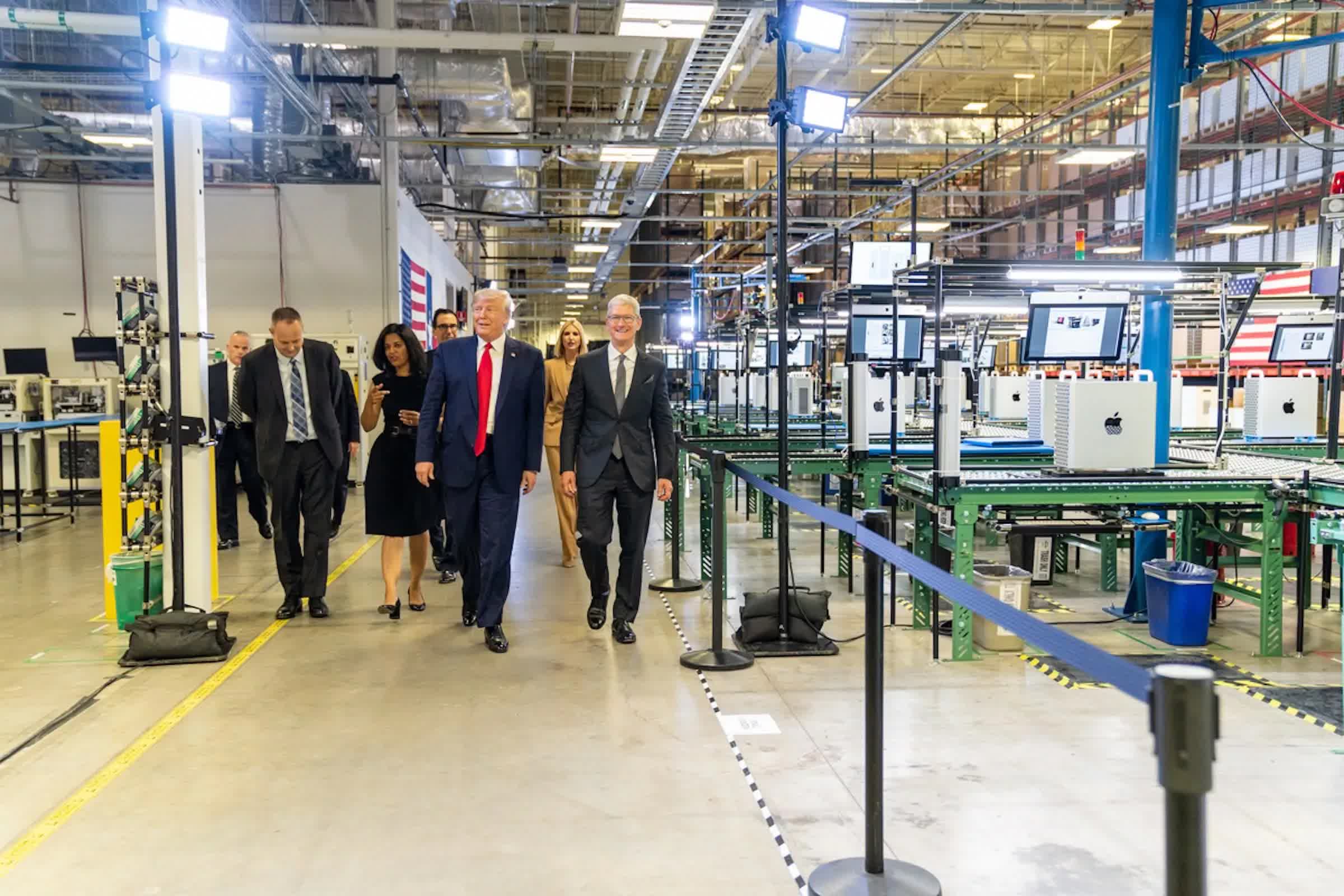
In August, Trump announced plans for a tariff of roughly 100 percent on imported semiconductors, with exemptions for firms either producing in the US or pledging to do so. Several major foreign producers have already expanded their presence in the US. TSMC, Samsung Electronics, and SK hynix have all committed capital toward American chip manufacturing, with the goal of securing access to the US market without facing new duties.
Tariffs have been a fixture of Trump's broader economic agenda and a central feature of his second term. The president has framed them as a bargaining tool to renegotiate trade deals and compel manufacturing investment inside the United States, yet his sweeping use of trade penalties has faced mounting legal challenges.
Just this week, the administration petitioned the US Supreme Court to hear a case that could determine whether Trump can continue imposing wide-ranging tariffs under a 1977 law originally intended for emergency situations. A lower court recently struck down large portions of his administration's tariff program, threatening to unravel much of the trade policy Trump has pursued since returning to the White House.
For now, the threat of new penalties against non-US semiconductor suppliers injects fresh uncertainty into a sector already grappling with geopolitical pressure and supply chain realignments. Whether the tariffs spur more domestic production as intended – or deepen global market strains – remains an open question.
Trump warns of "substantial" tariffs for chipmakers not shifting production to the US


