Why it matters: A new Department of Energy pilot program is testing a faster, less traditional path for bringing advanced nuclear reactors from concept to operation, reshaping long-standing assumptions about how the US oversees atomic power. Proponents describe an overdue correction to decades of regulatory stagnation, while critics see a dismantling of critical guardrails.
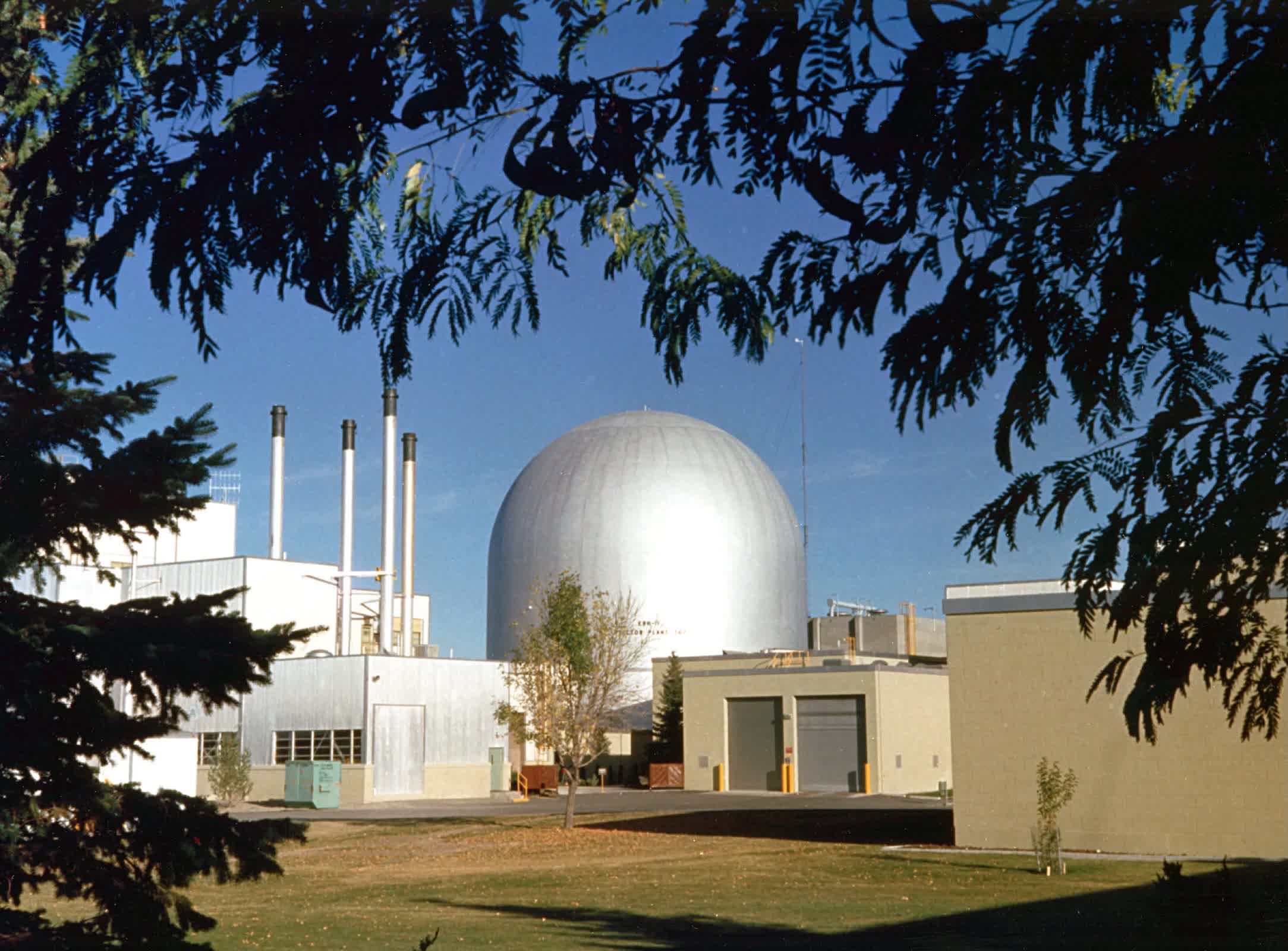
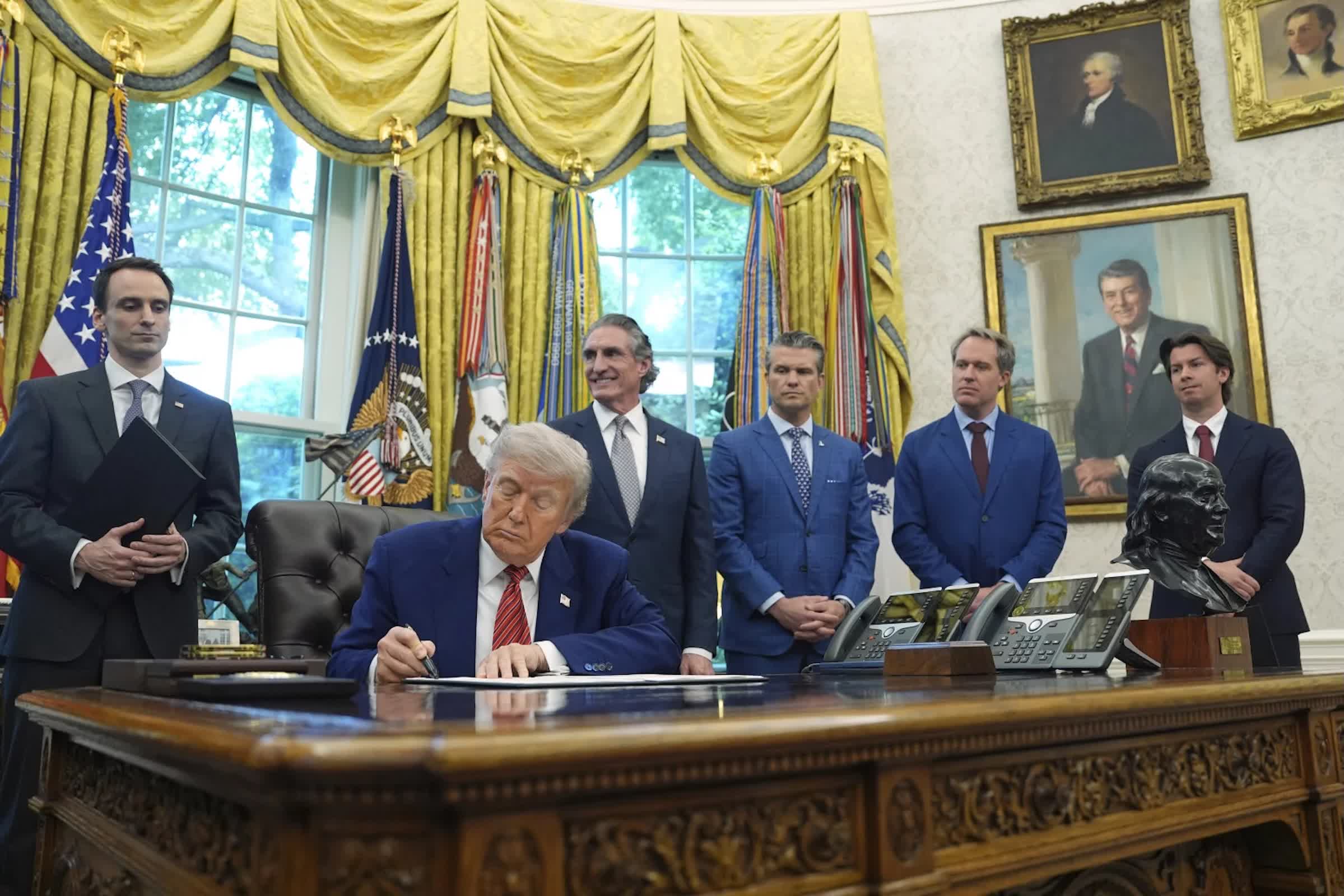
When President Donald Trump convened nuclear industry executives at the White House in May, it marked the public rollout of a major shift in US nuclear policy – one that places the Energy Department, not the Nuclear Regulatory Commission, at the center of an accelerated test-reactor program.
Trump issued a presidential executive order establishing a Reactor Pilot Program that aims to have at least three experimental nuclear reactors running by July 4, 2026, the nation's 250th anniversary. Under this plan, private companies can construct and test new reactor designs under DOE oversight – effectively sidestepping the NRC's half-century role as the country's primary nuclear safety regulator.
Since its creation in 1975, the NRC has independently conducted reactor safety reviews, a structure intended to separate regulation from the promotion of nuclear technology. Now, the DOE's Office of Nuclear Energy is running the pilot with only limited NRC consultation.
Four projects have already completed preliminary design presentations, and the first regulatory approvals could come early next year.
That aggressive timeline has drawn criticism from safety experts who fear speed could undermine oversight. The Union of Concerned Scientists' Edwin Lyman told NPR that by restricting transparency, "the new pilot program is really an attempt to subvert the laws and regulations that go around commercial nuclear power." He added that even small test reactors "are capable of leaking radiation in an accident."
The new push comes as nuclear energy gains traction among technology companies and investors seeking to meet surging power demands driven by artificial intelligence and data centers. The International Energy Agency projects US data-center electricity consumption will rise 130% by 2030. Firms like Amazon and Google are already pursuing nuclear sourcing partners to meet carbon-neutrality pledges without sacrificing reliability.
Prominent Silicon Valley investors aligned with Trump, including Peter Thiel and Marc Andreessen, have invested in several advanced-nuclear startups. By one estimate from the OECD Nuclear Energy Agency, more than $6 billion in venture and public funding has flowed into small modular and microreactor projects in recent years.
Unlike traditional large-scale reactors that can take a decade to build, many of these designs are small modular reactors (SMRs) engineered for standardized factory production and modular deployment near industrial or tech sites. Developers say their compact scale limits the potential for worst-case accidents and enables faster construction and easier replication. Independent consultant Nick Touran said that small designs "definitely" reduce the magnitude of risk compared to full-size reactors.
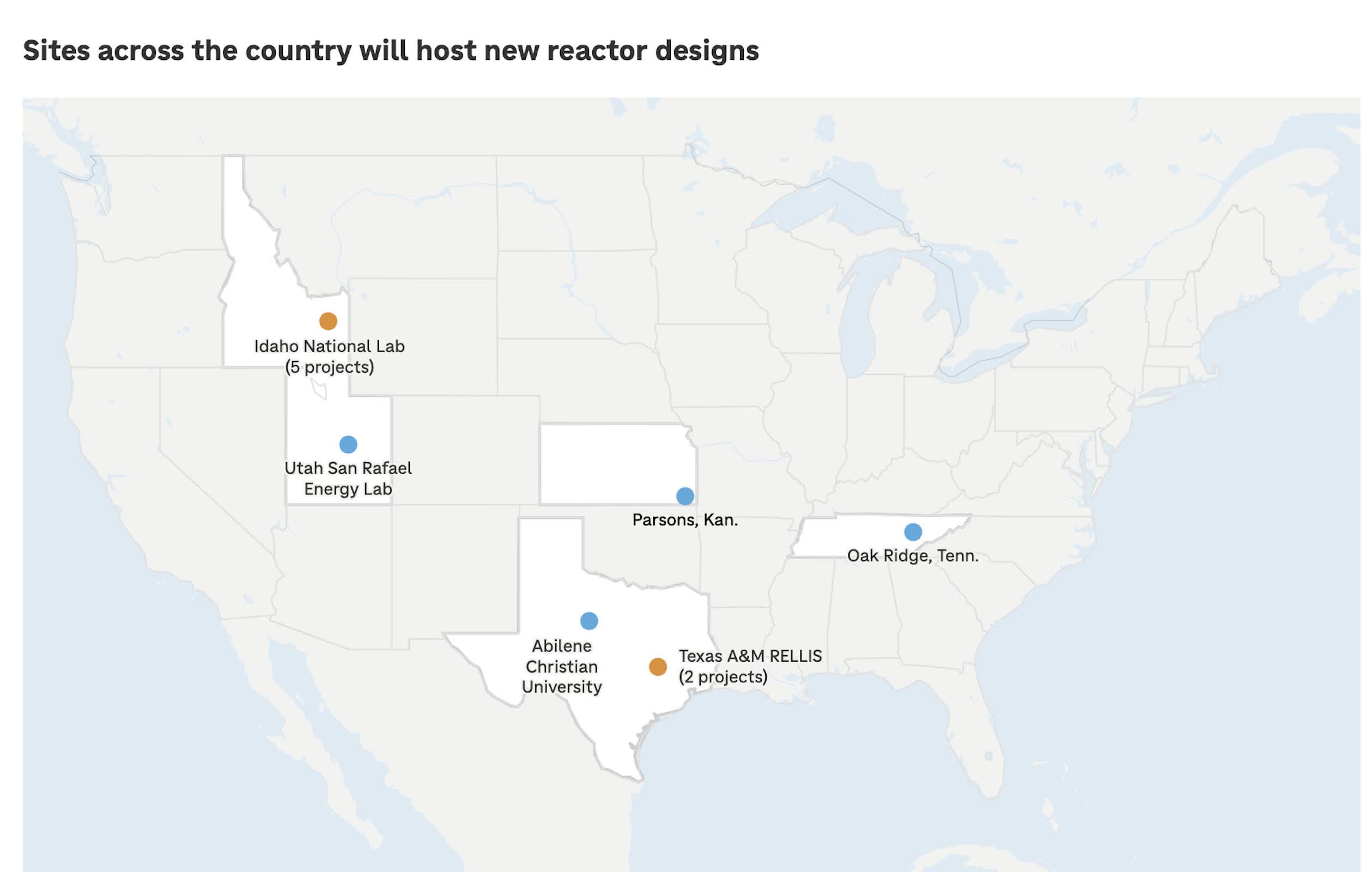
At the same time, companies like California-based Valar Atomics and defense-focused Antares see DOE's pilot as essential for gathering validation data. "The NRC is not built for R&D," said Valar founder Isaiah Taylor, whose gas-cooled, high-temperature reactor seeks to demonstrate real-world safety performance. "R&D has to be done in the real world, you actually have to turn reactors on."
Antares CEO Jordan Bramble agreed that experimental licensing through DOE "is absolutely the best way to build prototype reactors."
Both companies intend to have their reactors operational by the 2026 deadline.
Among the most prominent private participants is Oklo, a California startup whose compact Aurora reactor was previously denied NRC approval in 2022 due to information gaps in its safety documentation. The company is now part of DOE's pilot, with three reactors selected for testing – including a version of the same model that the NRC rejected.
At the White House event announcing the executive order, Oklo CEO Jacob DeWitte told Trump that "changing the permitting dynamics is going to help things move faster." The company said it secured a pilot placement through DOE's open competitive opportunities and noted the agency's prior operation of similar reactors.
Energy Secretary Wright, who was confirmed in February, had been a member of Oklo's board before joining government service. Oklo spokesperson Bonita Chester said the firm has continued to update its safety analyses and expects to apply for NRC licensing once construction is complete.
The DOE said it retains "safety standards as the top priority regardless of which regulatory body is utilized." Meanwhile, an NRC – DOE memorandum of understanding now requires the commission to develop a "fast-track pathway" to commercialize any pilot reactor successfully approved and tested by DOE.
That clause has raised new concerns about regulatory independence. According to the NRC, it plans to "build on DOE's analysis for future licensing, not repeat it," providing a foundation for expedited approval of commercial versions.
Former NRC chair Allison Macfarlane cautioned that this approach risks embedding safety assumptions made under political pressure into the broader nuclear fleet. "They can look at what the DOE did, they can take it as a piece of input, but they have to do their own separate analysis," she said. "Otherwise, none of us are safe."
Image credit: NPR
Trump's new nuclear pilot program is rewriting how reactors get approved


