Bottom line: TSMC delivered another strong quarter, offering a clear signal that demand for AI chips remains high. The company reported revenue of NT$1.27 trillion, or about $39.6 billion, for the June quarter, up 36% from a year earlier and in line with analyst expectations. The gains were driven in part by a sharp surge in June revenue, which jumped 68%. That late-quarter spike suggests that orders tied to AI infrastructure are accelerating, particularly among customers expanding their data center capacity.
TSMC sits at the center of that buildout. The company manufactures many of the world's most advanced chips used in AI data centers, including processors designed by Nvidia and Apple. As tech companies race to expand their data center capacity, demand for those chips has remained robust.
The broader AI spending wave is enormous. Global investment in AI infrastructure, driven by companies such as Meta Platforms, is expected to exceed $725 billion this year. That spending includes servers, networking equipment, and specialized AI accelerators, much of which depends on chips manufactured by TSMC.
Still, not everyone is convinced the current pace is sustainable. Investors have begun to question whether tech companies are building more capacity than they will ultimately need. A significant portion of that spending is debt-funded, and there is still little visibility into when, or whether, those investments will generate strong returns.
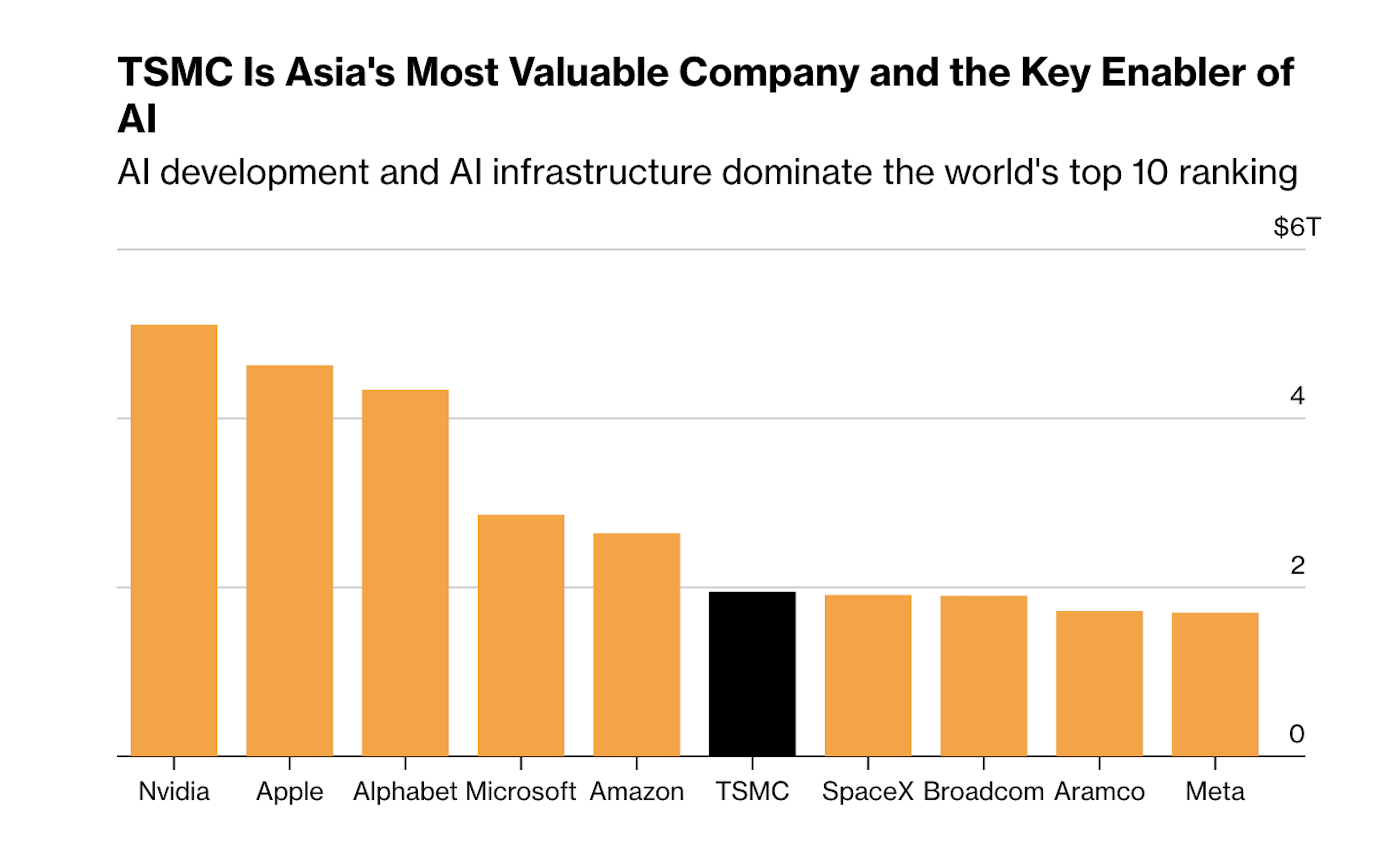
Credit: Bloomberg
Chipmakers, however, continue to push back against those concerns. In June, Chief Executive Officer C.C. Wei warned that TSMC would be unable to keep up with demand from American customers for years, even as new US manufacturing capacity comes online.
That view is echoed elsewhere in the supply chain. SK Hynix has said shortages of advanced memory chips, particularly the high-bandwidth memory used in AI systems, could persist into the next decade.
TSMC's full earnings report later this week is expected to provide a clearer picture of how demand is holding up. Investors will pay close attention to the company's capital spending plans, which are often viewed as a proxy for future supply and demand across the semiconductor industry. TSMC has said it plans to spend nearly $56 billion this year, approaching a record.
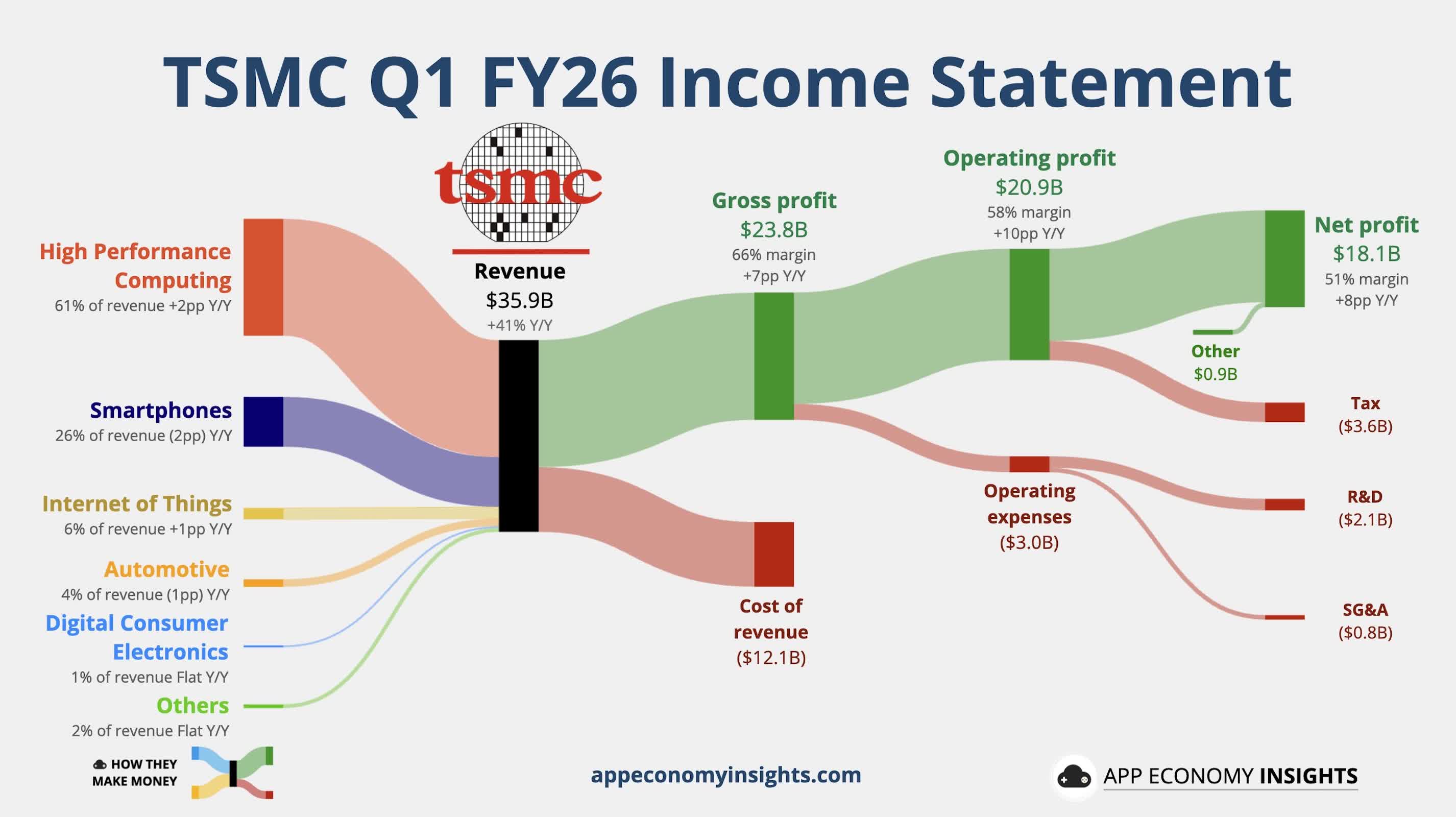
Credit: App Economy Insights
The company is also expanding its footprint beyond Taiwan. It is investing heavily in the US, including an Arizona campus expected to represent a total investment of about $265 billion. The move aligns with Washington's push to bring more advanced chip production onshore and reflects TSMC's growing importance to both economic and geopolitical security.
TSMC posts blowout $39 billion quarter, raising the same old AI question: is this sustainable?


