TSMC's 3nm capacity is now reserved for its biggest customers only

Alfonso Maruccia

Posts: 2,600   +978
Staff
The Great Chip Shortage: Big Tech and AI companies are ramping up orders at a pace the industry can't easily absorb, turning advanced chip manufacturing into an extremely finite asset. TSMC, which controls roughly 70% of the global foundry market, is now so stretched that it can't realistically accommodate every customer seeking capacity.
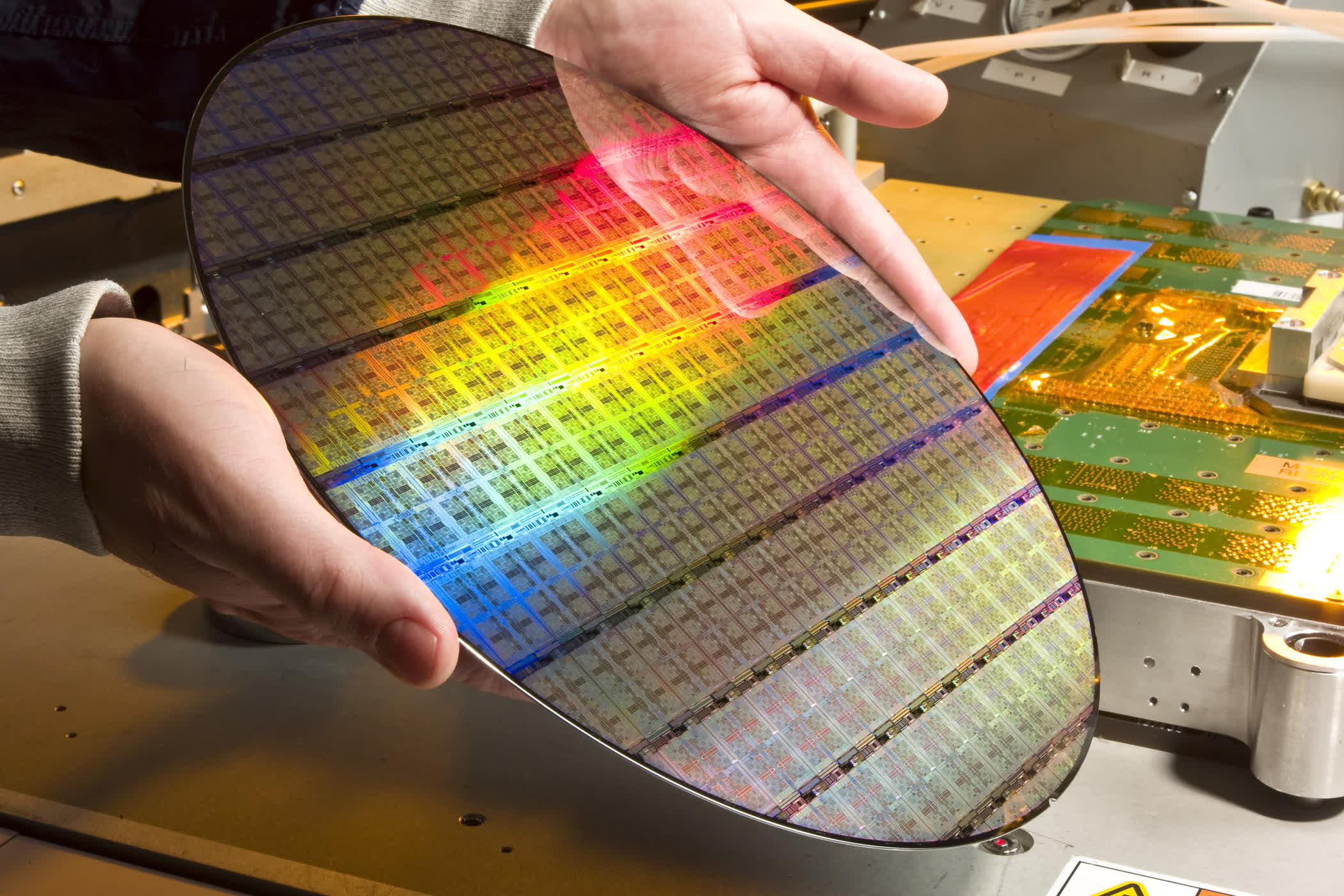
TSMC's most advanced nodes are particularly bottlenecked, forcing the company to prioritize a small group of "loyal" clients. A recent report from DigiTimes mentions that everyone in the chip business is asking for a piece of the Taiwanese foundry, but demand far exceeds supply across the industry, with many companies unable to secure production at all. The resulting crunch is fueling broader concerns about whether the current AI boom is sustainable.

Broadcom recently acknowledged that TSMC is effectively hitting a ceiling in production capacity, challenging the long-held assumption that the foundry could scale output almost indefinitely. According to the report, many firms are now rethinking their strategies as TSMC funnels a steady stream of silicon to a narrow set of customers.

Much of the company's 3nm capacity is being directed toward Apple and Nvidia, two of its largest and most consistent partners. Their privileged access to cutting-edge nodes could further widen the competitive gap with rivals across chips and devices.
A smaller share of advanced capacity is allocated to Intel and AMD, though in more limited volumes compared to AI products. Meanwhile, ASIC designers like Broadcom are pushing for better deals but having a hard time trying to ramp up volume production of specialized AI accelerators.

The broader picture is one of mounting uncertainty. Ongoing geopolitical tensions, including the US-Israel conflict involving Iran, add another layer of risk to already strained supply chains. Some analysts believe the current constraints could ease within 1 to 2 years, though similar timelines have been floated before.

In response, parts of the industry are exploring alternatives. Samsung Foundry is courting new partners, including AMD, while Intel continues to face challenges ramping its own manufacturing output (or finding suitable clients). With supply tight and demand still surging, the balance of power in the chip industry could shift quickly in the months ahead.

Permalink to story:

 
This isn't new; certain semiconductor parts have been on 36 or 48 month backlog for well over a decade now.
 
The market is ripe for ANYONE else to compete with TSMC. Intel, samsung....get a move on!
I do wonder what special sauce TSMC has that other foundries lack. TSMC's foundries have never floundered (heh) that I'm aware of since I've paid attention for 15 or so years. But Samsung and Intel (and other smaller fish) consistently come up short in yields, performance, capacity, and such.
 
A pity AMD (Global Foundries) exited the state of the art a decade ago. Maybe they will re enter, or at least move up into "relatively recent" node types.
They simply couldn't afford to compete anymore. R&D to stay competitive with TSMC (and at the time Intel) was huge, company-ending huge. Chances of them being able to actually compete were tiny, they made the smart choice and now just serve a different customer base than they used to.

You're better off betting on Intel if you want competition for TSMC. Or Samsung, but Samsung has never been at the very top - they're never far behind yet behind they remain.
 
You're better off betting on Intel if you want competition for TSMC. Or Samsung, but Samsung has never been at the very top - they're never far behind yet behind they remain.
Samsung's problem is that they have their fingers in so many pies, they have trouble focusing on any of them. And Intel has to deal with the work-ethic gap between the US and Taiwan.

One (more) bright side about the AI boom is that the semi industry has now grown enough where it can likely support a few new players entering the market.
 
I do wonder what special sauce TSMC has that other foundries lack. TSMC's foundries have never floundered (heh) that I'm aware of since I've paid attention for 15 or so years. But Samsung and Intel (and other smaller fish) consistently come up short in yields, performance, capacity, and such.
Good management, overly dedicated worker ethos/cheaper labor, and patience, maybe? Intel, IBM, and others got complacent over the years, and once you stop innovating you open the door for others to eat your lunch. TSMC still could, but with geopolitical pressure and AI, they probably won't for some time.

They simply couldn't afford to compete anymore. R&D to stay competitive with TSMC (and at the time Intel) was huge, company-ending huge. Chances of them being able to actually compete were tiny, they made the smart choice and now just serve a different customer base than they used to.

You're better off betting on Intel if you want competition for TSMC. Or Samsung, but Samsung has never been at the very top - they're never far behind yet behind they remain.
I don't entirely disagree, and they are certainly in no position to compete today, they haven't even advanced a single node since that pivot was made. But they didn't have to stay toe-to-toe with TSMC to offer value. And now they are in decline.
 
I do wonder what special sauce TSMC has that other foundries lack. TSMC's foundries have never floundered (heh) that I'm aware of since I've paid attention for 15 or so years. But Samsung and Intel (and other smaller fish) consistently come up short in yields, performance, capacity, and such.
Focus. Intel does other things and Samsung does a LOT of other things.

Good management and corporate culture are very important but only doing one thing well is much easier (relative to many things).
 
I do wonder what special sauce TSMC has that other foundries lack. TSMC's foundries have never floundered (heh) that I'm aware of since I've paid attention for 15 or so years. But Samsung and Intel (and other smaller fish) consistently come up short in yields, performance, capacity, and such.
They do one thing, and do it well. Intel and Samsung, like others have said, have too many projects going on to do one thing well.
 
Samsung's problem is that they have their fingers in so many pies, they have trouble focusing on any of them. And Intel has to deal with the work-ethic gap between the US and Taiwan.

One (more) bright side about the AI boom is that the semi industry has now grown enough where it can likely support a few new players entering the market.
tbh think those many pies is the only reason why their foundry is still around for modern processes. They don't seem to have any major customers aside from their own products. Google moved to TSMC. NVIDIA has tried a few times but then goes back to TSMC whilst claiming Samsungs process isn't up to snuff.
I wouldn't be surprised if the Korean government is pressuring them into staying near the cutting edge as a safety net and forces their hand in using their own processes for their products as much as possible.

Think the US/Taiwan work ethic difference is overstated most of the time. When you're doing things where you need to use your brain putting in massive amounts of overtime doesn't tend to scale very linearly.

Intel just made the wrong bet by trying to make too big of a step at once and have struggled ever since. I could totally see them catching up again though, especially if the US government keeps pushing for domestic supply lines/production.
Two of the most highly valued companies swimming in money (NVIDIA/Apple) could stand to gain a lot from Intel growing its foundry business. They can provide volume if Intel can provide the service and all 3 of them are US based. Intel is also snatching up the latest tech from ASML.
So basically if Intel can demonstrate they can provide good yields then NVIDIA/Apple will be eager to get some deals done and put the money behind it to make it happen.
 
I do wonder what special sauce TSMC has that other foundries lack. TSMC's foundries have never floundered (heh) that I'm aware of since I've paid attention for 15 or so years. But Samsung and Intel (and other smaller fish) consistently come up short in yields, performance, capacity, and such.

Intel's problem was that they had become a bureaucracy that governments would envy. Between territory fights internally and resting on their laurels because they were "so far ahead" of everyone else, it cost them dearly. And once they fell behind, the management incompetence relegated them to being an "also ran" in the industry.
 
Back