ASML says first silicon from its latest $400M High-NA EUV machines is just months away

Alfonso Maruccia

Posts: 2,581   +969
Staff
Looking ahead: ASML builds the most complex and advanced chipmaking machines available today, and is Europe's largest technology company in terms of market cap. The Dutch corporation still needs to sell its uber-expensive machines to foundry ventures, which is why is it is now praising the unprecedented capabilities of its latest photolithography machines.
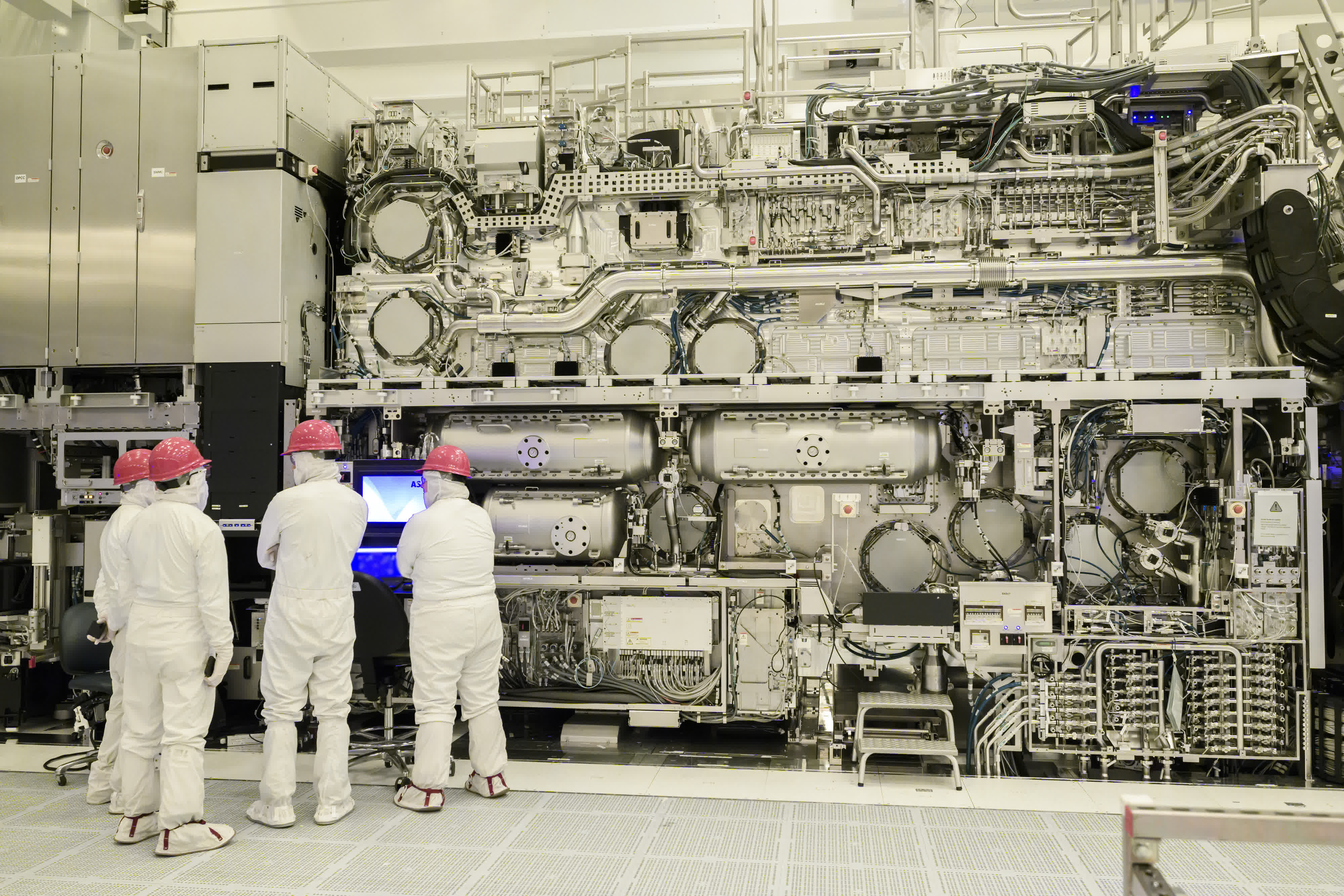
ASML CEO Christophe Fouquet recently confirmed that the first silicon products manufactured with the company's latest chipmaking machines will be delivered to customers over the next few months. Fouquet added that these massive devices are very expensive but pay off on long-term manufacturing efforts. The executive attended a conference held by research company Interuniversity Microelectronics Centre in Antwerp, Belgium.

Fouquet stated that "in the next few months, we will be looking at the first few products, in memory, in logic, being exposed on the High-NA system."

High-NA EUV tools are photolithography machines based on extreme ultraviolet lithography. They are equipped with High Numerical Aperture scanners that can produce next-generation chips with smaller features, enabling more densely packed transistor designs.

"World-class foundries should simply buy more ASML scanners" says Christophe Fouquet, ASML CEO.
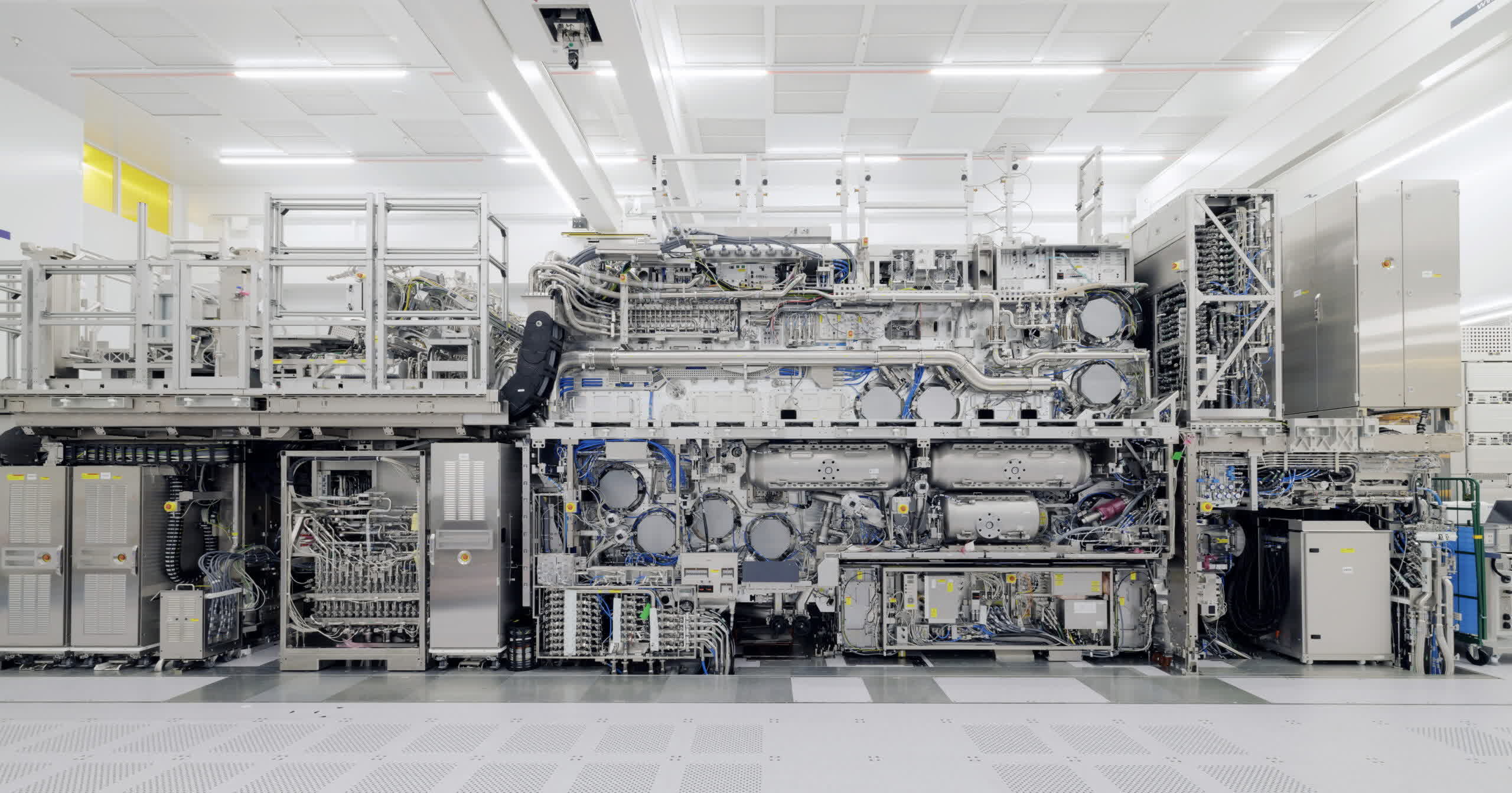
Every High-NA EUV machine can cost up to $400 million, but Fouquet is confident about their its adoption. This technology is expensive and requires very skilled personnel, Fouquet said, but is designed to lower the cost of "patterning" and increase the margins for next-generation silicon products.

So far, chipmakers have welcomed High-NA EUV scanners with what might be described as lukewarm enthusiasm. Intel is one of the most enthusiastic proponents of the new EUV technology, and has been experimenting with ASML's TWINSCAN EXE:5000 scanners for a few years already. The company now hopes to leverage High-NA EUV to better compete with other major chip manufacturers.

According to TSMC, High-NA EUV technology will not be a strict requirement for at least the next few generations of chip manufacturing nodes. The Taiwanese foundry, one of the world's most important technology corporations, plans to keep using its current EUV technology – which was made by ASML anyway – to develop novel chip designs that don't necessarily require ever-shrinking silicon features.

Fouquet acknowledged the concerns expressed by TSMC, Samsung, and other high-profile executives attending IMEC's Antwerp conference. The industry is worried that ASML will be unable to keep up with growing demand for more chipmaking machinery coming from the AI industry, with chip sales expected to grow by 20% over the next few years.

World-class foundries should just buy more ASML scanners, Fouquet said, so that they can significantly expand their production capacity. Many chipmakers are not keen on the idea, and are mostly focused on reserving a growing portion of their existing facilities for high-margin products such as Nvidia's AI accelerators or high-bandwidth memory chips.

Permalink to story:

 
If TSMC, Samsung, SK Hynix and Intel are all yet to actually start using these new High-NA EUV machines, who is the player that's ready to start releasing chips using these machines? I can't find a mention anywhere.

Did a bit of further digging, it seem's Intel are the closest with their 14A node products, so it must be them.
 
Last edited:
World-class foundries should just buy more ASML scanners, Fouquet said, so that they can significantly expand their production capacity. Many chipmakers are not keen on the idea, and are mostly focused on reserving a growing portion of their existing facilities for high-margin products such as Nvidia's AI accelerators or high-bandwidth memory chips.

Capitalism can be done correctly. This is the opposite. Chip shortages and yet they refuse to expand capacity. Artificial shortage, artificial intelligence. That is why none of this panics me in the slightest. There will be RAM available the moment they decide to produce more of it.
 
Capitalism can be done correctly. This is the opposite. Chip shortages and yet they refuse to expand capacity. Artificial shortage, artificial intelligence. That is why none of this panics me in the slightest. There will be RAM available the moment they decide to produce more of it.

If that were true, other companies would already have stepped in to fill the gap in demand.

The problem is that many fabs have redirected production to HBM, and soon DDR6 too, instead of DDR5. That naturally drives DDR5 prices up: less supply and high demand equal higher prices.

Consumer relief will probably come from DDR5 produced by a smaller player, likely CXMT.
 
Capitalism can be done correctly. This is the opposite. Chip shortages and yet they refuse to expand capacity. Artificial shortage, artificial intelligence. That is why none of this panics me in the slightest. There will be RAM available the moment they decide to produce more of it.
Increasing supply in semiconductors is not like turning up production at a normal factory. The entire industry runs on multi-year planning cycles and extremely specialized equipment.
Even ASML has its production fully booked years in advance (at least through 2027). If TSMC, Samsung, or Intel suddenly decided to massively expand capacity tomorrow, they couldn’t even get the equipment before 2027-2028.
The lithography machines are only one part of the problem. A fab needs thousands of ultra-specialized tools from different suppliers, ultra-pure chemicals and gases, stable power infrastructure, water treatment systems, packaging capacity, and highly trained engineers to operate everything. One bottleneck anywhere in that chain can delay the entire facility.
Building a modern fab also takes years and costs tens of billions of dollars. You cannot risk building one without confidence that demand will still exist by the time it comes online. If demand collapses midway through the cycle, you are left with an underutilized fab depreciating at enormous cost.
RAM is also a commodity market with boom-and-bust cycles. Companies are cautious about overexpanding because the industry has repeatedly gone through periods where too much capacity caused prices to crash and wiped out profitability for years.
Shortages are not necessarily artificial. In semiconductors, capacity expansion is slow because the industry is one of the most capital-intensive and supply chain constrained businesses on earth.
 
This is the only THING you should take away from this and QUOTE :

"World-class foundries should just buy more ASML scanners, Fouquet said, so that they can significantly expand their production capacity. Many chipmakers are not keen on the idea ... "

Of course the chipmakers are not keen on the idea because they want to DRIP-FED the market with products so the world consumers perceive this as a "constrained market because of conditions like AI, etc" and their prices go higher and higher ! if the price goes higher, their stock goes higher, their evaluation goes higher, their payouts go higher, whilst the STUPID you and me buy their overpriced products.

But the CEO of the machines that these memory/chip producers need said exactly what everyone wants to hear ! Buy and you wont have constraints.

Those that have ears to hear and eyes to see, know what is going on here.
 
Back