USB-C is now effectively mandatory in Europe as the new charging era begins

Alfonso Maruccia

Posts: 2,586   +972
Staff
A hot potato: The European Union decided to impose USB-C as the de-facto standard for data communication and battery charging on small devices two years ago. The new rule is now going into effect, despite Apple's objections, which include concerns about reduced technological innovation.
The European market is making USB-C the sole interface for battery charging on mobile and portable gadgets. The EU Parliament approved the USB Type-C mandate in 2022, compelling even reluctant manufacturers to adopt the port for their chargers. By the end of 2024, all mobile phones, tablets, and cameras sold in the EU must feature a USB-C charging port – and that's just the beginning.

By 2026, the mandate will extend to laptops as well.

European authorities explained that the new rule would allow consumers to use a single, universal charger for all their portable devices. USB-C chargers will remain compatible with new products, creating a standard for a wide range of small and medium-sized portable electronic devices with power delivery under 100 watts. By 2026, the mandate will extend to laptops as well.

The EU also stated that devices supporting fast charging will have the same charging speed, ensuring that any compatible charger can power up devices at the same rate. According to the European Commission, the adoption of a common USB-C charger will improve interoperability across the market, reducing the impact on both consumers and the environment.
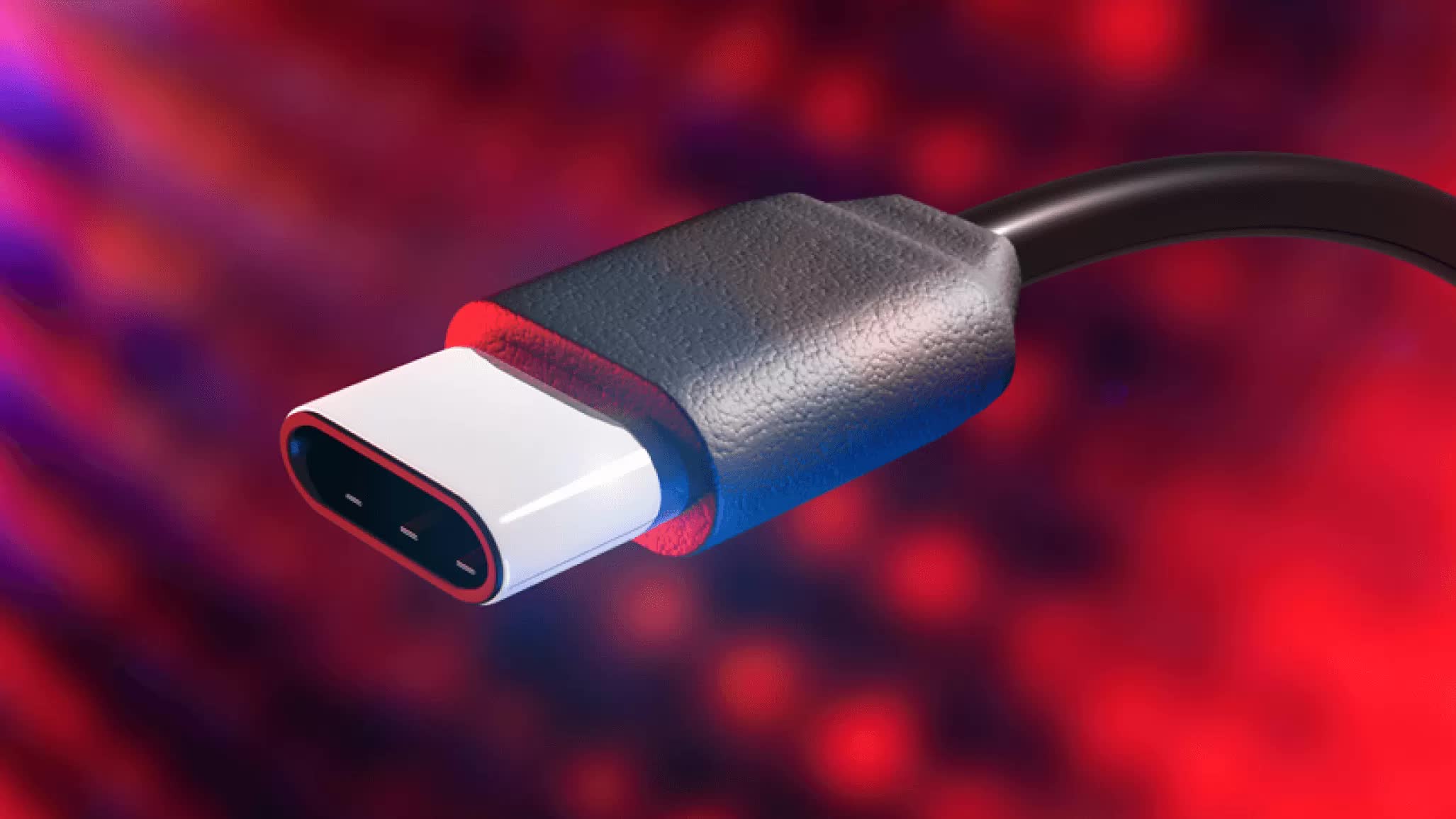
The USB-C mandate is expected to increase consumer choice and force manufacturers to abandon their outdated "lock-in" business model, which requires customers to purchase products exclusively from a single brand. Apple, one of the most notable offenders in this practice, actively resisted the EU's push for a common USB-C charger.

In 2022, Apple argued that the regulation would enforce "conformity" in the types of connectors used by devices, stifling innovation. Apple also claimed the regulation would harm both European consumers and the broader economy. However, the company was ultimately forced to comply. Apple's SVP of Marketing, Greg Joswiak, admitted that they had no choice but to adopt USB-C in their devices.

The iPhone 15, introduced last year, marked the first generation to replace Apple's proprietary Lightning port with USB-C. According to EU estimates, the ability to reuse old chargers will save consumers up to €250 million annually. Europe also warned that disposed chargers currently account for 11,000 tonnes of additional e-waste every year.

Permalink to story:

 
In case you wonder why very little innovation comes out of Europe lately, the obsession with meaningless regulations is probably the main reason.
Why the fck should a bunch of anonymous unelected bureaucrats impose mandatory technical standards?
How are charging ports a "lock-in" business model ? Nobody sticks to the same phone brand to reuse existing chargers, so where exactly is the "lock-in" ?

The number of products and technologies not available to Europeans because of the preposterous regulations is growing by the day. What's the purpose? How that benefits anyone? It definitely benefits the bureaucrats, because meaningless regulations justify their meaningless existence, but is there something more?
 
How are charging ports a "lock-in" business model ? Nobody sticks to the same phone brand to reuse existing chargers, so where exactly is the "lock-in" ?

The number of products and technologies not available to Europeans because of the preposterous regulations is growing by the day. What's the purpose? How that benefits anyone? It definitely benefits the bureaucrats, because meaningless regulations justify their meaningless existence, but is there something more?
Ehhh so your saying that people have invested into a ton of Lightning port accessories wouldn't take that into consideration when buying the best phone?

Afaik the main point behind it is unifying charging standards so that not every manufacturer can sell proprietary chargers. Because those can be hard and expensive to replace.
Bad for the environment as well having so many different chargers and cables as well. I've been trying to make every purchase in the last few years with USB-C. It was a nice experience going on vacation and being able to power the beard trimmer, laptop and phone all using a travel adapter with multiple USB-C ports. (Gf brought a hair dryer so she needed the travel adapter part of it, power draw of those is far beyond what USB can do).
 
In case you wonder why very little innovation comes out of Europe lately, the obsession with meaningless regulations is probably the main reason.
Why the fck should a bunch of anonymous unelected bureaucrats impose mandatory technical standards?
How are charging ports a "lock-in" business model ? Nobody sticks to the same phone brand to reuse existing chargers, so where exactly is the "lock-in" ?

The number of products and technologies not available to Europeans because of the preposterous regulations is growing by the day. What's the purpose? How that benefits anyone? It definitely benefits the bureaucrats, because meaningless regulations justify their meaningless existence, but is there something more?
What the EU has done here is a form of regulatory innovation. It's something that US regulators are completely incapable of doing because of the corrupted lobbying and money interests system there, all in the name of "free markets".
 
Finally. I still see a ton of headsets usings the old ones... come on, its 2025. Even Go pro like cameras, recorders and many other devices. It aint just phones and chargers. I wish they can do this for everything.
 
Afaik the main point behind it is unifying charging standards so that not every manufacturer can sell proprietary chargers. Because those can be hard and expensive to replace.
Bad for the environment as well having so many different chargers and cables as well. I've been trying to make every purchase in the last few years with USB-C.
How are chargers "hard" to replace? You just plug in a different cable.
It's not expensive either, chargers are universal since quite some time. It's only the cable between the charger and the device that's different, does that seriously require regulation? Besides, everyone already has the cables they need
I, my wife and kids have iPhones, with plenty of chargers that will now become obsolete, is that good for the environment? It doesn't matter at all actually, but 'environment' is used alarmingly often to justify regulatory overreach about ridiculous stuff like this.

You buying things with USB-C is fine - you decide what's best for you. That's how it should be - not a group of anonymous bureaucrats messing around in everything just because they'll become useless otherwise.
 
What the EU has done here is a form of regulatory innovation.
I truly hope that's sarcasm.

"Regulatory innovation" is at the expense of actual, useful innovation. You can think of these as rivalry species competing for the same resources. In Europe, the "regulatory innovation" is definitely winning big time, because real innovation is in the endangered species list.
 
I'm all for convenience but why is a government getting involved with this?
Because companies like apple had no plans to dump their inferior lightning port because they were all to happy to sell their customers overpriced proprietary chargers. So I'm glad somebody finally forced them, and apple users will be all the better for it.
 
I truly hope that's sarcasm.

"Regulatory innovation" is at the expense of actual, useful innovation. You can think of these as rivalry species competing for the same resources. In Europe, the "regulatory innovation" is definitely winning big time, because real innovation is in the endangered species list.
Do you think electrical outlets being standardized was a bad thing? Its the same principle that only prevents companies from locking you into a product ecosystem.

If it really upsets you and you insist on that ecosystem or feature... YOU can go buy the dongle to convert... this ensures no one else will be forced to.
 
I'm all for convenience but why is a government getting involved with this?
It's not just for convenience sake, but for standardization. The procurement processes for parts and services are much more cost effective and easier when there is one standard instead of many. They're thinking of saving money in an era of high price hardware.
 
Eh, as long as USB-A and USB-C are the only USBs out there, I'm happy. USB-C can actually pretty fragile and I just don't want a fragile port on some things.
It defeats the entire purpose of having one standard if I still have to bring two cables for everything. Just make the USB-C port stronger. They should be doing that for public ports anyway.
 
How are chargers "hard" to replace? You just plug in a different cable.
It's not expensive either, chargers are universal since quite some time. It's only the cable between the charger and the device that's different, does that seriously require regulation? Besides, everyone already has the cables they need
I, my wife and kids have iPhones, with plenty of chargers that will now become obsolete, is that good for the environment? It doesn't matter at all actually, but 'environment' is used alarmingly often to justify regulatory overreach about ridiculous stuff like this.

You buying things with USB-C is fine - you decide what's best for you. That's how it should be - not a group of anonymous bureaucrats messing around in everything just because they'll become useless otherwise.
Think outside the phone market. Ever tried buying a replacement power brick for a laptop? I have, cost me €80. Now if my laptop had usb c instead of MSIs odd barrel plug I could have my power brick for half or even nearly a quarter of the price. Plus it would charge any USB device, not just my laptop.
If the power adapter for my beard trimmer breaks in a couple of years I don't have to cross my fingers and hope the manufacturer sells replacement adapters, I can just plug it into adapters I already have.


I have a USB-C soldering iron as well, it didn't come with a adapter but works great on the previously mentioned travel adapter or my GFS laptop adapter. Ewaste saved.

Id like it if the EU doubled down on it even and make it required on any new <=20v / <=120w device. I'm not a huge fan of for example the low quality power adapter that comes with my ISPs router. I'm on the third one already because the house has shoddy electrics.
 
Last edited:
Its funny to see how corporations have convinced an entire nation that regulation is bad. But then again this is nation that has been convinced that universal health care and environmental controls are also bad. The citizens of this nation also appear to be at odds with every other country including those that would have been traditional allies.

Proprietary standards in most cases are developed to generate extra income from licensing why would a company go to the trouble of developing a new standard when a low cost equivalent technology already exists.

Using a unified standard improves compatibility with third party devices, reduces waste and makes repairs easier.
 
I, my wife and kids have iPhones, with plenty of chargers that will now become obsolete, is that good for the environment? It doesn't matter at all actually, but 'environment' is used alarmingly often to justify regulatory overreach about ridiculous stuff like this.
Typical Apple user. How does those chargers become obsolete? Only IF and IF your next phone is Apple AND that new Apple happens to use same connector, those chargers would not be obsolete.

But guess what? Apple told EU that mandatory USB-C is bad for innovation. In other words, Apple is planning another connector that will make your chargers, well, obsolete.

Congratulations for proving that Apple users have serious problems with logic.
 
We need standardized usb magnetic pogo connector.
4 pins 480 mbps USB 2.0 is more than enough because most users don't use it for data transfer anymore.
 
I don't understand this law. I live in the EU, and there are still tons of devices selling with usb-a, and they aren't going anywhere! So the article doesn't clearly state is this only applied on some devices, because clearly it doesnt apply to cars, audio equipment, televisions got no usb-c
 
Back