TL;DR: Google is adding a new capability to its productivity suite: the ability to edit videos directly from Google Drive using its browser-based tool, Google Vids. The update reflects a broader trend of bringing lightweight creative tools into cloud platforms.
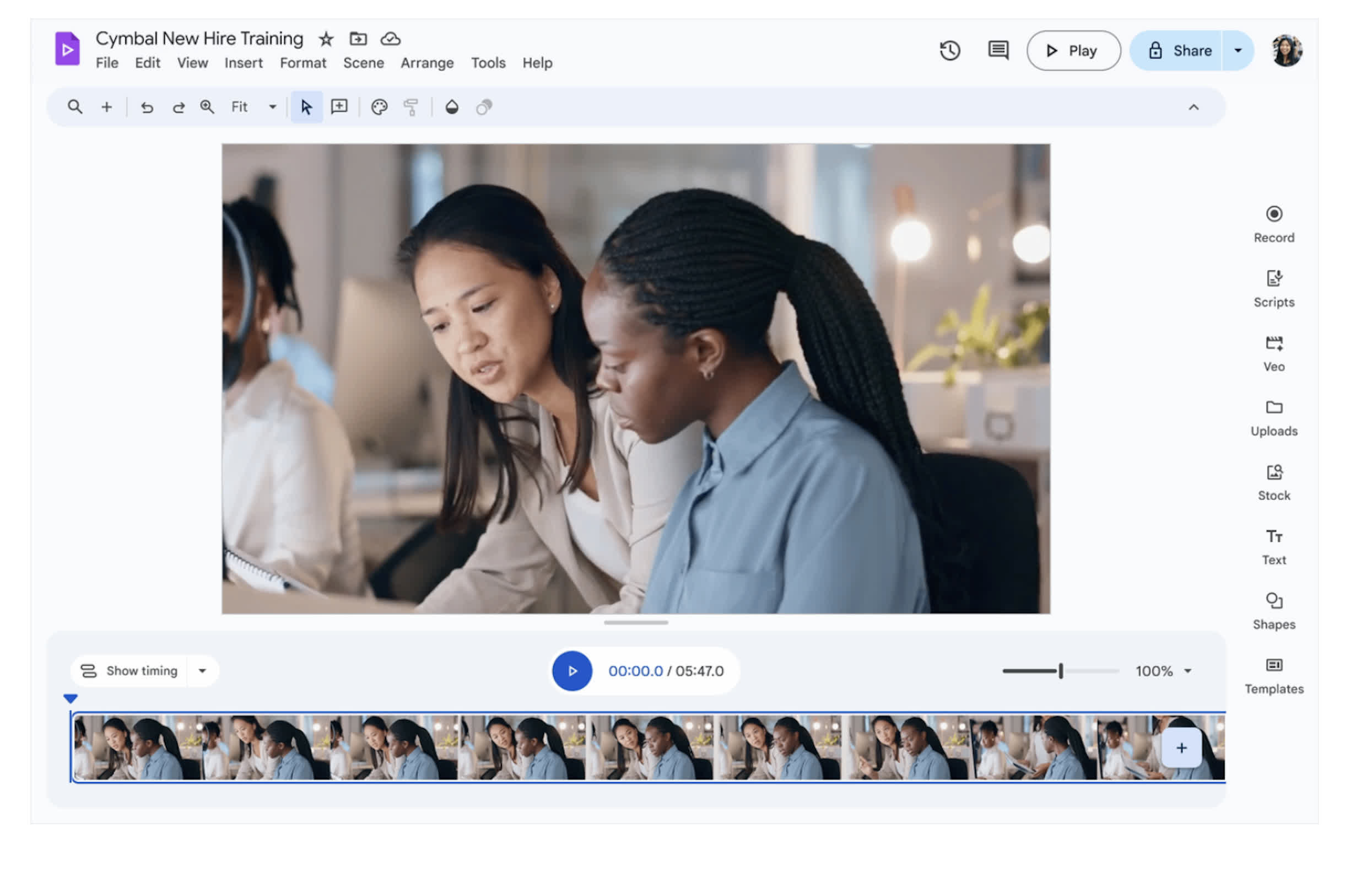
Eligible users can now open videos stored in Drive with Vids through an Open button in the file preview screen. From there, they can cut clips, insert text, layer audio tracks, and make other adjustments. The app integrates with Veo, Google's artificial intelligence system for generating video and audio. Once edits are complete, Vids saves a separate copy of the file, leaving the original video untouched.
The feature is not rolling out to every Google account holder. Instead, it is limited to paying customers on certain Workspace plans, including enterprise and business tiers, nonprofit organizations, and schools with Gemini Education add-ons.
Some individual subscribers – such as those with the AI Pro and Ultra packages – are also included. Administrators can disable the feature, but it is enabled by default. By restricting access to paid plans, Google is following a strategy similar to Microsoft and Adobe, which increasingly tie lightweight creative products to their subscription ecosystems.

Vids supports common video formats, including MP4, QuickTime, OGG, and WebM, though with limits: clips must be under 35 minutes and no larger than 4GB. For now, the app runs on recent versions of Chrome, Firefox, and Edge on Windows. Performance on other browsers and devices may be inconsistent.
The move puts Google in more direct competition with rivals that have integrated simple video editors into their productivity suites. Microsoft's Clipchamp, for example, comes preinstalled on many Windows devices and works with OneDrive. Adobe has expanded Express, a pared-down version of its design tools, to focus on ease of use and cloud access.
Google's approach differs by making video editing a natural extension of file previewing in Drive. Rather than positioning Vids as a standalone application, the company frames it as a quick editing option for files already in use. The integration of Veo underscores the growing role of artificial intelligence in multimedia editing.
While Vids is not intended to compete with full-scale production tools, its AI features suggest Google sees value in offering generative enhancements where professional polish is not the top priority.
Video editing comes to Google Drive, powered by browser-based Vids tool


