Ripple effect: A massive power outage that swept across San Francisco this weekend provided an unscheduled stress test for the city's growing fleet of autonomous vehicles. The blackout, caused by a fire at a Pacific Gas and Electric substation on Saturday afternoon, at one point left more than a third of the city without power. Service was disrupted for over 130,000 customers, shutting down traffic lights and halting public transit in several neighborhoods.
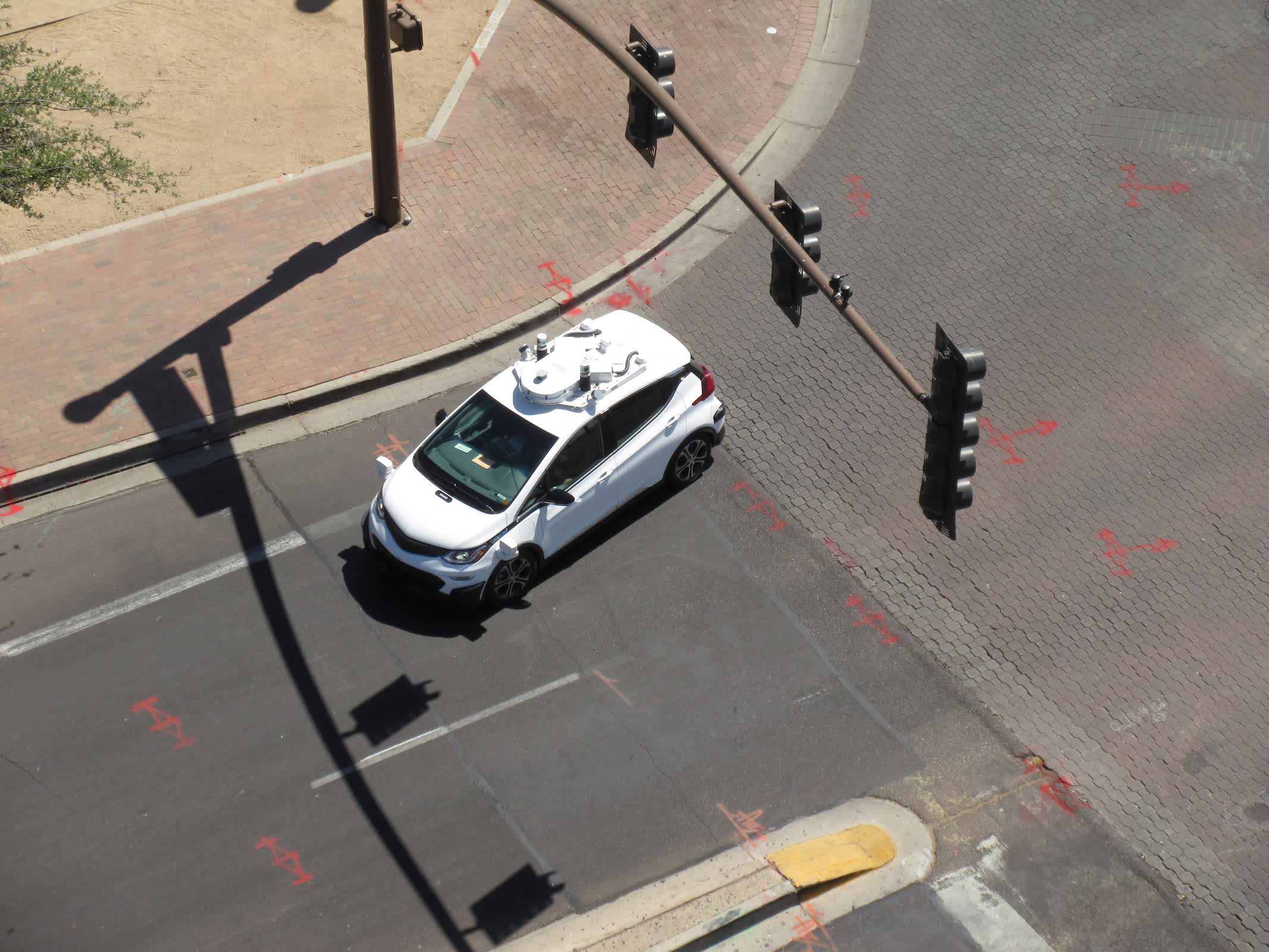
Among the most visible signs of the disruption were the clusters of Waymo's white Jaguar I-Pace robotaxis idling motionless at intersections. The company, which operates more than 800 autonomous vehicles in the Bay Area, suspended ride-hailing operations temporarily as parts of the city's infrastructure went offline.
Waymo's vehicles rely on a detailed combination of high-resolution mapping data and real-time sensor input to navigate dense urban streets. Each upfitted Jaguar carries a suite of lidar, radar, and optical sensors that provide 360-degree environmental awareness. These systems continuously cross-check sensor readings with preloaded maps to interpret traffic flow, pedestrian movement, and signaling cues. When traffic lights went dark citywide, the autonomous logic defaulted to a four-way stop protocol, the standard procedure when signals fail.
That approach works in isolated cases, but the scale of the outage created gridlock at many major intersections. Social media users began posting clips of multiple Waymo cars stopped at the same junctions, none of which were willing to proceed without a visual signal.
Earlier this month, Waymo issued a software recall to address a separate behavioral glitch that caused some vehicles to pass stopped school buses illegally. Saturday's paralysis highlighted a different challenge: how to maintain consistent decision logic when the broader urban network provides no reliable external cues.
"We are resuming ride-hailing service in the San Francisco Bay Area," a Waymo spokesperson told Ars Technica. "Yesterday's power outage was a widespread event that caused gridlock across San Francisco, with non-functioning traffic signals and transit disruptions. While the failure of the utility infrastructure was significant, we are committed to ensuring our technology adjusts to traffic flow during such events."
The company added that it closely coordinated with San Francisco city officials throughout the event and noted that it is focused on rapidly integrating the lessons learned to strengthen its response to future disruptions.
Pacific Gas and Electric reported that most customers had power restored by midday Sunday, though some remained without service into Monday afternoon. By then, Waymo's vehicles were again navigating the streets of San Francisco.
Waymo's robotaxis froze when San Francisco's traffic lights went dark


