Hmm; Memory use is all about how the system is used by the user.
Like even a Boeing 747, load enough into it and it will never leave the ground - - same is true for a system abused by the habits of the user. In the commercial world, this is the arena of Capacity Planning; how do you configure a system for the intended use?
Ignoring XP, Vista, Win/7 & Win/8 comparisons, the "minimum" ram can be seen in two boot configurations:
In Safe Mode, the absolute minimum services are started (ie: making it as
safe as possible) and thus using absolute minimum ram for that OS on that hardware. With such heavy reductions in services, MS can't do too much except play with itself (aka maintenance).
In Normal Mode, all of the enabled and autostarted services are started along with the user Autorun programs creating a larger use of Ram.
When the desktop becomes available - - the system is in the hands of the user to use or abuse.
Less we forget, today's OS is a Virtual Memory model and real ram supports the VM, not the applications. This says that we expect more and more ram to be used and when necessary, VM pages move to the pagefile so running programs get better performance.
On other platforms, real ram is consumed to the 80-90% level almost immediate. The object is to use available resources, NOT to reserve or miserly parse them out. The beauty of a VM model is the system tunes itself to the load imposed upon it. When or if the Performance Specialist sees that the original Capacity Planning assumptions were exceeded
frequently (not just once on one day last month), then more resources can be added - - OR less work can be imposed by waiting to another time when less demand is present.
To make the claim that the cited example is normal, expected and therefore sets a minimum ram configuration imo is absurd.
My laptop runs extremely well with 4gb ram and I use several programs concurrently.
We all have our opinions and this is mine

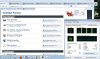
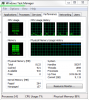
[edit] Taskmgr resources added [/edit]





![hellokitty[hk]](/community/data/avatars/m/169/169488.jpg?1355088591)


