Workers at OpenAI, Anthropic, and Meta say AI is making their jobs harder, not easier

Skye Jacobs

Posts: 2,088   +62
Staff
The big picture: AI tools are being sold as a way to make work faster and easier. But employees at some of the companies building those tools say the opposite is happening inside their own workplaces. Current and former workers at OpenAI, Anthropic, Meta, and Google told the BBC that developing AI often involves long hours, weekend shifts, and constant pressure to meet product deadlines.

At OpenAI and Anthropic, some employees said major development pushes can last for weeks and involve more than 90 hours of work per week.

One former OpenAI technical employee said they worked at least 70 hours most weeks before leaving the company last year. They now work at another AI startup and said their schedule is closer to 50 to 60 hours a week, except during intense release periods known as sprints.

"You go in on Saturday or Sunday just to catch up or make sure things aren't broken," the person said.

That experience does not line up with the public message from many AI leaders. Google predicted several years ago that AI could help make a four-day workweek possible. Earlier this year, OpenAI encouraged companies to experiment with four-day schedules without cutting pay, saying AI would soon accelerate much of the work people do.

The former OpenAI employee said the company did not try a four-day workweek while they were there. Instead, they described regular "crisis meetings," weekend work and "super cut-throat" performance reviews that could lead to sudden layoffs. OpenAI and Anthropic did not respond to the BBC's requests for comment.

The workload is partly a result of the pace of the AI race. Companies are trying to improve models, build more computing infrastructure, and add AI features to products at the same time. That creates pressure on engineers, researchers and product teams to move quickly and fix problems as they arise.

Anthropic has said its Claude tool can work independently for seven hours on some tasks. Meta CEO Mark Zuckerberg has said AI will allow smaller teams to do more work. Yet employees say these systems are not reducing the amount of work expected from them. In many cases, they are simply being asked to produce more.

Meta workers described being moved onto AI teams with little warning. A current employee and a former employee told the BBC that workers called the process being "drafted." The former employee said people often had little meaningful choice about joining an AI project.

"They just move you over," the former employee said. "You can't say no – or if you do, you have to quit."

Those teams are working on AI systems for software engineering and other tasks, along with infrastructure that measures how well models can perform work typically done by people. The former employee said the work had no clear endpoint.

"You're literally working in teams of people trying to replicate humans doing jobs," the person said.

Meta has reportedly softened its reassignment approach, but workers said many employees had already been placed on AI projects. They described late nights, weekend work, and a feeling that they remained on call even when they were not actively working. A Meta spokesperson declined to comment.

The strain is not limited to people directly building AI models. Amin Shali, a former Google employee, said he left the company in May after seeing internal engineering systems fail more often. He said Google had shifted key resources, including processing units and memory storage, to AI projects, leaving other teams dealing with disruptions.

Shali said the problems often required engineers to work through the night. Since leaving Google, he said his sleep and health have improved. He said heavy use of AI tools at large companies "creates a bad culture with excess pressure on engineers." A Google spokesperson declined to comment.
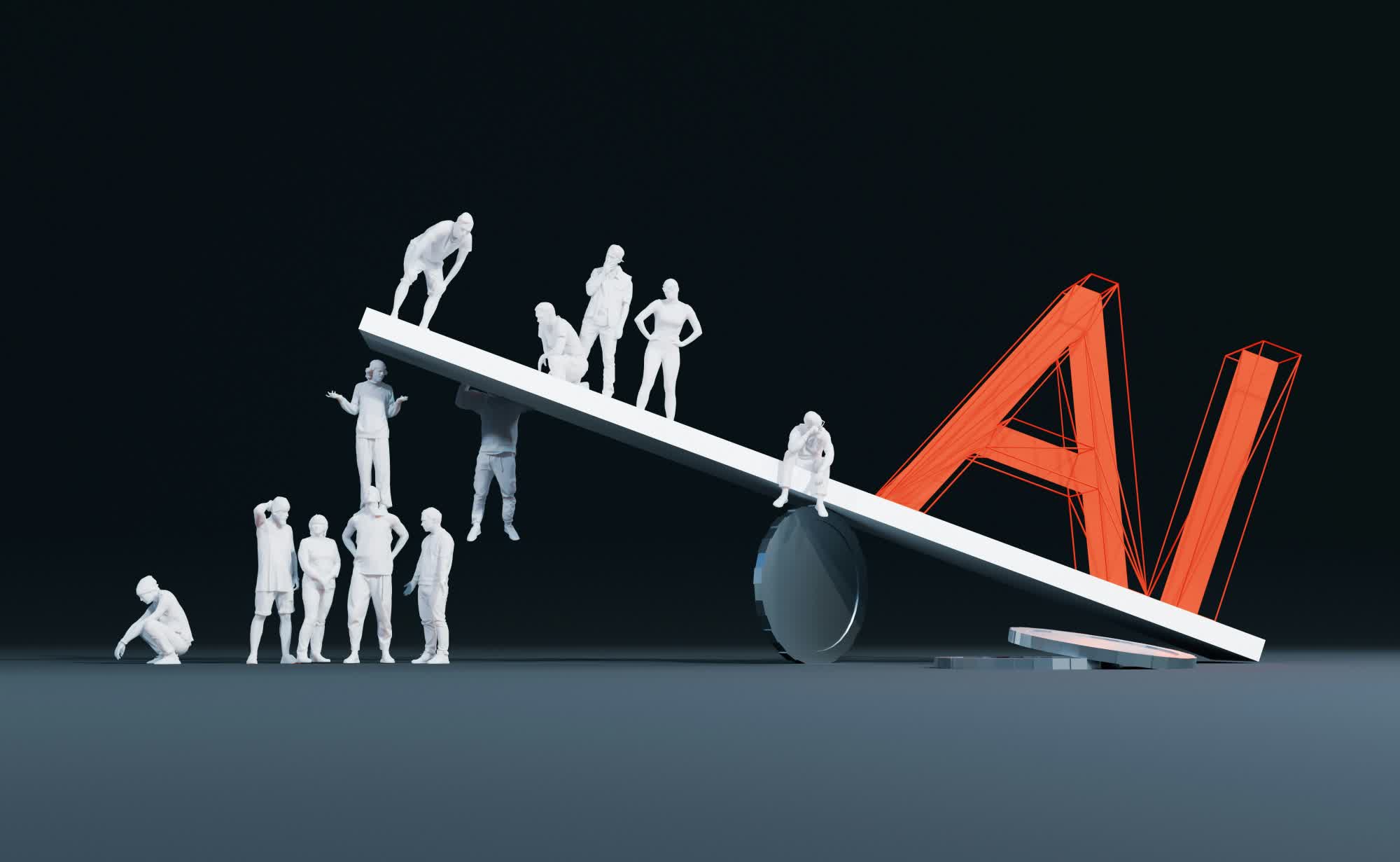
Research from UC Berkeley suggests that AI can increase workloads even when it makes individual tasks faster. The study followed hundreds of workers at a US tech company for eight months and found that employees using AI worked at a faster pace, handled more tasks and worked later into the day. They also had to spend time checking AI-generated output.

Neil Thompson, an innovation scholar at MIT, said companies are unlikely to give workers more free time when AI creates efficiency gains. Instead, those gains often lead to new tasks, more oversight, and higher expectations.

"People assume that 20% less work means four-day weeks," Thompson said. "But new work emerges."

Permalink to story:

 
We just had a training in using AI. Skills and whatnot. Well, you have to write everything the AI needs to do specifically. Well, excuse me, if I have to guide it step by step, I'll do it myself. AI was about figuring stuff on its own.

My take from the training was: besides doing the actual work, you now have to write down what you did so the "skill" can be used later on. Most of the issues are a one time thing.
 
Oh, those victims at OpenAI, Anthropic, Meta, and Google .. let's pray for them, their life is so hard.

But wait .. don't they work there voluntarily???
Don't they get 2x the average salary for the country? If unhappy, they can start flipping burgers at any time, right?

Software development has always involved "long hours, weekend shifts, and constant pressure to meet product deadlines", there's nothing new here. That effort is handsomely compensated.

Of course being at the forefront of development under intense competition makes your job harder, how could it possibly be otherwise? But their undoubtedly hard job makes the job of so many people so much easier and productive.
 
Oh, those victims at OpenAI, Anthropic, Meta, and Google .. let's pray for them, their life is so hard.

But wait .. don't they work there voluntarily???
Don't they get 2x the average salary for the country? If unhappy, they can start flipping burgers at any time, right?

Software development has always involved "long hours, weekend shifts, and constant pressure to meet product deadlines", there's nothing new here. That effort is handsomely compensated.

Of course being at the forefront of development under intense competition makes your job harder, how could it possibly be otherwise? But their undoubtedly hard job makes the job of so many people so much easier and productive.

Except there's no proof of that, now is there?
 
We just had a training in using AI. Skills and whatnot. Well, you have to write everything the AI needs to do specifically. Well, excuse me, if I have to guide it step by step, I'll do it myself. AI was about figuring stuff on its own.

My take from the training was: besides doing the actual work, you now have to write down what you did so the "skill" can be used later on. Most of the issues are a one time thing.
Before AI, it was called documenting. XD
 
Ah yes, another episode of “AI bad...made work harder.”

Then you read it and discover AI is helping people get more done, so companies are...asking them to get more done.

That isn't an AI productivity failure. That's management discovering the accelerator pedal and immediately wondering why anyone would ever use the brake.

If an engineer can accomplish in six hours what previously took ten, there are two possible outcomes...

“Great, go home early.”

Or Silicon Valley's preferred option......

“Excellent. Here's another ten hours of work.”

AI didn't invent the 80 hour workweek. Competitive tech companies managed that particular innovation all by themselves long before Ai.

There are legitimate questions here about burnout, expectations, and whether every productivity gain should automatically become a higher workload. But framing this as evidence that AI somehow doesn't improve productivity is backwards.

Apparently we've reached the stage where a technology increasing output is being cited as evidence that productivity technology doesn't work.

TechSpot is having one hell of a week.

Except there's no proof of that, now is there?

“Except there’s no proof of that.”

There actually is. Quite a bit of it.

Controlled studies have measured significant productivity gains from AI coding tools, Google says AI has increased its engineering capacity, and companies wouldn't be pouring billions into these tools because someone in accounting thought the autocomplete looked neat.

There are also studies showing AI can slow experienced developers down on certain complex, mature codebases. That's worth discussing too.

But that's called mixed evidence, not “no proof.”

And @pnntmp's larger point doesn't even require AI to make every programmer faster at every task. These people voluntarily took exceptionally well compensated jobs at companies engaged in probably the most competitive technology race in decades.

“Working at the bleeding edge is stressful and demanding” isn't exactly the plot twist of 2026.

Apparently the expectation was cutting edge AI research with cutting edge compensation and municipal library working conditions.
 
We just had a training in using AI. Skills and whatnot. Well, you have to write everything the AI needs to do specifically. Well, excuse me, if I have to guide it step by step, I'll do it myself. AI was about figuring stuff on its own.

My take from the training was: besides doing the actual work, you now have to write down what you did so the "skill" can be used later on. Most of the issues are a one time thing.
They are not training you to use AI. They are training AI to replace you. Update your resume.
 
Back