World's first carbon fiber metro train hits the tracks in China

zohaibahd

Posts: 978   +19
Staff
In a nutshell: A sleek new train is breaking ground in eco-friendly transportation. At first glance, it may look like any other modern metro, but China's Cetrovo 1.0 Carbon Star Express is the world's first passenger train made primarily from lightweight carbon fiber. It has officially started carrying commuters this month.
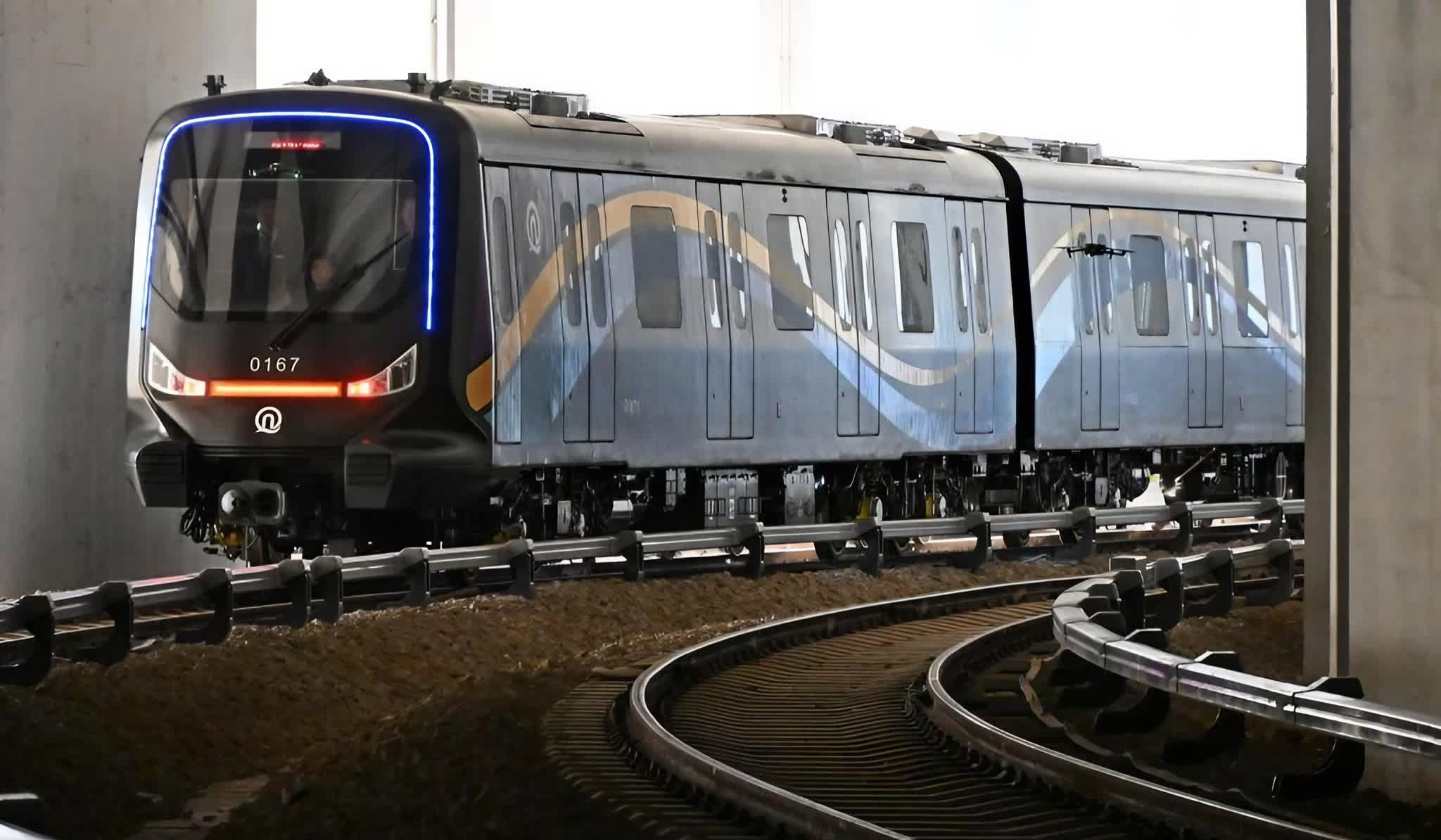
Unlike typical steel subway cars, the Cetrovo's body and frames are constructed from ultra-strong, ultra-light carbon fiber composites – the same material that supercar manufacturers like Ferrari, Lamborghini, and McLaren employ to reduce weight while maintaining structural rigidity. The result is improved acceleration, handling, and fuel efficiency.

This ultralight construction has some of those same benefits, particularly fuel efficiency thanks to reduced weight. The Cetrovo is around 11 percent lighter than others in its class, translating to about seven percent less energy consumption. Chinese media outlet People's Daily Online reports that those savings equate to around 130 tons of CO2 emissions, equal to the air-cleaning benefits of planting 100 acres of trees.
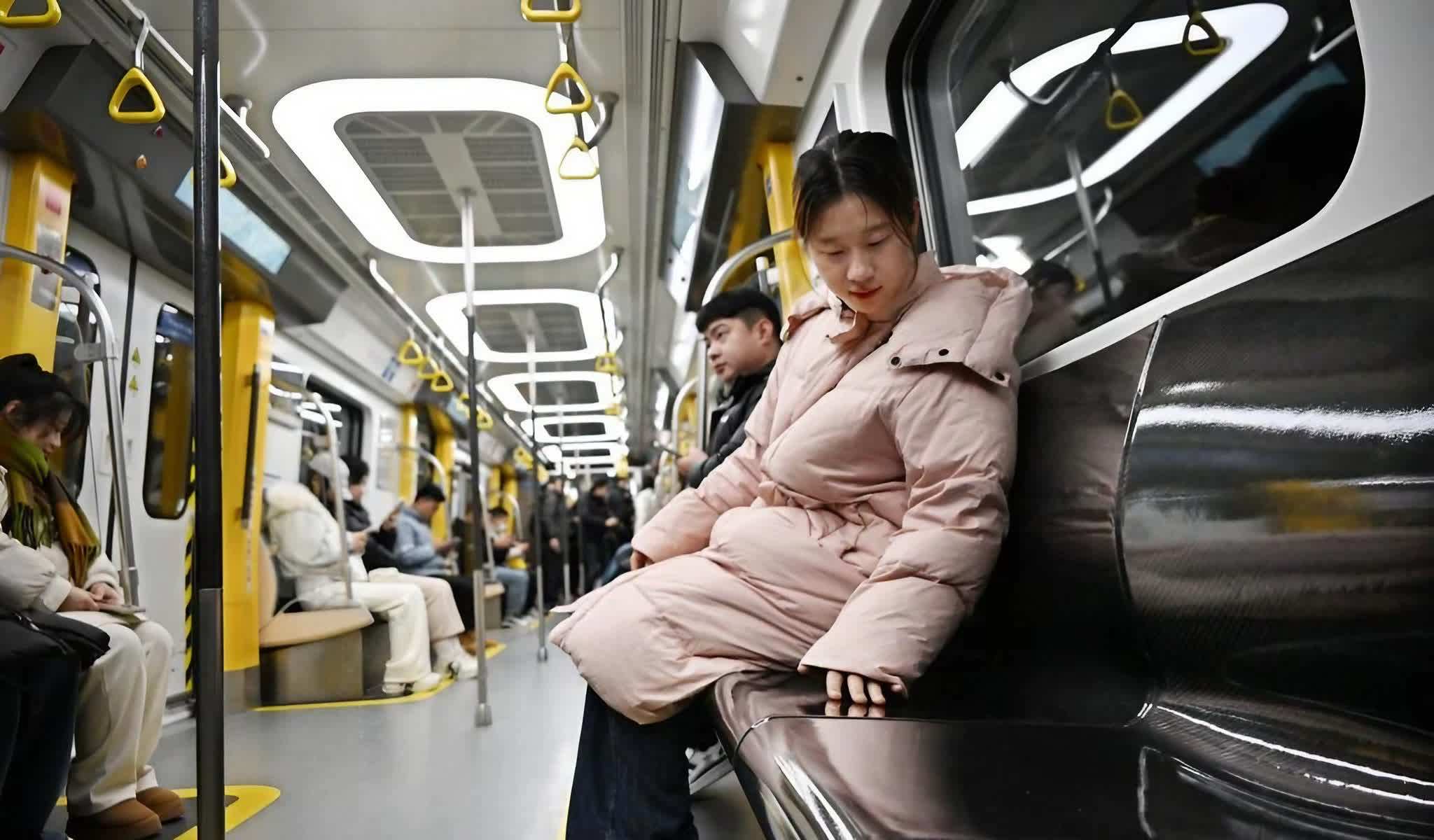
Cetrovo's carbon fiber construction offers benefits beyond being more environmentally friendly. For one, the material brings lower operation and maintenance costs for the train throughout its life cycle. Additionally, since it's five times stronger than steel pound-for-pound while weighing just 25 percent as much – the cars should be more rigid and impact-resistant than steel rail cars. Riders can also expect a smoother, quieter journey thanks to reduced vibration.

It's been a long road bringing this green transportation machine to life. State-owned CRRC Qingdao Sifang, the company behind the Carbon Star Express, began research and development in 2021. The resulting prototypes underwent years of intensive testing and evaluation.
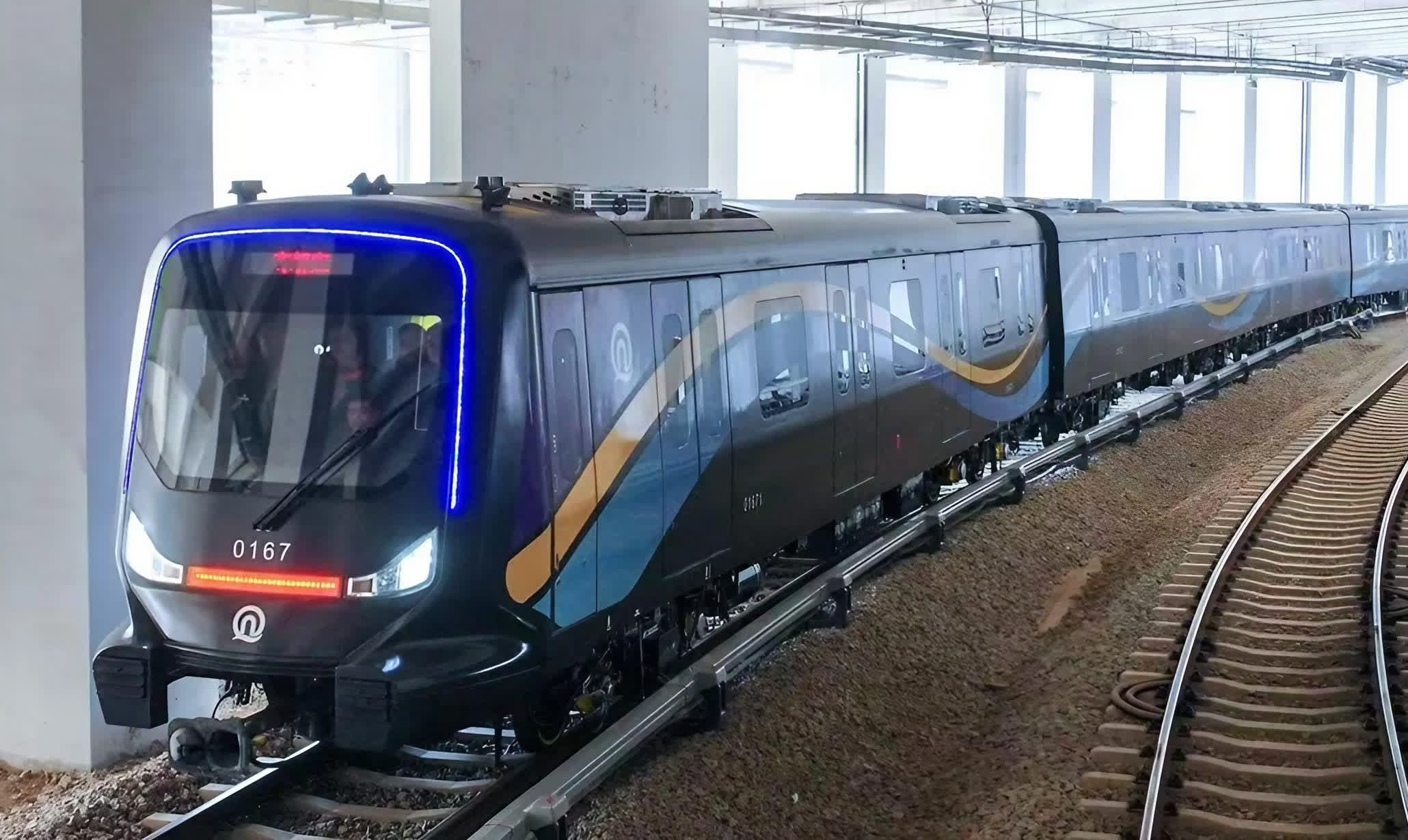
During trials last year, the train demonstrated its potential by cruising at over 87 mph, which blows past the 50 mph average of current Chinese metro systems. It also demonstrated automated operation and high-tech safety features like anti-collision warning and obstacle detection.

The Express is now running autonomously on a 37-mile route with 41 stations called "Line 1" and will serve as the Cetrovo's initial proving grounds in Qingdao. If this groundbreaking train is successful, we could see carbon composites displacing steel as the material of choice for future mass transit projects across China and other nations.

Permalink to story:

 
"unlike typical steel subway cars, the Cetrovo's body and frames are constructed from ultra-strong, ultra-light carbon fiber composites"
"it's five times stronger than steel pound-for-pound while weighing just 25 percent as much "
"The Cetrovo is around 11 percent lighter than others in its class"

I was expecting more of a reduction if the frame and body are using carbon fiber. Working back the math, only 15% of the train is carbon fiber. Normally, 2/3 or 65% of a train's mass is body and frame.
 
The US rail system could be great. I know I would take it to many destinations. Flying ? My name is not cattle.
 
Maybe try reading more on what carbon fiber is troll.
Its a composite construction. Carbon fiber is embedded in plastic achieving properties that far exceed either material on their own. https://en.wikipedia.org/wiki/Carbon-fiber_reinforced_polymer
The material has been proven in practice for a long time. The Boeing 787 makes extensive use of carbon fiber composite materials.
Carbon fiber, you mean plastic. Any accident nobody gets out of that train alive.
One crash and any train car may just bounce off what it hits and is likely far more survivable than almost any other material.
 
The fact that this train is lighter, stronger, and more eco-friendly while also doing 87 mph is impressive, but I’m mostly here for the part about a quieter ride. Finally, a subway ride where you don't feel like you're traveling inside a rock tumbler.
 
Why is it that every eco breakthrough costs a ton more money to build with moderate at best returns. 7% less energy? That's hardly what I would call slashing the energy bill. 33%? That would be slashing, but that's probably how much more this train costs, at least.

One of the issues with all of this is the mistaken belief by the green crowd that because I (we?) don't want tho throw endless money at these projects for meager returns, we don't want cleaner or better energy. Nothing could be further from the truth. I wouldn't buy a curly fluorescent bulb in the late 70's, I didn't buy the 30w equivalent LED's when they came out, I didn't buy the first gen usable LED's when they were $50 a piece and wouldn't dim, and now, my whole house has LED bulbs because the are reasonably priced, and I sacrifice nothing in function.

Let me know when this stuff gets there.
 
Why is it that every eco breakthrough costs a ton more money to build with moderate at best returns.
The article doesn't mention the costs of development, however development of anything costs a lot of money, and comes down in cost the more mainstream it becomes as economies of scale realise efficiencies across the manufacturing processes, this is a widely observed as the 'early adopters tax'. Beyond reworking fabrication, I can't imagine this took much to develop considering large scale manufacturing of carbon-fibre such as planes already exists, and the article does quote the reported reduction in operational and maintenance costs.
 
Back