
Tiny11 Core is great for scenarios where you need to run Windows in a VM or for testing purposes.
This is not a replacement for tiny11. It has a different purpose: to be a quick-and-dirty testbed or development platform. However, it should not need any other components to run most (if not all) of the applications designed for Windows, .NET 3.5 is enabled by default.
To achieve this, some significant changes had to be made, including (but not limited to):
- Windows Component Store (WinSxS)
- Windows Defender
- Recovery Agent
- Microsoft Edge
- Windows Update
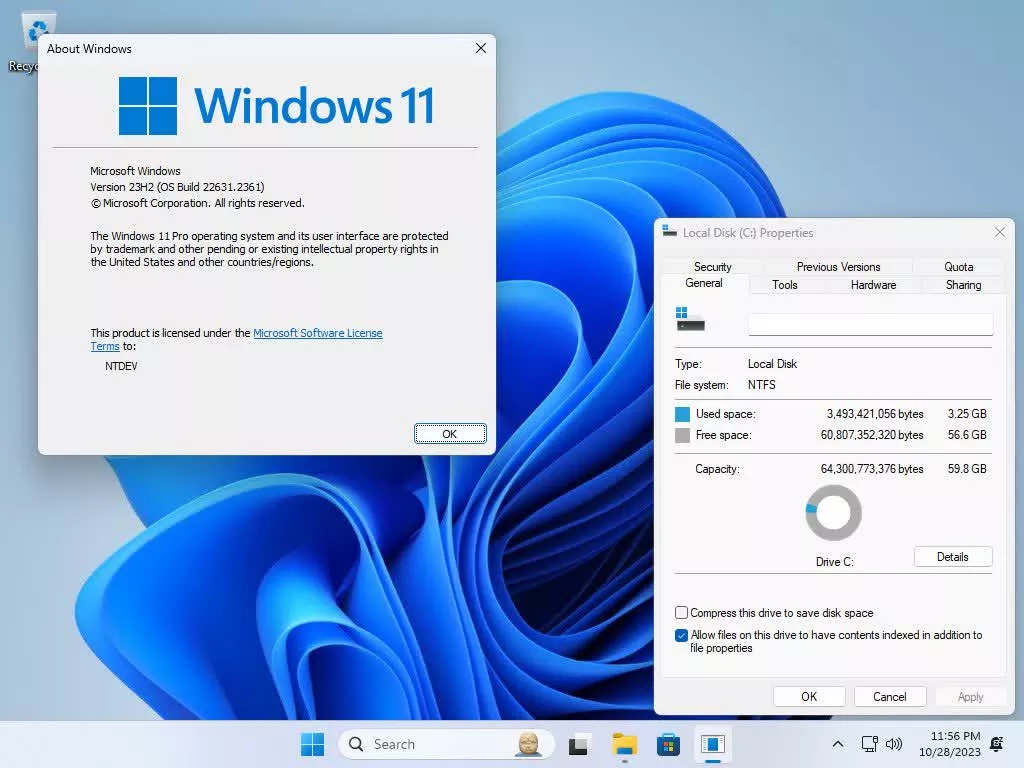
As such, I strongly recommend to exercise increased caution if you're trying to use tiny11 core on production systems, as it has limited security and NO serviceability.
It is not a replacement for tiny11! It has a different purpose: to be a quick-and-dirty testbed or development platform. To install a browser, just use Microsoft Store or Winget. Make sure to have network drivers ready, as tiny11 core removes most of them to achieve a smaller footprint. (however, you shouldn't need any network drivers for VMware or VirtualBox or Hyper-V)
What's New
Based on the latest Windows 11 version 25H2, tiny11 removes the unnecessary bloat and clutter, giving you a purer, more responsive operating system without sacrificing core functionality. It's the perfect choice for systems with limited resources, virtual machines, or for anyone who simply wants a cleaner Windows experience.
It also doesn't require a Microsoft account and it bypasses the system requirements, meaning that you can install it on any PC that supports Windows 10.
Also, if you want something even more lightweight, tiny11 core is more than twice as small as a normal Windows 11 ISO, while sacrificing serviceability. As such, it is more geared towards those who want something for a VM or a testbed environment.