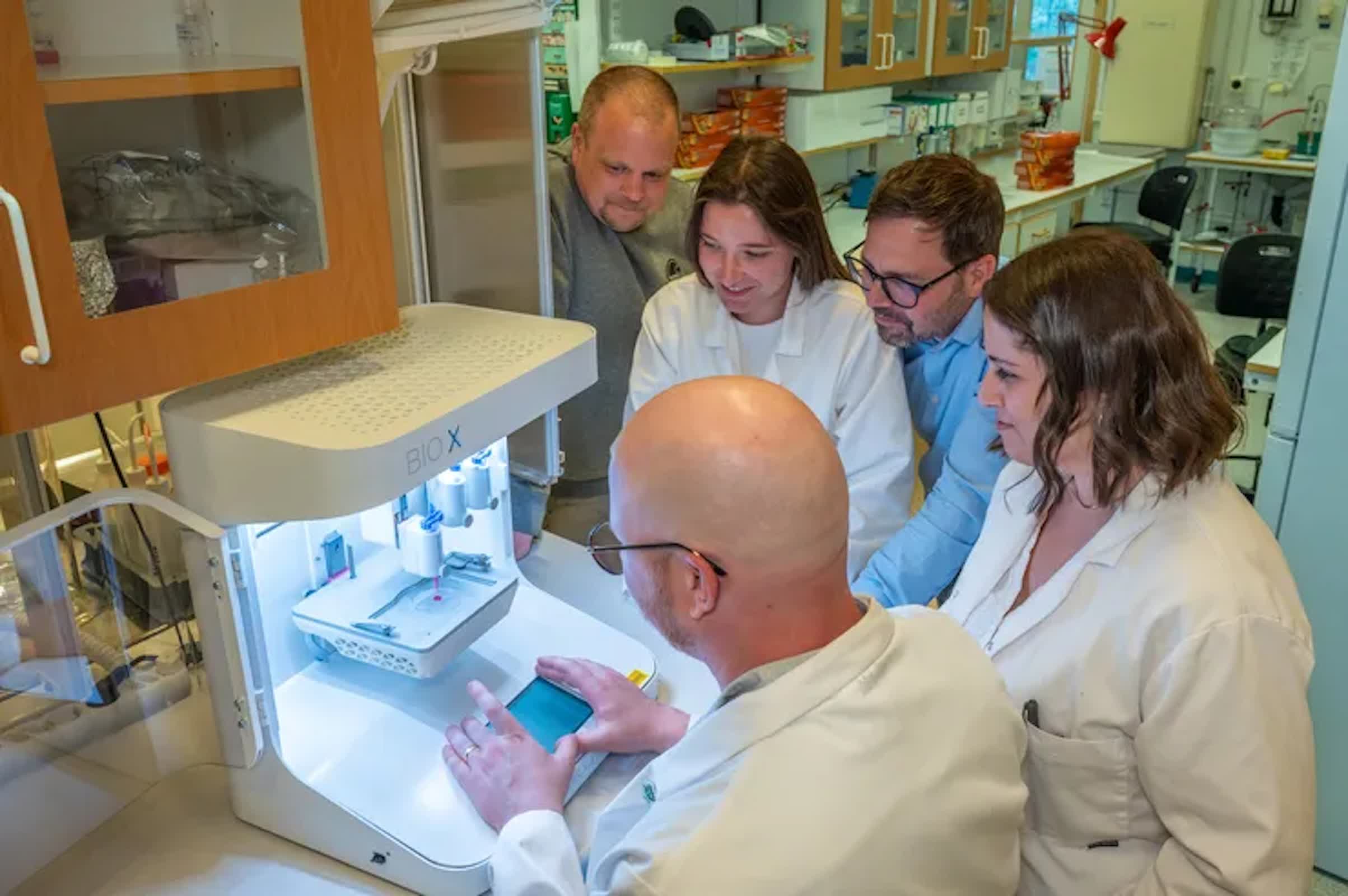
Forward-looking: Swedish scientists are pushing regenerative medicine closer to a breakthrough that could one day allow doctors to rebuild living skin, complete with blood vessels. Building on years of research into tissue engineering, two teams at Linköping University have developed separate bioprinting methods that bring medicine closer to solving one of its most difficult challenges: supplying new tissue with a functioning vascular system. Their findings were recently published in Advanced Healthcare Materials.
Severe burns and traumatic injuries are still treated much as they were decades ago – by transplanting thin layers of the epidermis from a patient's own body. While lifesaving, this approach leaves scars and fails to recreate the dermis, the deeper skin layer that contains nerves, blood vessels, and connective tissue. Without the dermis, transplanted skin lacks many of its natural functions.
"The dermis is so complicated that we can't grow it in a lab. We don't even know what all its components are," said Johan Junker, an associate professor at Linköping University and plastic surgeon who led part of the effort. "That's why we, and many others, think that we could possibly transplant the building blocks and then let the body make the dermis itself."
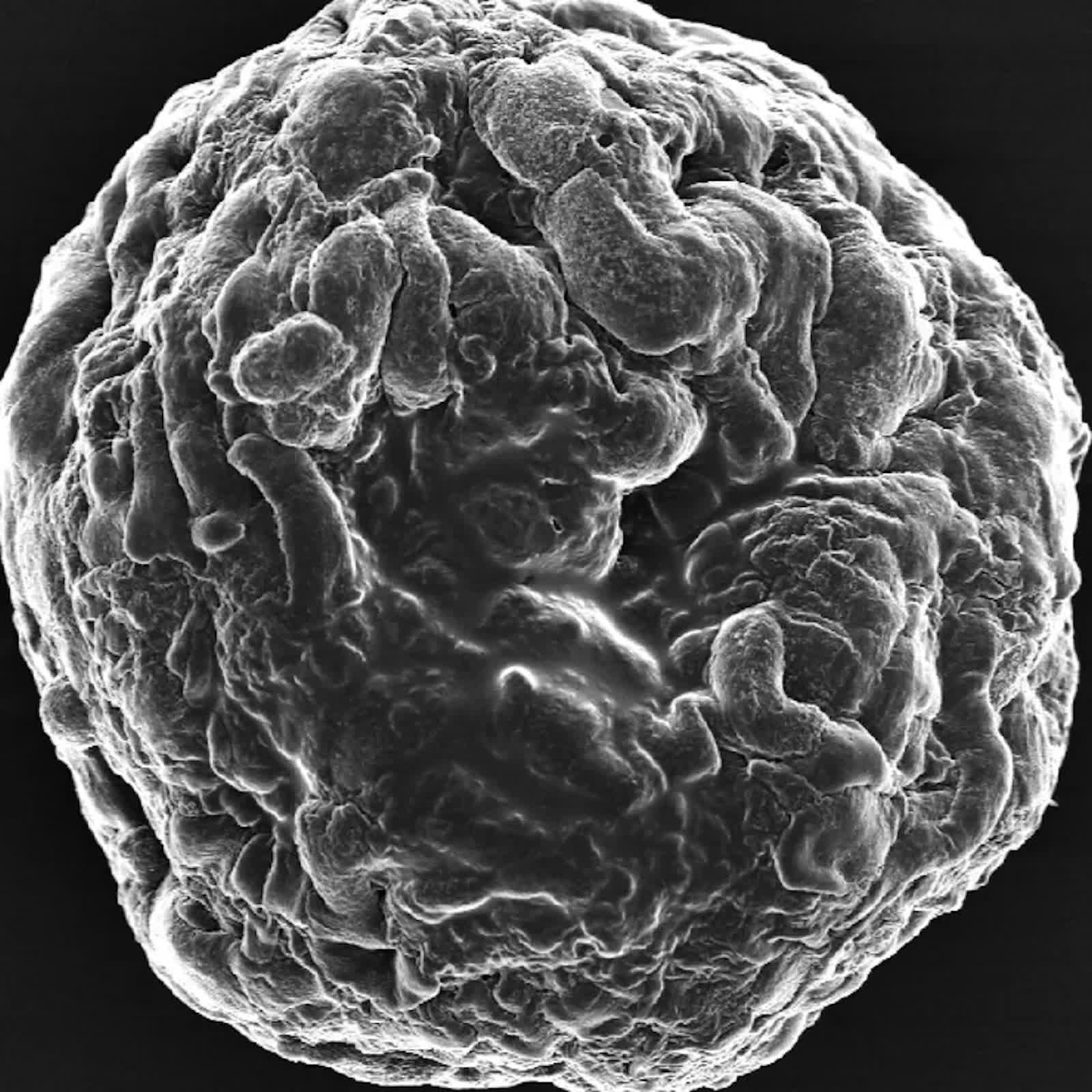
Junker's group designed a specialized bio-ink called μInk that allows skin tissue to be built in layers using a 3D printer.
Fibroblasts – cells that naturally generate dermal proteins like collagen and elastin – were grown on microscopic gelatin beads and embedded in a gel made from hyaluronic acid. Printed three-dimensionally, this mixture produced artificially constructed tissue packed with a high concentration of living cells.
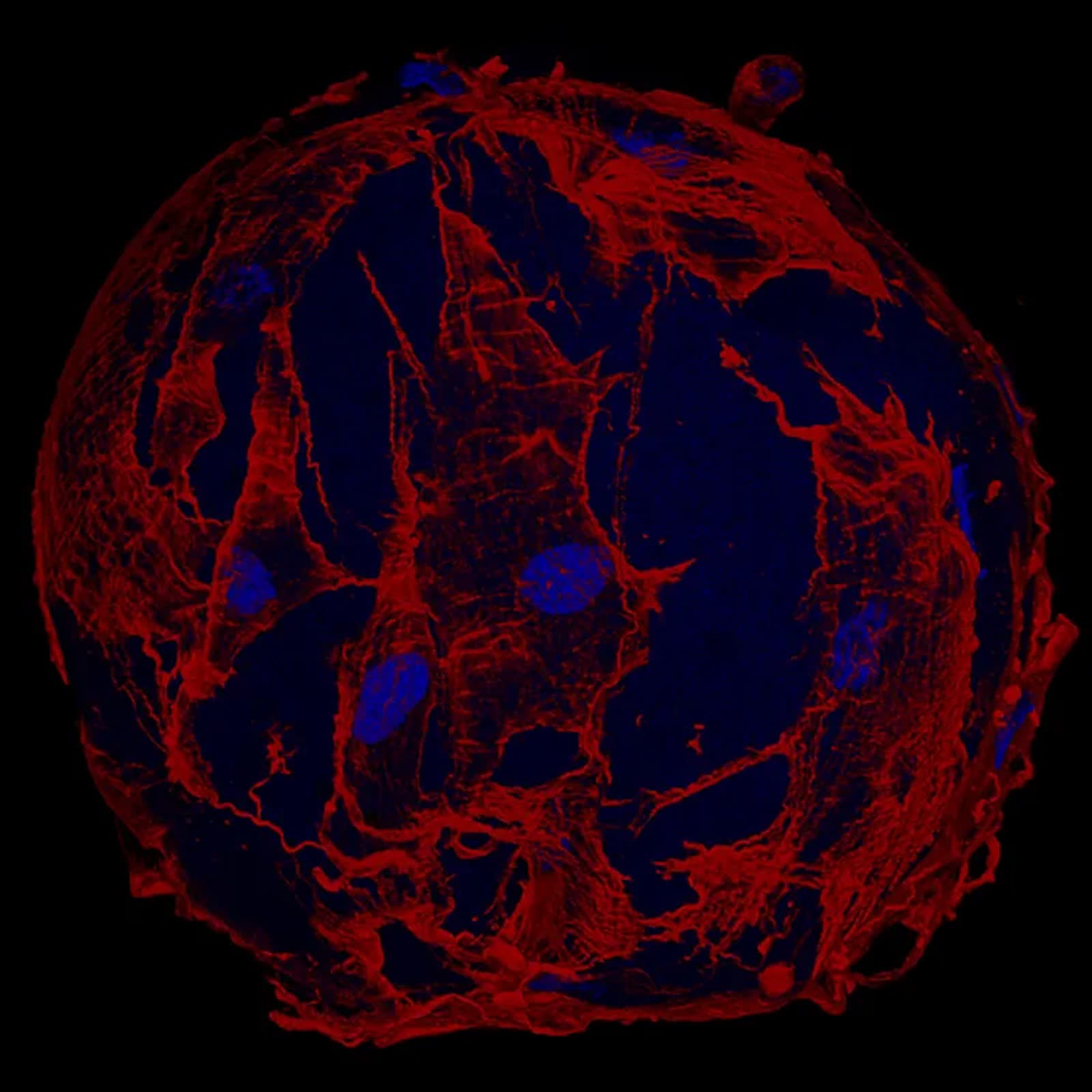
In transplantation experiments on mice, tissue formed with μInk survived, integrated, and began repairing itself by secreting collagen and producing new blood vessels.
The presence of vascular growth was crucial, as it suggested that the grafts were capable of long-term survival inside living systems.

In parallel, the Linköping team also developed a technique they have named REFRESH, or Rerouting of Free-Floating Suspended Hydrogel Filaments. Using hydrogels composed of 98% water, the researchers manufactured elastic threads that could be tied, woven, or even reshaped after being crushed. These threads retained their structure, but critically, they could later be completely broken down by enzymes, leaving open microchannels where they once were.
By designing the placement of these threads, researchers could create hollow conduits within tissue that mimic blood vessels. Once the hydrogel dissolved, fluids could be pumped through the newly formed micro-tubes, permitting blood vessel cells to grow inside them.
Daniel Aili at Linköping University, who worked on the method, explained that this offered a flexible route toward introducing vascular networks into synthetic tissue.

The REFRESH method also demonstrated that the threads could be braided or knotted into complex structures to build intricate 3D networks resembling vascular systems.
In future iterations, the team aims to automate this process, enabling the more efficient construction of dense vessel networks that can supply nutrients to artificial skin or even entire synthetic organs.
The project has involved collaboration with Lars Kölby, a professor of plastic surgery at Sahlgrenska University Hospital. The Erling-Persson Foundation, the European Research Council, the Swedish Research Council, and the Knut and Alice Wallenberg Foundation have supported it.
Despite these advances, significant hurdles remain before the work can be applied in clinical settings. Laboratory tissues are grown under controlled conditions, unlike wounds, which present complex environments where inflammation and bacterial infection pose serious risks. Scientists caution that much more testing will be required to determine how well-engineered grafts perform in real-world healing.
Still, the research marks a step forward in regenerative medicine. By combining the densely cell-packed skin structures created with μInk and the vascular networks engineered through REFRESH, scientists envision a pathway to building functional, vascularized skin grafts for treating patients with severe injuries.