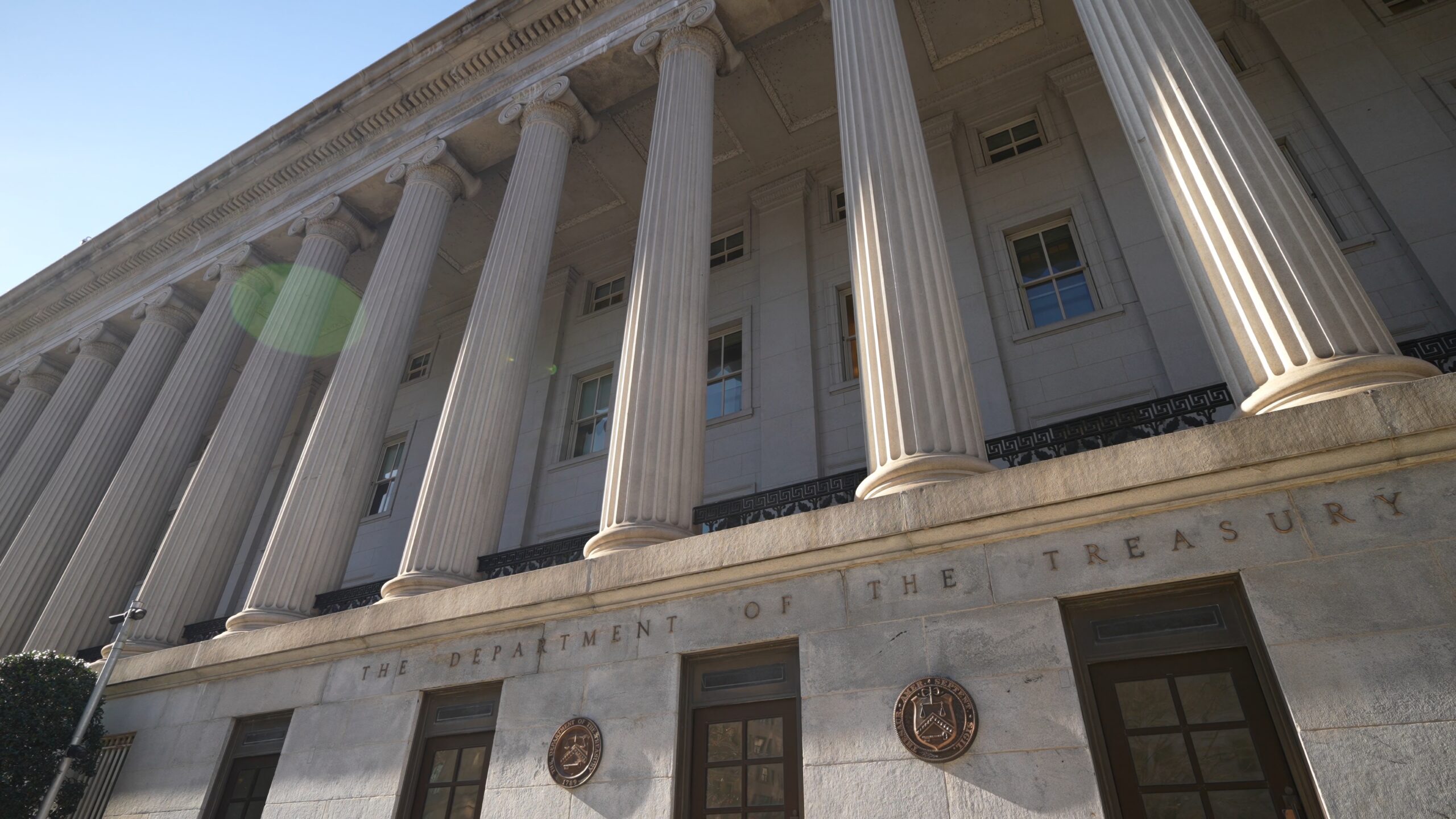
NYC could force Amazon and FedEx to directly employ its delivery drivers

DragonSlayer101

Posts: 1,061   +15
Staff
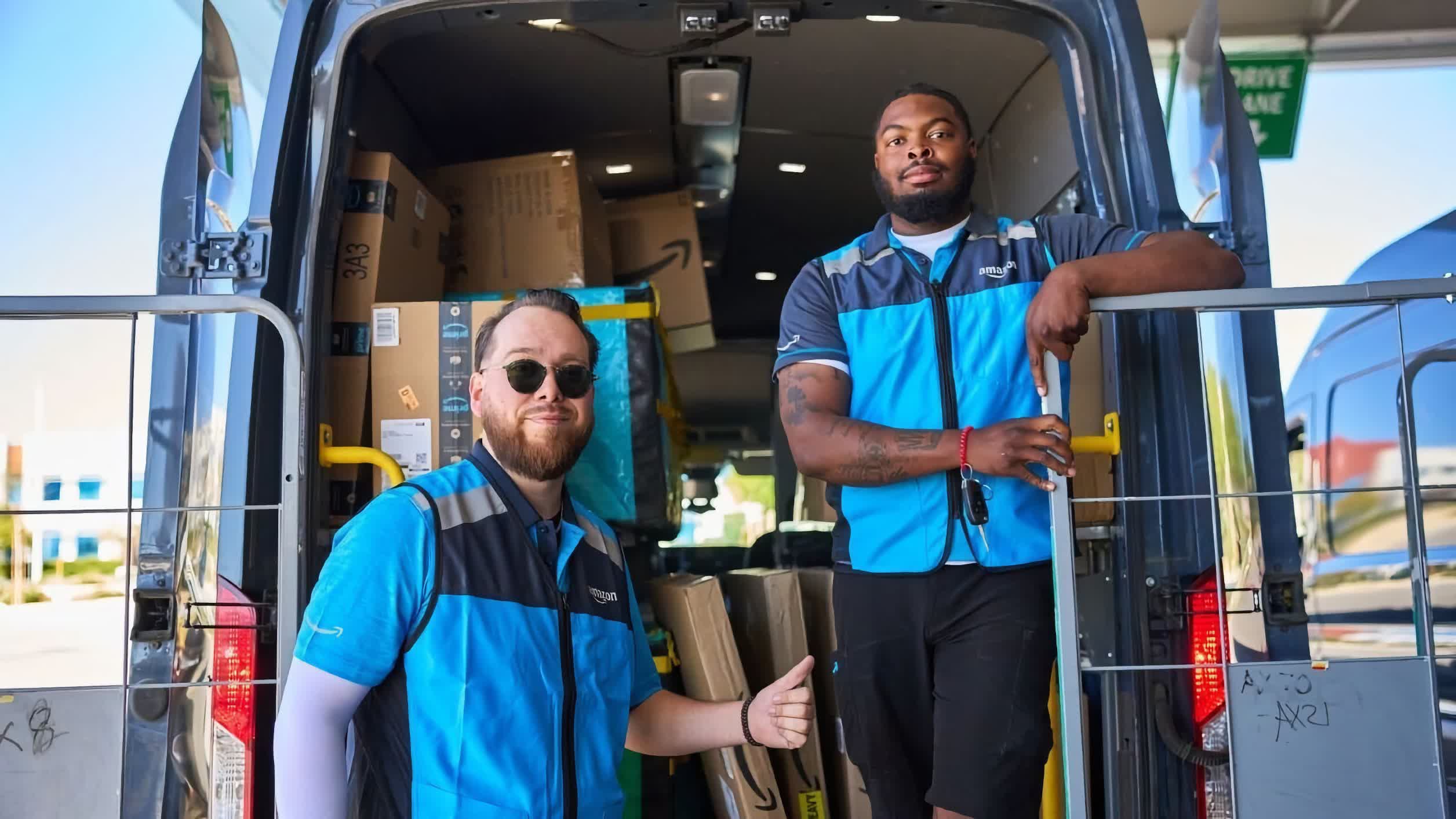
What we know so far: A bill pending before the New York City Council could make the Big Apple the first US city to regulate the last-mile operations of e-commerce and logistics giants, such as Amazon and FedEx. Supported by Mayor Zohran Mamdani, the bill aims to mandate that businesses with door-to-door operations must directly employ their delivery personnel rather than outsourcing the job to third-party contractors.

Proponents of the Delivery Protection Act claim that it will offer major benefits to e-commerce employees working for companies like Amazon, FedEx, DHL, FreshDirect, and DoorDash. These include higher wages, better work hours, safer working conditions, improved healthcare benefits, and more paid time off, especially in cases of injuries while on duty.

Mamdani has thrown his full support behind the proposed legislation, calling it a much-needed measure to hold multibillion-dollar corporations accountable for their actions. In a statement, he said that the legislation will prevent Amazon and other businesses from "insulating themselves from accountability through a system of exploitative subcontracting."

Describing it as "common-sense regulation," Mamdani argued that the bill will protect delivery workers, as well as safeguard the communities where these companies operate. He added that it will also ensure that "the corporations benefiting from workers' labor are responsible for the consequences of their business practices."

The bill is sponsored by Tiffany L. Caban, a councilwoman from Queens, who described it as "the most important municipal labor bill in the country." Caban and other supporters claim that it is also a public safety initiative that will not only benefit delivery workers, but also local communities in the five NYC boroughs.

Talking to The Progressive, Caban's communications director, Matan Arad-Neeman, lamented that the people who are "wearing Amazon vests, driving Amazon vans, and delivering Amazon packages" are treated as dispensable when they get sick or have an accident while working for the company. They are "not (even) allowed to take legally required rest breaks," he added.

As expected, Amazon has vehemently opposed the bill, claiming it will raise delivery costs and disrupt timely deliveries for NYC residents. The company also threatened to move its delivery hubs out of the city if the bill passes, potentially eliminating thousands of jobs and negatively impacting the local economy.

Backed by labor organizations like the Teamsters Union, the proposed legislation has secured supermajority support among NYC council members and drawn more than 30 co-sponsors, mostly from the progressive wing of the Democratic Party. It is expected to be presented for a formal vote as soon as this fall, although an exact date has not yet been officially confirmed.

Permalink to story:

 
Does anyone actually believe Amazon would leave the most densely populated city in the US over this?

I might have some sympathy for Amazon, if they didnt constantly mistreat their workers. They've earned this.

I did find this funny: "They are "not (even) allowed to take legally required rest breaks," he added."

If the law can so flagrantly be ignored, exactly what good is this employment law going to do then?
 
F##k em.. make them move out and lose money.. THEY'RE NOT paying a living wage anyways so they are NOT CONTRIBUTING TO THE ECONOMY IN ANY WAY.
Amazon pays one of the highest rates for warehouse work, which is why they have no shortage of contractors. They pay $18-20 an hour in areas where most warehouses pay $12-15.

"Muh livin waaaaage" is a stupid argument. You keep pumping the numbers up, you dont actually fix anything. Which people pointed out, but were called evil chuds for saying that doubling minimum wage wouldnt fix the issue since costs would rise to absorb the extra income.

We went from $10, to "fight for 15", to "$25 to stay alive" and now they're clamoring for $30 an hour minimums. At no point do these knuckleheads stop and ask why, despite number going up, they are just as poor as they were a decade ago.
 
Does anyone actually believe Amazon would leave the most densely populated city in the US over this?

I might have some sympathy for Amazon, if they didnt constantly mistreat their workers. They've earned this.

I did find this funny: "They are "not (even) allowed to take legally required rest breaks," he added."

If the law can so flagrantly be ignored, exactly what good is this employment law going to do then?

Because they’re contractors not employees they technically work for themselves and aren’t required to take breaks. Basically independent contractors aren’t protected by employment laws which is why Amazon structures it this way.

The only reason why they would leave the city is to prevent the same legislation spreading
 
Amazon pays one of the highest rates for warehouse work, which is why they have no shortage of contractors. They pay $18-20 an hour in areas where most warehouses pay $12-15.

"Muh livin waaaaage" is a stupid argument. You keep pumping the numbers up, you dont actually fix anything. Which people pointed out, but were called evil chuds for saying that doubling minimum wage wouldnt fix the issue since costs would rise to absorb the extra income.

We went from $10, to "fight for 15", to "$25 to stay alive" and now they're clamoring for $30 an hour minimums. At no point do these knuckleheads stop and ask why, despite number going up, they are just as poor as they were a decade ago.
You're right. For that to work, CEOs and other execs would need to take a pay cut rather than raise prices. You can keep paying the guy who does nothing and spends nothing millions of dollars, or you could pay the people below him who do most everything and would spend money in a heartbeat if they had it. I wonder which of these is good for the economy?
 
Nice to see the government in NYC wanting to dictate to companies how they are allowed to do their business. /s

If drivers for these delivery services are having issues with the DSP (Delivery Service Partner) contracts, they need to take it up with the contractors they are working through. Amazon has no say in how these DSP conduct their businesses and no one is forced to work for these DSP contractors, either.

Amazon has every right to be upset about the changes. It would be a massive undertaking for them to construct and build up their business to handle everything that their contracted jobs would no longer be able to do. Amazon prices would go up because they'd have so much more overhead in terms of employees (part & full time), needing to pay more into benefits, more vehicles for delivery use, more into insurance, higher taxes and so on.

Amazon also has the right to pull out of NYC and taking their jobs with them. Just like how a lot of companies have left CA for other states because of tax laws, this wouldn't really be any different for Amazon leaving NYC.

Amazon just has to decide if the pros of leaving NYC outweigh the cons of staying if this law does go through.
 
You're right. For that to work, CEOs and other execs would need to take a pay cut rather than raise prices. You can keep paying the guy who does nothing and spends nothing millions of dollars, or you could pay the people below him who do most everything and would spend money in a heartbeat if they had it. I wonder which of these is good for the economy?
This is also a stupid argument. Amazon's CEO Andy Jassy reported $2.1 million in compensation for FY 2025.

So if you took his ENTIRE compensation, and split it among just the 1000 amazon driver sin New York, each one would get.....$2,100 per year. Or about $80 per check, before tax. If you divided it among ALL amazon drivers, that would be $5.38 per year.

You see this same rhetoric over Wal Mart compensation. People really struggle with multiplying big numbers; people were calling for wal mart to raise pay of all employees by $5, not understanding that this would bankrupt the company within a year unless they jacked up prices. And claiming C suites do nothing.....IDK why people think this. They simultaneously think C suites do nothing but are responsible for all ill in the world. Having your cake and eating it too.
Hah! Totally! It's like people saying millionaires will move if you raise taxes. Uhh, go ahead, they aren't paying taxes already so what's the difference?
ALSO factually incorrect. Millionaires, when factoring in state and local taxes, can pay rates as high as 45%.


And the top 1% of americans pay for 40% of income tax revenue in the US


Billionaires are able to more effectively hide their money, but they also still pay a huge chunk, even with financial wiggling. Meanwhile, the bottom 20% of americans pay almost nothing, and technically pay NEGATIVE once you factor in tax returns and credits.

 
As expected, Amazon has vehemently opposed the bill, claiming it will raise delivery costs and disrupt timely deliveries for NYC residents. The company also threatened to move its delivery hubs out of the city if the bill passes, potentially eliminating thousands of jobs and negatively impacting the local economy.

The more amazon hates it, the better it is for the working class.
 
I've bought zero items from Amazon and will probably keep it up for the rest of my life.
Sure in a sense that's a negative for the employees but I had to draw my line somewhere so...

Furthermore Amazon dot nl has a dismal rep - very unreliable and especially techies recommend looking elsewhere for goodies.
 
Zero chance they will leave the city. Nothing but empty threats. Would be a super bad look if they did too.
Of course they will not leave the city.
What Madmani's madness will do is incentivize a lightning fast switch to drone / robocar / automated dropbox deliveries, which will royally screw the delivery workers and cause massive job losses. Or, it will result in increased delivery prices. Or both.
It will be far worse for everyone, that's for sure.
 
Amazon drivers are mostly colored folks, (and many of them are probably illegal) who have no clue what they're doing, nor do they care...
 
Amazon can just use FedEX, UPS or the postal service. Problem would be solved for Amazon but not the thousands of delivery drivers that would lose their jobs. The customers would just end up paying more and may take longer for them to receive their packages. This is what happens when the government tries to dictate how a company should run their business.

The free market creates, the government just takes.
 
Gee! The teamsters is behind this! Ya think? Think of all the dues they would collect if all of those private contractors, were now in the teamsters union! $$$$ ;) 🤣
 
I think some of you are arguing about whether Amazon is a nice company when the more important question is whether this law actually accomplishes what its supporters think it accomplishes.

@Theinsanegamer is one of the few people here getting to the real issue.

Start with his question about legally required breaks. If workers are already entitled to protections and those protections are being violated, then the first question should be why existing law isn't being enforced. Changing the corporate name above the worker on an organizational chart does not magically create enforcement.

And that gets to what this bill actually does.

NYC isn't merely proposing better breaks, safer vehicles or tougher penalties for labor violations. The proposal creates licensing, safety, training and employment requirements for last-mile facilities, and supporters openly describe the goal as requiring direct employment rather than Amazon's DSP model.

That's a much bigger intervention than “protect the workers.”

Amazon's DSPs are independent businesses that hire and manage employees. So while supposedly protecting jobs, government may also be telling an entire class of small businesses that the service they currently provide can no longer be purchased from them in its existing form.

That deserves more thought than @NumberNine's....“The more Amazon hates it, the better it is for the working class.”

That's not economic analysis. That's choosing a football team.

@Theinsanegamer also made another uncomfortable point about wages.

You cannot measure living standards solely by the nominal number on a paycheck.

If wages increase while housing, food, insurance, utilities and transportation absorb most of the increase, the worker hasn't magically become wealthier. What matters is purchasing power.

That's why going from “fight for $15” to demands for $25 or $30 should at least make someone ask WHY the target keeps moving.

It doesn't mean wages shouldn't rise. It means raising a number and solving affordability are not the same thing.

Then @Notmare gave us the inevitable....Take it from the CEO.

Executive compensation can absolutely be criticized, but the arithmetic still matters.

A $5/hour raise for 100,000 full time employees costs roughly $1.04 BILLION per year before additional employment costs. For 500,000 workers, that's about $5.2 billion annually.

Not once...Every year.

So “take the CEO's money” sounds wonderful until multiplication gets involved.

This is exactly why @Theinsanegamer's response was useful. He actually did the math.

Then we get @Kirby1....“Zero chance they will leave the city.”

Maybe. Maybe not.

But Amazon doesn't have to stop SELLING TO NYC to move DELIVERY INFRASTRUCTURE outside NYC.

Those are completely different things.

Amazon can move facilities outside city boundaries, alter distribution routes, use more third-party carriers, consolidate operations, raise delivery charges, slow delivery promises or automate more of the process.

Probably some combination.

So “zero chance” isn't analysis.

It's fortune telling.

And @pnntmp brought up something else worth taking seriously...automation.

This is called capital labor substitution.

If you increase the total cost of using people for a task, you increase the financial attractiveness of technology that can substitute for them.

Automation doesn't have to become perfect. It only has to become cheaper relative to the human alternative.

A delivery system that isn't economical against $20/hour labor might look much more attractive against $30/hour labor plus benefits, payroll taxes, insurance and regulatory overhead.

No, robots aren't replacing every NYC delivery driver next Tuesday.

But you've changed the ROI calculation. That's how businesses make capital investment decisions.

Then there's @maxxcool7421...“THEY'RE NOT CONTRIBUTING TO THE ECONOMY IN ANY WAY.”

That's a fascinating new theory.

Workers receive wages.

DSPs receive revenue.

Vehicles are purchased.

Fuel is purchased.

Insurance is purchased.

Warehouses are leased.

Maintenance is performed.

Goods are moved.

Consumers receive products.

But apparently all of that economic activity somehow adds up to zero economic activity.

Economists will be fascinated.

You can argue Amazon should contribute MORE.

You cannot seriously argue it contributes nothing.

@GABulldog also raises a legitimate point...carrier substitution.

UPS exists.

FedEx exists.

USPS exists.

Regional carriers exist.

Amazon's own network exists.

They're not infinitely interchangeable, but that's the point: businesses respond to regulation by changing the combination of inputs they use.

There's also another layer almost nobody is discussing.

We already have a legal framework for determining whether Amazon exercises enough control over DSP workers to bear employer responsibilities, joint employer law.

The NLRB has already pursued Amazon in a DSP dispute on exactly that issue.

So if Amazon exercises sufficient control to legally qualify as a joint employer, then establish that standard and enforce it.

That's a much more interesting discussion than simply legislating the intermediary business model out of existence.

And yes, @p51d007, the Teamsters are heavily involved.

They openly support the bill and openly want the DSP structure eliminated.

There's nothing mysterious about that. Unions advocate for structures they believe benefit labor.

But let's stop pretending anyone here is operating without incentives.

Amazon has incentives.

DSP owners have incentives.

Workers have incentives.

Consumers have incentives.

The Teamsters have incentives.

Politicians have incentives.

That's precisely why legislation should be judged by incentives, enforcement, substitution effects and unintended consequences rather than deciding who the villain is first.

And that's why I appreciated @Theinsanegamer's posts.

He's asking the questions people SHOULD be asking...

If existing worker protections aren't being enforced, why will another law automatically fix enforcement?

If wages rise but purchasing power remains strained, what costs are driving the affordability problem?

If executive compensation is supposed to fund massive permanent wage increases, does the arithmetic work?

If regulation substantially raises the cost of human delivery, how will companies respond?

Those questions matter.

“Amazon bad, therefore law good” doesn't.

Neither does “Amazon won't move anything because I said so.”

If workers are being abused, enforce the law.

If DSPs violate wage or safety rules, hammer them.

If Amazon meets the legal standard for joint employer responsibility, hold Amazon responsible.

But if government is going to effectively eliminate an entire subcontracting structure, perhaps we should perform slightly more analysis than:

Amazon bad.
Union good.
Law good.

Economic systems have this annoying habit of responding to incentives whether the comment section believes in them or not.

For anyone whose head still doesn't hurt...

NYC Council – Intro 518:
https://legistar.council.nyc.gov/LegislationDetail.aspx?ID=7879110

Teamsters – Delivery Protection Act:
https://teamster.org/2026/04/amazon...livery-protection-act-in-nyc-council-hearing/

Amazon DSP program:
https://www.aboutamazon.com/news/policy-news-views/amazon-dsp-program-update

NLRB/Amazon joint-employer dispute:
https://teamster.org/2024/10/nlrb-doubles-down-amazon-is-a-joint-employer/

There. Now we can disagree using actual economics instead of interpretive dance.
 
I think some of you are arguing about whether Amazon is a nice company when the more important question is whether this law actually accomplishes what its supporters think it accomplishes.

@Theinsanegamer is one of the few people here getting to the real issue.

Start with his question about legally required breaks. If workers are already entitled to protections and those protections are being violated, then the first question should be why existing law isn't being enforced. Changing the corporate name above the worker on an organizational chart does not magically create enforcement.

And that gets to what this bill actually does.

NYC isn't merely proposing better breaks, safer vehicles or tougher penalties for labor violations. The proposal creates licensing, safety, training and employment requirements for last-mile facilities, and supporters openly describe the goal as requiring direct employment rather than Amazon's DSP model.

That's a much bigger intervention than “protect the workers.”

Amazon's DSPs are independent businesses that hire and manage employees. So while supposedly protecting jobs, government may also be telling an entire class of small businesses that the service they currently provide can no longer be purchased from them in its existing form.

That deserves more thought than @NumberNine's....“The more Amazon hates it, the better it is for the working class.”

That's not economic analysis. That's choosing a football team.

@Theinsanegamer also made another uncomfortable point about wages.

You cannot measure living standards solely by the nominal number on a paycheck.

If wages increase while housing, food, insurance, utilities and transportation absorb most of the increase, the worker hasn't magically become wealthier. What matters is purchasing power.

That's why going from “fight for $15” to demands for $25 or $30 should at least make someone ask WHY the target keeps moving.

It doesn't mean wages shouldn't rise. It means raising a number and solving affordability are not the same thing.

Then @Notmare gave us the inevitable....Take it from the CEO.

Executive compensation can absolutely be criticized, but the arithmetic still matters.

A $5/hour raise for 100,000 full time employees costs roughly $1.04 BILLION per year before additional employment costs. For 500,000 workers, that's about $5.2 billion annually.

Not once...Every year.

So “take the CEO's money” sounds wonderful until multiplication gets involved.

This is exactly why @Theinsanegamer's response was useful. He actually did the math.

Then we get @Kirby1....“Zero chance they will leave the city.”

Maybe. Maybe not.

But Amazon doesn't have to stop SELLING TO NYC to move DELIVERY INFRASTRUCTURE outside NYC.

Those are completely different things.

Amazon can move facilities outside city boundaries, alter distribution routes, use more third-party carriers, consolidate operations, raise delivery charges, slow delivery promises or automate more of the process.

Probably some combination.

So “zero chance” isn't analysis.

It's fortune telling.

And @pnntmp brought up something else worth taking seriously...automation.

This is called capital labor substitution.

If you increase the total cost of using people for a task, you increase the financial attractiveness of technology that can substitute for them.

Automation doesn't have to become perfect. It only has to become cheaper relative to the human alternative.

A delivery system that isn't economical against $20/hour labor might look much more attractive against $30/hour labor plus benefits, payroll taxes, insurance and regulatory overhead.

No, robots aren't replacing every NYC delivery driver next Tuesday.

But you've changed the ROI calculation. That's how businesses make capital investment decisions.

Then there's @maxxcool7421...“THEY'RE NOT CONTRIBUTING TO THE ECONOMY IN ANY WAY.”

That's a fascinating new theory.

Workers receive wages.

DSPs receive revenue.

Vehicles are purchased.

Fuel is purchased.

Insurance is purchased.

Warehouses are leased.

Maintenance is performed.

Goods are moved.

Consumers receive products.

But apparently all of that economic activity somehow adds up to zero economic activity.

Economists will be fascinated.

You can argue Amazon should contribute MORE.

You cannot seriously argue it contributes nothing.

@GABulldog also raises a legitimate point...carrier substitution.

UPS exists.

FedEx exists.

USPS exists.

Regional carriers exist.

Amazon's own network exists.

They're not infinitely interchangeable, but that's the point: businesses respond to regulation by changing the combination of inputs they use.

There's also another layer almost nobody is discussing.

We already have a legal framework for determining whether Amazon exercises enough control over DSP workers to bear employer responsibilities, joint employer law.

The NLRB has already pursued Amazon in a DSP dispute on exactly that issue.

So if Amazon exercises sufficient control to legally qualify as a joint employer, then establish that standard and enforce it.

That's a much more interesting discussion than simply legislating the intermediary business model out of existence.

And yes, @p51d007, the Teamsters are heavily involved.

They openly support the bill and openly want the DSP structure eliminated.

There's nothing mysterious about that. Unions advocate for structures they believe benefit labor.

But let's stop pretending anyone here is operating without incentives.

Amazon has incentives.

DSP owners have incentives.

Workers have incentives.

Consumers have incentives.

The Teamsters have incentives.

Politicians have incentives.

That's precisely why legislation should be judged by incentives, enforcement, substitution effects and unintended consequences rather than deciding who the villain is first.

And that's why I appreciated @Theinsanegamer's posts.

He's asking the questions people SHOULD be asking...

If existing worker protections aren't being enforced, why will another law automatically fix enforcement?

If wages rise but purchasing power remains strained, what costs are driving the affordability problem?

If executive compensation is supposed to fund massive permanent wage increases, does the arithmetic work?

If regulation substantially raises the cost of human delivery, how will companies respond?

Those questions matter.

“Amazon bad, therefore law good” doesn't.

Neither does “Amazon won't move anything because I said so.”

If workers are being abused, enforce the law.

If DSPs violate wage or safety rules, hammer them.

If Amazon meets the legal standard for joint employer responsibility, hold Amazon responsible.

But if government is going to effectively eliminate an entire subcontracting structure, perhaps we should perform slightly more analysis than:

Amazon bad.
Union good.
Law good.

Economic systems have this annoying habit of responding to incentives whether the comment section believes in them or not.

For anyone whose head still doesn't hurt...

NYC Council – Intro 518:
https://legistar.council.nyc.gov/LegislationDetail.aspx?ID=7879110

Teamsters – Delivery Protection Act:
https://teamster.org/2026/04/amazon...livery-protection-act-in-nyc-council-hearing/

Amazon DSP program:
https://www.aboutamazon.com/news/policy-news-views/amazon-dsp-program-update

NLRB/Amazon joint-employer dispute:
https://teamster.org/2024/10/nlrb-doubles-down-amazon-is-a-joint-employer/

There. Now we can disagree using actual economics instead of interpretive dance.
Mega-kill!

You're never supposed to go full...
 
Amazon can just use FedEX, UPS or the postal service. Problem would be solved for Amazon but not the thousands of delivery drivers that would lose their jobs. The customers would just end up paying more and may take longer for them to receive their packages. This is what happens when the government tries to dictate how a company should run their business.

The free market creates, the government just takes.
The free market would move the delivery drivers to new employers who provide the same service and employment. Jobs don't disapear, the need for delivery stays the same, the employer is different.
 
The free market would move the delivery drivers to new employers who provide the same service and employment. Jobs don't disapear, the need for delivery stays the same, the employer is different.
You're missing the whole point. People chose to do it because they want independence and be their own boss. Like what California did with AB5, NYC is also doing the same. That's not free market, that's the government taking away your freedom of choice to make money in the name of social justice.
 
Back