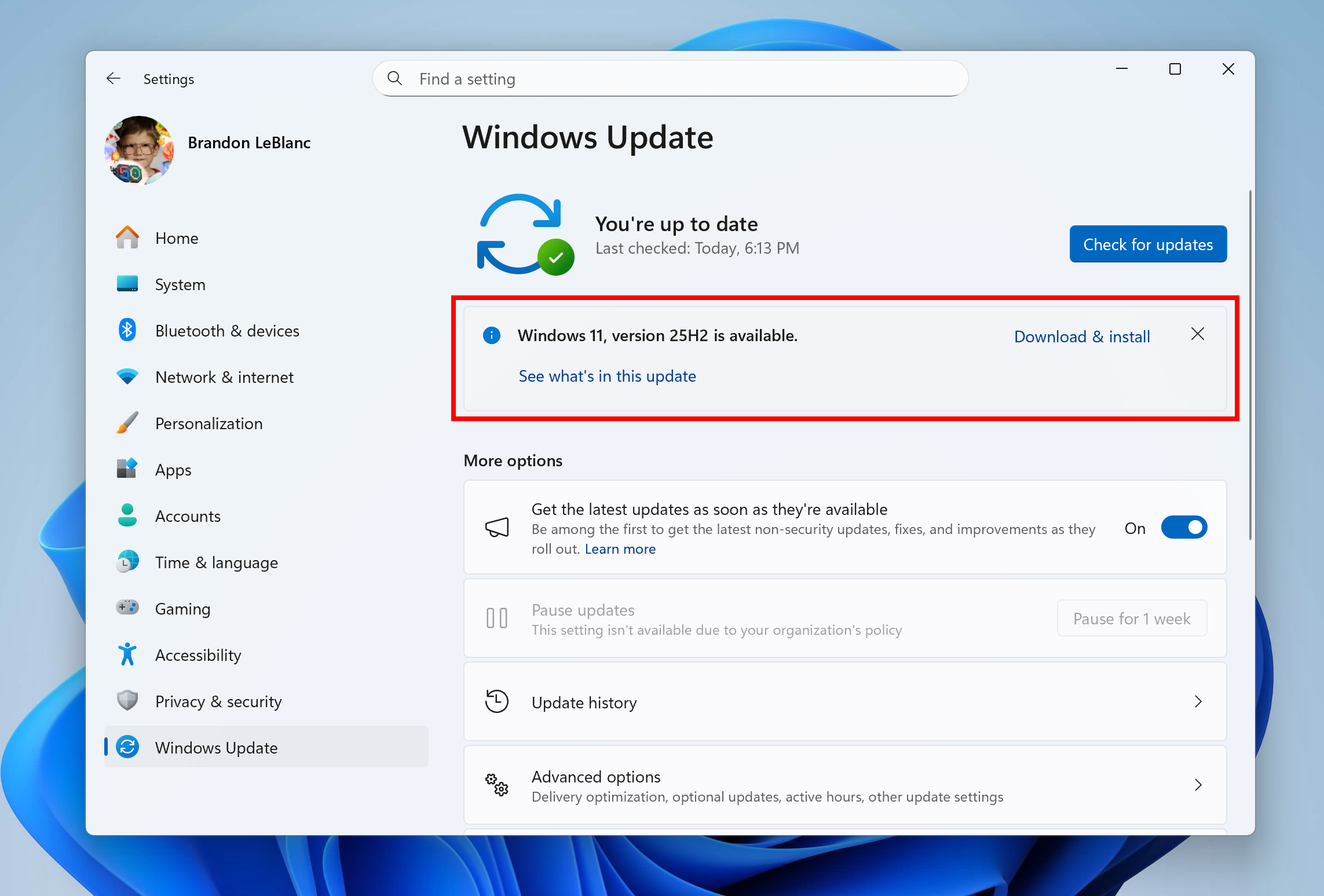
What just happened? Microsoft is moving ahead with its annual Windows 11 upgrade cycle, with version 25H2 ISO installation media now available for download. This release marks the final testing stage before the update reaches general availability, likely in October, putting testers and IT professionals at the forefront for installation and clean system setups.
Testers can now obtain the official 25H2 ISO (around 7GB in size, depending on the selected language) from the Windows Insider download page. This file offers both in-place upgrades using Windows' mounting features or full reinstalls with tools such as Rufus, granting users and administrators more control over deployment timing and installation conditions. Microsoft had originally delayed the release of the ISO by a week, though no specific reason was made public.
The underlying structure of the update differs from some earlier Windows rollouts. Instead of distributing a completely new system build, Microsoft delivers 25H2 as what it calls an "enablement package." This method overlays the new features and updates directly on top of the 24H2 base, minimizing download size and install time, while leaving core system files unchanged. This approach continues patterns established with earlier Windows 11 annual releases, such as 22H2 and 23H2.
From a technical standpoint, Windows 11 25H2 does not introduce sweeping new features. Microsoft says that its focus remains on stability and shared servicing between 24H2 and 25H2, meaning any improvements or security updates developed are extended to both versions.

The biggest changes are under the hood for enterprise and education environments: administrators have gained the ability to uninstall certain pre-installed Microsoft Store apps, simplifying business and school device setups. Additionally, deprecated software components such as PowerShell 2.0 and the legacy Windows Management Instrumentation command line have been removed, continuing Microsoft's shift away from older system tools.
Support timelines also change with the rollout. Once 25H2 becomes generally available, the support cycle resets – 24 months for Home and Pro users, and 36 months for Enterprise and Education users. Devices still running 24H2, which was finalized earlier in the year, are already a year into their respective cycles, making early adoption of 25H2 sensible for those wanting the longest window of updates and security fixes.
Although Microsoft hasn't confirmed a launch date, past release tradition suggests an October general rollout, with the update delivered via Windows Update as a simple enablement package. Both 24H2 and 25H2 use the same system foundation and updates, so apps and games will work as usual after the upgrade.