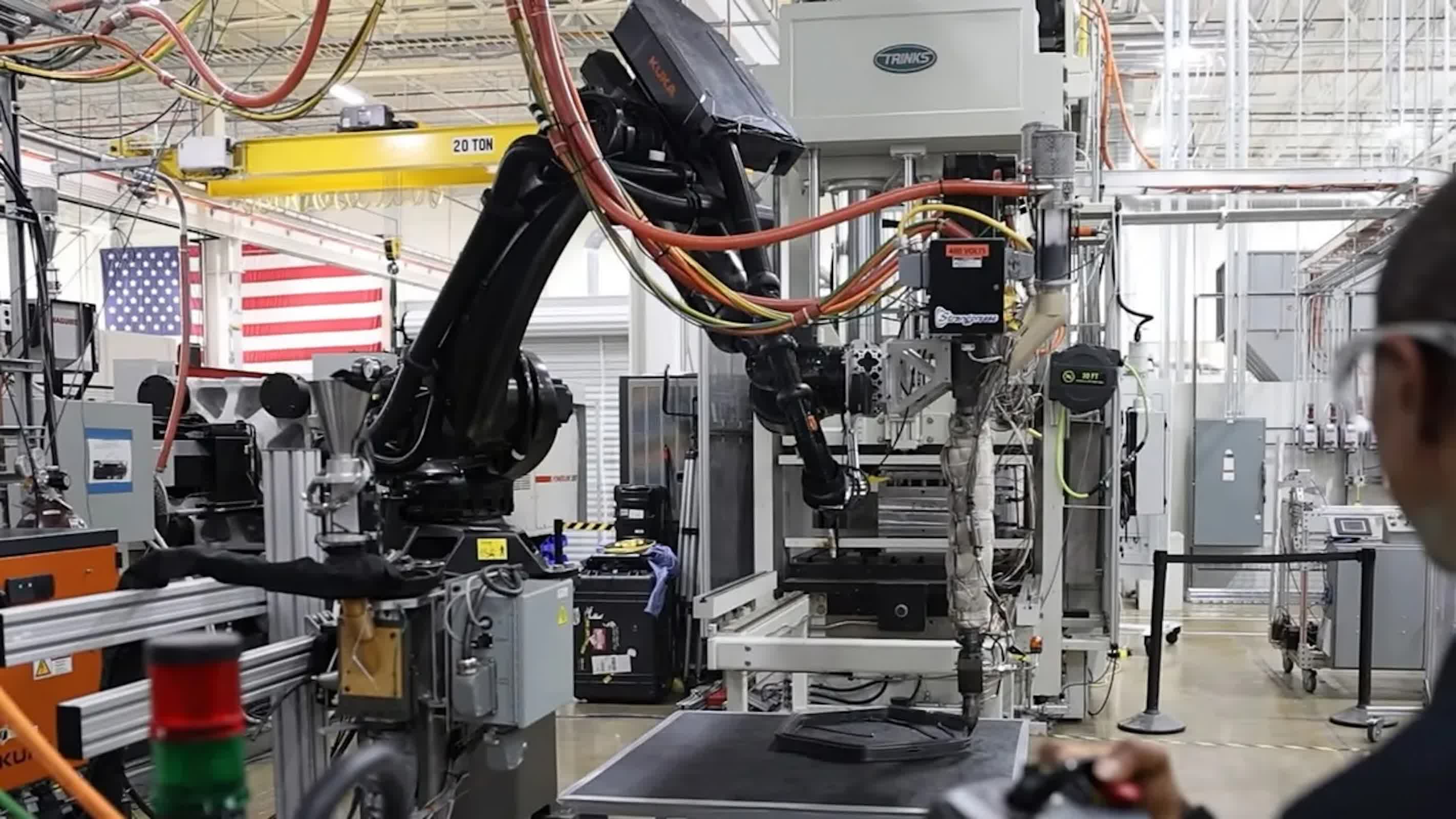
The takeaway: With features such as multi-material printing, real-time monitoring, and adjustable build sizes – from small, intricate components to very large industrial parts – Oak Ridge National Laboratory's new system represents a major advance in additive manufacturing. The lab continues to test new combinations of extruders, materials, and software upgrades, aiming to push the limits of what can be produced with today's 3D printers.
Oak Ridge National Laboratory has developed a next-generation 3D printing system that aims to solve some of the persistent problems faced by industrial manufacturers working with large and complex designs. The highlight of this new technology is its multiplexed nozzle approach, which uses several smaller extruders working together instead of relying on one oversized, heavy extruder.
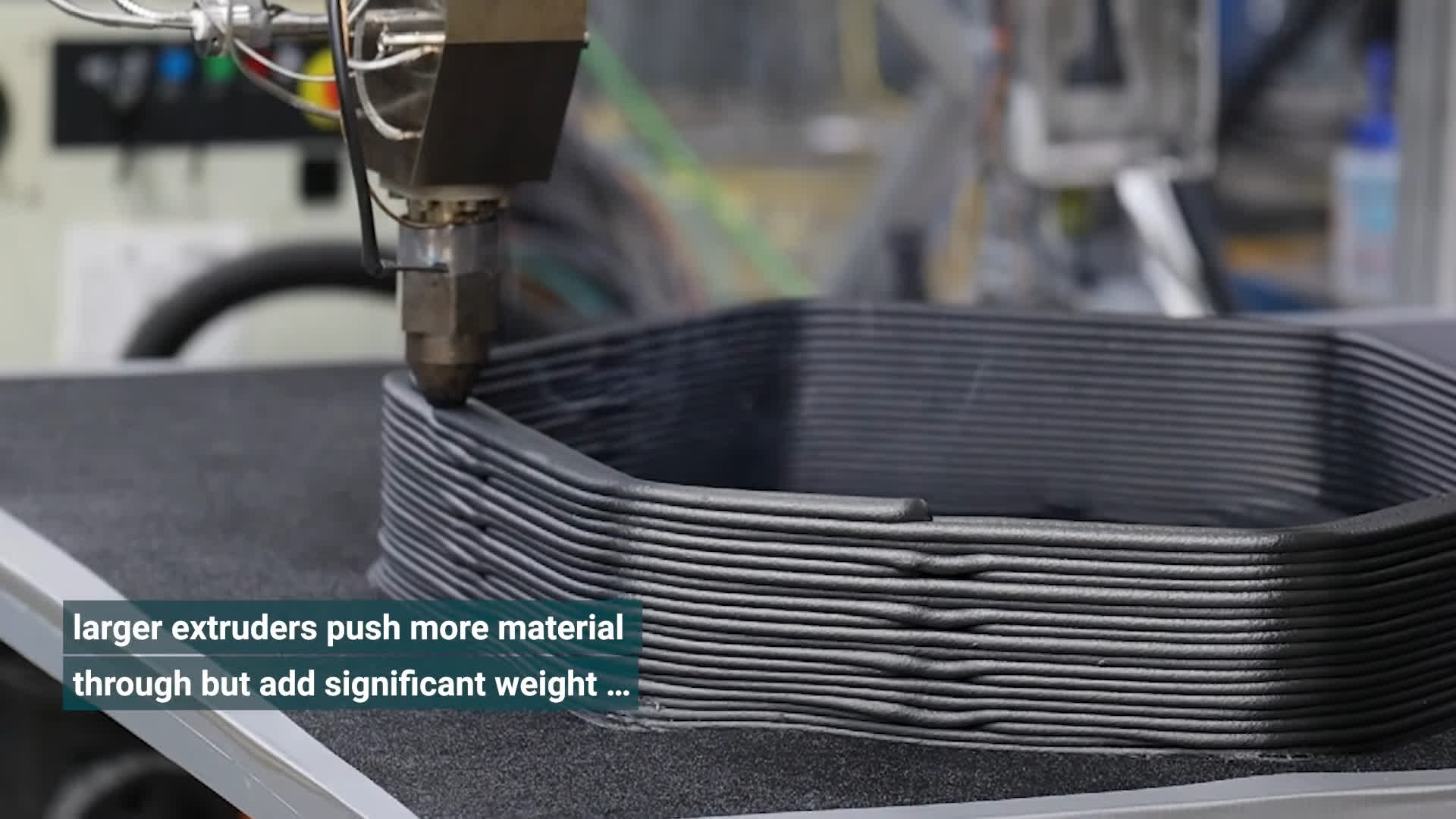
This method increases printing speed and throughput without requiring costly, heavy-duty robotic arms or gantry systems to support massive extruders.
Older large-scale 3D printers often fail to provide accurate flow control, especially at slow speeds or when building detailed parts. The Oak Ridge system solves this by allowing operators to switch off some extruders to slow down the process for fine detail work, or turn them all on for high-speed, large-part fabrication.
The multiplexed nozzle system also lets users print with more than one material at the same time, making it possible to create highly customized objects with unique properties – such as beads that have ribbon shapes or structures with different materials layered in "core and sheath" patterns.
Since each extruder is smaller and lighter, the overall weight is reduced and machine wear is minimized. Operators can add more extruders to the nozzle as needed, enabling extremely high throughput rates for larger projects without sacrificing accuracy.
The lab's research team built a software platform that keeps track of the material settings and parameters for hundreds of polymers, allowing fast and reliable switching between different material types without the need for frequent recalibration. During printing, real-time laser monitoring ensures that the extruded beads stay accurate, so the finished part matches design specs every time.
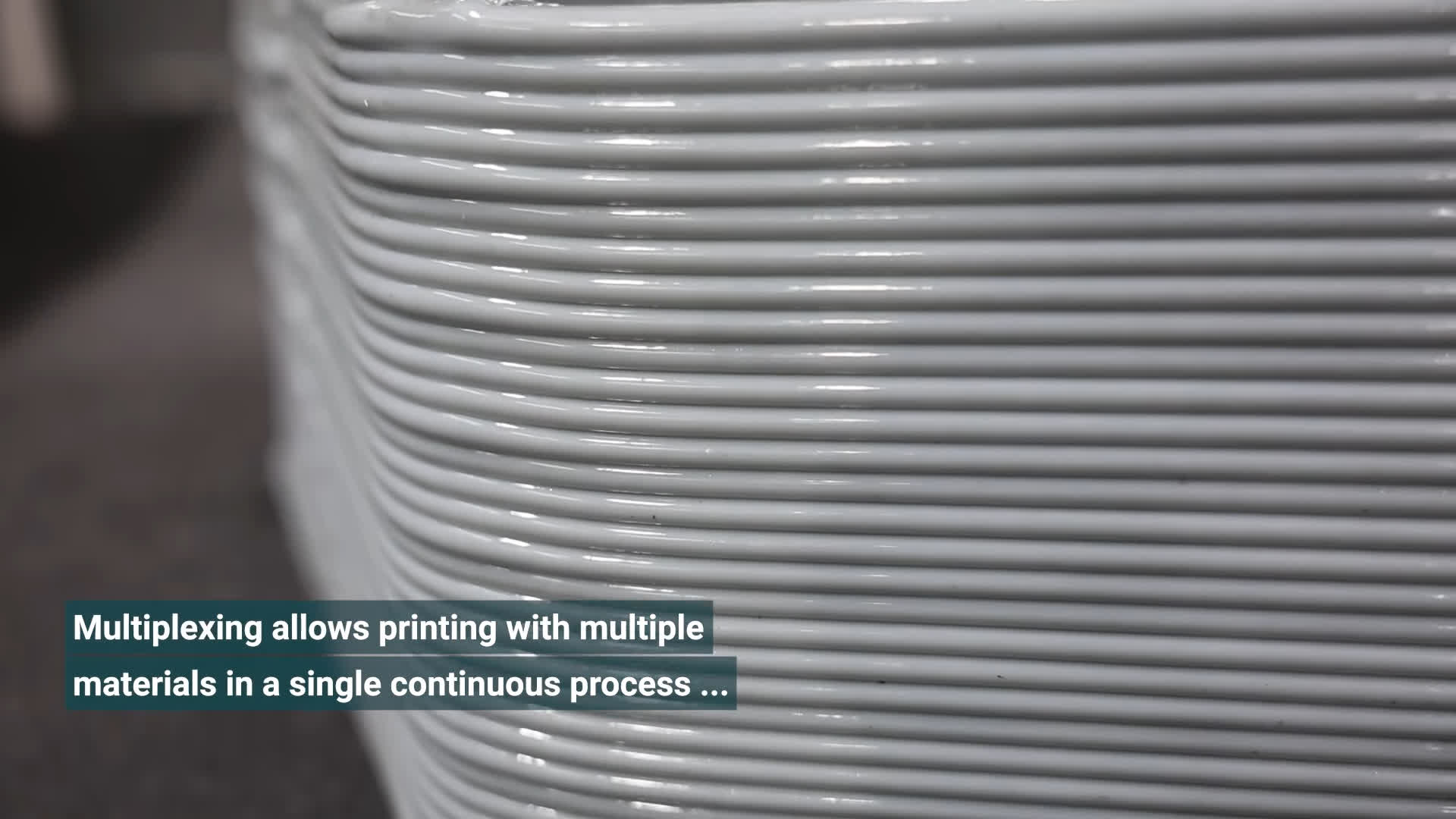
Oak Ridge printers using multiplexed extrusion can produce single objects up to 13 feet long, 6.5 feet wide, and 8 feet tall, which is rarely seen in the 3D printing world. Previous projects leveraging variations of this approach at the lab have produced experimental jet wings, wind turbine molds, and even entire automobile bodies and nuclear reactor test capsules.
The innovation is not limited to just increasing size or speed. Oak Ridge scientists have also demonstrated the ability to reduce internal porosity in large-scale prints by up to 75 percent, which makes finished objects much stronger and more durable. The multiplexed nozzle can deliver distinct sections with tightly controlled microstructure, giving manufacturers new options for optimizing the strength, density, or flexibility of their products.
Oak Ridge's system is already attracting interest in aerospace, marine manufacturing, wind turbine manufacturing, and advanced composites production. Industry partners are exploring how the technology can help produce more resilient airplane parts, stronger ship components, and lighter but sturdier wind turbine blades.
The lab's researchers point out that while multiplexed 3D printing is still a recent breakthrough, its benefits are likely to reach both industrial factories and everyday consumer printers in the near future as the software and hardware become more affordable and widely available. This could give home users the ability to print with multiple materials and improve bead design far beyond what today's dual-nozzle systems allow.