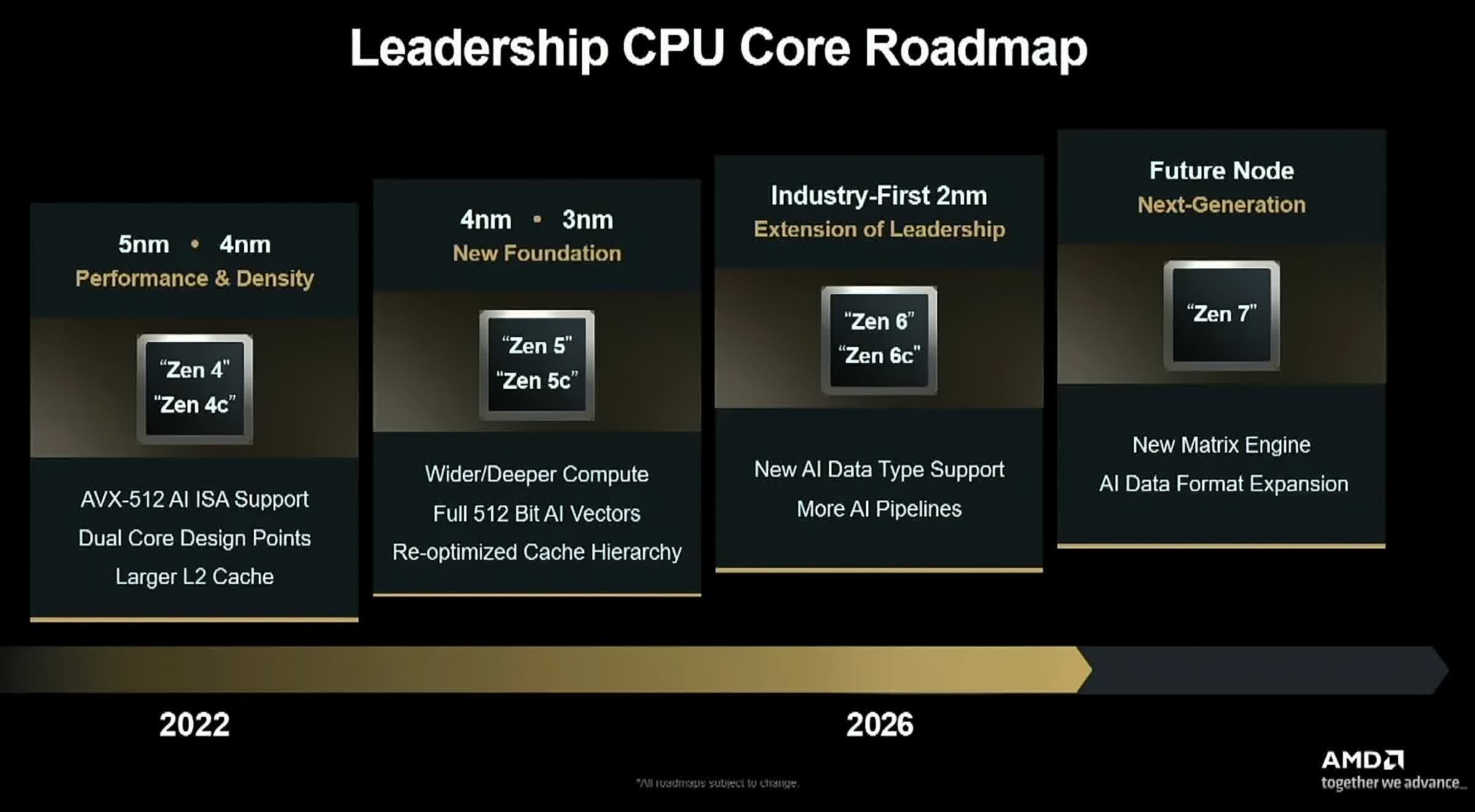
Forward-looking: AMD has revealed a new CPU roadmap that looks back to Zen 4 and stretches all the way to its future Zen 7 architecture. The slide also confirms some details about Zen 6, including the launch date and the process node being used.
AMD showed off the Leadership CPU Core Roadmap at Financial Analyst Day. The slide looks at previous and future generations of chips, going back to 2022 and the launch of Zen 4 and Zen 4c.
While it isn't exactly a deep dive into its upcoming processors, the slide is significant for being the first time AMD has included Zen 7 on one of its roadmaps.
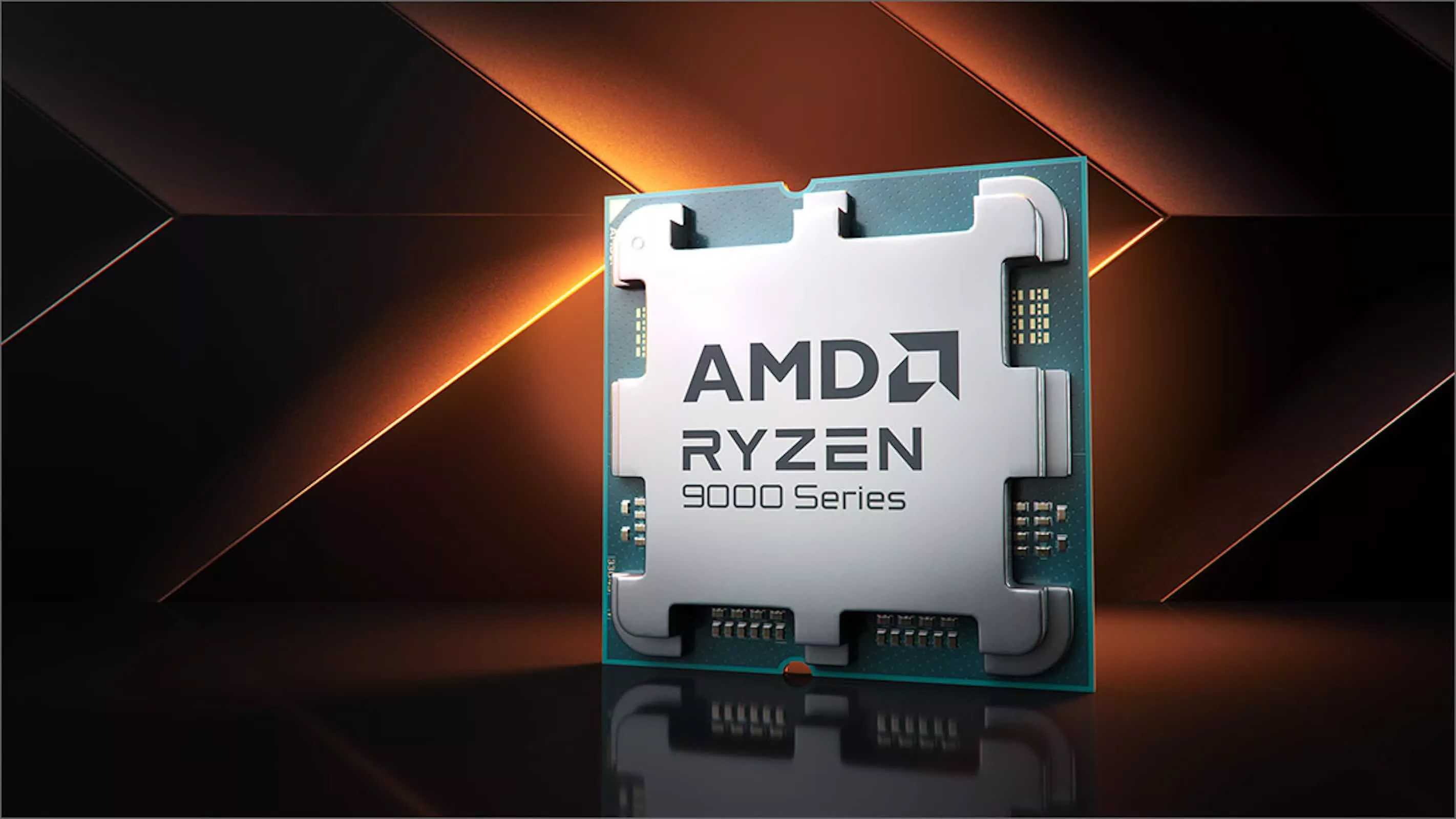
Described as a next-generation future node, Zen 7 will appear after 2026, so expect it to land in 2027 to 2028 with the Epyc Verano data center CPUs being the first products to feature the new architecture.
The only details AMD has listed about Zen 7 is its New Matrix Engine and AI Data Format Expansion. Given the state of the industry – and the fact that the Financial Analyst Day is for investors – it's no surprise that the company chose to underline the AI capabilities.
Before Zen 7, we'll see Zen 6, which the slide confirms will launch next year. There have been plenty of leaks and rumors about AMD's next architecture, and now AMD has confirmed that it will use what it calls TSMC's industry-first 2nm (N2) process node. AI is the focus again here, boasting new AI data type support and more AI pipelines.
AMD previously talked about Zen 6 and Zen 6C IPC improvements and new AI features. In July, a leaker called Zen 6 an evolution of Zen 5, rather than a complete overhaul.
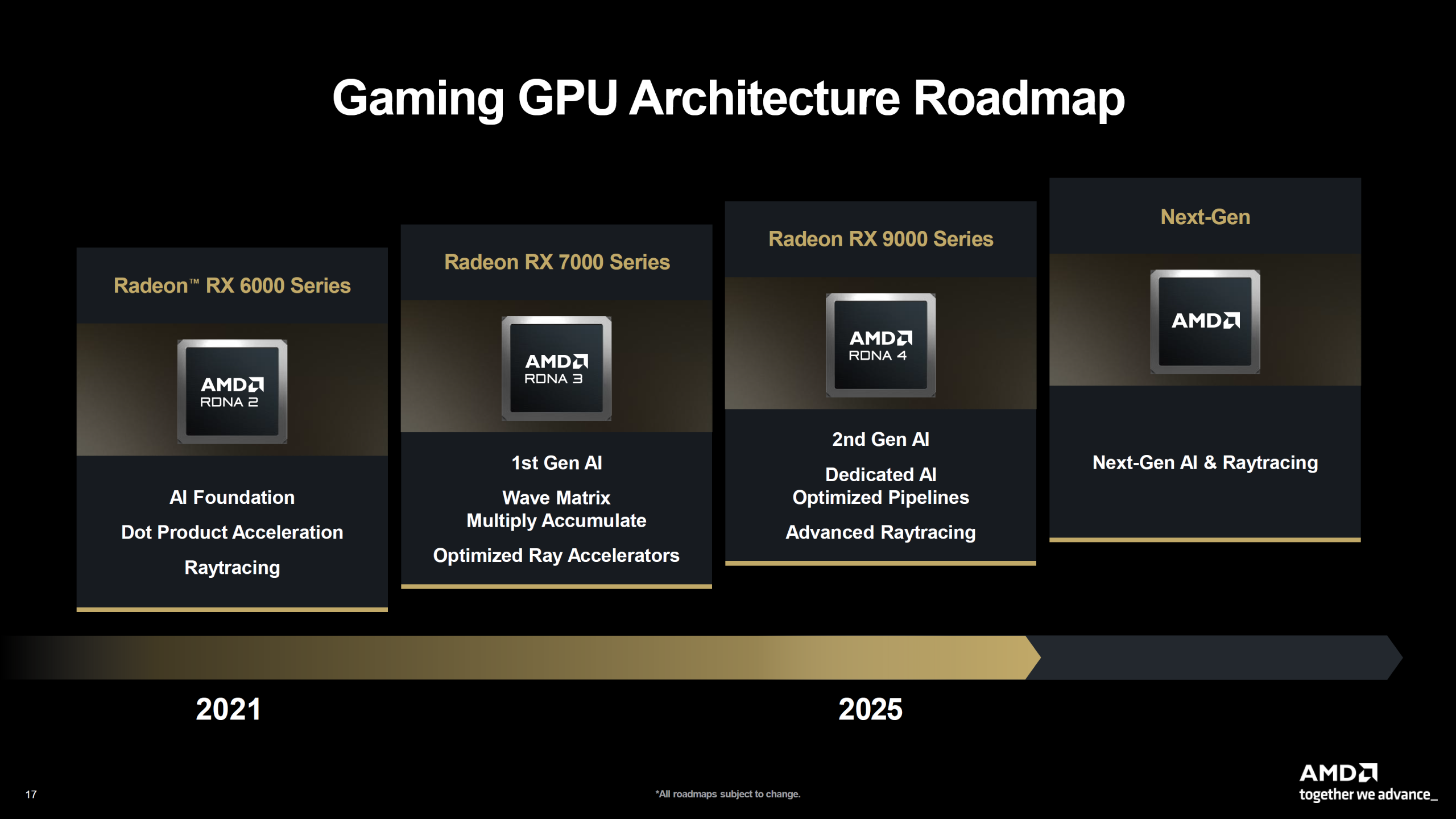
It's been claimed that Zen 6/6c bring a notable increase in CPU core counts per chiplet, with up to 12 cores per CCD expected. This could allow desktop processors to reach up to 24 cores and 48 threads when two CCDs are paired on a single chip, a significant leap from previous generations.
It's not just PC users who will benefit from AMD's next chips. In July, a leaker claimed a 10-core, 20-thread Zen 6/6c Magnus APU would appear in the next-gen Xbox when it arrives, possibly in 2027.