
Bottom line: PlayStation's expansion onto Steam has generated over $1.5 billion in gross revenue, according to estimates from Alinea Analytics. After Valve's platform fees, Sony is projected to have taken home nearly $1.2 billion, while Valve has earned more than $350 million from PlayStation Studios titles. The data underscores how significant Steam has become as a distribution channel for Sony's first-party games.
Until recently, Sony had largely treated Steam as a secondary outlet for older PlayStation titles, primarily single-player games that had already maximized their sales on console. But if Valve releases mainstream hardware that runs Steam natively and becomes a viable home for PlayStation Studios releases, Sony's PC strategy could be forced to evolve.
What once looked like a low-stakes, back-catalog revenue stream would instead place Sony inside a rival ecosystem with its own hardware base, community expectations, and pressure for day-and-date releases.
Steam's standard cut starts at 30 percent of gross sales, dropping to 25 percent once a game exceeds $10 million in revenue, and further to 20 percent beyond $50 million. This tiered system significantly improves margins for top-performing titles.
Valve's fee structure is central to Alinea's analysis of the $1.5 billion in gross sales from PlayStation Studios games on Steam. For lower-selling titles, the 30 percent platform cut applies to every copy sold. However, for PlayStation's biggest releases on Steam, most revenue benefits from the lower 25 and 20 percent tiers, as these games quickly surpass both thresholds.
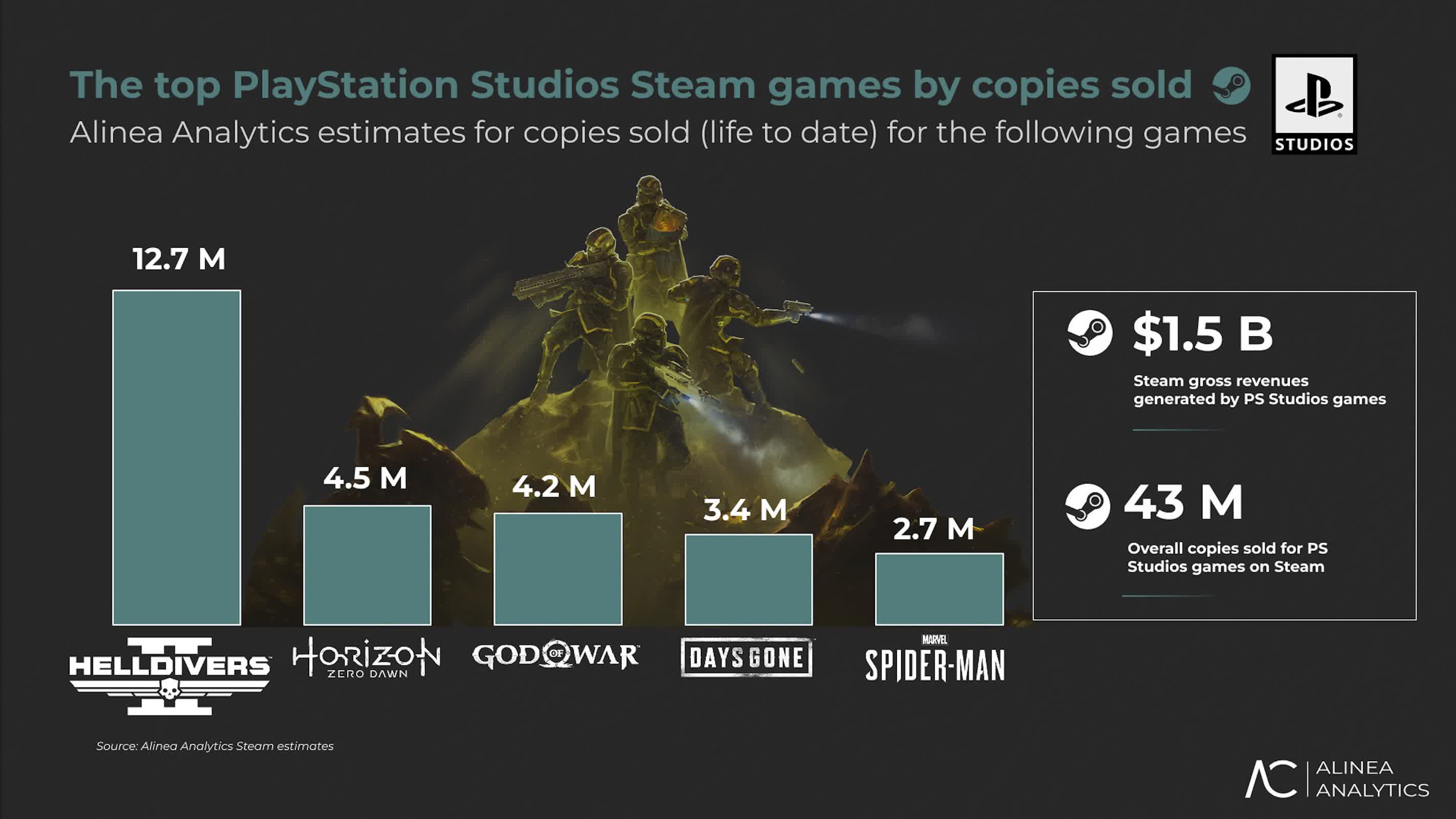
By applying these tiered fees across each PlayStation Studios title, Alinea estimates that Valve's cumulative take has exceeded $350 million, while Sony's net share sits just under $1.2 billion. These figures are based on an estimated 43 million copies of PlayStation-published games sold on Steam.
Within that 43-million-unit total, one title stands out: Helldivers 2. Alinea estimates that the cooperative shooter has sold roughly 12.7 million copies on Steam alone, generating about $400 million in gross revenue and becoming Sony's largest PC success by a significant margin.
Alinea attributes Helldivers 2's outperformance to several factors: its focus on replayable, player-versus-environment co-op gameplay, a release window with limited direct competition, and sustained daily engagement on Steam. Elliott notes that the title has sold more than twice as many copies on Steam as on PlayStation 5, highlighting strong PC demand for high-end co-op games built around ongoing play rather than one-and-done campaigns.
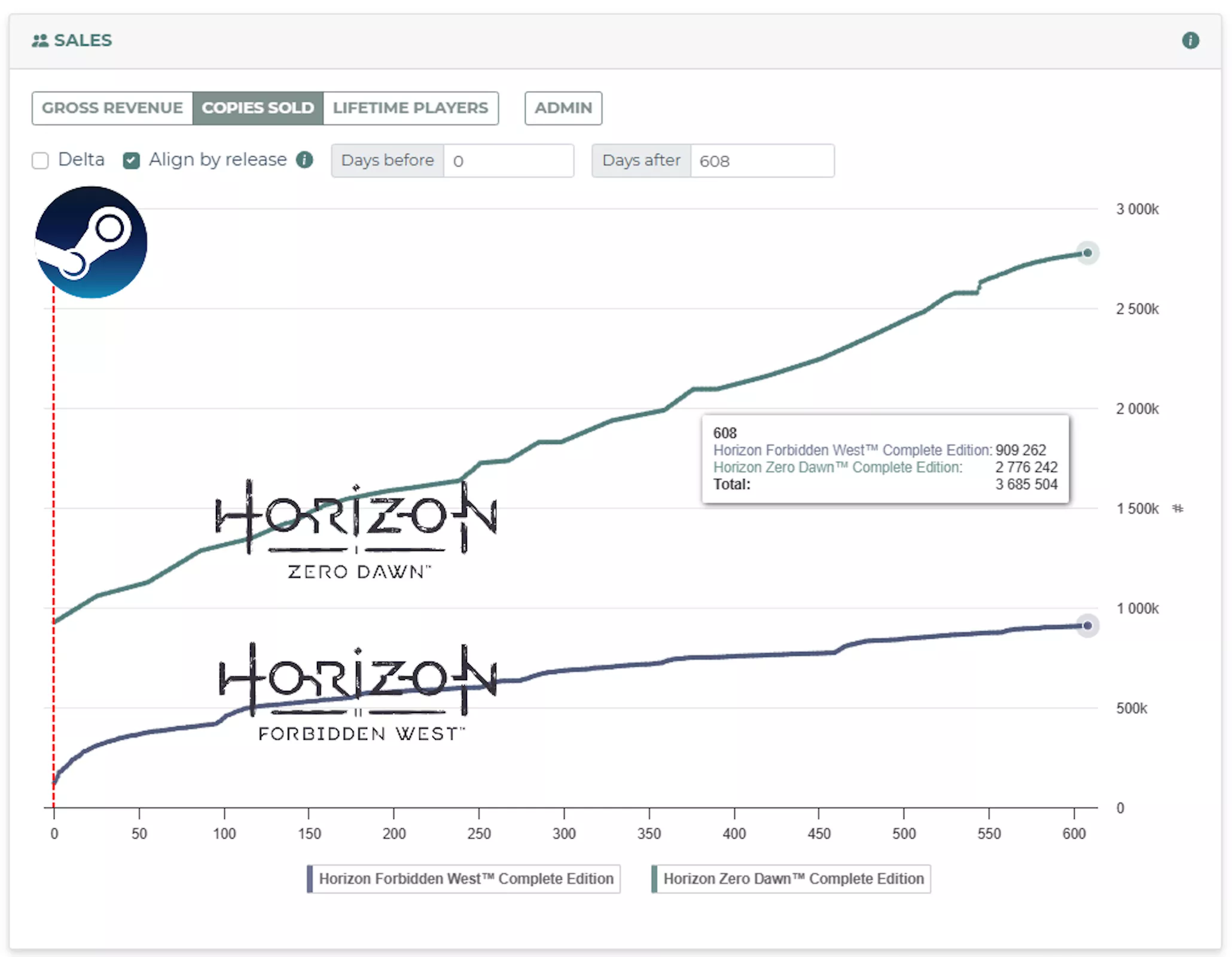
Beneath Helldivers 2, several single-player franchises have also established substantial PC audiences over time. Horizon Zero Dawn, one of Sony's earliest major Steam releases, is estimated to have sold 4.5 million copies on Valve's platform, generating roughly $170 million in gross revenue.
God of War's 2018 reboot has sold approximately 4.2 million copies on Steam, generating close to $150 million and benefiting from its status as a flagship narrative action title. Days Gone, which received mixed reviews on console, exceeded expectations on PC with an estimated 3.4 million copies sold, bringing in roughly $108 million in revenue.
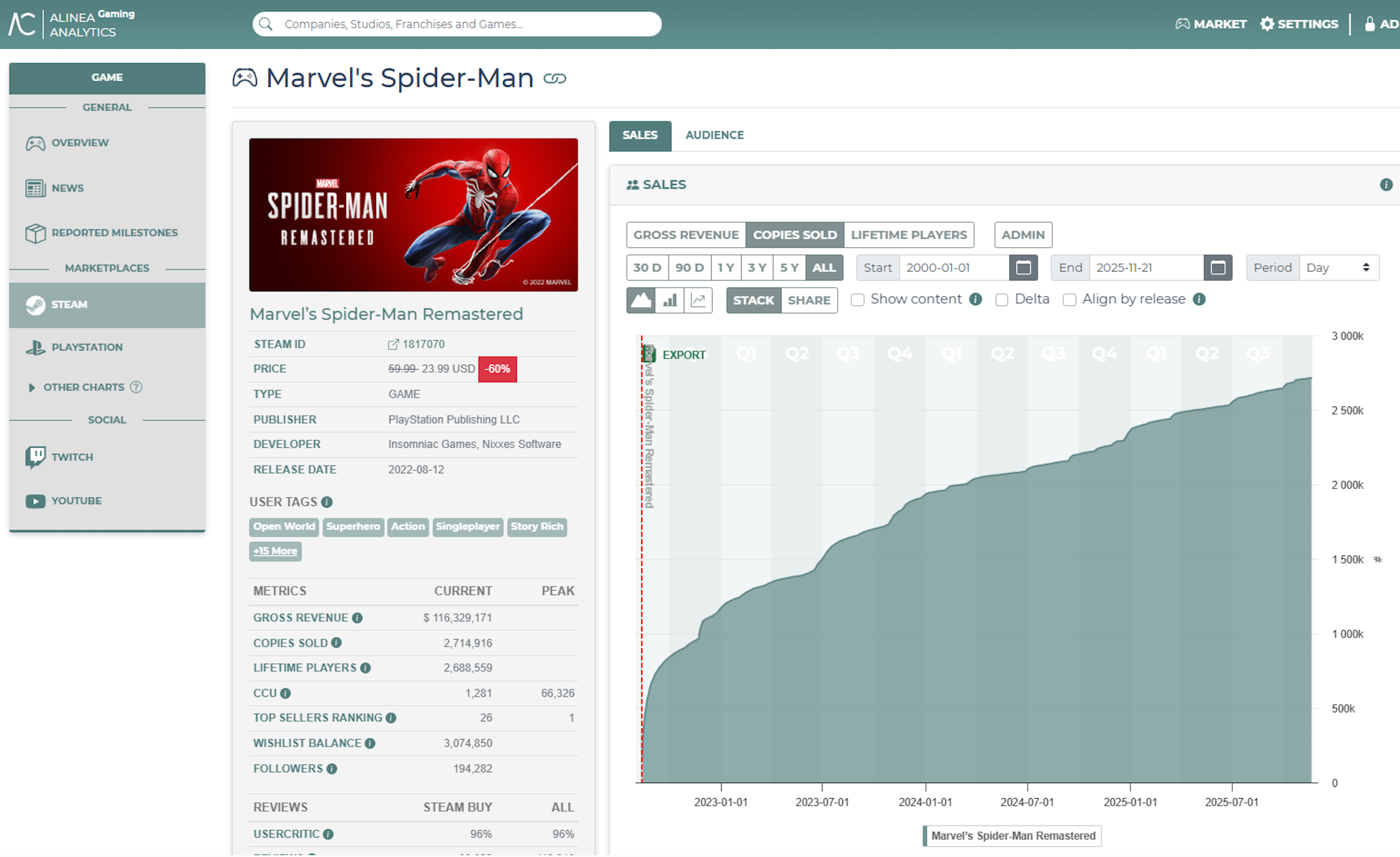
Spider-Man Remastered has sold around 2.7 million copies, generating $116 million. Its performance was bolstered by technical features such as ultrawide monitor support and ray-traced graphics, appealing to hardware enthusiasts despite some early performance issues.
Alinea's data suggests that the earliest PlayStation ports to Steam benefited from a "novelty premium." Titles like Horizon Zero Dawn, Days Gone, and God of War arrived when first-party Sony games on Steam felt like major events, drawing strong initial interest from PC players who had never owned a PlayStation console.
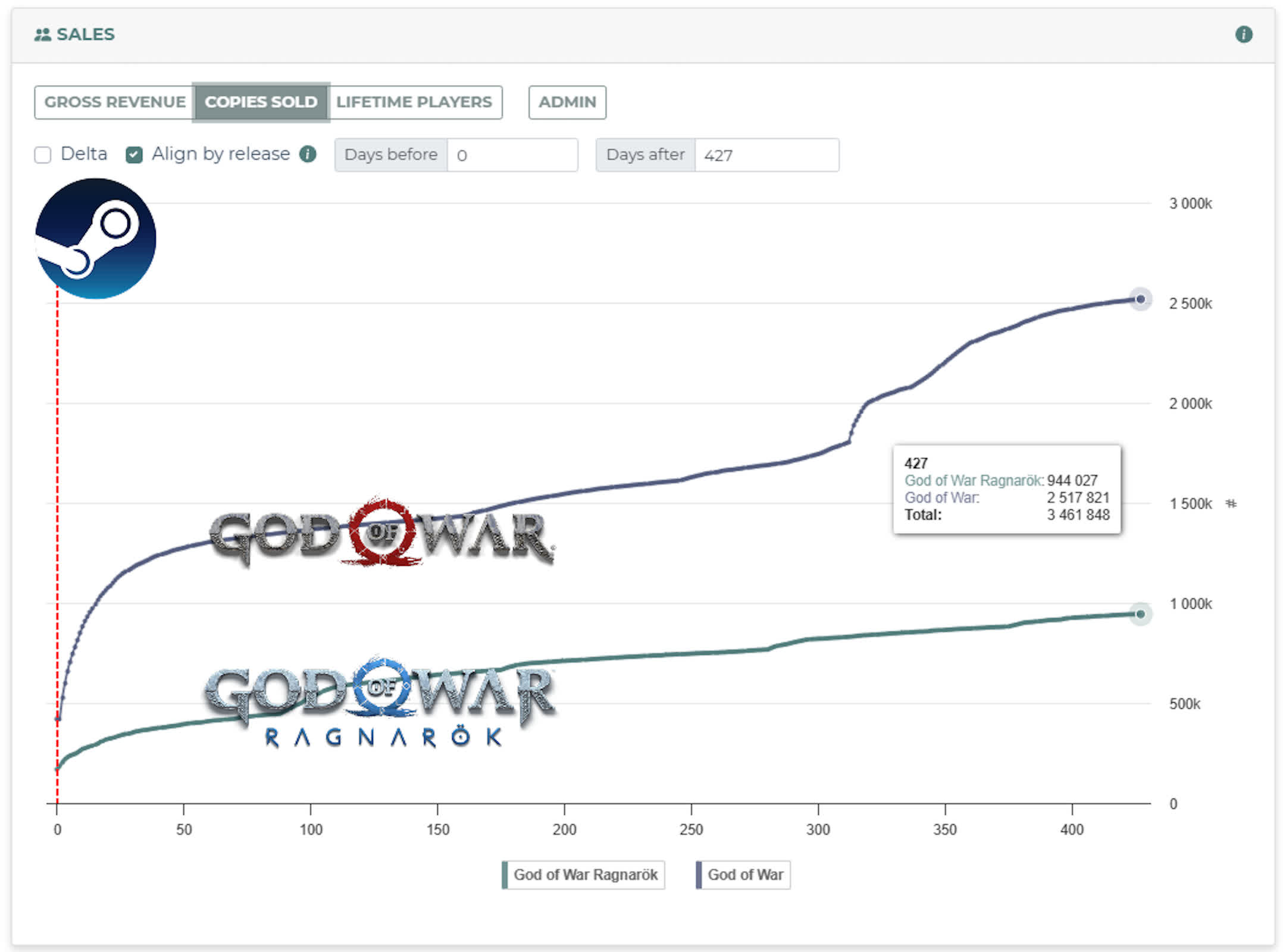
That environment has shifted as more series have made the jump. According to Alinea's launch-aligned comparisons, the Steam version of God of War sold roughly 2.5 million copies in its first 427 days – more than two-and-a-half times the units sold by its sequel, God of War Ragnarök, over an equivalent period.
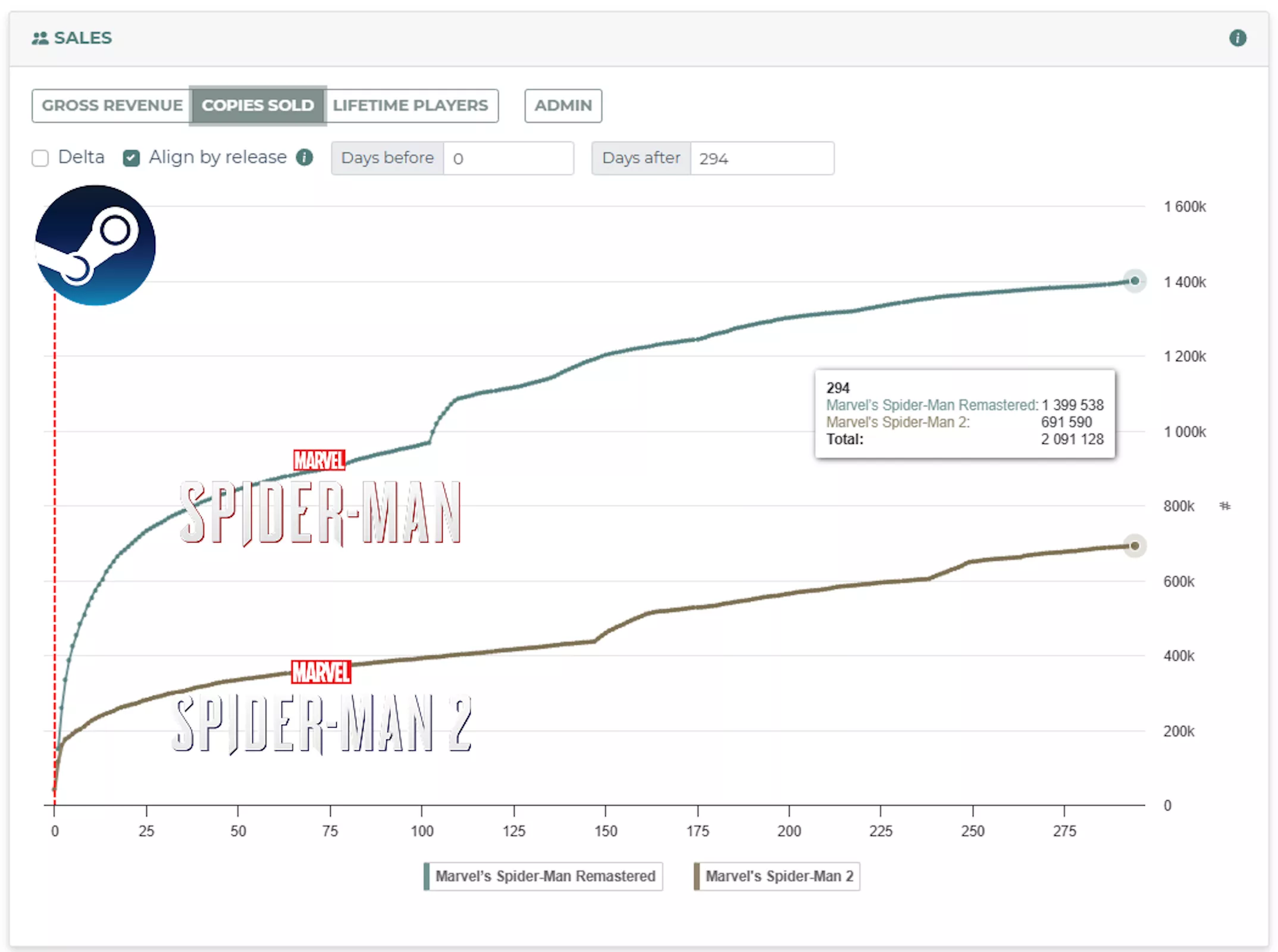
A similar pattern appears in the Spider-Man series: after 294 days on Steam, Marvel's Spider-Man sold around 1.4 million copies – more than double the sales of Marvel's Spider-Man 2 over the same period.
Even with that slowdown, the newer PC ports are far from commercial failures. Alinea estimates that Marvel's Spider-Man 2 has already generated about $32 million on Steam, while God of War Ragnarök's PC version has brought in roughly $45 million.
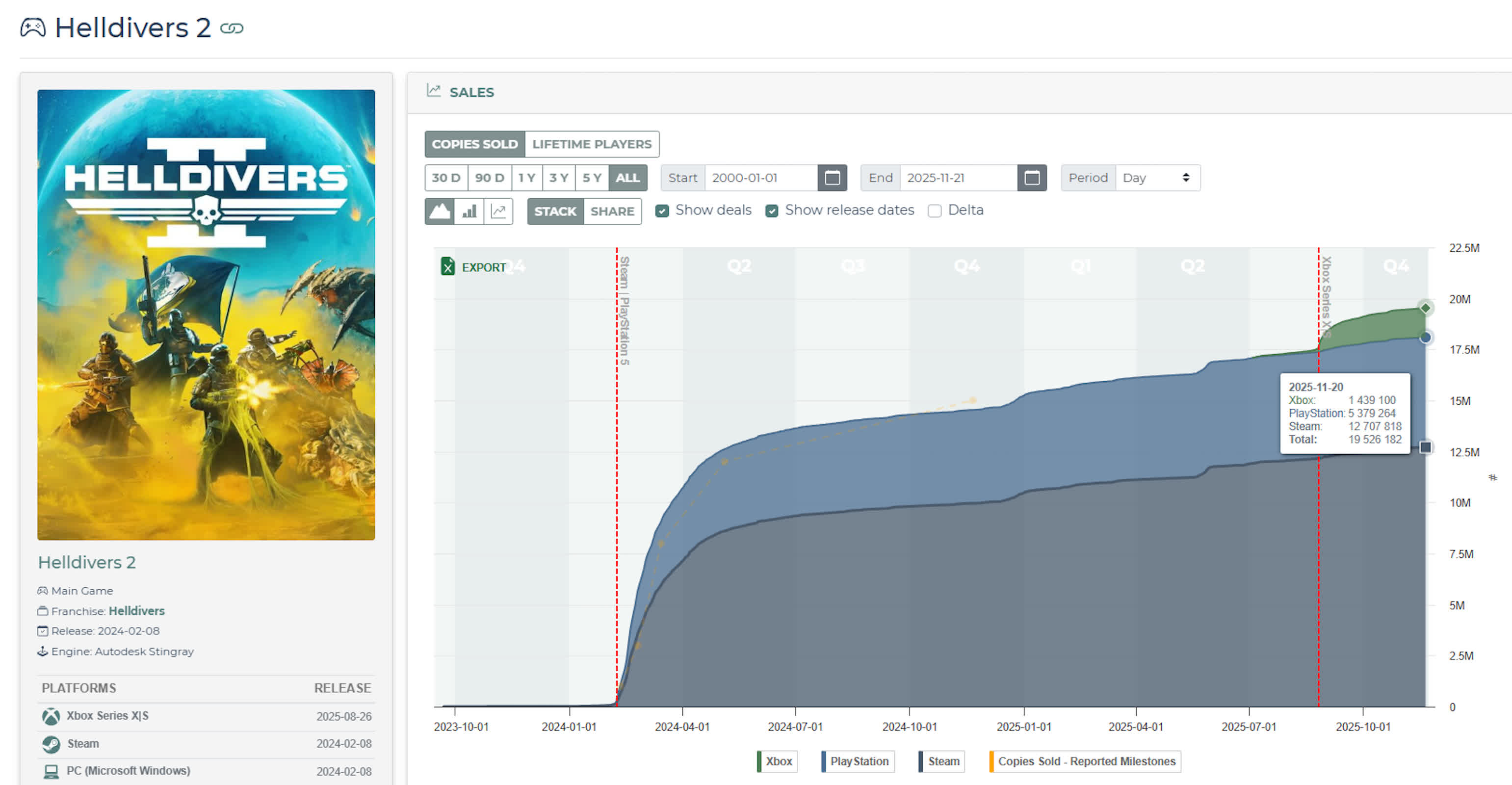
The emerging picture is not of a collapsing PC strategy, but of a maturing one. When a title aligns with Steam audiences' preferences – as Helldivers 2 has with its cooperative, live-service design – it can still break out as a megahit, even as follow-up entries in older single-player franchises settle into more modest trajectories.
For future projects, Rhys Elliott of Alinea Analytics suggests a six-to-12-month window between PS5 and Steam releases could capture peak console demand first, then serve a PC audience that expects timely access to premium single-player games. Live-service projects, by contrast, are likely to continue launching on Steam and PlayStation simultaneously, since cross-platform communities are vital to their economics.
One variable that could prompt a rethink is hardware. Elliott flags the expected return of a Valve-backed "Steam Machine" concept, with dedicated hardware that would treat Steam less as a mere storefront and more as a fully fledged platform.
Image credit: Alinea Analytics