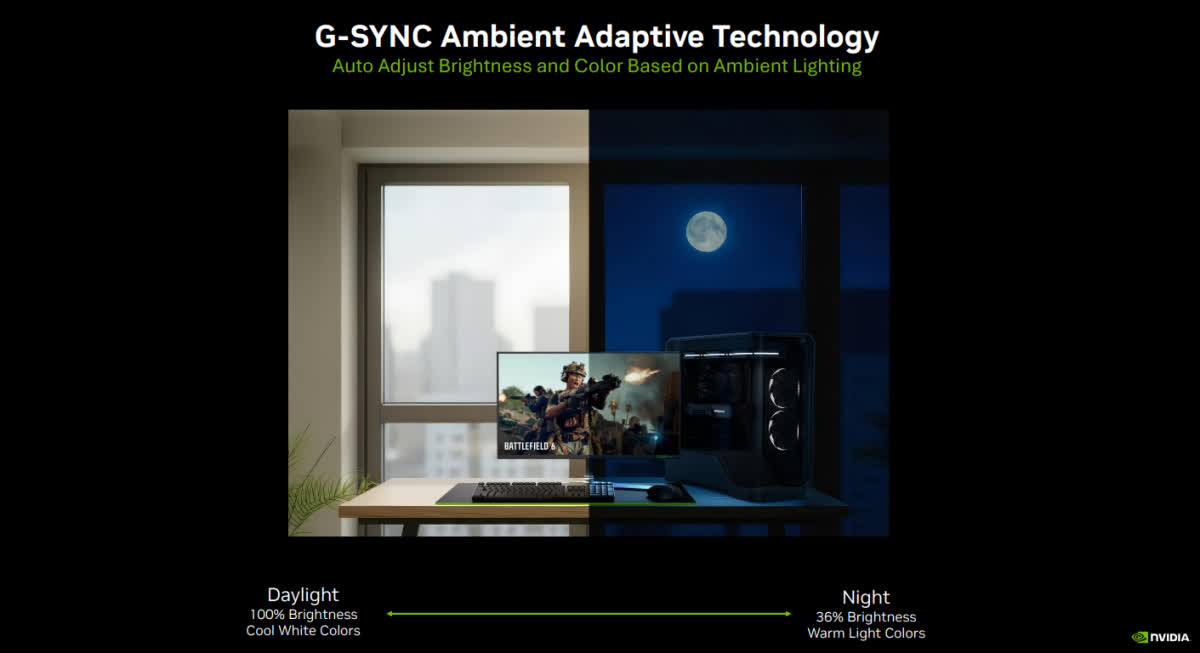
What just happened? Nvidia has made a slew of announcements at CES 2026. One of these is the improvements to its G-Sync Pulsar monitor tech. Not only will the latest version further reduce motion blur, but it also adjusts a monitor's brightness and color based on a room's ambient lighting.
It's been two years since Nvidia unveiled G-Sync Pulsar. It combines variable refresh rate with adaptive backlight strobing, synchronizing the panel refresh, GPU output, and strobe timing to improve motion clarity across a wide range of frame rates.
It worked well in fast-paced games, particularly competitive shooters, but it wasn't without trade-offs. Limited panel support, reduced brightness, and a narrow set of conditions meant Pulsar often felt like a feature built for demos rather than everyday use.
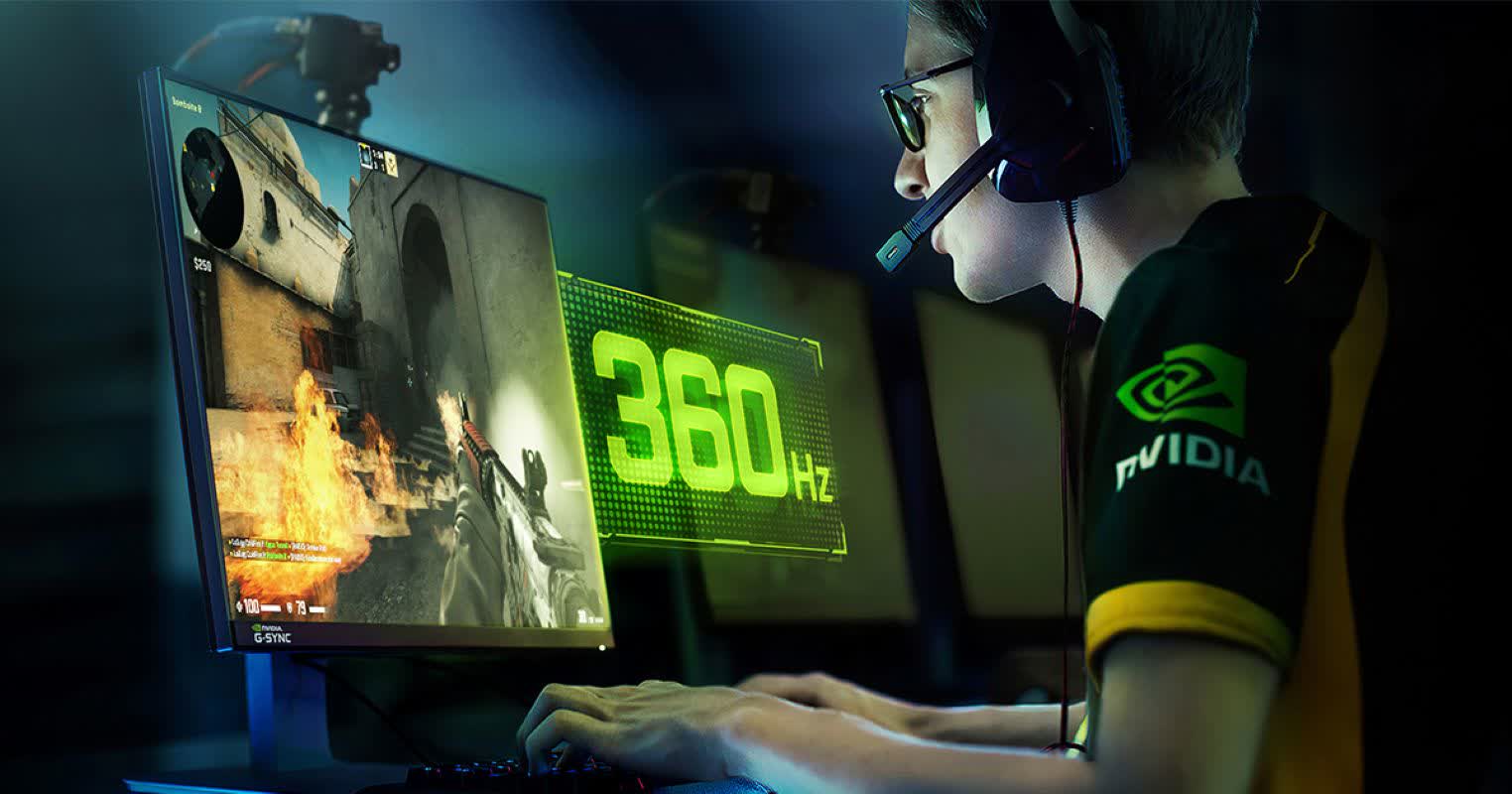
Nvidia claims the G-Sync Pulsar updates address several of those limitations. Motion clarity remains the primary focus, with the company stating that the updated system can deliver up to four times the effective motion clarity of a conventional VRR display.
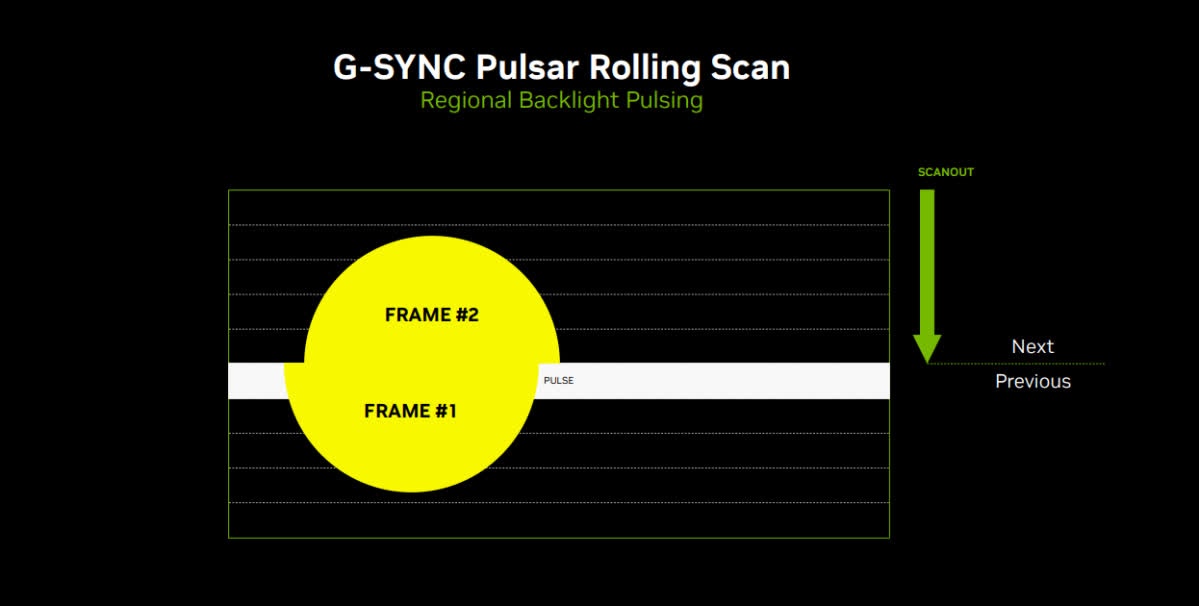
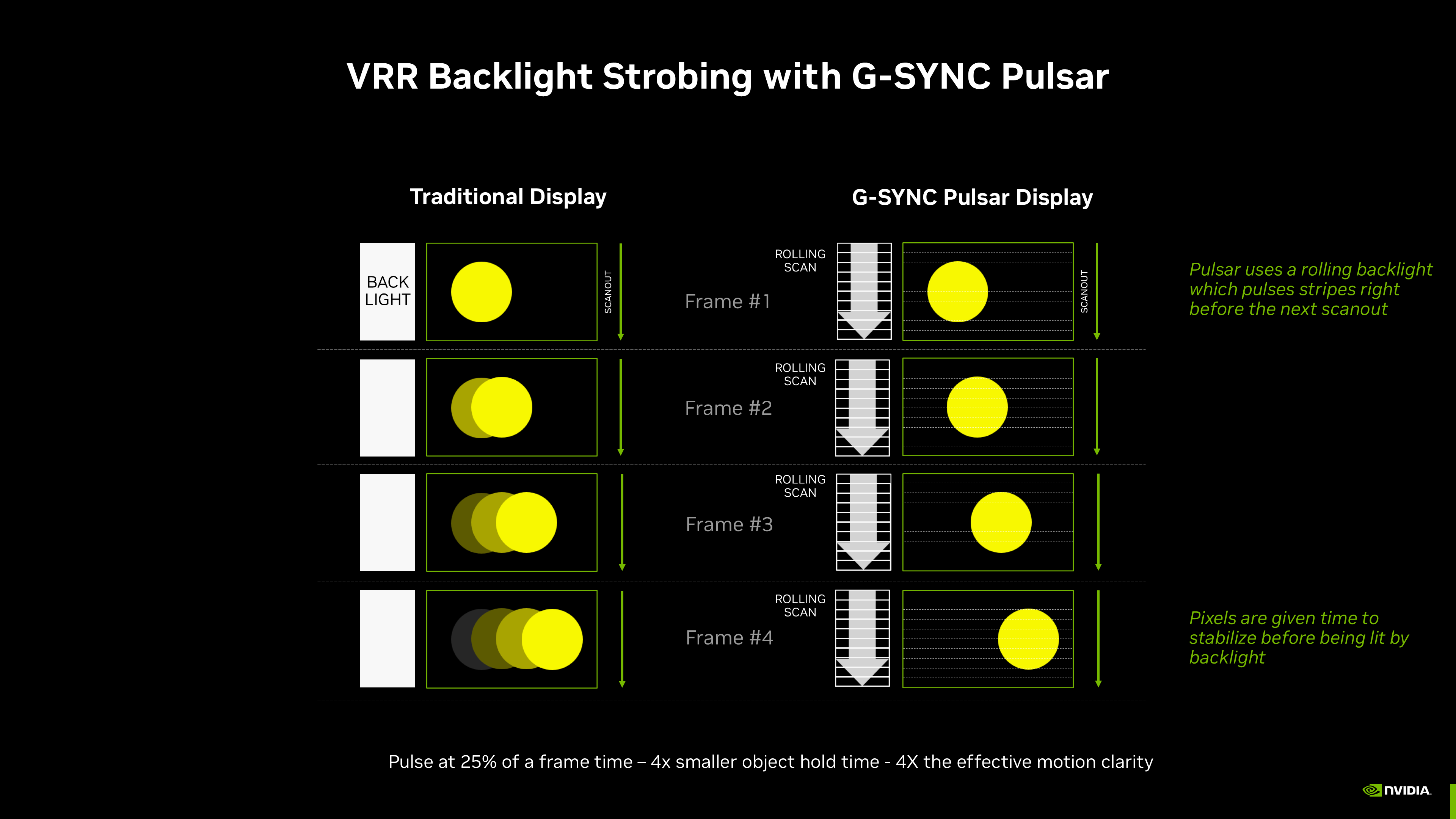
The core idea remains the same: Pulsar combines VRR with tightly synchronized backlight strobing to reduce sample-and-hold blur. Rather than illuminating the entire panel at once, the backlight pulses in sync with the display's scanout, ensuring each section of the screen is only lit once pixel transitions have fully settled. Nvidia now claims this approach can make a 360Hz panel appear closer to a 1,000Hz display in terms of perceived motion clarity, particularly during fast camera pans and rapid target tracking.
One of the biggest improvements is how precisely the strobing is handled. Instead of global flicker, the updated system uses narrow horizontal backlight bands that track the panel's scan position. This reduces visible artifacts and minimizes brightness loss compared to older blur-reduction techniques, while keeping latency low enough for competitive play. The benefit should be most obvious in esports-style titles, where motion clarity often matters more than raw image quality.
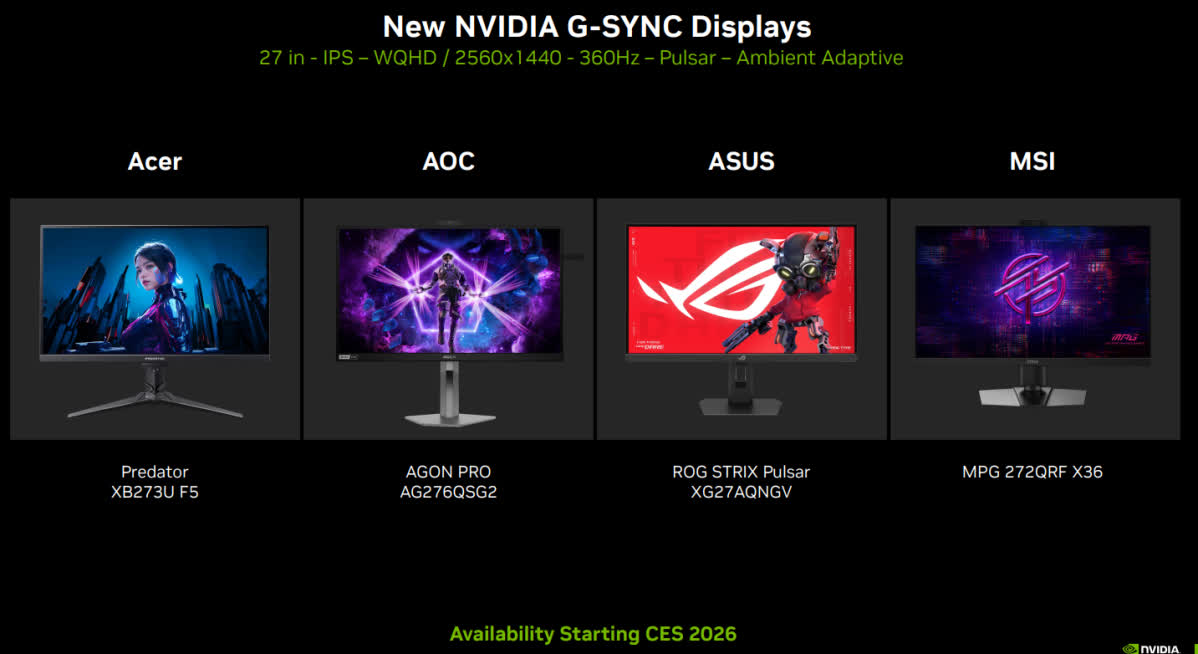
Several manufacturers, including Asus, AOC, Acer, and MSI, are launching 27-inch, 1440p, 360Hz displays with full Pulsar support, using new scaler hardware that integrates G-Sync functionality directly into the panel. That integration removes the need for Nvidia's traditional G-Sync module, helping to lower costs and making wider adoption more realistic – though these monitors are still very much premium products.
There are still limitations. Pulsar's advantages diminish outside high-frame-rate gaming, and the tech remains tied to specific panel types and resolutions. As always, independent testing will be needed to see how closely Nvidia's motion clarity claims translate to real-world use.
Rounding out the update is a new feature that dynamically adjusts brightness and color temperature based on room lighting. Nvidia says this helps offset the inherent dimming caused by strobing, potentially making Pulsar more practical beyond controlled gaming setups – though how much control users have over these adjustments remains an open question.