
What just happened? Apple's iPhones have traditionally been prime targets for phone thieves due to their high resale value, but premium Android devices can also be highly desirable targets. Google is now working to create stronger protections for these devices.
Google recently announced a new suite of anti-theft measures for modern Android devices. The company aims to protect users before, during, and even after an attempted theft. After all, a stolen smartphone not only threatens personal data security but can also lead to further financial scams.
The new features are designed to enhance the protections Google introduced in 2024. For starters, Mountain View plans to strengthen authentication safeguards and improve remote recovery tools. Additionally, new Android users in Brazil will benefit from a safer mobile ecosystem from the start, addressing the country's persistent problem with mobile phone theft.
The improved authentication safeguards target devices running Android 16 and later. Authentication Lock, first introduced in Android 15 to automatically lock a device after multiple failed authentication attempts, now includes a dedicated toggle in the OS settings. Google says the toggle will give users more granular control over their device security.
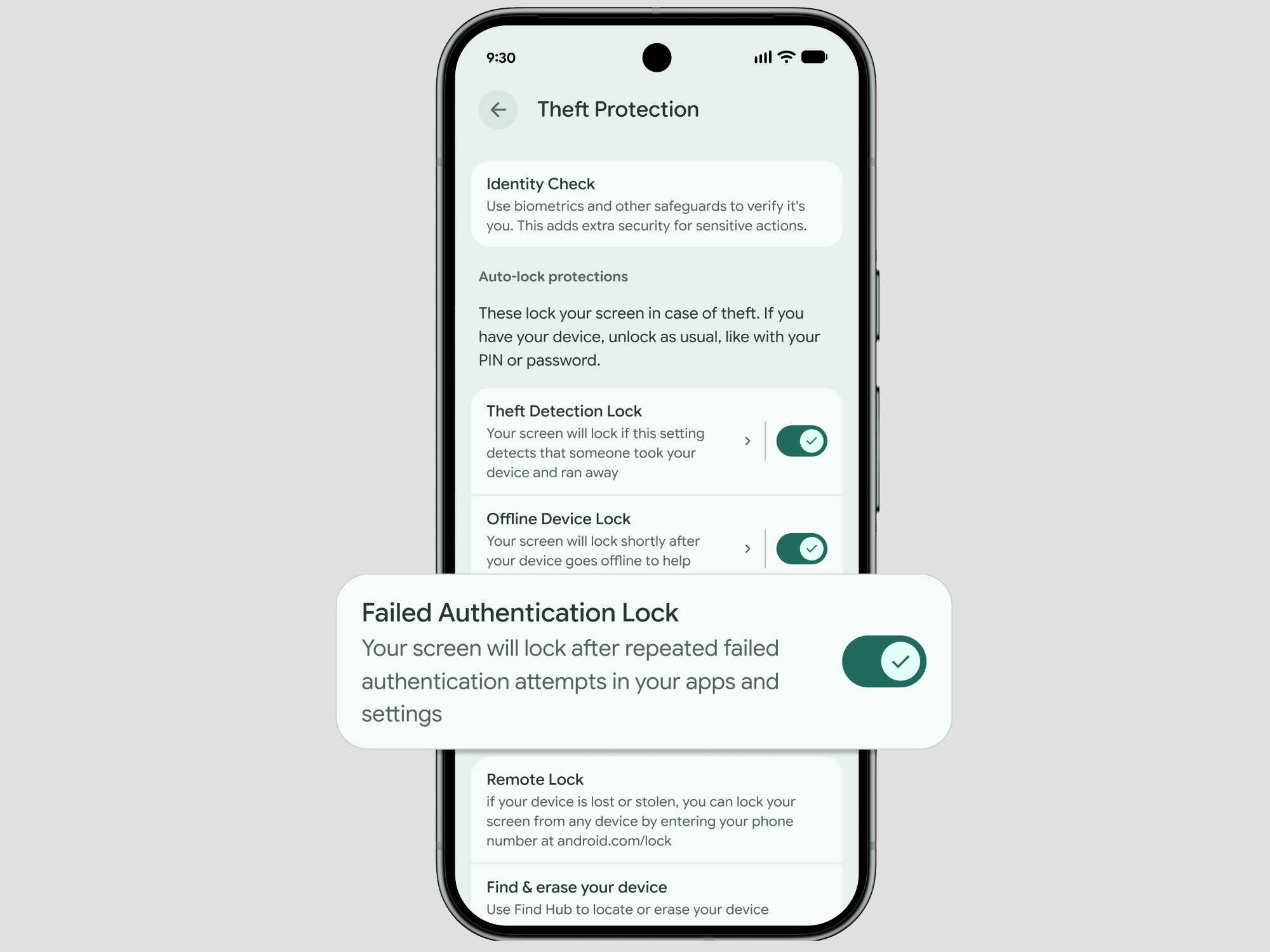
The Identity Check feature is also being enhanced. Introduced in 2025, it requires users to authenticate with biometrics when outside their "trusted" locations. The updated version will now protect all apps and features that use the Android Biometric Prompt API.
Home banking tools, Google Password Manager, and other third-party apps can now benefit from this additional layer of protection. Google is also making Android more resilient against PIN or passphrase guessing: lockout times will increase after multiple failed attempts, and repeated identical guesses will count as a single retry to reduce accidental lockouts.
The remote lock feature on the Android lock hub is being updated as well. This tool, which allows users to lock a lost or stolen device from a web browser, will now include an optional security question to ensure that only the device's true owner can execute a remote lock.
These security improvements will be available by default on new Android devices activated in Brazil. Two anti-theft protections will be enabled out of the box: Theft Detection Lock, which automatically locks the screen if a motion sensor detects a "snatch-and-run" theft attempt, and the updated Remote Lock functionality.
The Android Security Team said Google is committed to staying a step ahead of phone thieves, though the effectiveness of these features may vary depending on location. Regardless, Android users can expect additional theft protections in the near future.