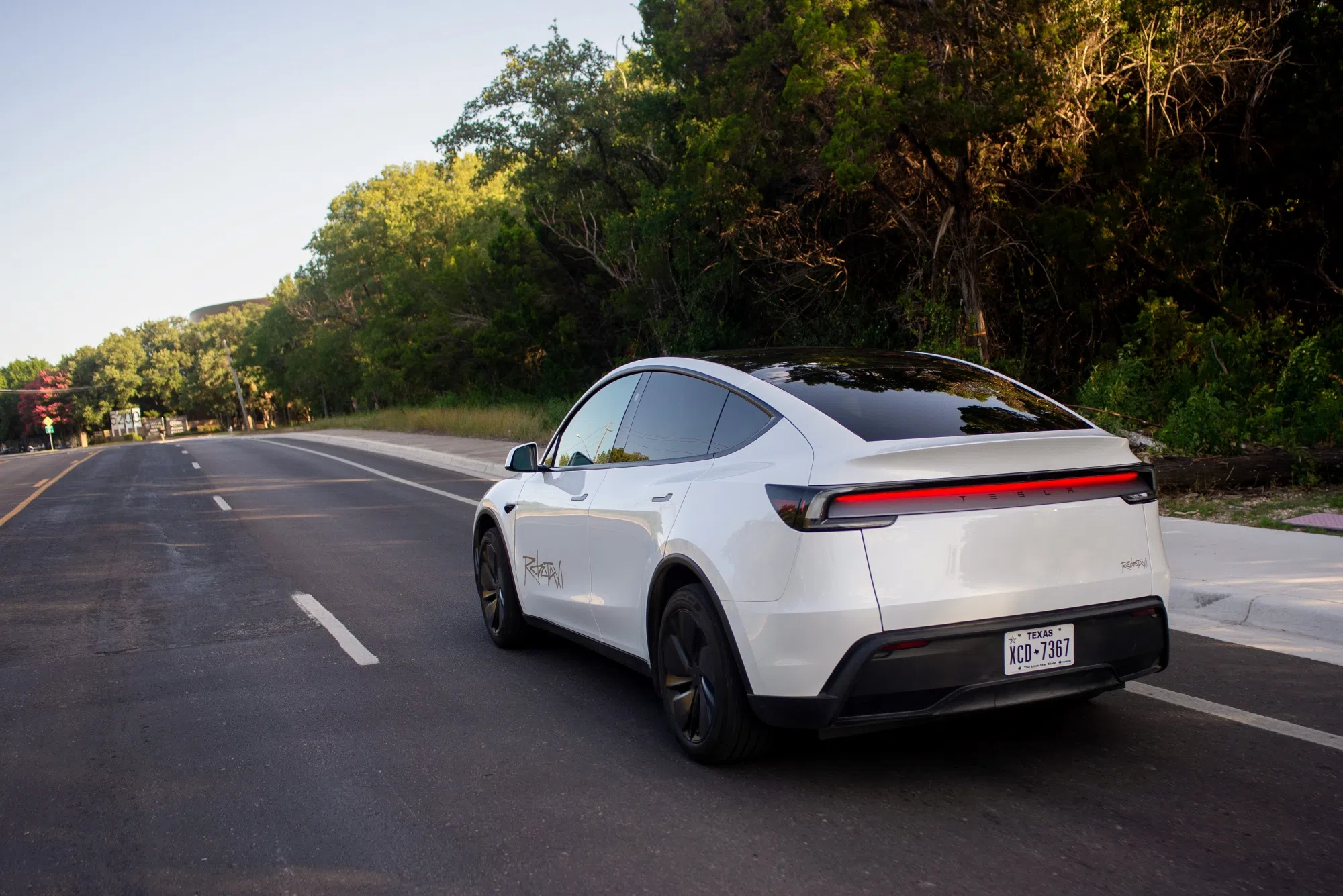
A hot potato: Federal data from Tesla's autonomous test fleet in Austin shows the company's Robotaxi program has yet to achieve the reliability promised by CEO Elon Musk. Between July and November 2025, nine crashes involving the company's self-driving Model Y were reported to the NHTSA. Across roughly 500,000 logged miles, that equals one crash for every 55,000 miles traveled, nearly an order of magnitude more frequent than typical human driver incidents.
Human drivers in the United States, according to NHTSA data, average a police-reported crash roughly once every 500,000 miles. Even after adjusting for underreporting to a more realistic estimate of once per 200,000 miles, people still outperform Tesla's autonomous system by a wide margin, according to data originally surfaced by Electrek.
While Tesla markets its Robotaxi fleet as "autonomous," each vehicle still carries a trained safety monitor in the front passenger seat, ready to intervene if the system fails. Despite those human safeguards, the vehicles have been involved in collisions ranging from minor fender-benders to more concerning encounters with cyclists and roadway obstacles.
The NHTSA filings themselves reveal only fragments of what occurred. Tesla's reports are heavily redacted, obscuring many of the circumstances behind the crashes.
One September report, for instance, notes a collision with an animal at 27 mph; another cites an unspecified crash during a "right turn." Separate incidents that same month involved a cyclist and two collisions with stationary objects, including one in a parking lot.
Additional reports describe a rear impact while backing up and two July collisions involving SUVs, one of which caused a minor injury. Without full context or Tesla's internal data, it remains difficult to determine how much of the fault lies with vehicle software versus human intervention timing.
Despite the setbacks, Tesla continues to frame its Robotaxi project as central to its long-term vision of autonomous mobility. Musk told investors last year that the service would reach "half of the US population" by the end of 2025, a deadline that has quietly passed.
Instead, the fleet remains active only in Austin, Texas. The company has also launched a limited ride-hailing variant in the San Francisco Bay Area, though those Model Ys must retain human drivers due to the state's regulatory limits on unsupervised autonomy.
Even with only modest progress, Tesla is signaling that expansion is coming. On its latest earnings call, executives confirmed that the Robotaxi program will extend to seven additional markets – including Dallas, Houston, Phoenix, Miami, Orlando, Tampa, and Las Vegas – within the first half of 2026. That timeline would represent a major geographic jump, but it will test whether Tesla can improve its collision record before any large-scale deployment.