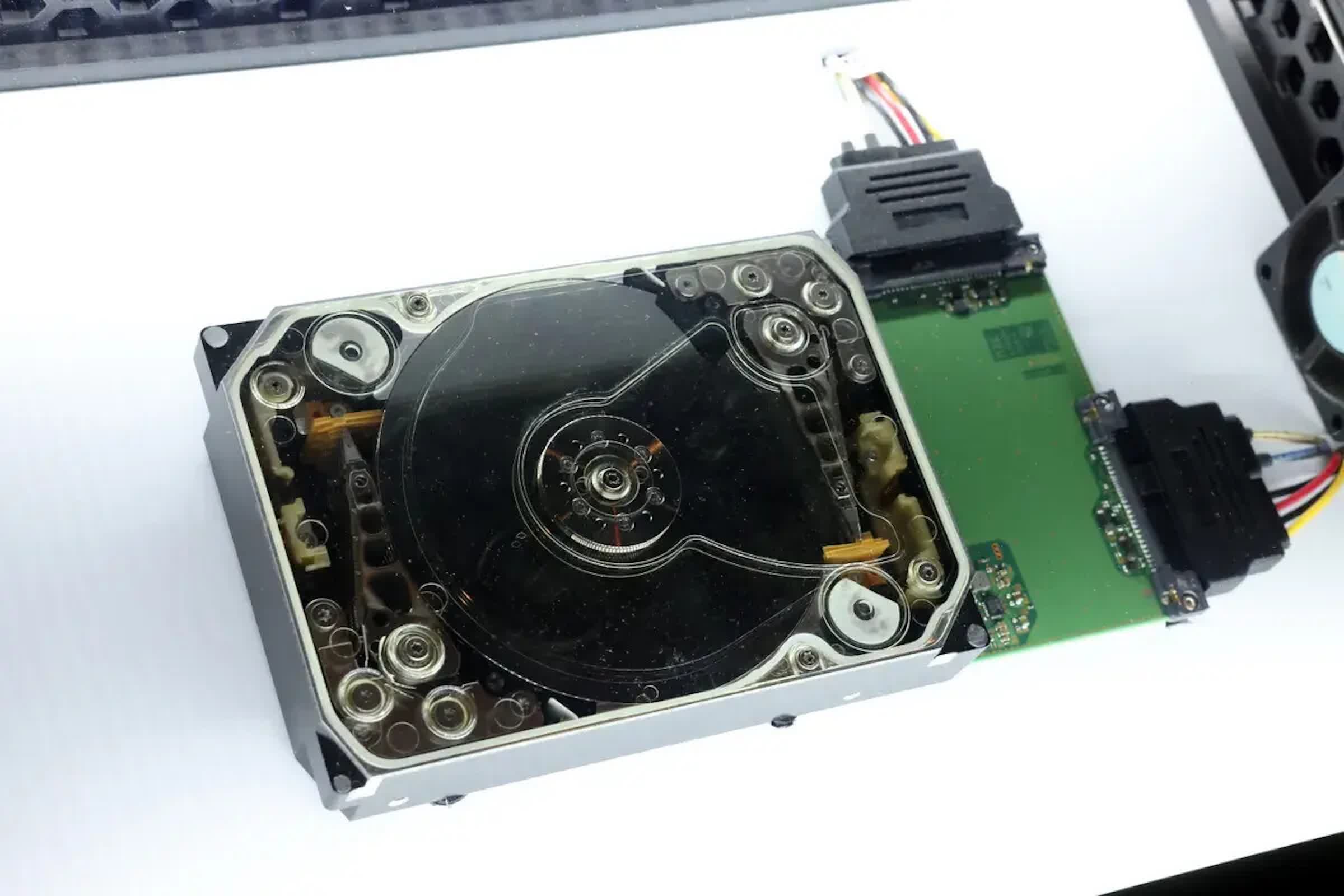
Forward-looking: Western Digital is bringing fresh momentum to an aging storage category with two ambitious technologies aimed at redefining mechanical hard drive performance limits. The company's new High Bandwidth Drive architecture and Dual Pivot actuator system aim to narrow the gap between traditional spinning disks and QLC-based solid-state drives – a gap that has long put HDDs on the defensive in high-performance environments such as AI workloads and hyperscale data centers.
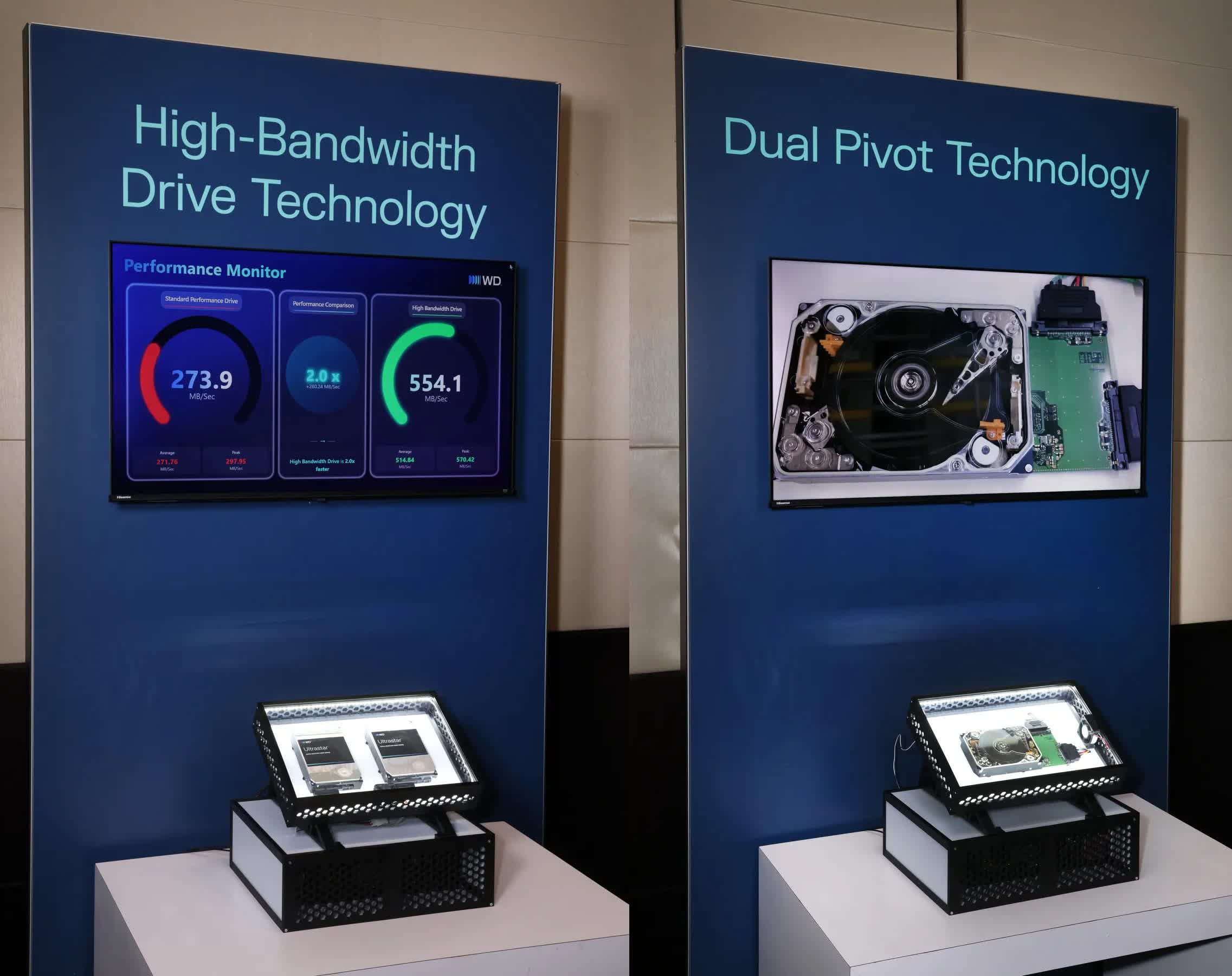
The new High Bandwidth Drive concept represents a shift in how data moves between platters and the interface. Instead of the standard one-head-per-surface design that reads or writes sequentially, the new approach allows multiple read/write heads to operate in parallel across several tracks.
This design effectively doubles the input/output bandwidth and provides a scaling path up to eight times the current throughput. Western Digital says these multi-head prototypes are already in the hands of select customers for validation, suggesting the architecture is close to production maturity.
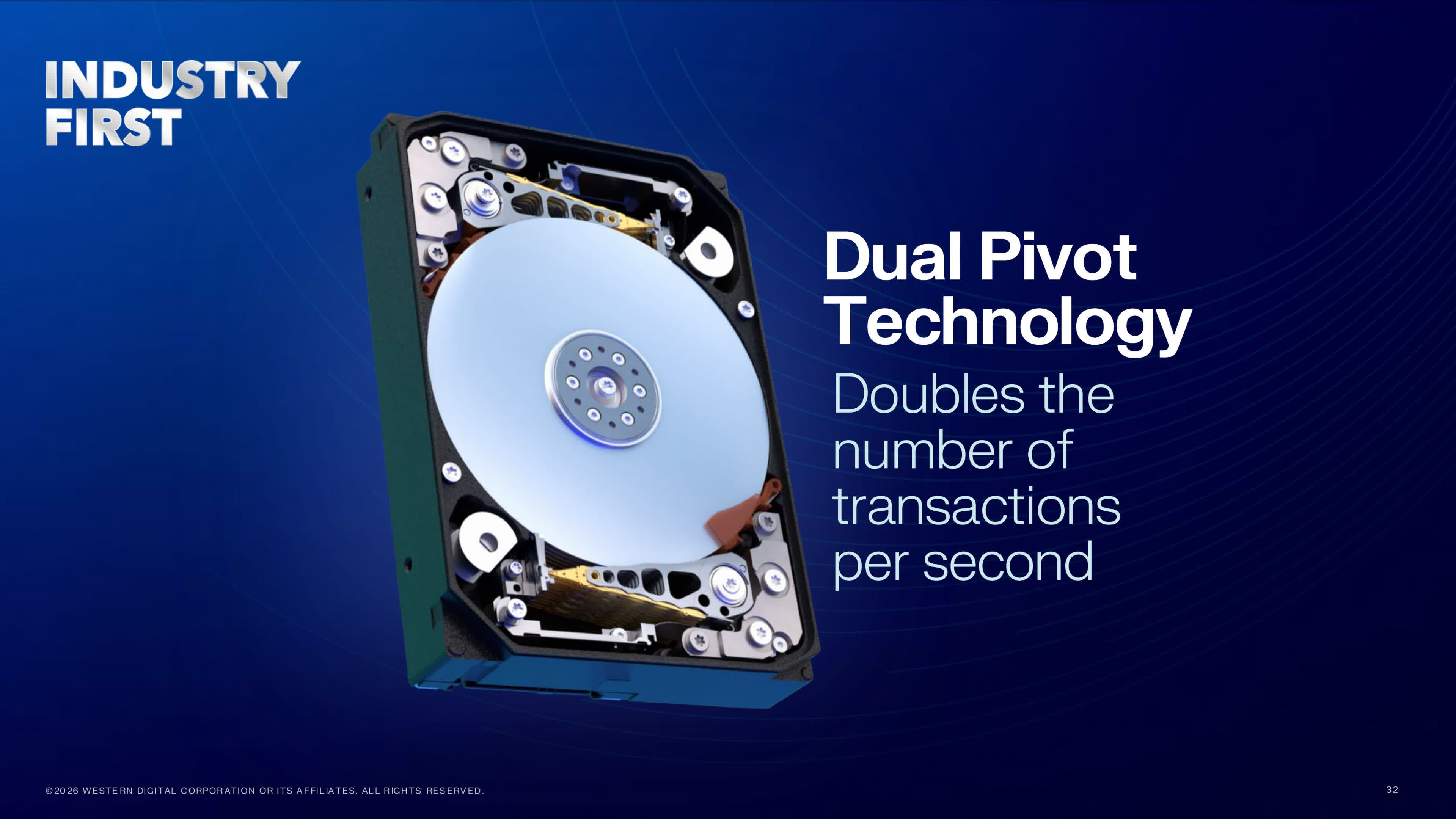
Alongside that effort, the company is developing what it calls Dual Pivot Technology – a reengineered actuator mechanism that uses two independent arms, each operating from a separate pivot, rather than a single shared pivot.
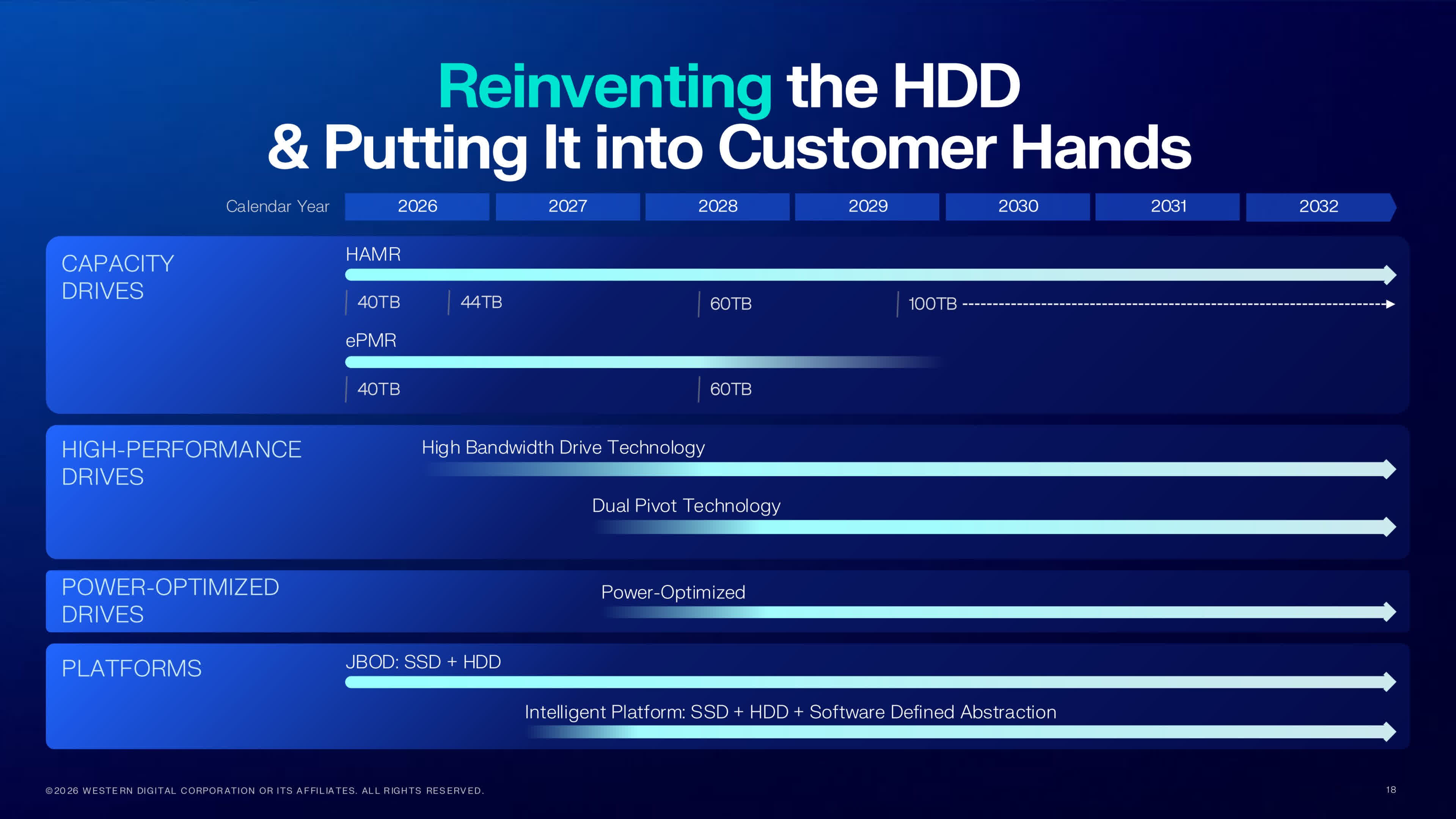
Unlike older dual-actuator designs that sacrificed storage density to achieve higher performance, Western Digital's variant maintains full drive capacity while still boosting throughput. By distributing read and write operations across both actuator assemblies, the company projects a performance gain of roughly 2× over today's top drives, for an aggregate 4× increase in I/O bandwidth when combined with the multi-head design.
The result could be a class of 3.5-inch drives capable of reaching capacities near 100 terabytes while delivering SSD-like access speeds at a fraction of the cost per terabyte. Those economies are especially appealing as cloud and AI operators confront explosive data growth.
Western Digital expects its Dual Pivot technology to move from laboratory development into customer sampling before the end of the decade, with commercial availability around 2028.
Even as it pursues raw speed, the company is also addressing efficiency in another corner of the market. Western Digital's upcoming Power-Optimized HDDs are designed to occupy a middle ground between spinning disk and tape storage.
These drives retain the mechanical nature of HDDs but are tuned for long-term data retention with lower random I/O rates and 20% lower power draw. The goal is to enable cold data – the kind that infrequently moves but must remain accessible – to be retrieved in seconds rather than the hours it takes with tape systems. That tradeoff makes them a potential fit for AI training archives and large-scale data lakes, where both capacity and access speed are critical.