
Bottom line: Google's latest turn in artificial intelligence is reshaping the balance of power in Silicon Valley. Once viewed as lagging behind OpenAI and other rivals, the company's Gemini system is now delivering tangible business results – not just product demos. Across search, cloud computing, and video streaming, the model is being woven into Google's core products and financial trajectory, reshaping the company's spending priorities and recalibrating investor expectations.
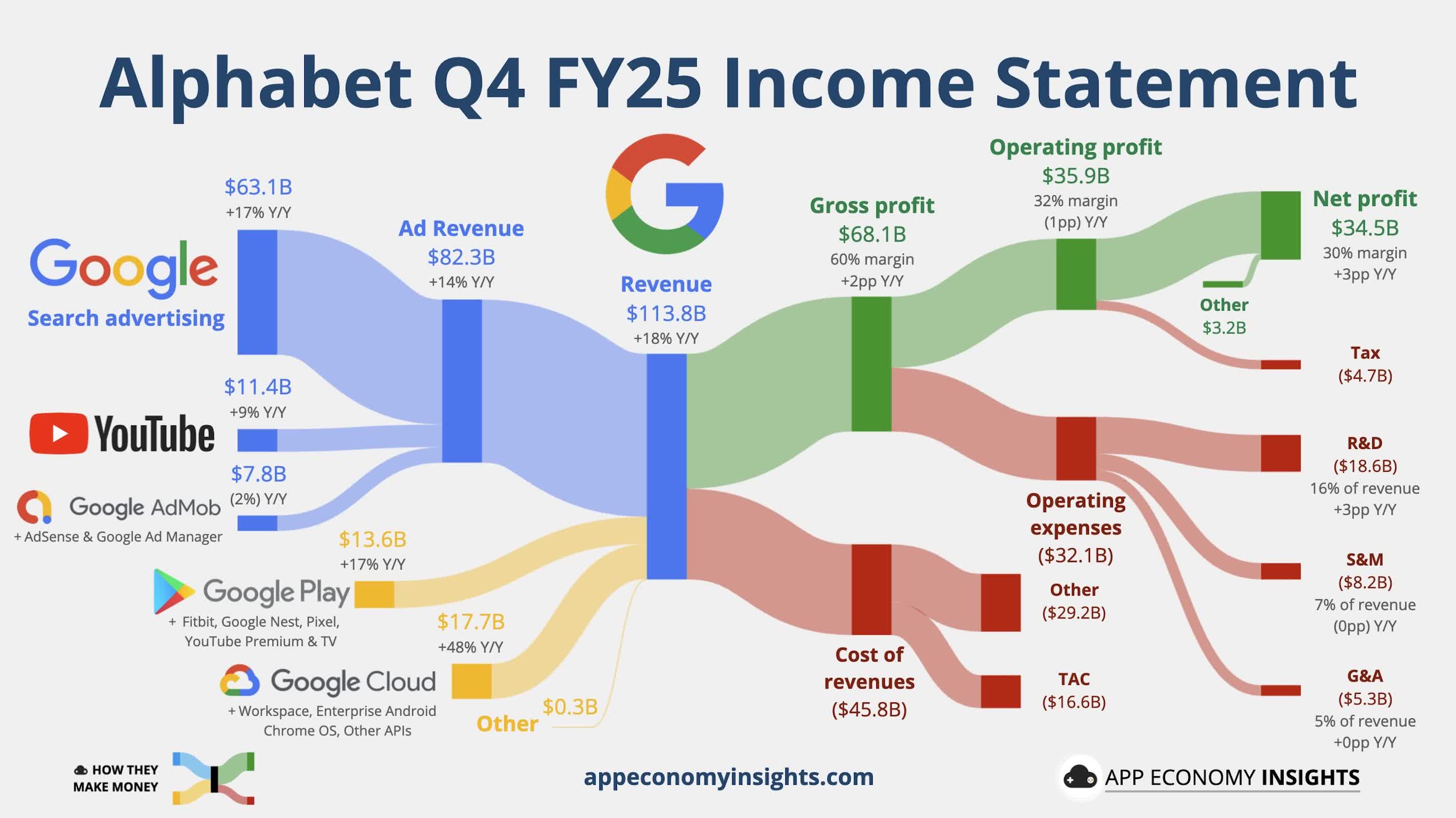
Alphabet reported quarterly revenue of $113.8 billion, an 18 percent increase from a year earlier, fueled by the performance of its AI systems. Net profit surged 30 percent to $34.5 billion, with Gemini at the center of that growth.
Behind the numbers, however, lies an expensive infrastructure race. Google plans to double its capital spending this year to between $175 billion and $185 billion to expand AI data center capacity, following roughly $90 billion spent the previous year.
Credit: App Economy Insights
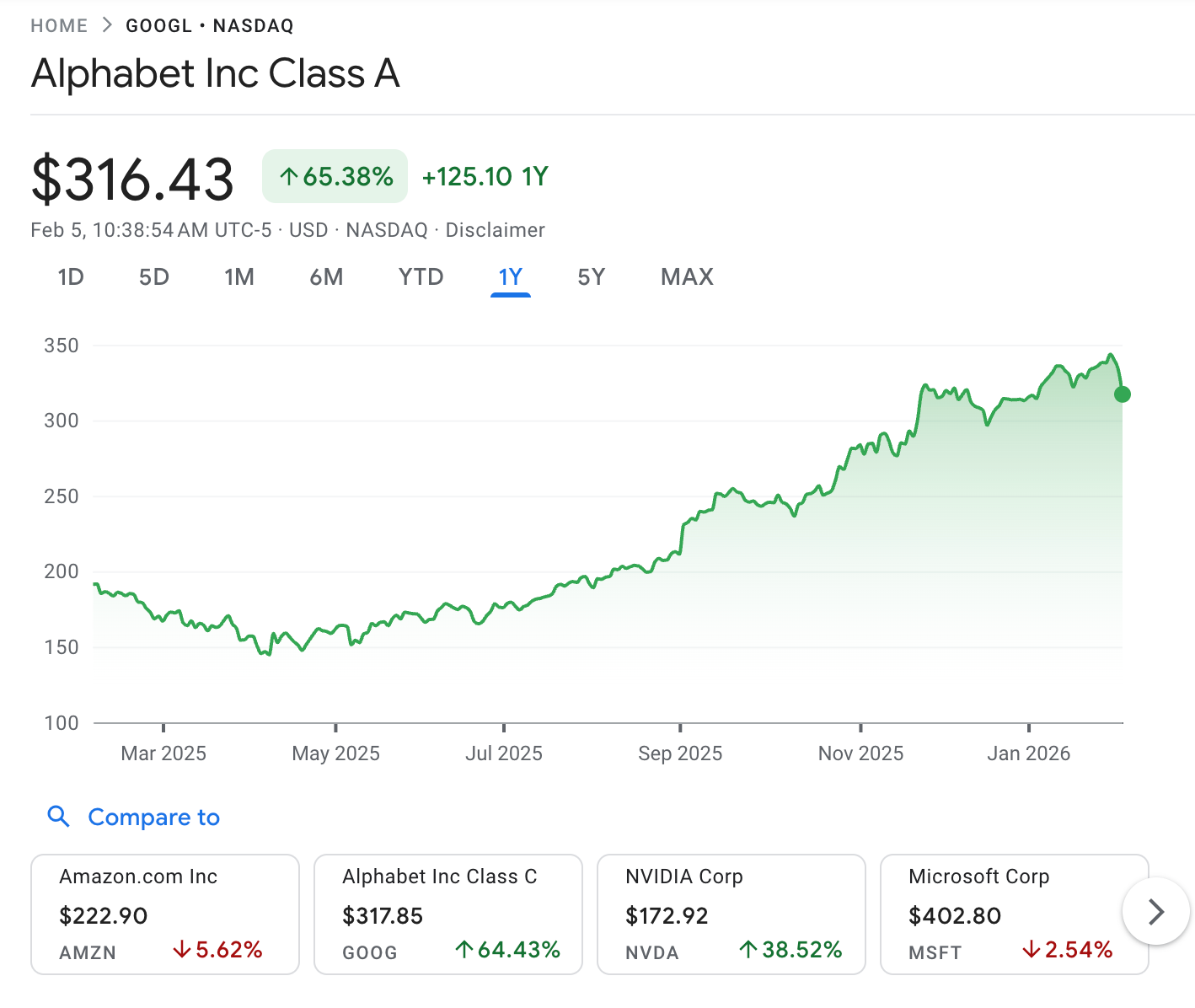
Chief Executive Sundar Pichai told analysts that the company's AI investments are paying off across multiple fronts. Investors appeared to agree – or at least, not panic. Alphabet's shares dipped slightly in after-hours trading but have added roughly $600 billion in value over the past three months, pushing the firm's market capitalization to $4.02 trillion.
Gemini's technical reach is visible across Google's major businesses. Its integration into Google Search, via the "AI Overviews" feature, has increased both engagement and traffic. The model parses natural-language queries and produces direct written summaries rather than a list of links, a capability built on advances in multimodal reasoning and text synthesis.
Google said those AI-driven results are prompting users to search more, driving 17 percent growth in Search revenue to $63 billion for the quarter.
Meanwhile, YouTube is using Gemini to refine recommendation algorithms and ad targeting – tools that identify and surface videos more effectively based on viewers' prior interactions. Those systems helped push YouTube revenue up nine percent to $11.4 billion, contributing to the service surpassing $60 billion in combined ad and subscription income annually.
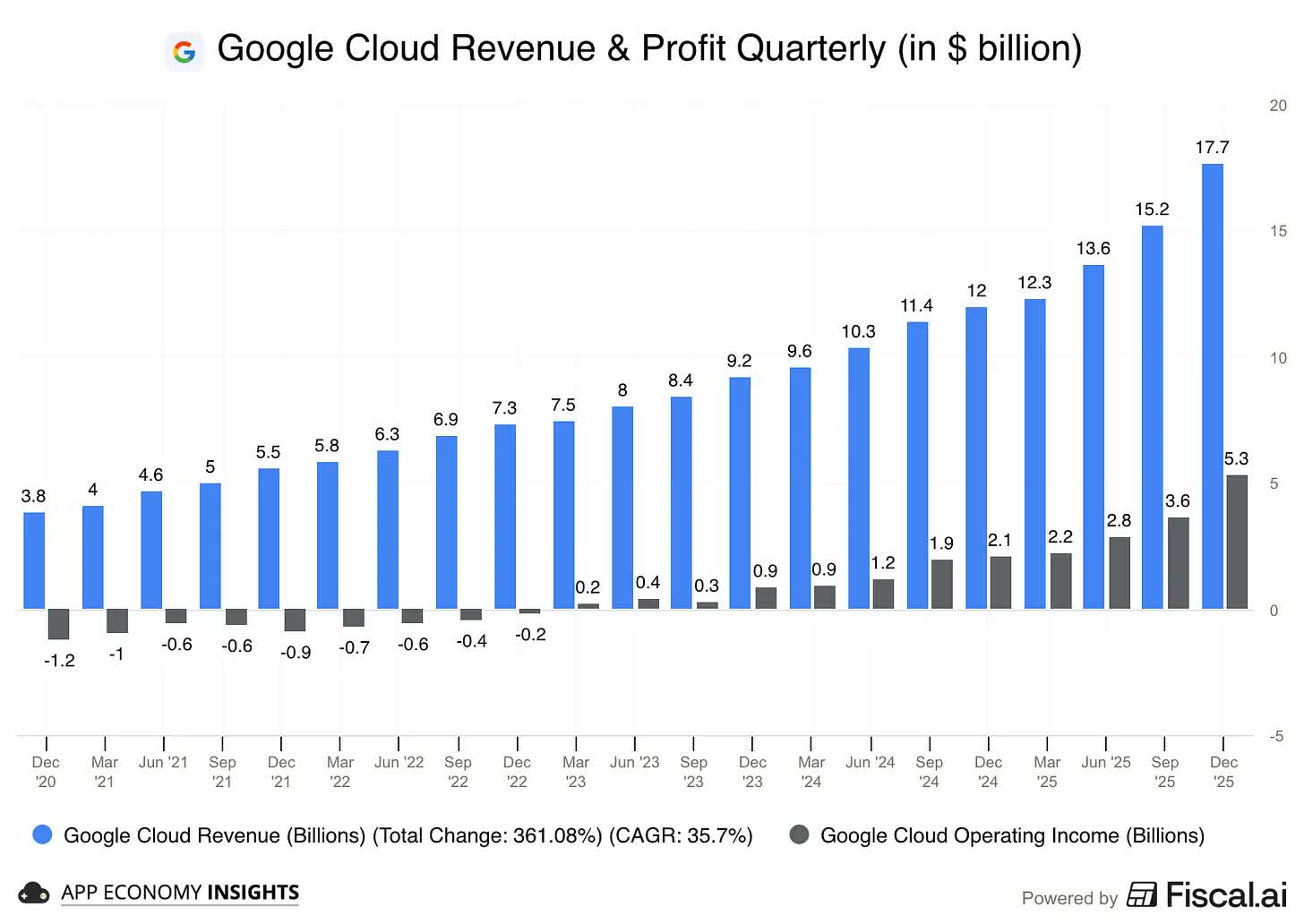
In cloud computing, Gemini has become a commercial product in its own right. Enterprises are using it for automated software development, research, and workflow management, driving 48 percent growth in Google Cloud revenue to $17.7 billion.
The company said it closed more multi-billion-dollar AI contracts in 2025 than in the previous three years combined and still maintains a sizable backlog of demand as businesses seek to deploy large-scale generative models.
That success marks a dramatic turnaround from three years ago, when Google was scrambling to respond to OpenAI's ChatGPT. Internally, the company launched what was described as a "code red" effort to accelerate research and product releases.
Today, Gemini's performance places Google back in front with competitive advantages few rivals can match. The company designs its own TPUs and benefits from the scientific leadership of DeepMind, its London-based AI lab long regarded as one of the best in the field.
2026: Google holds ~14% of Anthropic ($3B+ invested) and ~7% of SpaceX (from 2015's $900M) pic.twitter.com/n5pST6xmtl
(@tzmartin) February 2, 2026
The wider AI infrastructure race, however, is raising the stakes across the industry. Meta and Microsoft each said they expect to spend at least $100 billion on data centers this year, following a similar playbook. But investor reactions are diverging: Meta's shares rose after revenue gains tied to its AI recommendation systems, while Microsoft's dipped following slower-than-expected returns from its heavy investments.
Gil Luria, an analyst at D.A. Davidson, said Google's clear revenue growth could ease concerns that AI data center spending would weigh on profits. "Good results are going to create a relief that at least somebody is winning in the next big market," he told The New York Times.