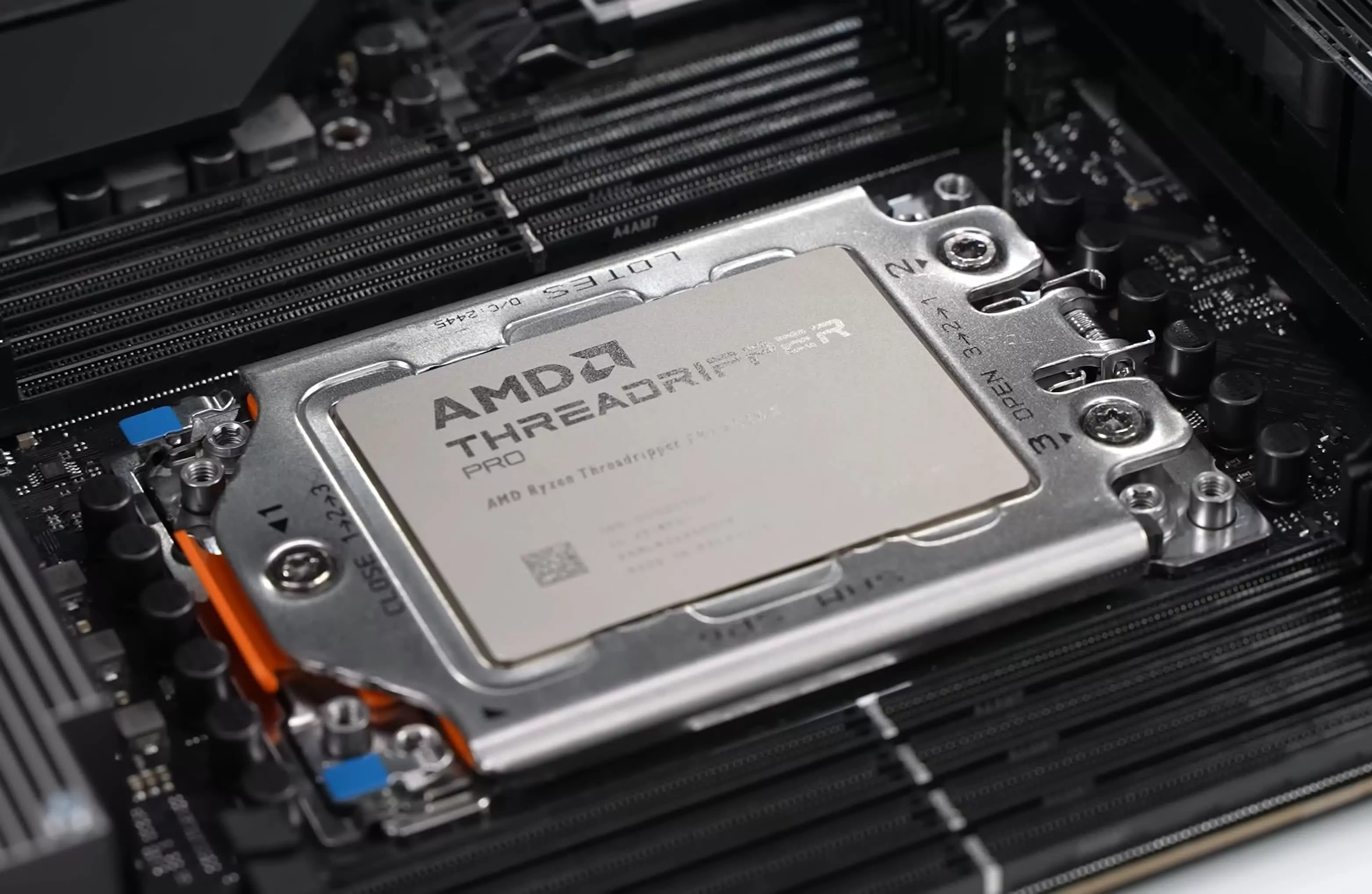
In a nutshell: Cooling a high-end CPU often means reaching for an all-in-one liquid cooler or custom loop. But those options fall short when they meet AMD's Ryzen Threadripper Pro 9995WX, a 96-core Zen 5 chip that can draw over a kilowatt under load and easily overwhelm conventional cooling capacity. That challenge was precisely what Chinese YouTube channel Geekerwan set out to solve – and the solution looks more like an industrial refrigeration experiment than a desktop PC.
Rather than delid the $12,000 workstation chip, the team reverse-engineered its heat spreader to design a replacement from scratch. They borrowed an integrated heat spreader (IHS) through Asus China's general manager Tony Yu and then used older Ryzen Threadripper 1900X chips as test subjects.
Those sacrificial CPUs allowed them to explore different microchannel geometries – narrow cuts through which coolant flows directly over the processor surface – to find a balance between thermal efficiency and structural stability.
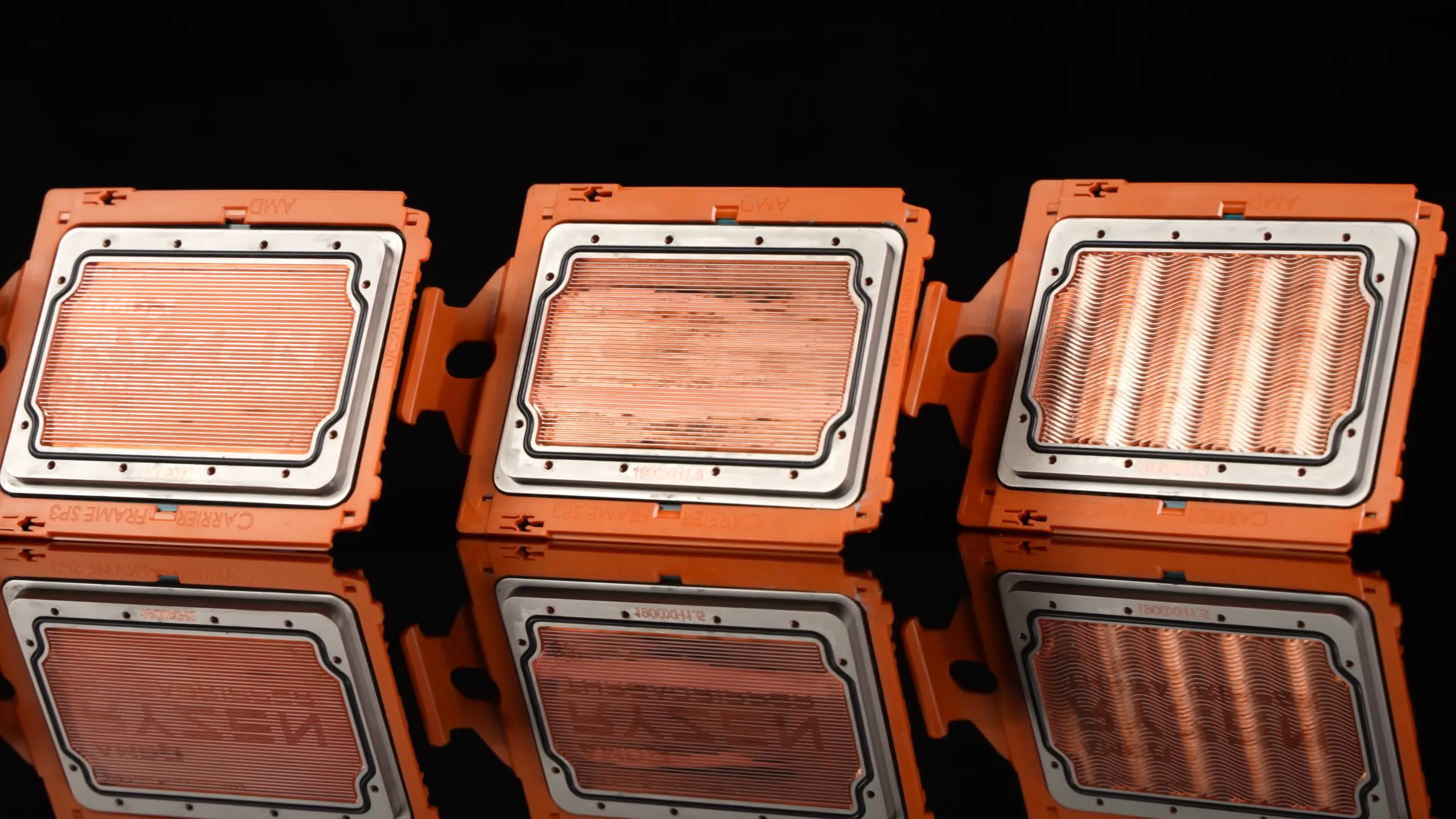
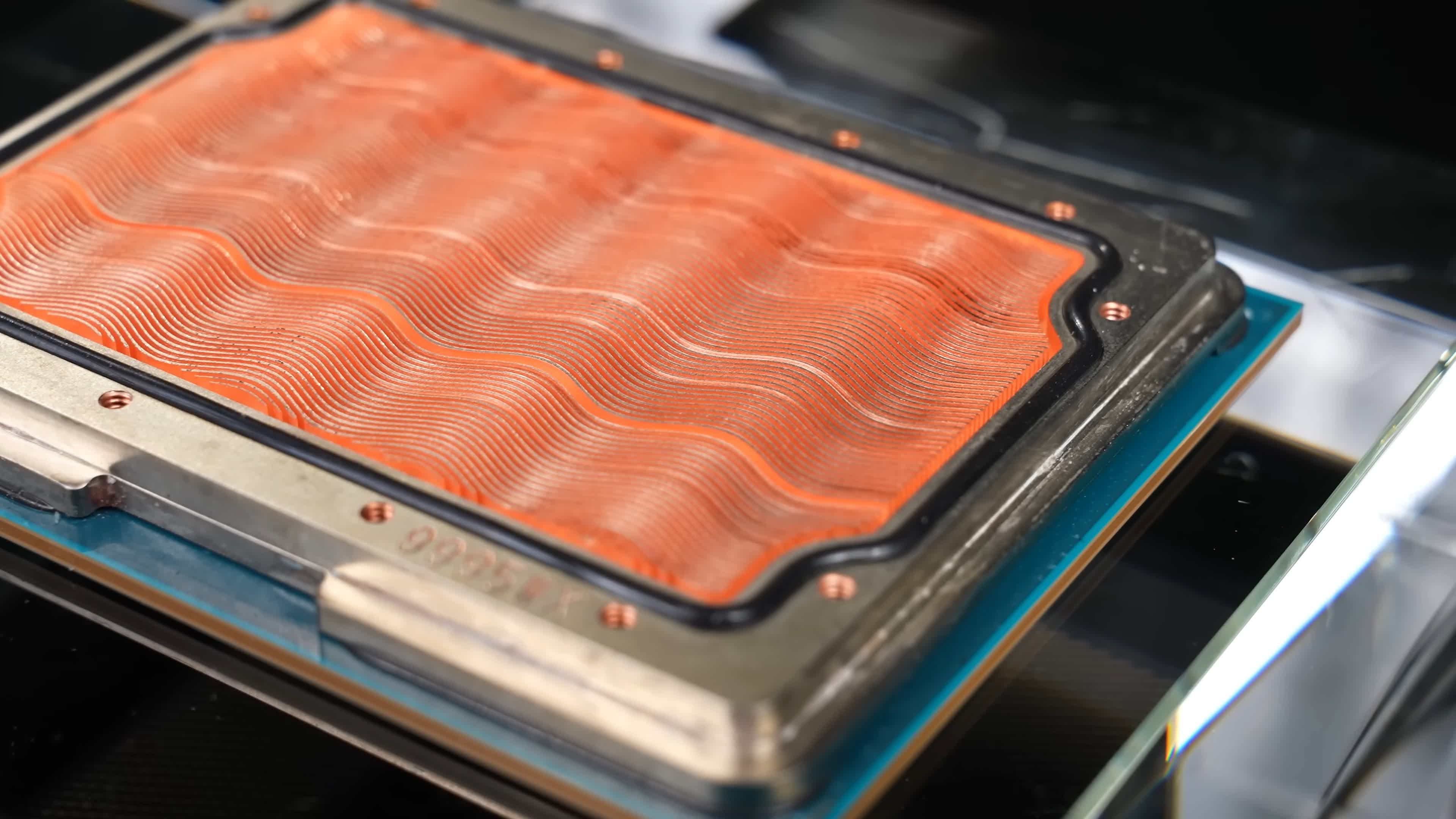
The engineering challenges began with depth. The Threadripper 9995WX's IHS is thicker than that of first-generation models, meaning its microchannels had to be precisely milled using a 0.3mm CNC cutter. The team tested multiple configurations – 1.5, 2.0, and 2.5mm grooves – finding that deeper cuts improved cooling up to a point, beyond which the material risked deforming under water pressure.
They ultimately settled on 2.0mm, which preserved enough thickness for mechanical safety while maintaining a high-density array of cooling fins just 0.15mm thick.
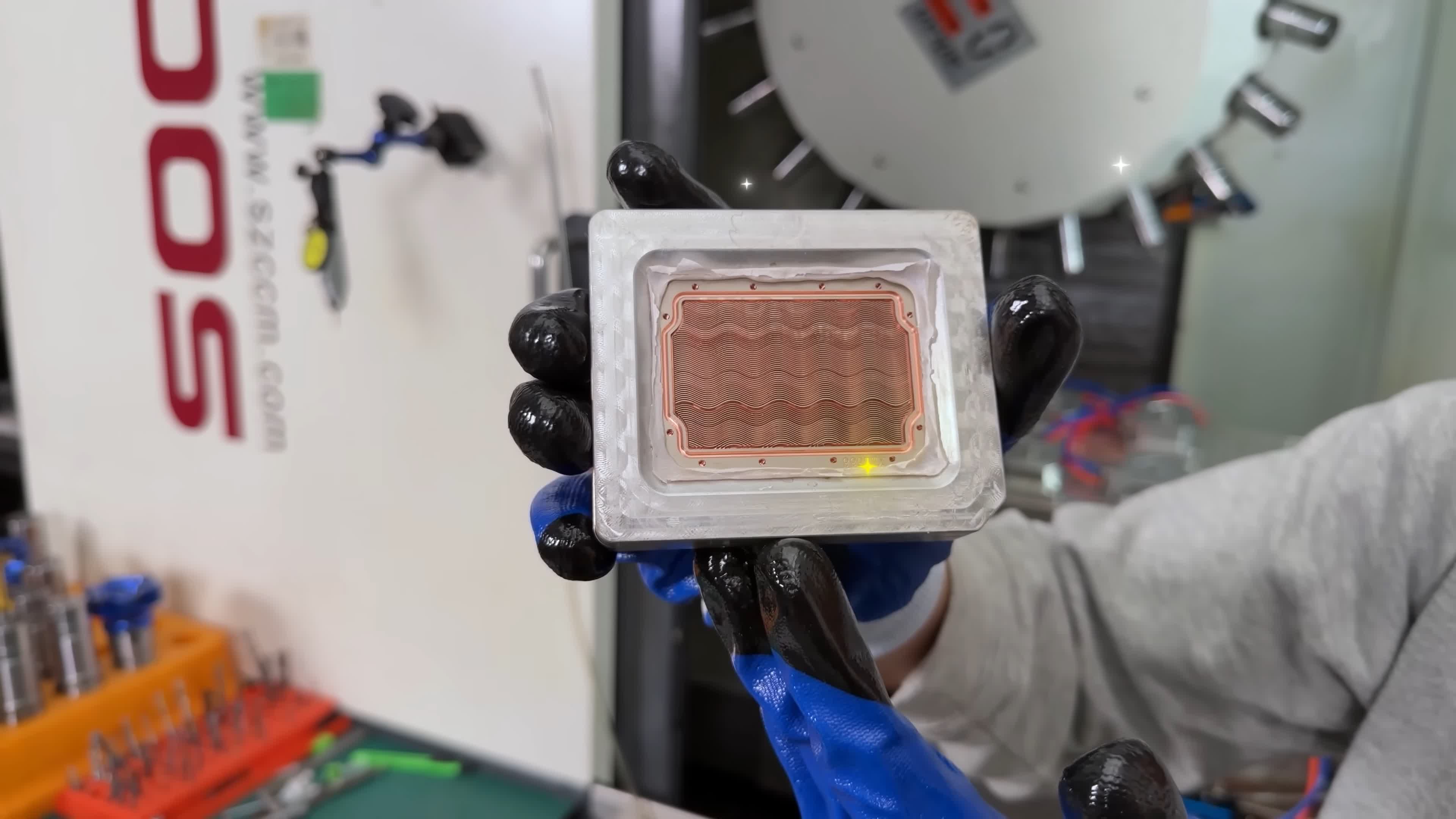
Geekerwan's next breakthrough came with the channel pattern itself. Industry-standard straight microchannels offer predictable flow characteristics, but simulations showed that curving them into S-shaped paths increased the contact area by roughly 20%.
When tested on the retired Threadripper 1900X, the wavy pattern reduced temperature by up to 1.2°C compared with straight cuts – an incremental gain that matters in thermal engineering. The process was time- and tooling-intensive: machining a single high-precision IHS took 19 hours and used 14 0.3mm bits before completion.
However, liquid flow presented an even greater obstacle. The chip's dual CCDs – positioned at opposite edges of the 9995WX die – made conventional dual-tube water blocks ineffective.
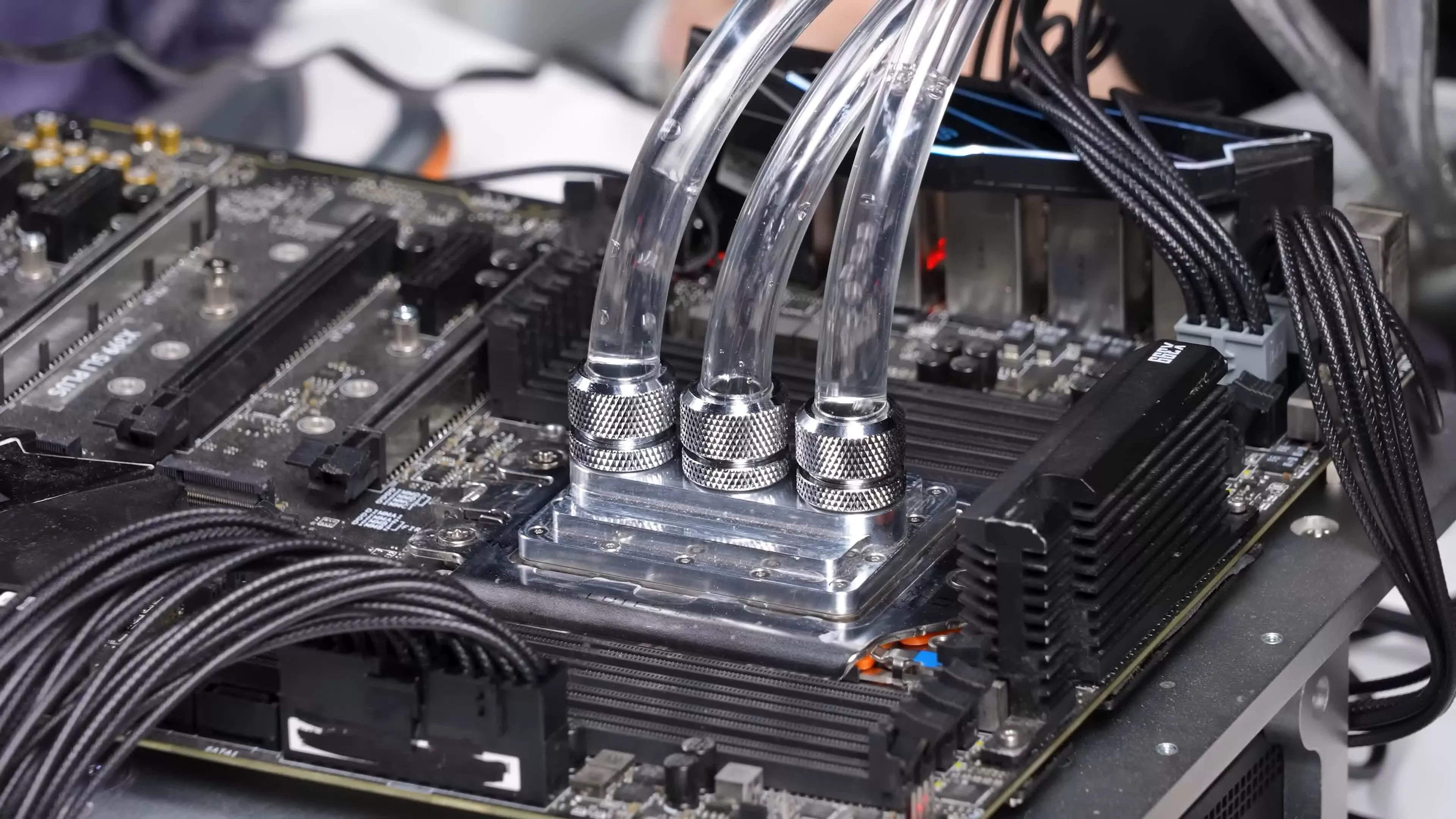
Geekerwan's team first prototyped a three-tube design, feeding coolant through a central inlet and exhausting it at two edges to equalize temperatures. That change alone improved performance by 5°C. The final design expanded this approach into a four-tube cross pattern: two central inlets over the cores, two side outlets for exit flow.
The cooling loop powering this system reads like something from an industrial catalog. Two 50-watt Bosch automotive water pumps – one salvaged from a Mercedes, the other from a Geely – push the coolant through a loop chilled to 0 degrees Celsius by a professional-grade water chiller before it cycles back into a 37-gallon reservoir. The configuration effectively turns the entire setup into a miniature refrigeration plant tailored to a single CPU.
The performance results justified the effort. Overclocked to 5.325 GHz, the 96-core chip idled at 5°C with coolant just above freezing, drawing 176 watts. In Cinebench 2024 and 2026 stress tests, total system power consumption peaked at around 1,700 watts, while CPU core temperatures remained between 30°C and 50°C.
That efficiency translated into measurable gains: the overclocked configuration improved multi-core performance by roughly 18% over the standard Precision Boost Overdrive settings, ranking seventh in global Cinebench R23 results – behind only liquid-nitrogen setups.
Ultimately, Geekerwan proved that with enough planning, simulation, and mechanical precision, it's possible to cool a 96-core workstation CPU without resorting to laboratory-grade cryogenics. While few enthusiasts will ever machine their own IHS or maintain a 37-gallon cooling tank, the experiment highlights how advances in chip architecture now make heat management as challenging as the silicon itself – and as open to creative experimentation.