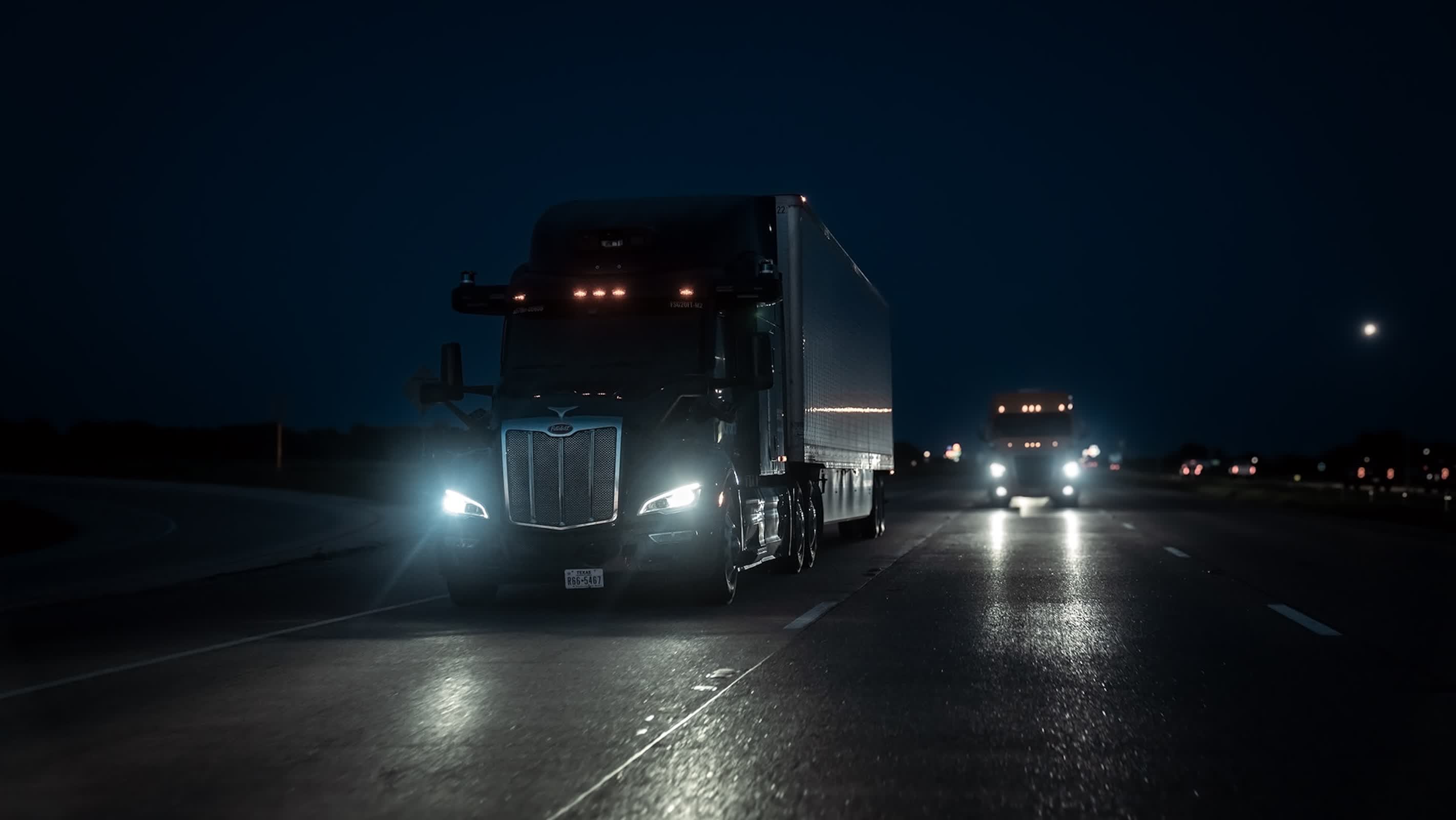
The big picture: Aurora has begun operating self-driving semi-trucks along a 1,000-mile route between Fort Worth, Texas, and Phoenix, Arizona, marking a significant milestone in the commercialization of autonomous freight. The route – completed without a human driver behind the wheel – represents the longest continuous run of driverless trucking in the US.
The journey takes Aurora's autonomous trucks roughly 15 hours, or about half the time a human operator could legally drive under federal hours-of-service rules. Existing regulations limit truck drivers to 11 hours of driving within a 14-hour window, require a 30-minute break after eight hours, and mandate a 10-hour rest period once daily limits are reached. For logistics companies, the ability to bypass these constraints presents significant economic advantages.
During the company's recent earnings call, Aurora co-founder and CEO Chris Urmson described the milestone as "the dawn of a superhuman future for freight," emphasizing that the breakthrough is not only technological but also operational and financial. Aurora's customers – including Uber Freight, Werner, FedEx, and Schneider – are expected to benefit from faster turnaround times and lower costs as autonomous trucking becomes more widespread.
Aurora began generating commercial revenue in April 2025 after launching driverless freight services on public highways in Texas. The company reported $1 million in revenue for the fourth quarter of 2025 and $3 million for the full year, according to filings with the US Securities and Exchange Commission. Adjusted revenue, which includes earlier pilot programs, totaled $4 million.
Although those figures remain modest, Aurora is rapidly transitioning from research to full-scale operations. The company posted a net loss of $816 million in 2025 – about nine percent higher than the previous year – reflecting continued investment in hardware, software, and network expansion. Such losses are typical for companies scaling AI platforms and autonomous systems.
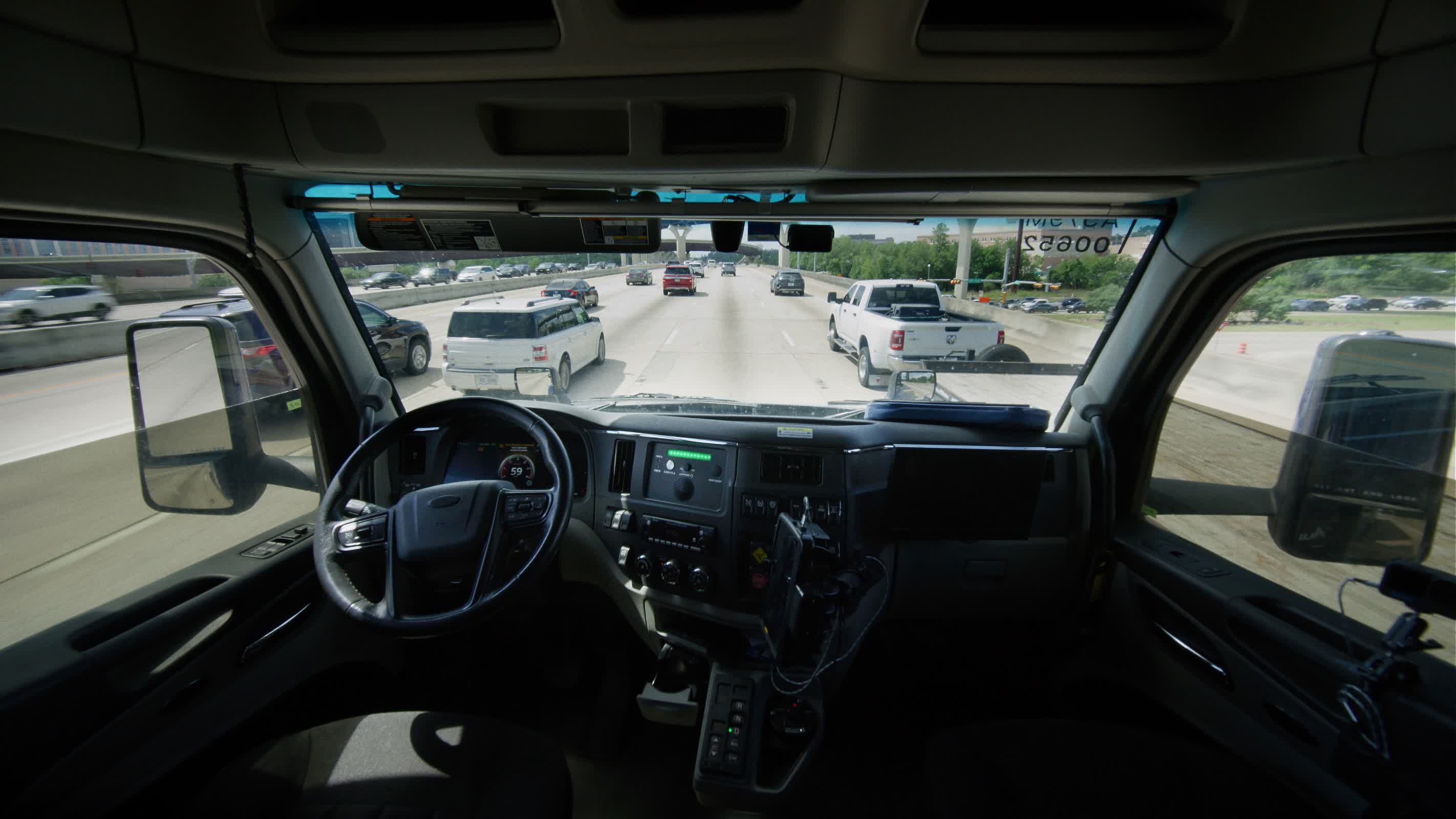
Aurora's self-driving fleet currently includes 30 trucks, 10 of which operate fully driverless. The company expects its network to exceed 200 vehicles by the end of 2026, spanning routes across the Sun Belt – from Texas and New Mexico to Arizona – with additional states, including Nevada, Louisiana, and Florida, slated for expansion.
Many of Aurora's vehicles still carry a human observer, a requirement imposed by truck manufacturers such as Paccar. Later this year, the company plans to deploy a fleet of driverless International LT trucks without onboard observers, marking what executives describe as the first phase of full-scale deployment.
In a letter to shareholders, Aurora said it has logged more than 250,000 driverless miles since its commercial launch and maintains a perfect safety record. The company added that its expanding route network has positioned it not only as a technology developer but also as a freight carrier, generating revenue from live shipments.
Aurora attributes much of its recent progress to rapid iteration of its self-driving software. Since April 2025, the system has undergone four major releases, each broadening its operational capabilities.
The initial release supported daytime driving between Dallas and Houston. Subsequent versions validated nighttime operations and extended service westward to El Paso. The most recent update enables the trucks to navigate the diverse terrain and climate zones of the American South and Southwest.
The company is also finalizing a second-generation hardware platform that executives say will reduce per-mile costs and streamline integration across multiple truck models. Urmson characterized these advancements as evidence that self-driving technology has moved beyond laboratory testing and pilot programs into scalable logistics infrastructure.
Autonomous freight presents a compelling financial case for shippers and carriers. Transit times along the Fort Worth – Phoenix corridor could eventually be cut nearly in half compared with human-driven operations, according to Aurora. Early customers, including Hirschbach, have already committed to long-term partnerships along the route.
If Aurora's rollout proceeds as planned, the company could become the first large-scale operator of a fully autonomous freight network on US highways. Urmson told investors that he expects 2026 to mark an inflection point for the self-driving trucking industry.