
Recap: Google recently published its Android ecosystem security overview for 2025, revealing that it used AI extensively to block millions of potentially malicious apps before they could reach the Play Store. The company also strengthened its machine learning defenses to identify and blacklist tens of thousands of developer accounts for alleged policy violations.
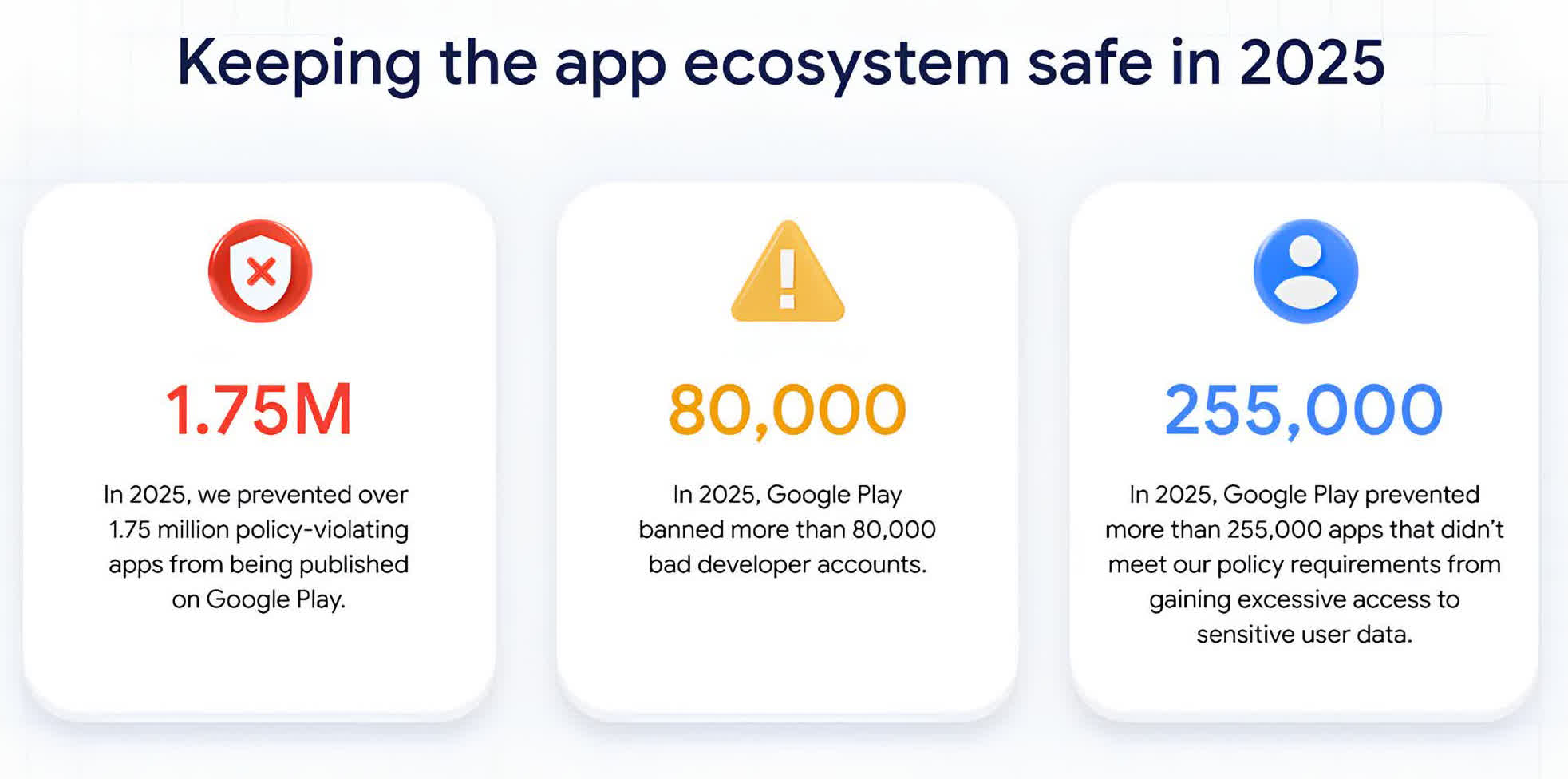
According to Vijaya Kaza, Google's VP of app and ecosystem trust, the company rejected more than 1.75 million potentially harmful apps during the review process and blocked over 80,000 developer accounts for various policy violations. Both figures are significantly lower than in 2024, when 2.36 million apps were rejected and 158,000 developer accounts were blocked.
In addition to the blocked apps, Google's Play Protect anti-malware service reportedly prevented 255,000 Play Store apps from accessing sensitive user data after failing to meet the company's policy requirements. Google did not disclose which apps were affected or specify the policies they violated.
Explaining how it incorporated machine learning into the approval process, Google said it used its latest generative AI models to identify malicious patterns more quickly, although final approval or rejection decisions were still made by human reviewers. The company announced last year that AI is now used to run more than 10,000 safety checks on every app published to Google Play.
Google also cracked down on spam ratings and reviews on the Play Store last year, blocking a staggering 160 million fake user interactions as part of its efforts to keep reviews and ratings meaningful for users. The company further reported that it prevented review bombings of certain apps and services, avoiding an average rating drop of 0.5 stars for affected applications.
Play Protect, which scans more than 350 billion apps every day, reportedly blocked 27 million malicious apps from being sideloaded by unsuspecting users in 2025. Google added that Play Protect's enhanced fraud protection system was expanded to cover over 2.8 billion Android devices across 185 markets, preventing 266 million installation attempts from 872,000 harmful apps.
Building on its recent success in fighting malware, Google reiterated plans to expand the Play Store's developer verification program to all professional developers across the Android ecosystem. Students and hobbyists, however, will still be able to distribute apps on a limited scale without undergoing full verification.
Google claims the new policy will "legitimize authentic developers" and prevent bad actors from targeting innocent users. Critics, however, argue that it represents another step by Google to fortify the Android ecosystem, potentially inconveniencing power users.