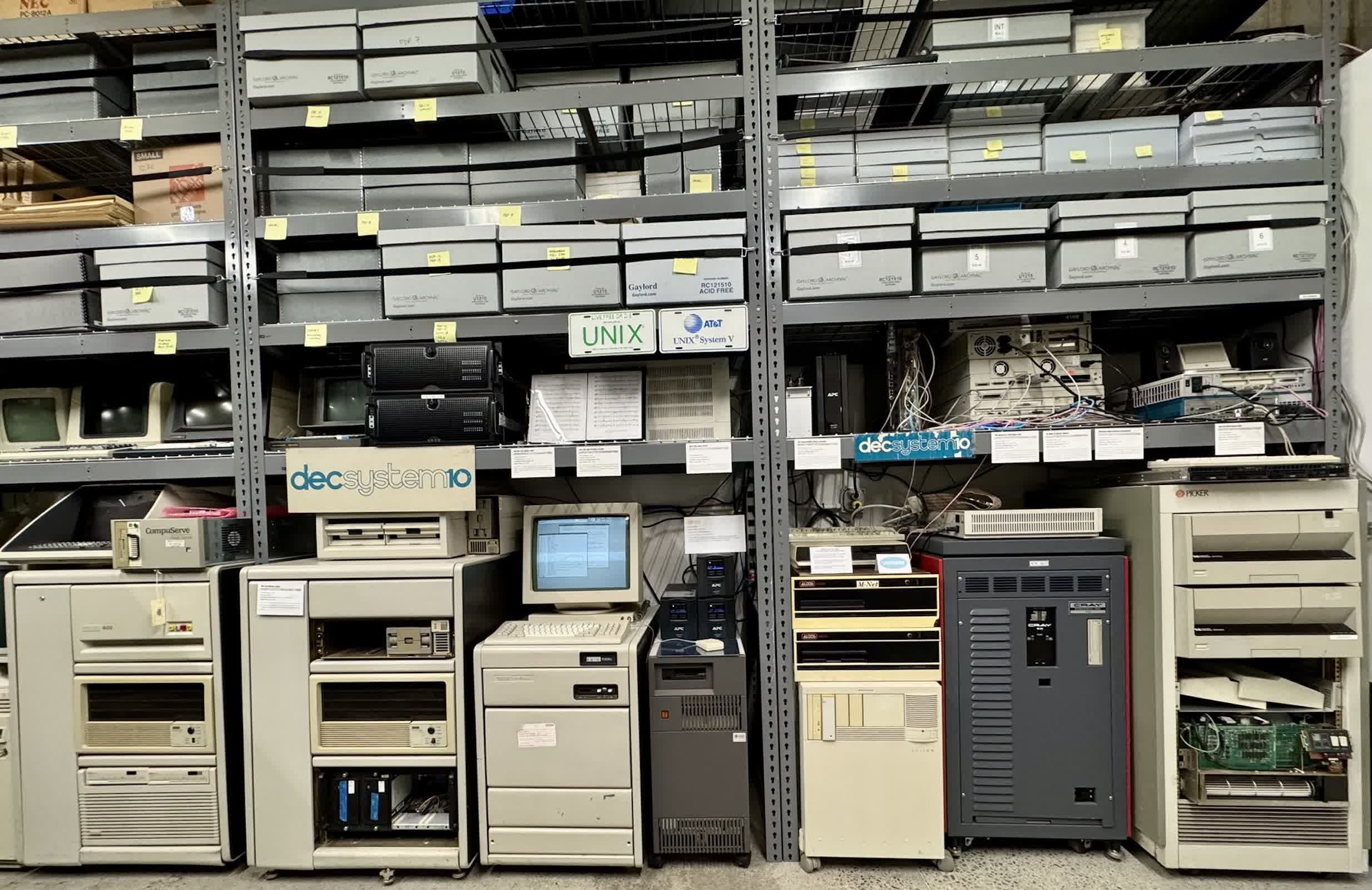
Through the looking glass: When software historians talk about preserving the roots of modern computing, they usually mean source code or documentation. Now, they can mean the computers themselves – alive and running, online, and free for anyone to use.
Through a partnership between the Interim Computer Museum (ICM) and SDF.org, twenty-eight vintage computing systems – some emulated, some partially hardware-based, and some running on original machines – are now accessible to the public through a web portal.
Unlike digital exhibits that rely on screenshots or static replicas, the ICM/SDF project gives direct, live access to historical operating systems that predate much of today's software architecture. Users connect via connect.sdf.org and can browse the full list with a text menu.
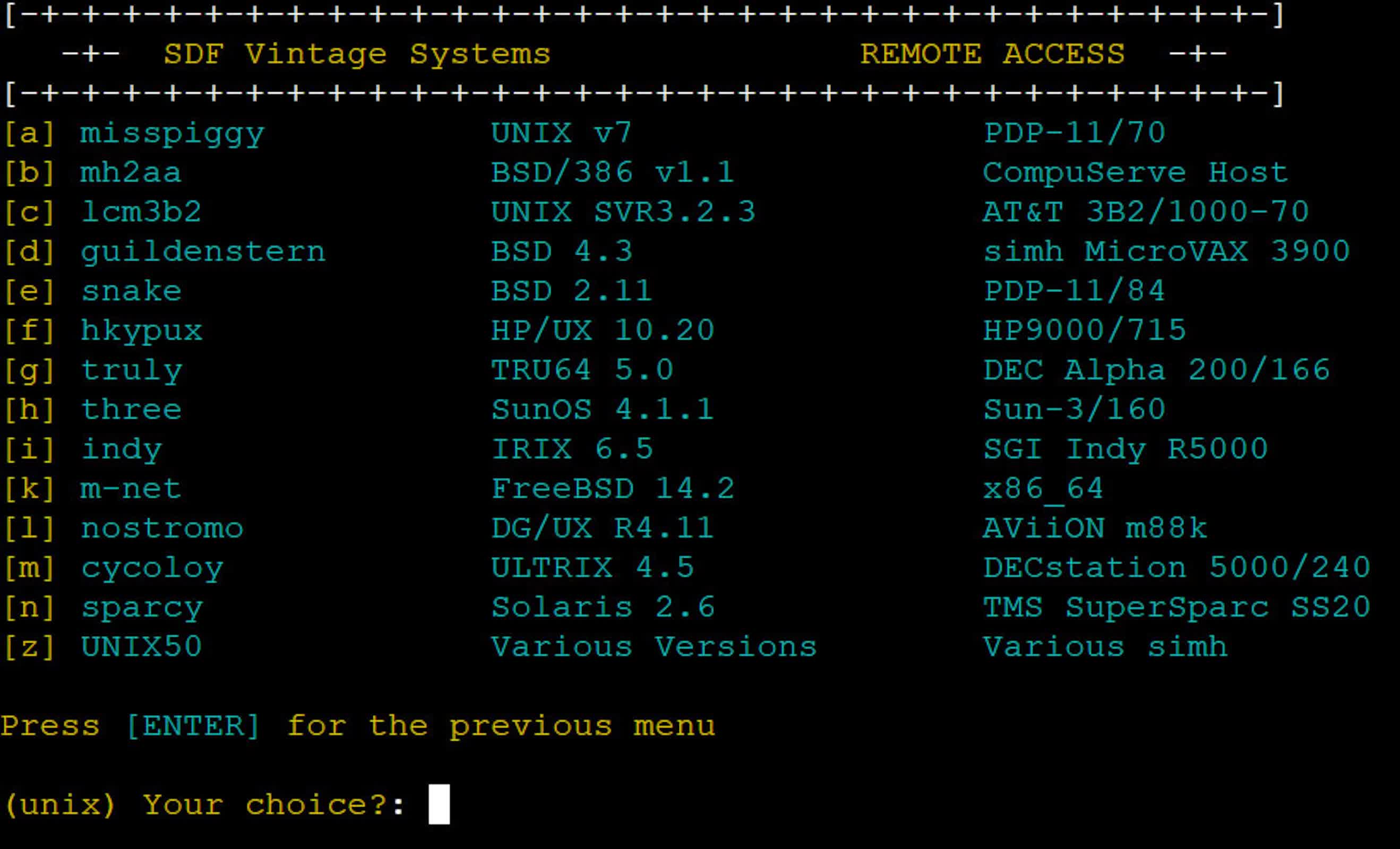
The systems themselves are not uniform in form. SDF describes them as a blend of emulated environments, hybrid configurations, and restored vintage hardware. What makes the project different from earlier academic emulation efforts is the scale and fidelity of the experience. Rather than isolating systems behind research firewalls, this initiative puts operational instances of historical machines directly on the public internet.
Among the lineup are several milestones rarely encountered outside of research institutions. The Multics operating system – originally developed in 1964 by MIT, General Electric, and Bell Labs – runs on a virtualized Honeywell 6180, as it once did in the 1970s.
Multics' innovations, such as segmented memory and dynamic linking, heavily influenced Unix, and by extension, every Unix-like OS since. For historians of computing, seeing Multics boot live shows how much of modern infrastructure traces back to that original design spine.
Elsewhere in the collection, three TOPS-20 systems channel the spirit of the PDP-10, the machine that powered much of the early ARPANET. These offer the classic @ prompt, an anchor point recognizable to anyone who's ever explored the lineage of networked computing. TOPS-20 offered command completion and directory contexts long before Unix shells made them standard.
One of the most ambitious nodes available online is the Control Data Corporation 6500 system running NOS 1.3, designed with Seymour Cray's architecture prior to his founding of Cray Research. The CDC 6500 used a single main CPU and 10 peripheral processors, an early step toward the parallel designs that still shape high-performance computing today.
The PDP-11/70, known as MissPiggy, runs Version 7 Unix – the foundational release from which most later Unix systems evolved. It's also fully interactive: users can log in, explore directories, and even run terminal-based programs, such as the original chess engine.
The project builds on SDF's long-standing mission to make computing accessible. One of the oldest public Unix systems still running, SDF fosters experimentation and preserves software history. That same ethos drives the new interactive museum.