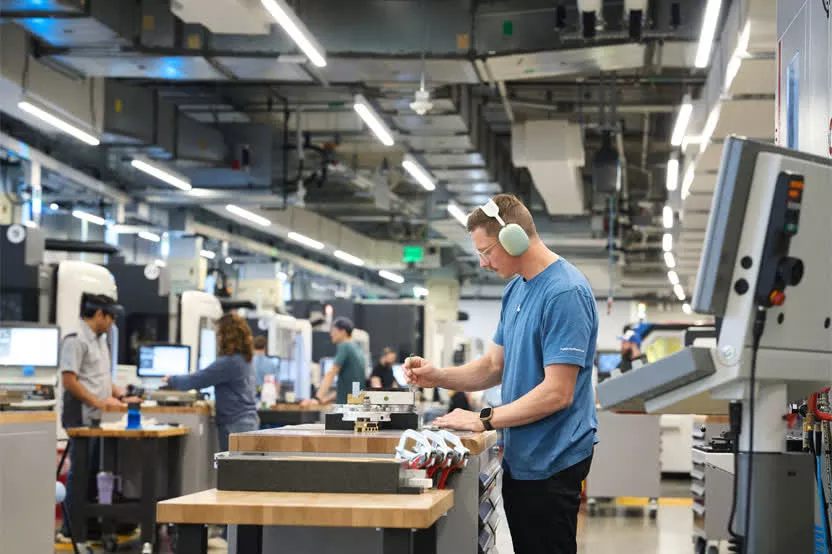
In a nutshell: Apple has announced that it plans to move some production of the Mac mini from Asia to the United States this year. According to reports, the computer will be manufactured at a Foxconn facility in Texas.
The announcement came from Sabih Khan, Apple's chief operating officer. During a tour of the Foxconn facility in North Houston, Khan told The Wall Street Journal, "We're very excited to tell you that later this year we will be beginning Mac mini manufacturing right here in this space."
Khan added that production of the Mac mini will continue in Vietnam and China – those facilities will meet local demand as manufacturing in the US ramps up. It's unclear whether Apple plans to scale down production at its Asian facilities.
Khan said that Apple makes "thousands" of Mac mini computers every week. He added that unlike the more expensive Mac Pro, which is also assembled in Texas, the Mac mini experiences more demand – Apple expects that pattern to remain unchanged in the long term.
Apple also said it will be expanding the Houston facility to include a new training center for advanced manufacturing.
Moving some Mac mini production to Texas is part of Apple's pledge to invest billions into US manufacturing. In February 2025, the company promised $500 billion over four years, which included hiring 20,000 people in the US. The iPhone maker unveiled plans to spend an additional $100 billion on US investments in August, taking the total to $600 billion.
President Trump has repeatedly criticized Apple for manufacturing its products overseas. Although most of its products are still made in China, the company has moved some production to Vietnam, Thailand, and India in recent years – but that still hasn't appeased Trump.
Apple's announcement comes days after the US Supreme Court ruled that Trump's IEEPA-based reciprocal/global tariffs were unlawful. Some major electronics categories – including smartphones and computers – had been exempted from those tariffs, but Trump has since announced a 15% tariff on imports from all countries under a different approach, which could also affect Apple.
Apple's move reflects a broader shift toward diversifying its manufacturing while strengthening its US presence. By expanding domestic production alongside its established Asian supply chain, the company aims to improve supply resilience, respond to political pressure, and maintain flexibility amid evolving trade policies and global market demand.