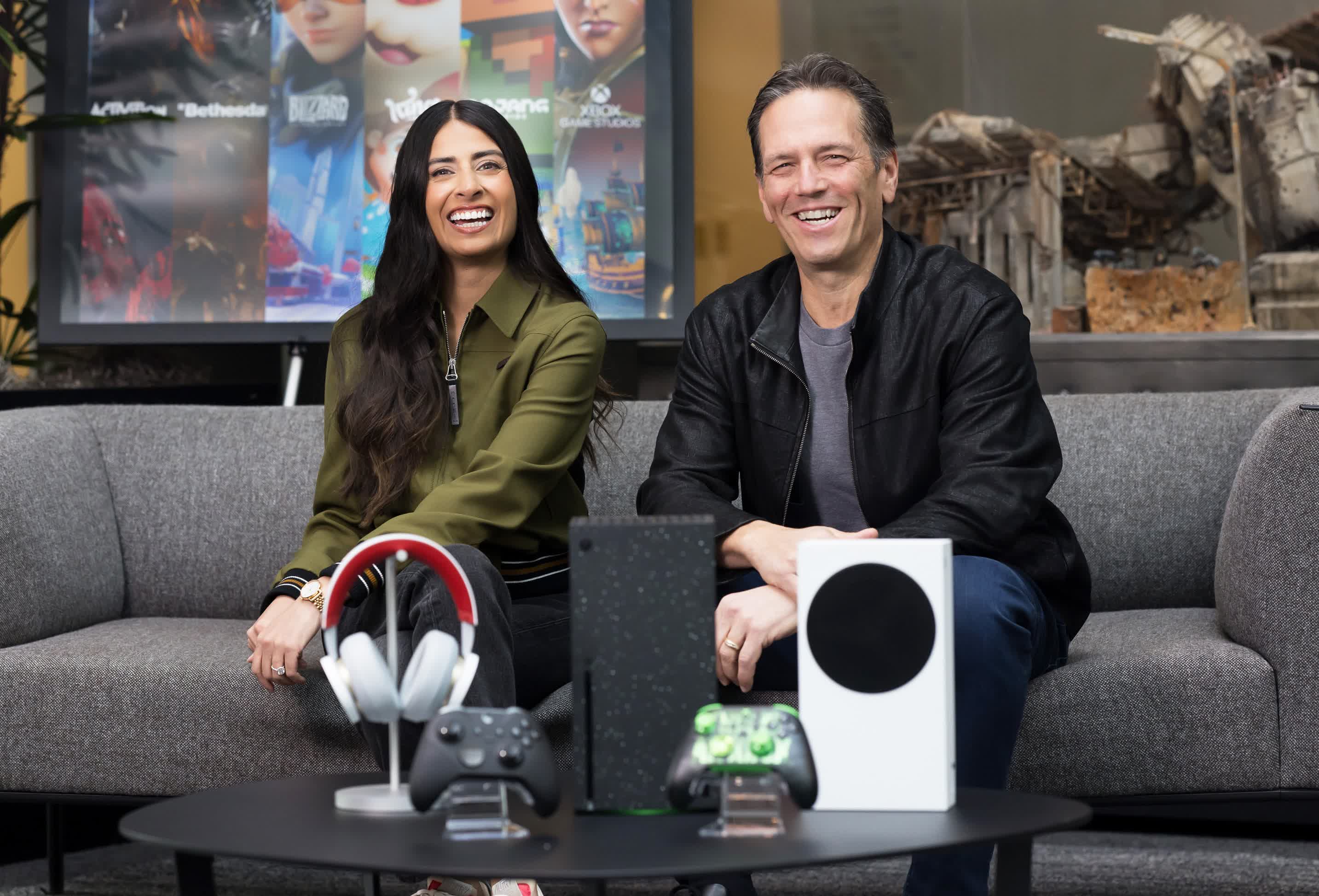
A hot potato: The co-founder of Xbox is one of many people who believe the appointment of Asha Sharma as head of Microsoft's gaming business is a worrying sign for fans. Seamus Blackley says the brand is being "sunsetted" in favor of an AI-first approach, and that Sharma is being positioned "as a palliative care doctor who slides Xbox gently into the night."
Last week, Microsoft CEO Satya Nadella announced that the company's CoreAI Product president, Asha Sharma, had become the head of Xbox, replacing the retiring Phil Spencer. The news came as a surprise: former Xbox president Sarah Bond, who has now resigned from Microsoft, was expected to be the 38-year veteran's replacement.
Sharma's lack of gaming experience and previous position as an AI executive raised concerns that Microsoft is pushing Xbox into becoming an AI-first product – as it has done with many of its other products.
New #Xbox CEO Asha Sharma has now publicly shared her Gamertag. She has a 10,860 gamerscore and seemingly only started playing on Xbox or this GT one month ago.
– NIB (@nib95_) February 21, 2026
She (or whomever runs the account) has played 29 games in the span of that month. pic.twitter.com/3EMvDVLNo3
Seamus Blackley, best known for creating and designing the original Xbox in 2001, believes Xbox as we know it faces an uncertain future.
In an interview with GamesBeat, Blackley warned, "Xbox, like a lot of businesses that aren't the core AI business, is being sunsetted."
"They don't say that, but that's what's happening. I expect that the new CEO, Asha Sharma, her job is going to be as a palliative care doctor who slides Xbox gently into the night," he continued.
Blackley, who left Microsoft in 2002, said that Sharma's appointment illustrates how Nadella wants someone with an AI background to take over what is viewed as an AI job.
"I imagine asking somebody if it made sense to put a major motion picture studio into the hands of somebody who didn't like movies, or a major record label into the hands of somebody who'd never seen a live show," Blackley said.
Hot Take: it doesn't matter if a CEO is a gamer.
– NikTek (@NikTek) February 22, 2026
As Strauss Zelnick has said perfectly "a CEO's job is to attract, retain and motivate the best talent in the business and then get out of their way."
The new Xbox CEO, Asha Sharma doesn't need to be a gamer to run a company.… pic.twitter.com/fw5B6dwCyQ
"Why would you do that? Well, you only do that if you're looking at the problem in a more abstract way. The natural consequence of the focus on AI is that AI abstracts every problem from the minds of the executives who believe in it. We're abstracting the problem of games as well. There's a core belief, and you can see it in what Satya said, that AI will subsume games like it will subsume everything."
The general opinion of generative AI continues to be negative, a sentiment that keeps growing as more jobs are lost and AI slop proliferates the internet. But Blackley says your opinion on the technology doesn't really matter; after investing billions into the industry, Microsoft is moving all of its business units toward generative AI, and that includes gaming.
"Microsoft is a company that is now about enabling its customers by enabling AI to drive things," he said. "That's at odds with the auteur model of any art, but specifically of games. Microsoft doesn't have the problem that Apple does, or that Netflix does, where they have an auteur-driven content model to manage. Games are the only place where they have a content business."
Blackley praised Spencer, saying he had also tried to do the right thing for games until "that finally wore him out."
Microsoft is aware of the optics of promoting Sharma to Xbox chief. In a statement following her appointment, she said there would be no "soulless AI slop" in Xbox games and that she has "no tolerance for bad AI." However, Sharma also said that "AI has long been part of gaming and will continue to be."
Microsoft is expected to launch the next Xbox sometime in 2027. We can expect AI to be a part of the console, though how large a role it will play, and whether people appreciate it, remains to be seen.