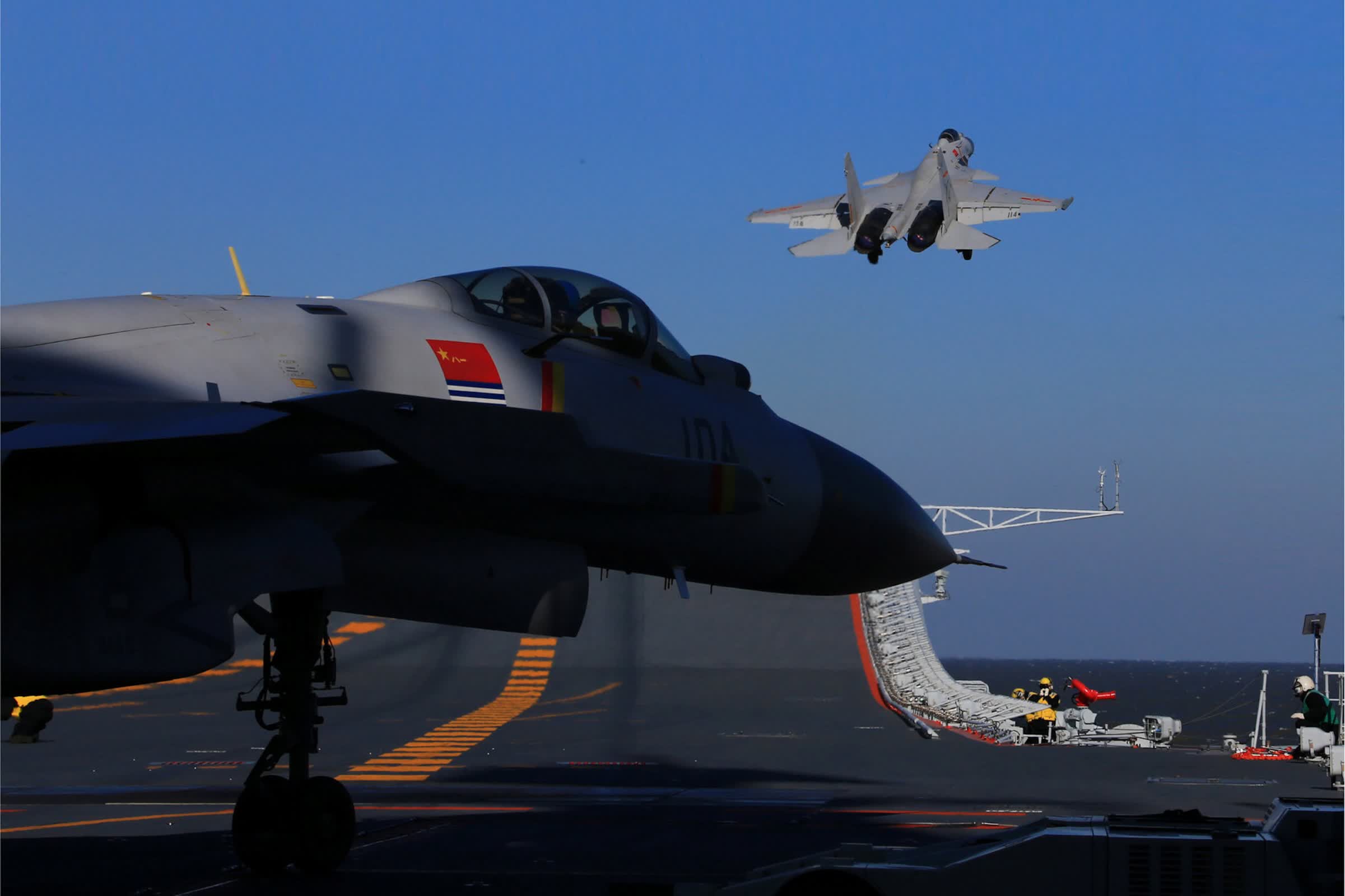
Why it matters: In closed-door briefings in Washington and Silicon Valley, national security officials have been blunt with executives from Apple, AMD, and Qualcomm: China is making plans to retake Taiwan, and even a blockade could choke off the island's chip exports and bring the US tech industry to its knees.
The warnings, reinforced by recent Chinese live-fire drills around Taiwan and a classified industry report projecting an economic shock on the scale of the Great Depression if Taiwan's chip supply is cut, have turned a once-abstract geopolitical worry into a direct threat to US growth. Yet for years, major US tech companies largely kept their supply chains where they were, deepening concern in Washington that Silicon Valley's inaction could destabilize the global economy if a crisis erupts.
China's growing military pressure on Taiwan is no longer just a regional flashpoint; it is a direct threat to the island's chip industry, which produces nearly all of the world's most advanced silicon and underpins the AI boom. Any move by Beijing to blockade or seize Taiwan would immediately endanger that manufacturing base, turning a concentrated geopolitical risk into a global technology shock and putting the US economy on the path modeled in the 2022 Semiconductor Industry Association report, which forecast an 11 percent plunge in US output if Taiwanese chip flows were severed.
That scenario has shifted Washington's approach from quiet persuasion to heavy-handed intervention. After years of warnings, subsidies and behind-the-scenes pressure that failed to move the market, the US government is now using tariffs, equity stakes, and direct demands on executives to pull a meaningful slice of leading-edge semiconductor production out of Taiwan and into the United States.
The effort is still incomplete, but over the past two years it has begun to reshape where some of the world's most important AI and logic chips will be fabricated – and how much damage a Taiwan crisis would inflict on US industry in the first months of a cutoff.
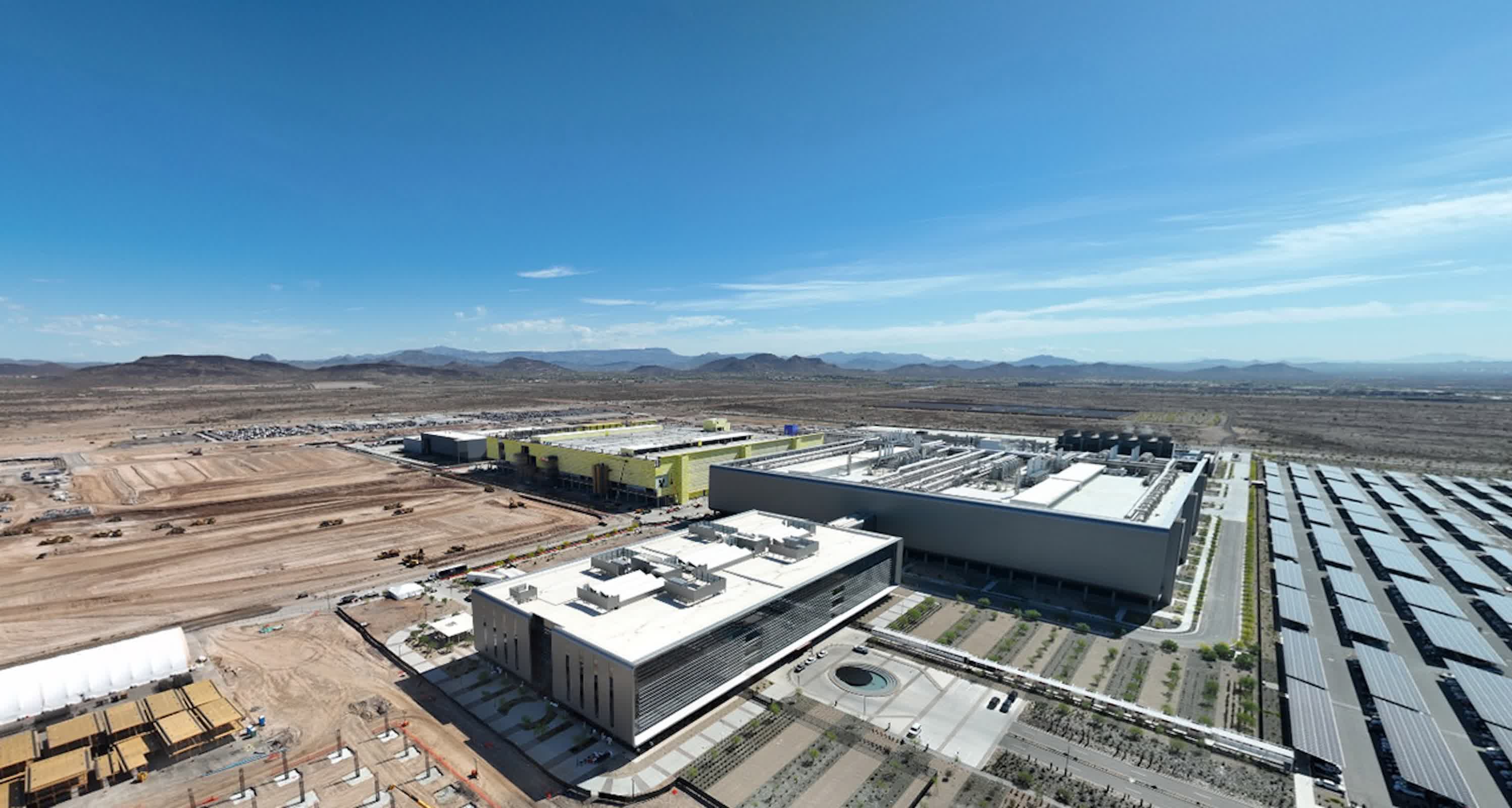
The most visible pillar of this strategy is the build-out of new foundry capacity on US soil. TSMC has committed more than $50 billion to three plants in Arizona and, under pressure from the Trump administration and Commerce Secretary Howard Lutnick, has agreed to add four more by 2028 and to purchase land in Phoenix for at least five additional facilities.
Samsung is investing about $45 billion in two factories in Taylor, Texas, and Intel has announced a major expansion in Arizona and a potential $100 billion campus in Ohio. Taken together, projects underway are expected to lift US semiconductor production capacity by roughly 50 percent by 2030, although even then the country would account for only about 10 percent of global output.
Nvidia has committed to buying chips from TSMC's Arizona plants and has also agreed to invest $5 billion in Intel and collaborate on AI chips. Apple has signed up as a key customer for the Arizona fabs and pledged another $100 billion to support semiconductor manufacturing. Tesla has become the first major customer for Samsung's new Texas facility, lining up chip production in the United States as its chief executive, Elon Musk, warns that markets are underestimating geopolitical risk around Taiwan.
Behind those headline projects is a harder-edged policy shift. The Trump administration has swung the pendulum toward tariffs, and direct leverage. New tariffs were levied on imports from every country, including a 32 percent baseline for Taiwan, with semiconductor-specific rates to be negotiated. US officials then used the threat of higher duties to push Taipei to encourage its chipmakers to invest more in the United States and to press TSMC to scale up its Arizona plans.
At the same time, Washington has intervened deeply in Intel's future. The company has agreed to give the US government a 10 percent equity stake in exchange for the $8.9 billion in CHIPS money it had been promised. That stake, combined with Nvidia's investment and Apple's extensive engineering engagement, is intended to keep at least one leading-edge American logic manufacturer alive as a strategic counterweight to TSMC if access to Taiwan is cut off.
Commerce Secretary Lutnick has set an aggressive goal: to shift about 40 percent of Taiwan's semiconductor manufacturing to the United States. To drive that change, he has told industry executives that the administration wants them to buy 50 percent of their chips from US fabs, or face 100 percent tariffs on non-compliant imports.
He has also brokered a trade arrangement under which Taiwanese chip firms can avoid some US tariffs if they commit to production in America. In parallel, Taiwan has pledged $250 billion in credit guarantees and its companies have promised around $150 billion more in US investments to support the relocation of semiconductor and tech manufacturing.
Even as wafers begin to move, a crucial piece of the stack remains firmly anchored in Taiwan: advanced packaging. That reality was on display when Nvidia chief executive Jensen Huang traveled to Phoenix to celebrate the first AI chip wafer produced for the company at TSMC's Arizona fab. But the chip itself was only partway through its journey. To become a finished AI processor, it still had to be shipped back to Taiwan for advanced packaging, binding the purportedly "American-made" component back into the same geographic risk that Washington has spent years trying to dilute.
The upshot is a global semiconductor system in mid-transition. New US fabs funded by a mix of subsidies, tariffs and political pressure are starting to carve off some leading-edge production from Taiwan, and the country's biggest chip designers are now tied into those projects by capital and long-term purchase commitments.
However, for the most advanced nodes and for the packaging techniques that define modern AI performance, Taiwan remains central – and exposed to the same geopolitical risks that first set this realignment in motion.