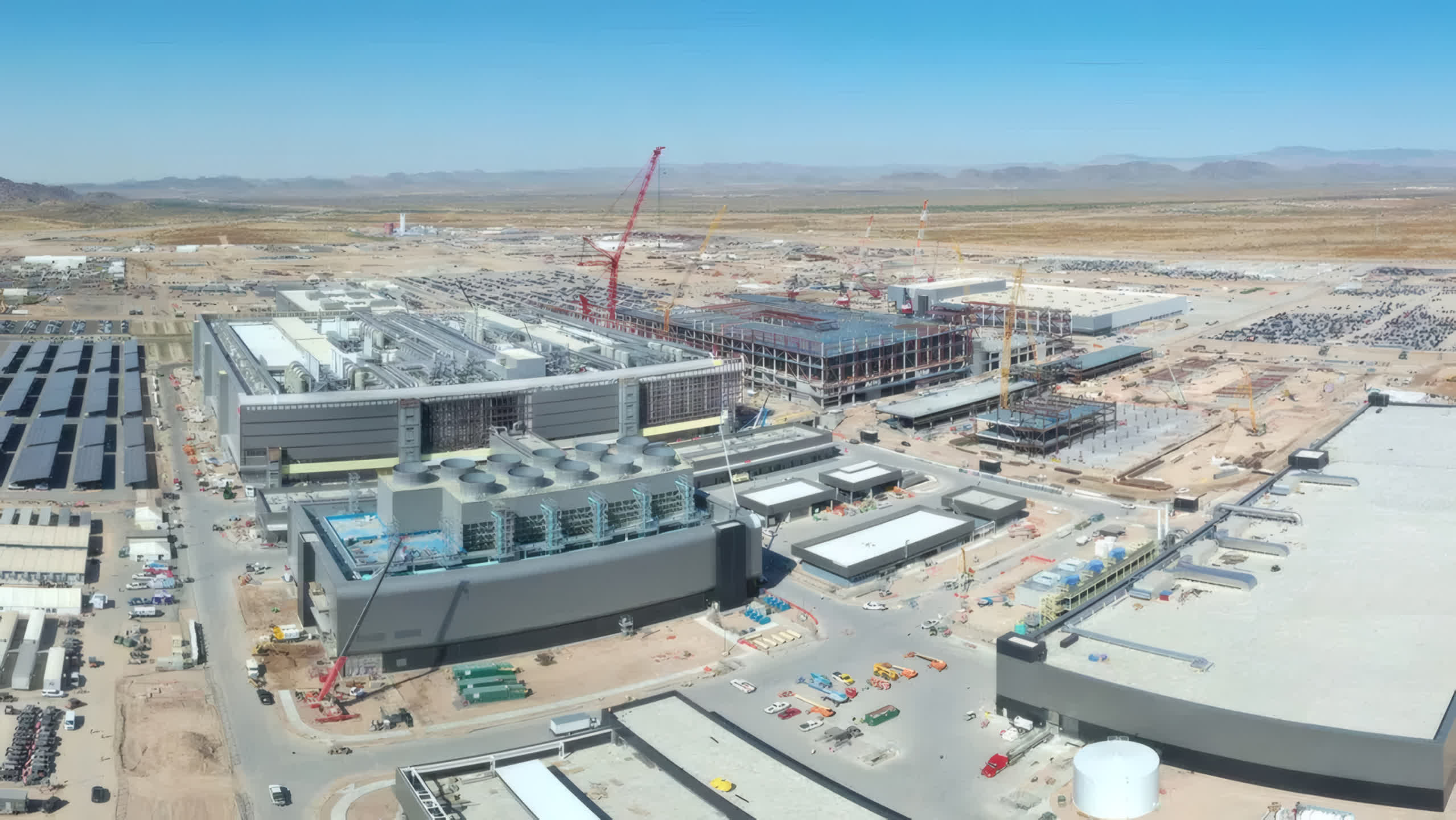
Why it matters: TSMC has doubled down on its enormous US expansion plans, committing another $100 billion to its Arizona operations. The money is expected to fund at least four additional fabs producing chips at the 2nm node and below, along with advanced packaging facilities.
The announcement came as the Taiwanese giant posted another record quarterly profit and raised its 2026 capital expenditure forecast to as much as $64 billion.
CEO C.C. Wei announced the investment during TSMC's second-quarter earnings conference in Taipei. It adds to the $165 billion already pledged for Arizona, taking the chipmaker's total planned US spending to $265 billion.
TSMC has not provided a construction timeline, saying the pace will depend on market demand. Wei said four more plants would probably be built, including advanced packaging facilities, joining eight fabs already under construction or planned. The expansion could eventually give the Arizona campus 10 fabs and two packaging plants.
Building and equipping a leading-edge 2nm fab can cost between $25 billion and $35 billion, meaning the additional investment is enough for roughly four facilities.
Advanced packaging is also an big part of the commitment. Capacity for technologies such as CoWoS remains one of the biggest constraints on AI accelerator production. Adding packaging operations in Arizona would allow TSMC's US customers to obtain advanced chips manufactured and packaged domestically.
Credit: App Economy Insights
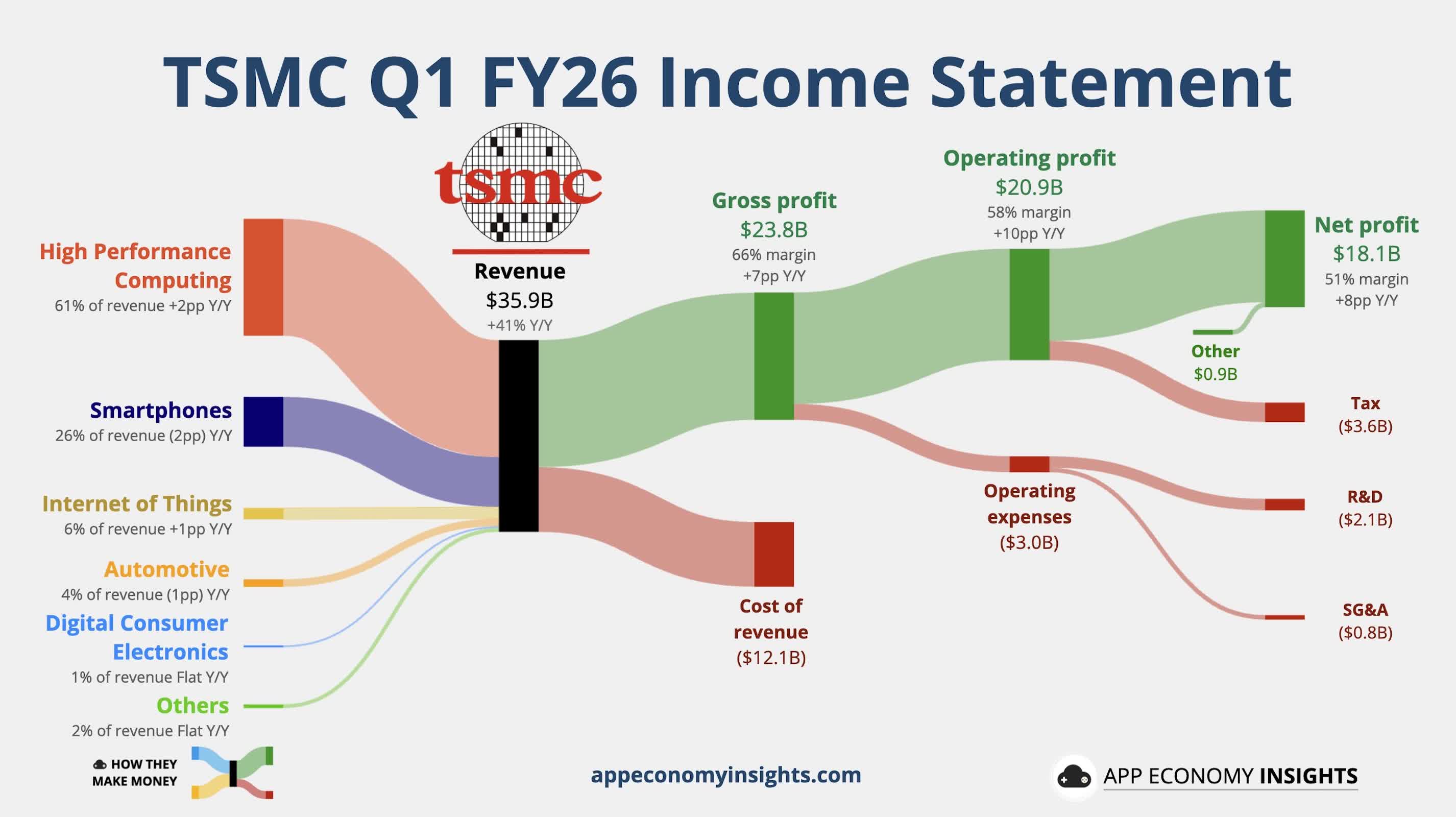
The announcement followed another huge quarter for the world's largest contract chipmaker. TSMC's second-quarter net profit surged 77% year-over-year to a record NT$706.6 billion, around $22 billion, beating analyst expectations of NT$632.6 billion. It was the company's ninth consecutive quarter of double-digit profit growth.
TSMC also increased its 2026 capital spending forecast from the upper end of its previous $52 billion to $56 billion range to between $60 billion and $64 billion. The company expects full-year revenue in US dollar terms to rise by slightly more than 40%, up from its previous forecast of more than 30%.
It was recently reported that TSMC generated $39.6 billion in second-quarter revenue, up 36% year-over-year, as June sales jumped 68%. The latest results and spending plans reinforce the belief that demand for AI chips remains extremely strong, despite ongoing concerns that hyperscalers could eventually discover they have built more infrastructure than they need.
Wei said TSMC remains highly confident in the multi-year AI trend, though he acknowledged that combining every customer's forecast would exaggerate real demand. For now, however, the company is preparing for years of continued growth.