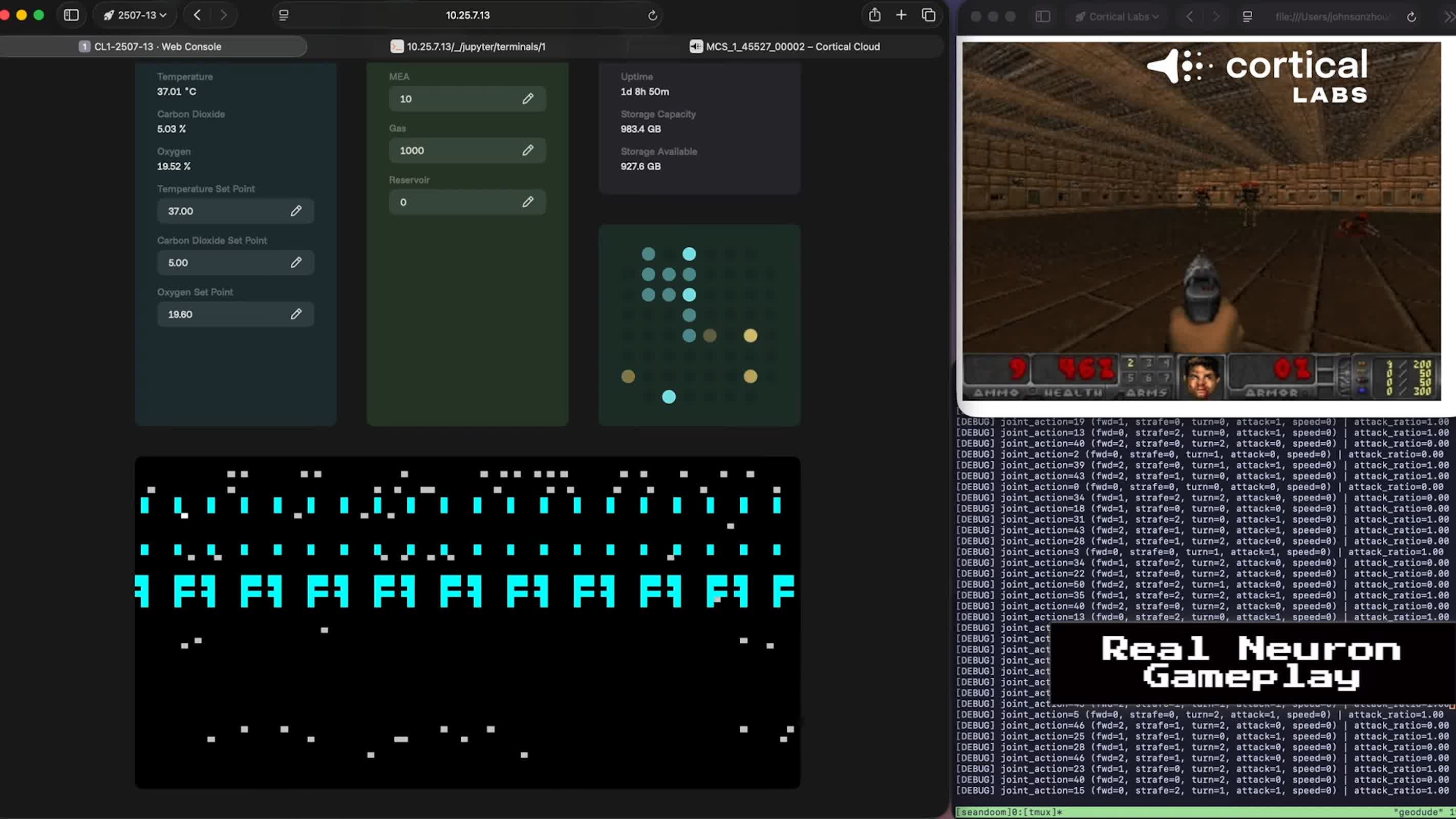
First look: Australian biotech startup Cortical Labs has crossed another boundary in biological computing. Its latest hardware platform, the CL1, uses living human neurons as the core of a fully functioning computer – and it's now capable of running Doom. The company demonstrated the feat through its Cortical Cloud, posting it on YouTube and the open-source code to GitHub.
The CL1 is the first commercial system from the same researchers who wowed the tech world in 2022 by teaching a cluster of 800,000 neurons to play Pong. The new CL1 pushes the idea into engineered hardware, built around 59 electrodes positioned on a planar array of metal and glass. The denser contact grid and upgraded signal processing cut latency from milliseconds to sub-millisecond speeds, allowing the living network to respond almost as fluidly as a conventional processor.
Unlike simulated neural networks, these are genuine neurons – cultured from skin or blood cells taken from adult donors, reprogrammed into induced pluripotent stem cells, and then differentiated into cortical brain cells.
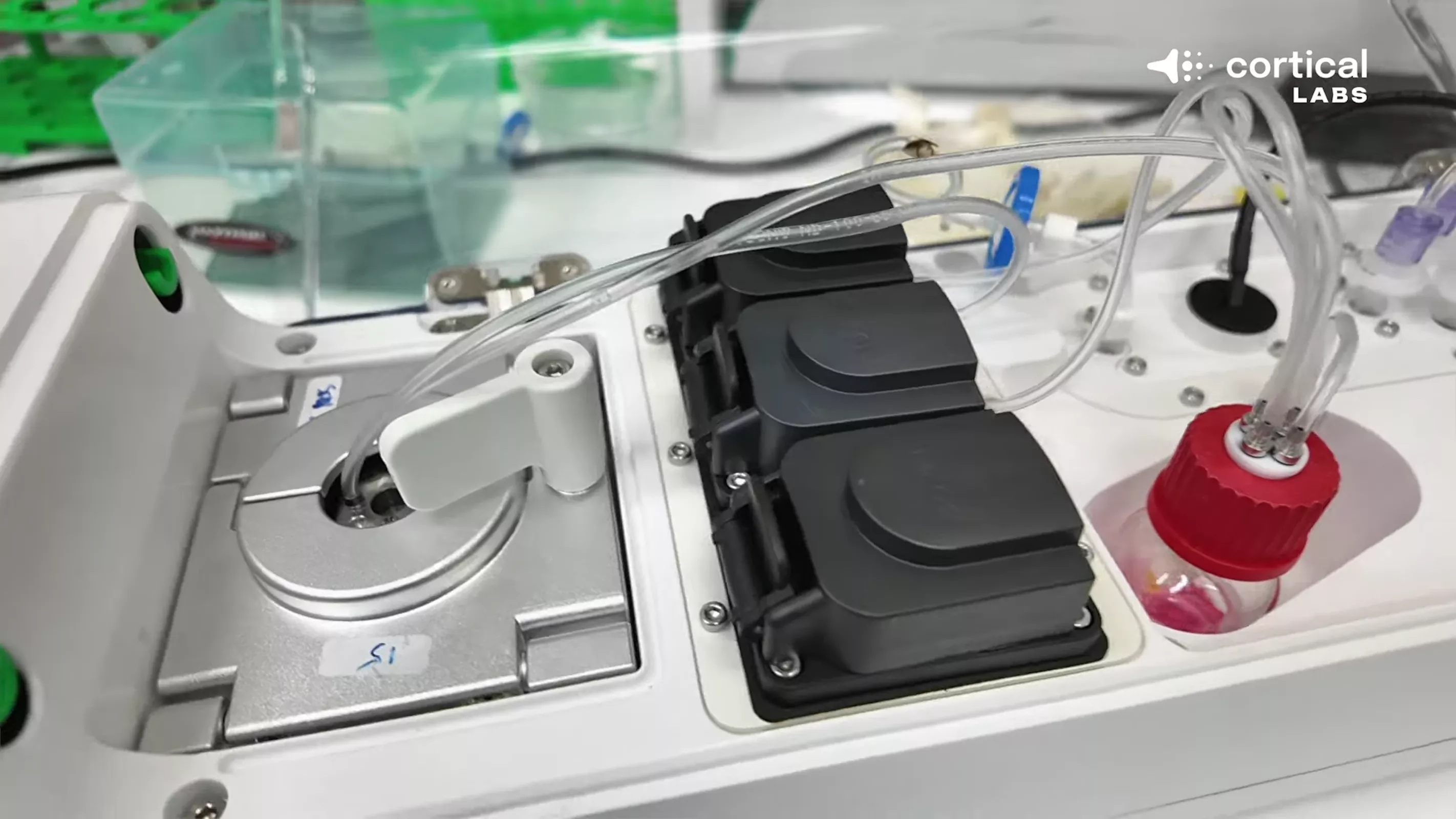
Within the CL1 module, the living tissue sits inside a sealed chamber linked to an internal life-support system that controls gas composition, temperature, and waste filtration. Under ideal lab conditions, the neurons remain active and viable for up to six months.
To manage this biological substrate, Cortical Labs designed an operating system, called biOS, that sends and receives electrical stimuli through the electrode array. Developers can deploy code directly to the neuron layer, where feedback signals shape adaptive pathways much like synapses in a biological brain.
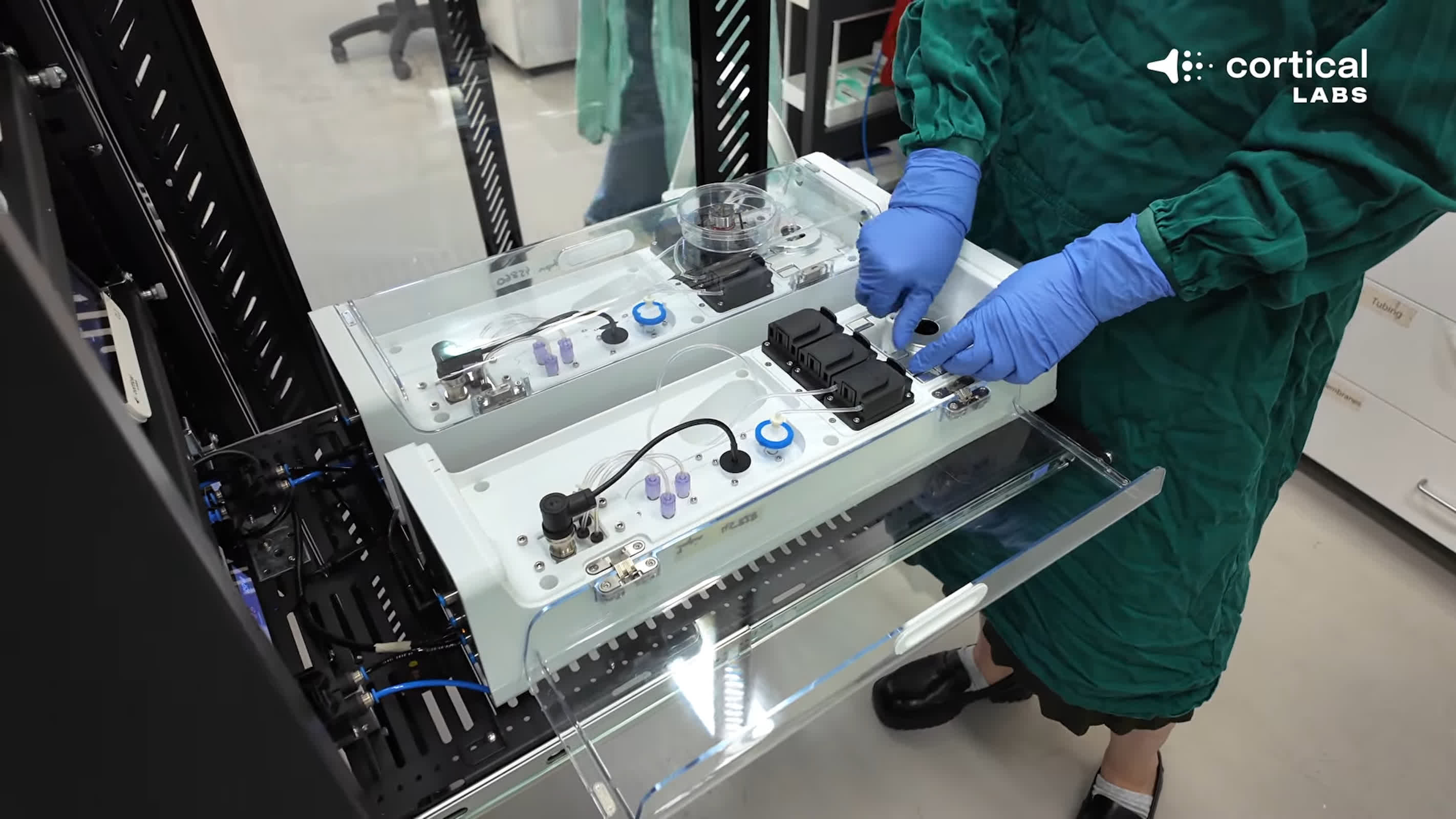
When trained on games like Pong or Doom, the networks react to stimuli – reward signals when a goal is achieved, corrective signals when it fails – forming self-organized response patterns.
Cortical Labs calls this computational model "Synthetic Biological Intelligence," a term meant to distinguish living computation from traditional artificial intelligence. Technically, the CL1 ships as a self-contained desktop unit but also integrates into 30-unit server racks targeted at research institutions.
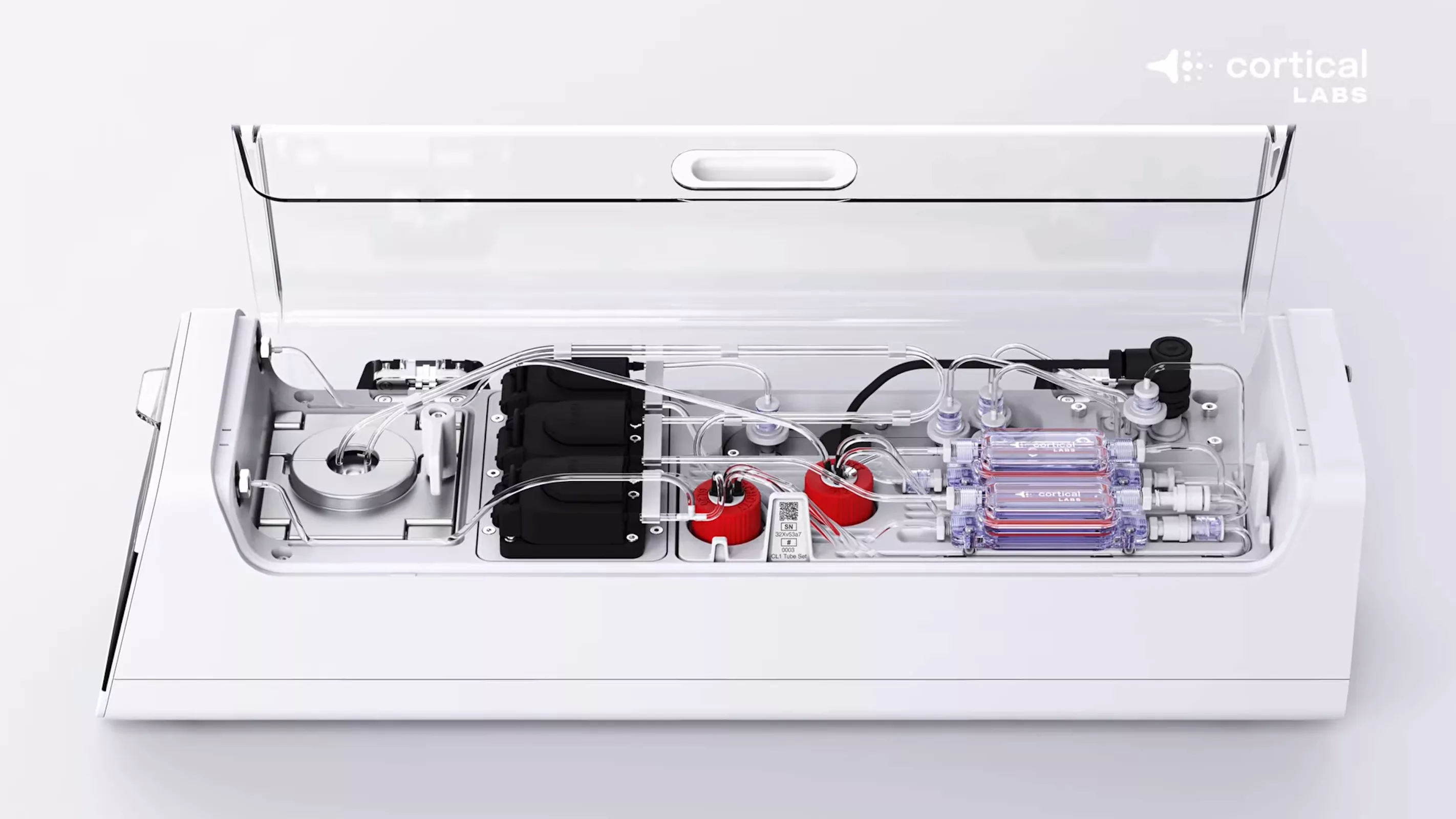
Each module sells for around $35,000, with volume pricing dropping to $20,000 per unit in rack configurations. A full rack consumes roughly 850 to 1,000 watts – power levels on par with a single midrange GPU server. The company began shipping the first 115 commercial systems in 2025 and maintains cloud connectivity for live monitoring and remote code deployment.
The decision to run Doom was partly practical and partly symbolic. Since the 1993 game has become a universal benchmark for testing hardware – a rite of passage for everything from graphing calculators to hacked-together pregnancy tests.