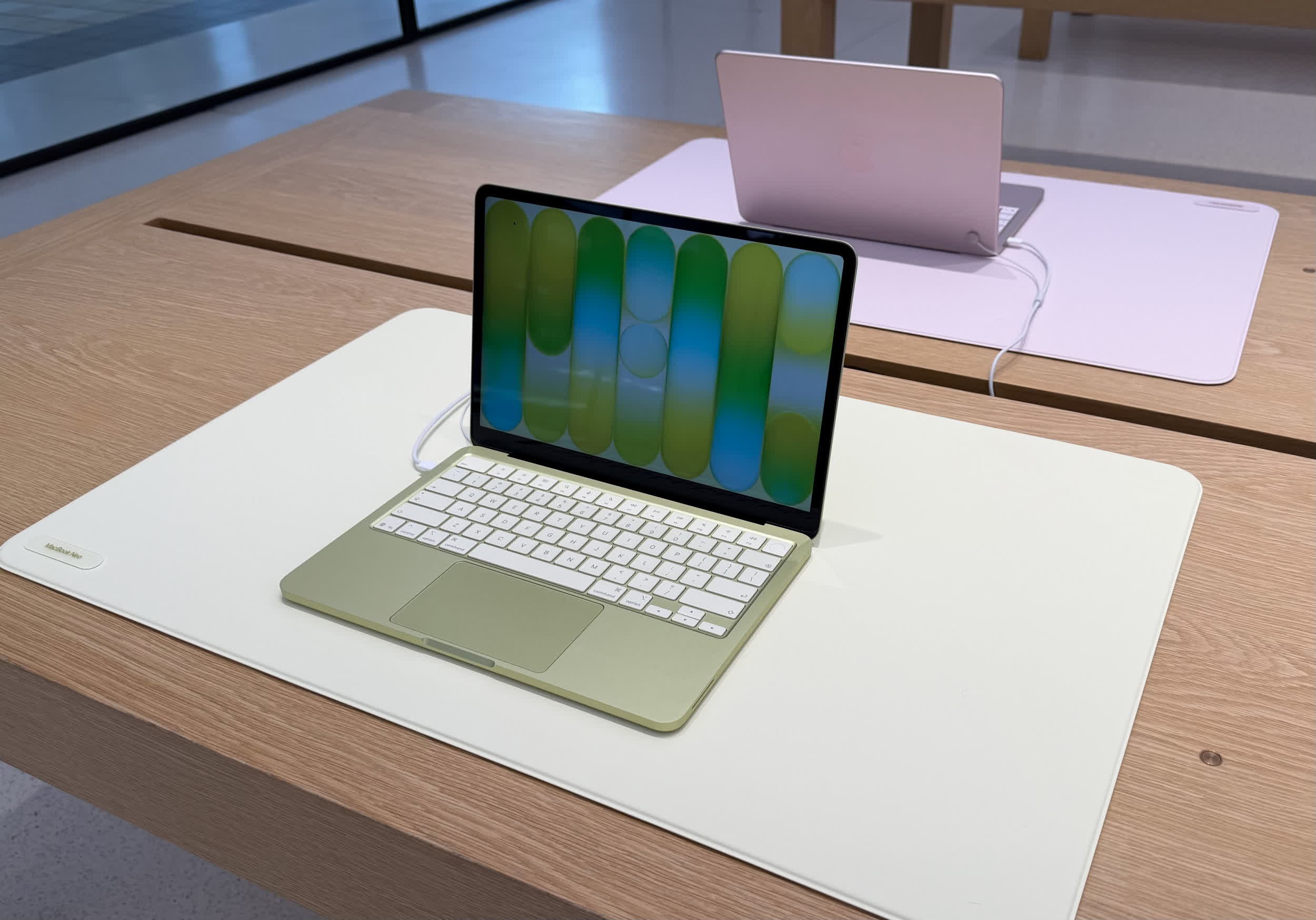
Winners & losers: Just days after Cupertino unveiled its latest notebook, the move is already being dissected across the PC industry. Manufacturers know they'll need some kind of response. The timing, however, could hardly be more complicated, as supply chain pressures around memory and other key components continue to intensify.
Apple launched the MacBook Neo last week, positioning it as the most affordable laptop the company has ever built. Starting at $600 (or $500 for students), the device targets users looking for a lightweight, agile computing machine. Its unusually low price, by Apple standards, could quickly become a source of concern for the broader PC ecosystem.
According to recent comments from Asus co-CEO S.Y. Hsu, major players across the industry are already discussing how to respond to Apple's latest move. Speaking during the company's most recent earnings call, Hsu described the MacBook Neo and its aggressive pricing as a genuine "shock" for Windows PC OEM manufacturers.
Until now, PC makers largely assumed Apple would continue to price its computers above most competing systems. A budget-oriented MacBook represents something new, Hsu noted. The Asus executive also suggested that other key players in the PC ecosystem, including CPU vendors and Microsoft, are taking this new threat as seriously as they can.
If Apple can persuade enough buyers to pick up one of its most affordable machines, students and everyday users may end up sticking with the company's ecosystem and eventually upgrading to more expensive devices. According to Hsu, insiders across the PC industry have been debating about rumors of a MacBook Neo for at least a year.
The machine does come with some hardware limitations, including 8GB of non-upgradable memory. Hsu argues that the MacBook Neo is better suited to lighter, everyday use, while many mainstream laptop buyers still expect their systems to handle more demanding workloads. However, early comparisons suggest that many Windows laptops selling in the same price range as the Neo are actually slower than Apple's machine.
Must read: The MacBook Neo is a $500 Wake-Up Call for the Entire PC Industry
The new MacBook is powered by Apple's A18 Pro chip – the same processor used in the iPhone 16 Pro – making it an unusual entry in the laptop market. For the most part, however, its performance appears to align with Apple's M1 SoC, which remains surprisingly capable.
At the same time, the broader PC industry is already facing another major constraint: memory supply. Analysts warn that retail prices for mainstream laptops could climb by as much as 40%. Asus has already confirmed that memory prices alone have doubled in a single quarter.
"How big of an impact it will have on the PC industry will still require some time for us to observe," Hsu said, adding that "the entire Windows PC ecosystem will push out products to compete against Apple."