Facing the Flaw: Many organizations have already migrated to Windows 11, but a few diehards are refusing to leave Windows 10 behind. In fact, millions of computers are still running the aging, albeit perfectly functional, operating system, and according to one market analysis, that could soon turn into a security disaster.

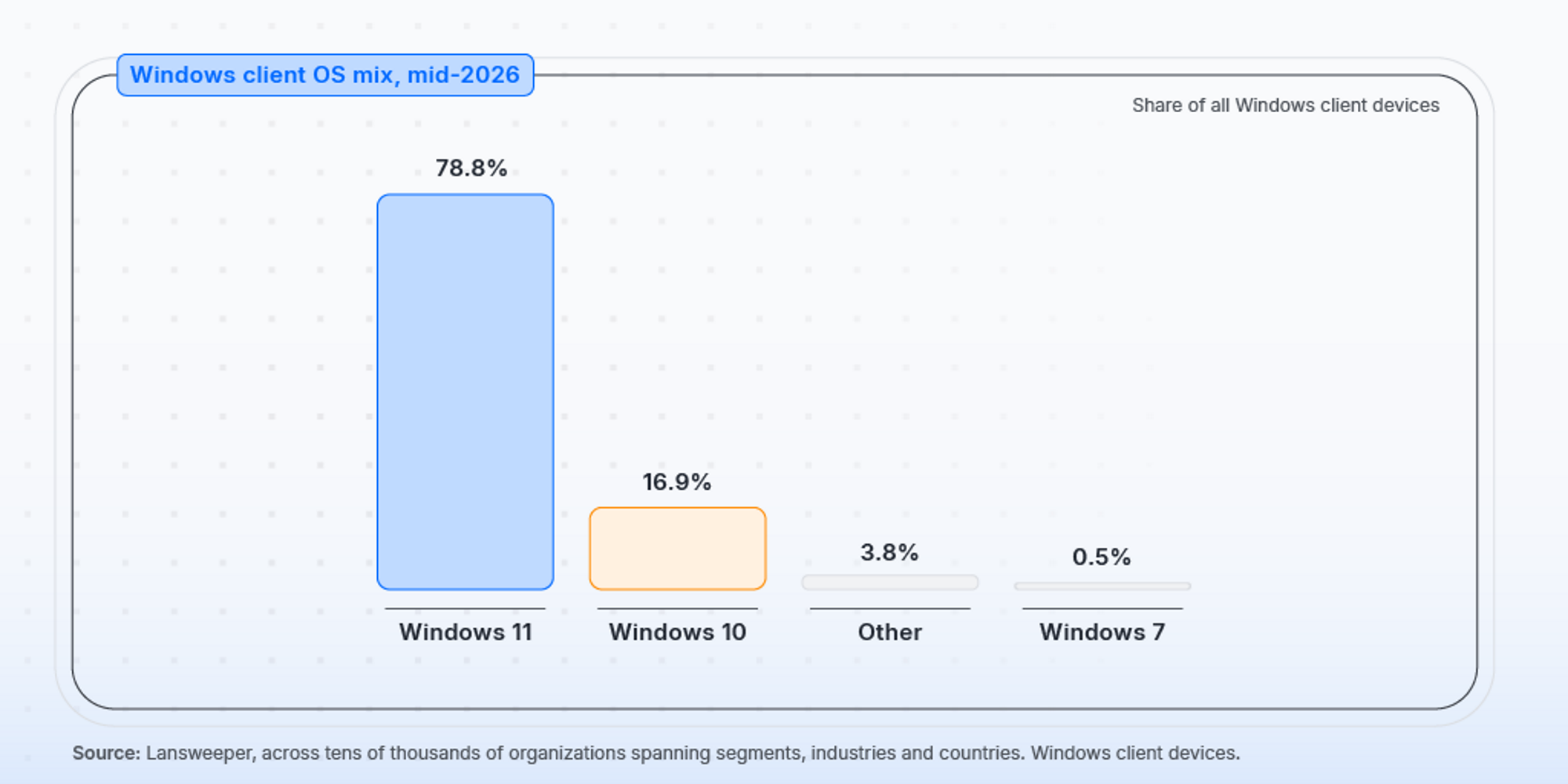
Asset management company Lansweeper recently sounded the alarm on Windows 10, noting that a lot of organizations still haven't upgraded to Windows 11. A significant portion of PCs, or roughly 17% of all Windows client devices, per Lansweeper's research, are still running Windows 10. Put simply, about one in six machines out there is running the older OS, and that's a growing security risk for the whole industry.
Windows 11 has climbed to 78% of Windows devices, a trend also reflected by third-party trackers: StatCounter had Windows 11 above 70% of desktop share as of February 2026. What's left behind is a stubborn holdout base, hardcore enthusiasts and everyday users alike, who either can't or won't move to the newer OS.
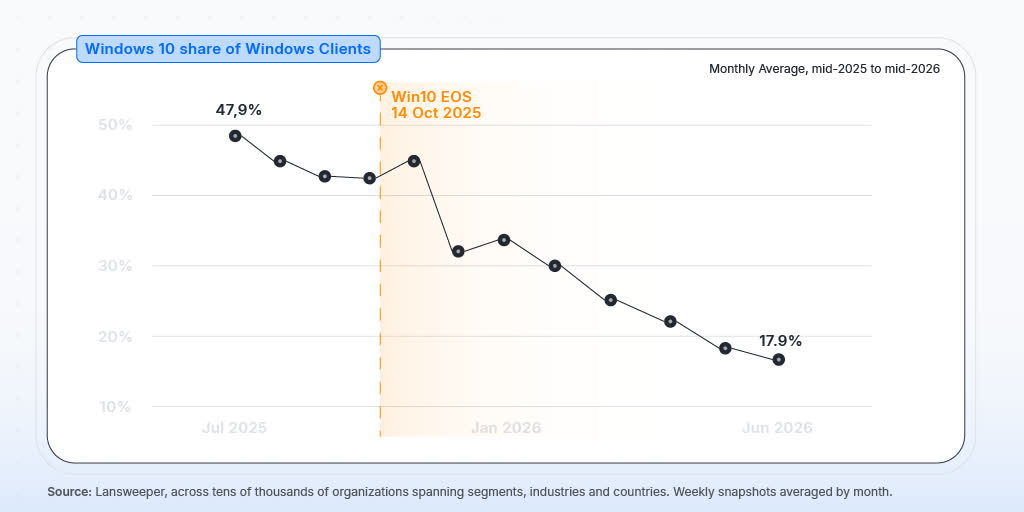
Microsoft ended official support for Windows 10 in October 2025, but its Extended Security Updates program will keep eligible devices patched through October 2027.
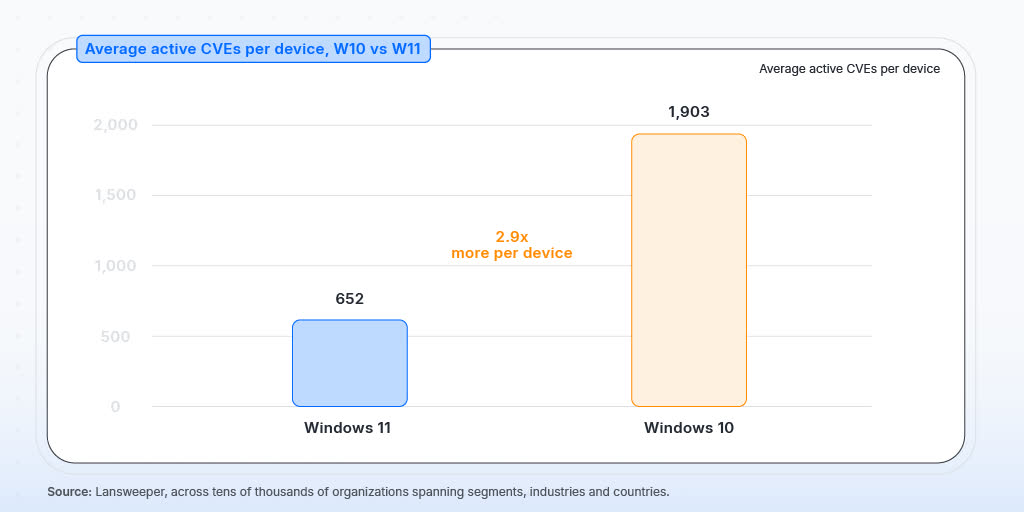
That coverage isn't free for most people, though: EEA users get a no-cost option only until October 2026, while everyone else has to pay to stay protected. Lansweeper's data shows how much is riding on that decision. A typical Windows 10 device carries an average of 1,903 active security vulnerabilities, almost three times the 652 CVE-tracked flaws found on the average Windows 11 machine.
The exploitability of those flaws is arguably the bigger issue. According to the research, 66% of Windows 10 vulnerabilities are rated "high" or "critical," and they're more likely to be exploited in the wild than their Windows 11 counterparts.
Microsoft routinely patches hundreds of bugs through its monthly Patch Tuesday updates, but Lansweeper warns that fixes rolled out for Windows 11 can end up flagging issues that remain wide open on Windows 10.
By business size, small and medium companies are the biggest holdouts, with 21.4% of their Windows devices still on Windows 10, compared to 16.6% at larger enterprises. By industry, the laggards are the ones built around long-lived, certified hardware: healthcare and pharmaceuticals lead at 23%, followed by consumer and retail at 22%, and manufacturing at 18%.
Lansweeper is urging Windows 10 holdouts to enroll in Microsoft's Extended Security Updates (ESU) program to limit the risk in the meantime. Longer term, though, the company says organizations need to figure out why they're still on Windows 10 in 2026 – and simply replace the aging systems with newer machines. Which is easier said than done, considering the dire conditions (e.g. expensive) the hardware market is in right now.
One in six Windows PCs still runs Windows 10, and the vulnerabilities are piling up


