First look: Nvidia CEO Jensen Huang used his GTC 2026 keynote to unveil the next stage of machine learning-driven video game graphics, which substantially transforms lighting and the overall visuals of a game using generative AI. Although the company's demonstration showcased dramatic increases in detail in titles such as Resident Evil Requiem and Starfield, it immediately drew sharp reactions from users, many of whom compared the results to AI-generated video footage.
Instead of upscaling games from lower resolutions or interpolating frames using AI, DLSS 5 applies machine learning to a game's lighting model. Nvidia calls it the next stage of rendering after upscaling and ray tracing. Digital Foundry got an early hands-on look at the technology (video below), which sparked controversy within hours of its debut.
The changes DLSS 5 introduces to environments and characters are so drastic that some social media reactions accuse Nvidia of effectively layering an AI filter over developers' original artwork. That perception is reinforced by the fact that several of the demo images resemble the glossy, hyper-processed aesthetic often associated with AI-generated photos and video.
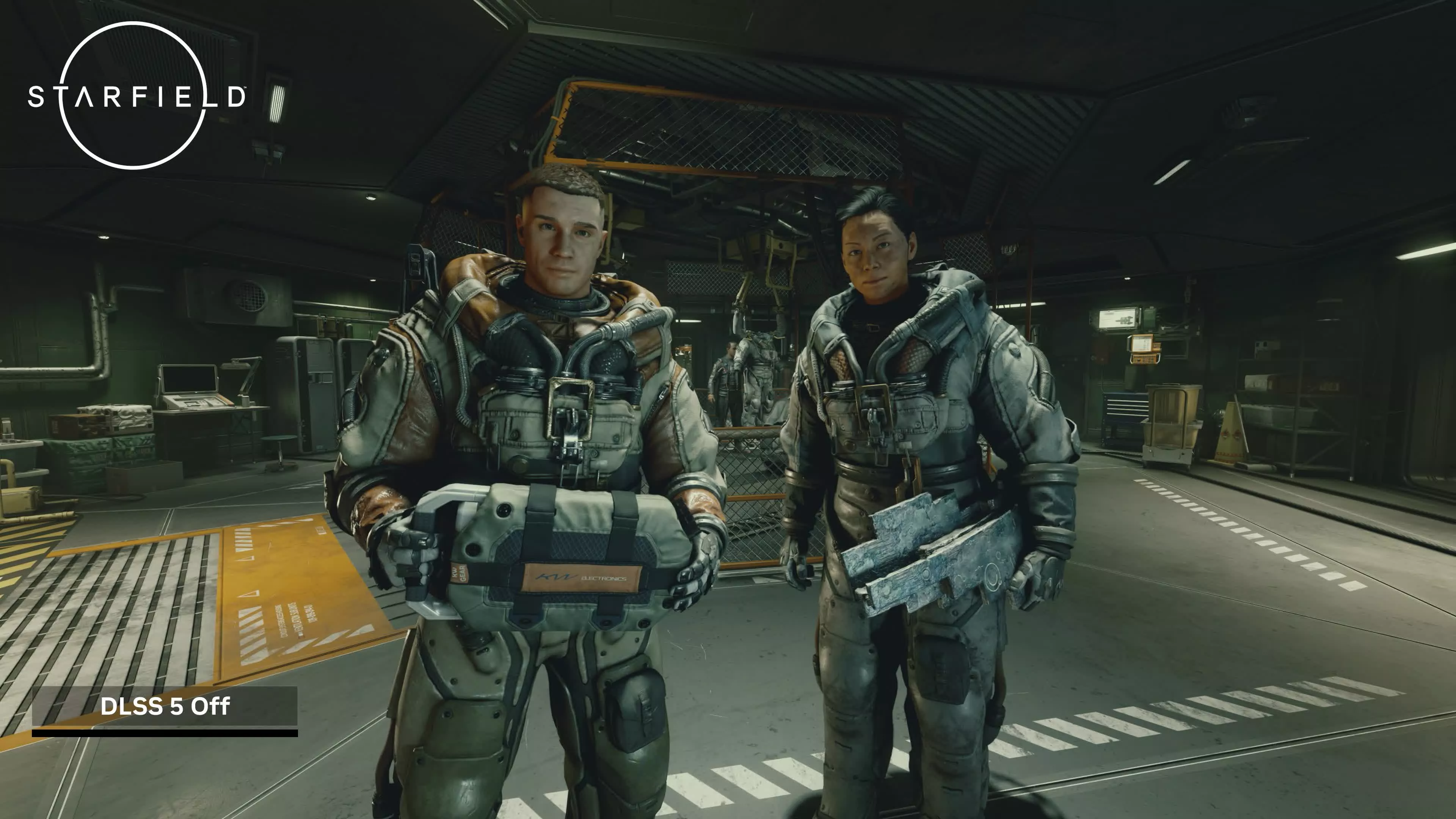
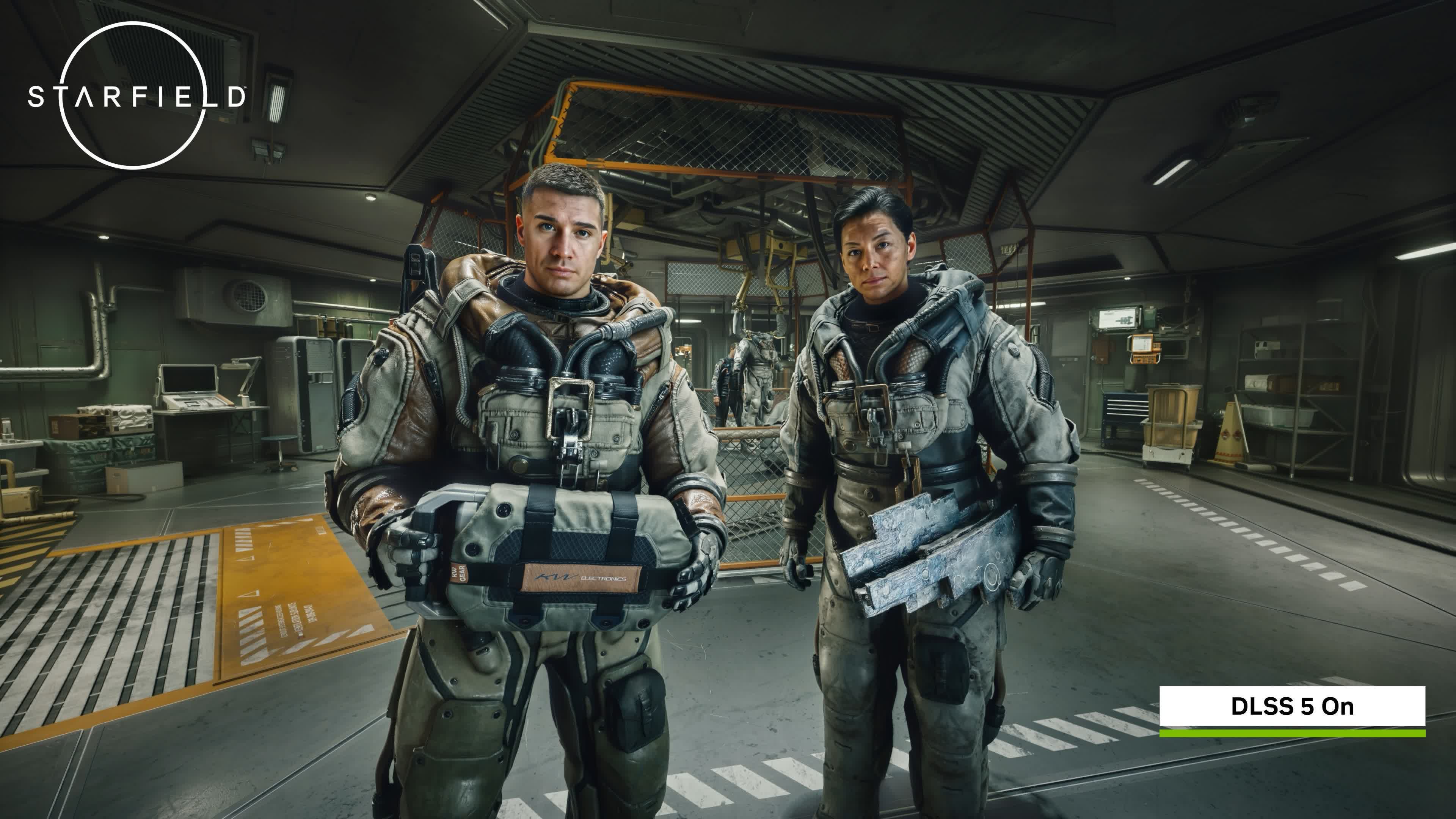
Nvidia stresses that DLSS 5 does not replace models or textures. All changes result from newly generated lighting based on a game's color and motion vectors, substantially altering subsurface scattering, material interactions, and other rendering processes.
The company's press release also states that the technology can handle materials, though it does not specify whether the AI generates entirely new material properties or simply adjusts existing ones. Huang described the system as applying generative AI to lighting, but the process remains deterministic and tied to the underlying game data, meaning it does not hallucinate new objects or geometry.
The update is already sparking discussions about authorial intent and compatibility with various art styles. Earlier versions of DLSS reconstructed images based on high-resolution training data to preserve each game's artistic intent. In contrast, DLSS 5 may risk taking some of that artistic intent out of developers' hands.
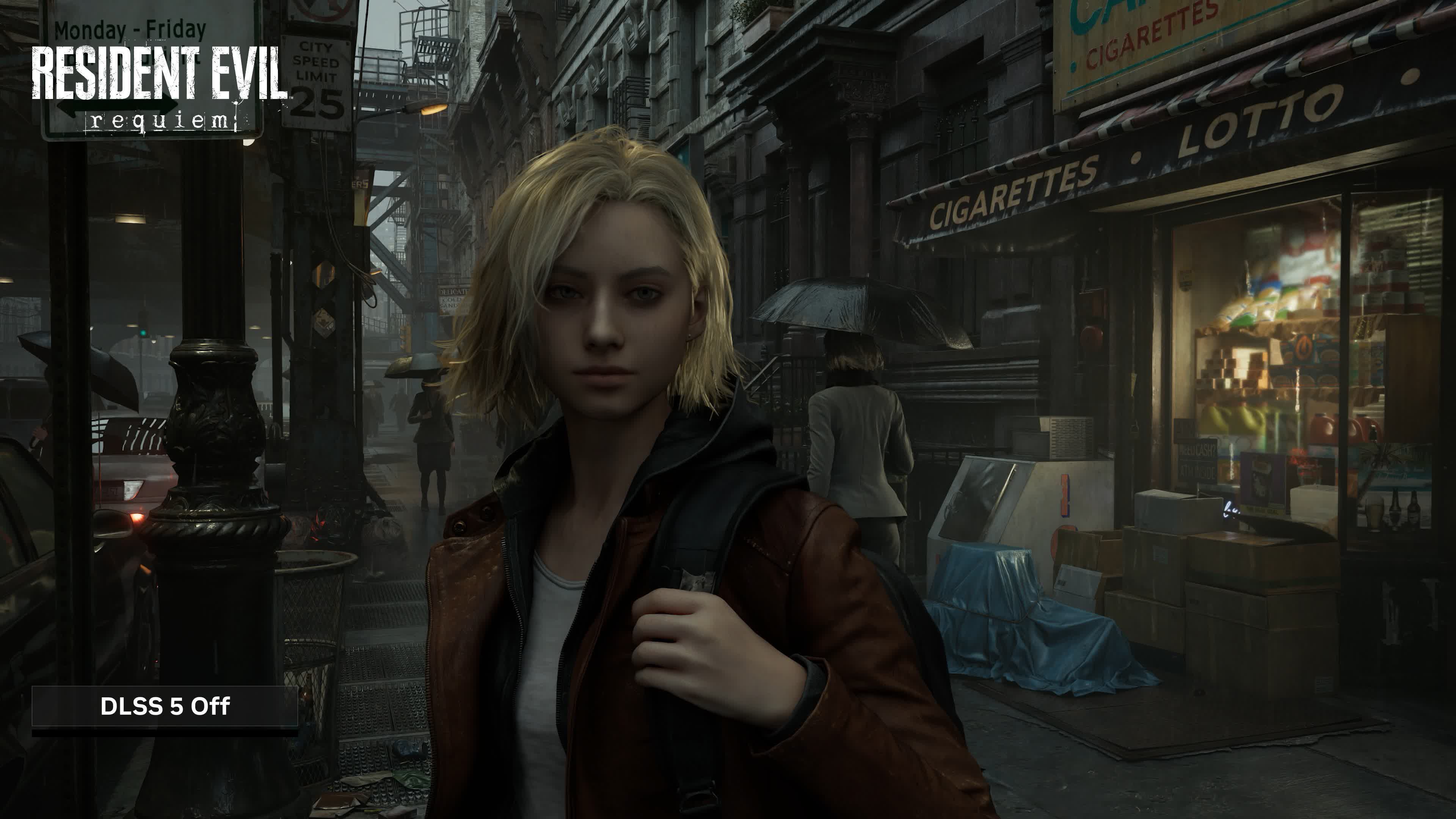
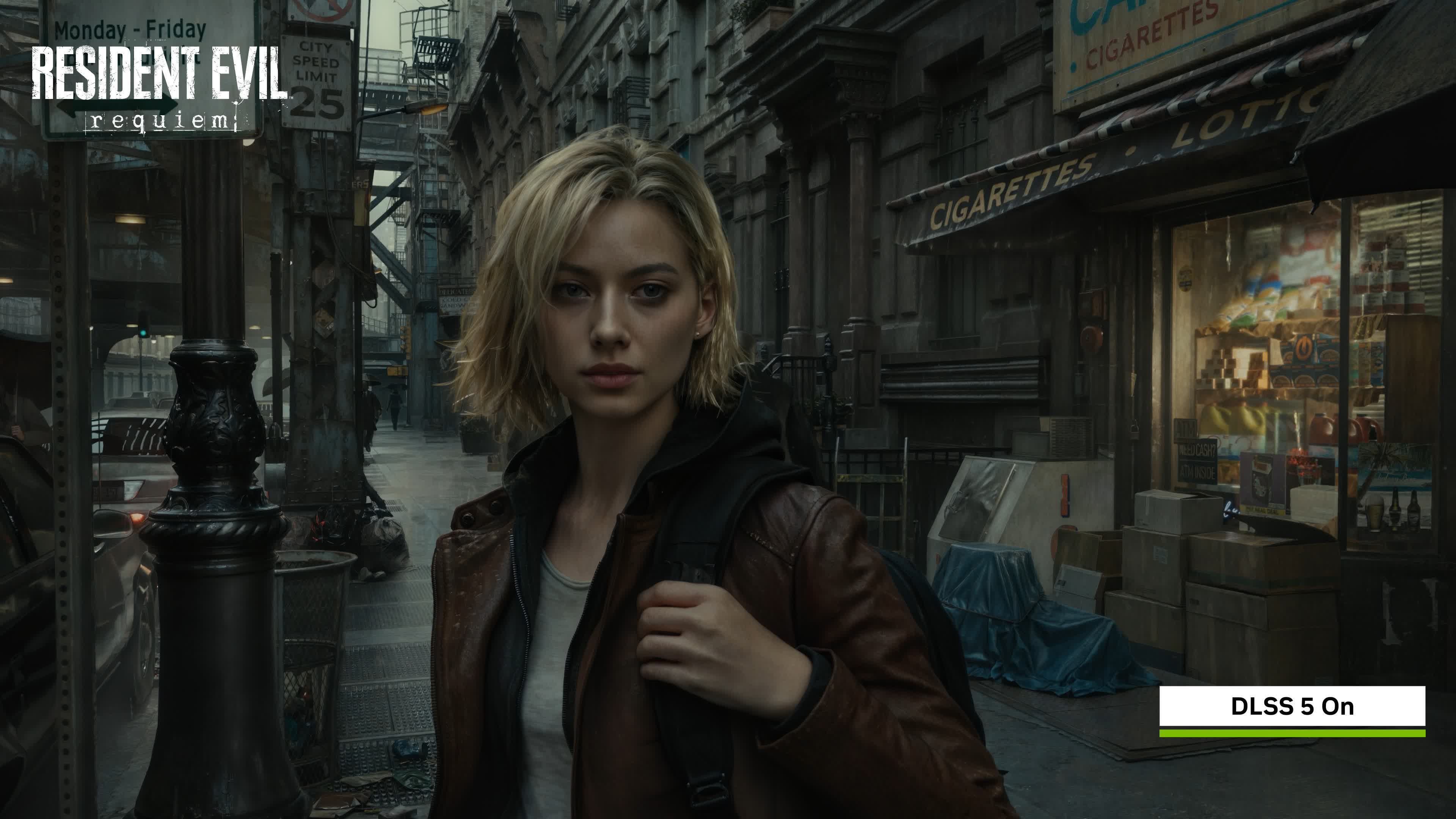
Nvidia frames the goal as pushing toward photorealism, comparing DLSS 5's output to Hollywood-grade visual effects. In the company's demos, the approach appears to work well on realistic characters in games like Resident Evil Requiem and EA Sports FC. But applying the same system to more stylized or fantastical worlds – such as those in The Elder Scrolls IV: Oblivion, Starfield, or Hogwarts Legacy – could plunge visuals into the uncanny valley.
Developers can tune DLSS 5's intensity, color grade, and masking. They can also exclude certain elements from the technology's effects, but the extent of artistic controls remains unclear.
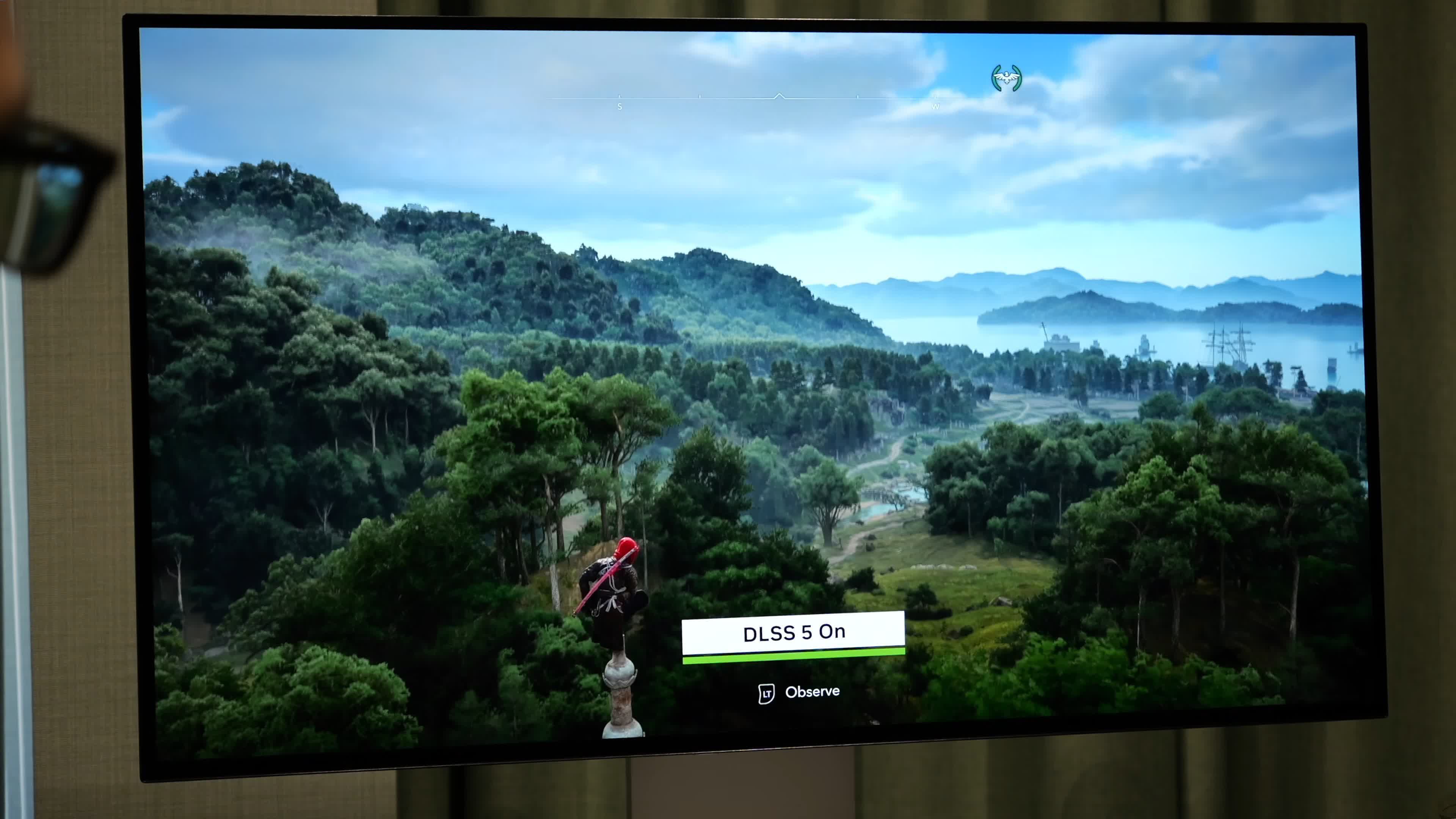
Despite the early criticism, numerous developers have approved DLSS 5 and collaborated with Nvidia to create the initial demonstrations, including Bethesda, Capcom, and Ubisoft. Assassin's Creed Shadows, Resident Evil Requiem, EA Sports FC, Hogwarts Legacy, The Elder Scrolls IV: Oblivion Remastered, and many other titles will be supported.
DLSS 5 is expected to arrive this fall with support for RTX 50 series graphics cards. Yet one of the biggest unanswered questions is computational cost. These early Nvidia demos ran on dual RTX 5090 systems, with one GPU dedicated entirely to DLSS 5 processing. The shipping version is expected to run on a single graphics card, but we'll have to wait and see if that's truly feasible.
***
What follows are some of the most interesting and funny X reactions we've seen so far. Make sure you leave your comments below:
– coreteks (@coreteks) March 16, 2026
– Colin Riley 🎗 (@domipheus) March 16, 2026
– Tom Warren (@tomwarren) March 16, 2026
– solst/ICE of Astarte (@IceSolst) March 16, 2026
– Hardware Unboxed (@HardwareUnboxed) March 16, 2026
– Benjamin De Kraker (@BenjaminDEKR) March 16, 2026
– JV Legacy 🔥 (@legacyreboot) March 16, 2026