A hot potato: A growing number of US cities are ending contracts with Flock Safety, the Atlanta-based company whose AI-powered camera systems have rapidly proliferated across the country. Originally promoted as a public safety tool, the company's technology is now at the center of a broader national debate over the use of artificial intelligence in law enforcement and immigration enforcement.
Flock, valued at roughly $7.5 billion and backed by venture capital giant Andreessen Horowitz, says its systems help police identify vehicles linked to criminal activity by analyzing license plates and other features, such as bumper stickers. But the same capability has alarmed privacy advocates and local governments, particularly after reports that federal immigration authorities have accessed data generated by its network.
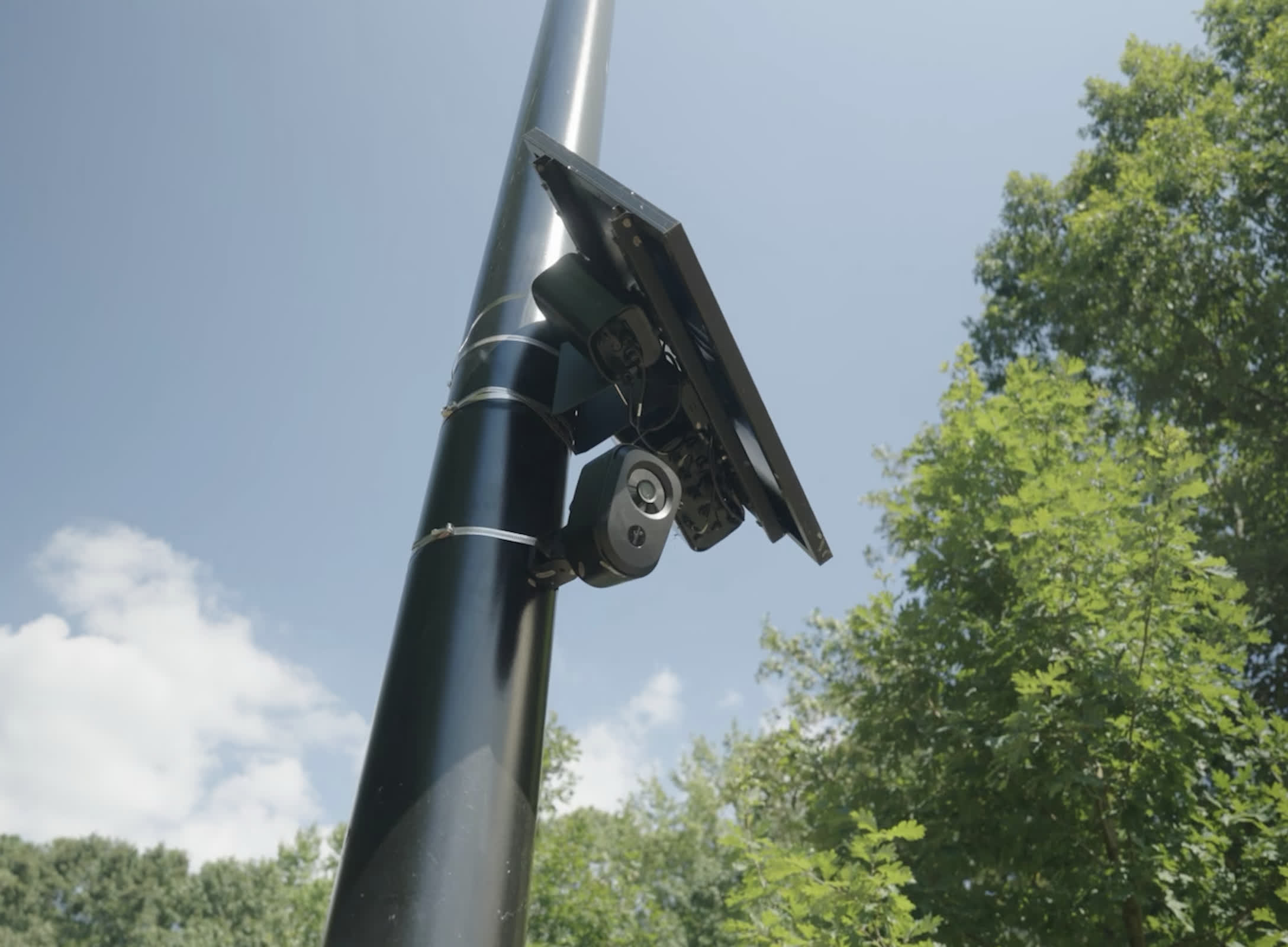
Over the past six months alone, 38 cities have rejected or shut off Flock cameras, part of a larger wave now encompassing 53 municipalities across 20 states. The pushback has turned Flock's distinctive black camera poles – often spotted on roadsides with solar panels perched above – into visible symbols of a broader public debate over the boundaries of domestic surveillance.
Flock maintains that it does not work directly with Immigration and Customs Enforcement and that its customers decide who can access camera data. "It is a frustrating thing to have so much attention directed at us, specifically when the underlying issues have nothing to do with our technology or our company," Dan Haley, Flock's chief legal officer, told The Financial Times. The company says it barred federal agencies from its national and state lookup tools last August, after criticism that national law enforcement groups were accessing data without the full knowledge of local police.

Even so, local officials and privacy organizations remain skeptical. Dave Maass of the Electronic Frontier Foundation said lobbying local authorities to block Flock's expansion in their cities was an "opportunity to affect change on a local level as a form of resistance against Border Patrol, ICE, and the Department of Homeland Security."
Jay Stanley of the American Civil Liberties Union has argued that Flock's centralized system gives it far greater power than traditional license plate readers, because data from millions of scans is transmitted to company-operated servers, creating what he called a "much more powerful technology than it was before."
Law enforcement agencies counter that Flock's cameras have transformed investigations. Departments in dozens of states use the system to match vehicle data against police "hotlists" in real time. One Texas department searched more than 103,000 devices in Flock's network during a single homicide investigation last year, according to a public records request. Billy Grogan, former police chief in Dunwoody, Georgia, credited the system with helping solve hundreds of cases that might otherwise have gone cold.
The controversy comes amid strong investor interest in public safety technology. Venture funding for US law enforcement and public safety startups hit $1.79 billion last year, up sharply from $552 million in 2024, according to Crunchbase. Flock reported more than $300 million in annual recurring revenue, positioning it alongside major players such as Motorola Solutions and Axon Enterprise.
Flock is also expanding into gunshot detection and drone surveillance tools that can be integrated into what it calls a "real-time crime center," a platform designed to fuse sensor data instantly for police use. The company's low-cost model – an estimated $2,500 per camera per year, plus installation – has helped fuel its rapid growth and adoption across police departments and private communities alike.
Whether that growth can continue remains uncertain. Critics are calling for tighter regulation of how vehicle and location data are collected, stored, and shared, while supporters in law enforcement insist the benefits to public safety outweigh privacy concerns. Caught between these two positions, Flock is now the technology sector's latest test case in defining the limits of AI surveillance.