
What we know so far: Samsung Electronics and AMD are strengthening their partnership to secure a foothold in the fast-evolving artificial intelligence hardware market. This week, the two companies signed a memorandum of understanding that expands their collaboration beyond memory supply to include potential chip manufacturing, highlighting how strategic alliances are reshaping global semiconductor competition.
The agreement positions Samsung as a key supplier for AMD's next-generation AI products. Under the terms, Samsung will provide its forthcoming high-bandwidth memory, HBM4, for AMD's Instinct MI455X accelerators – processors designed specifically for AI workloads.
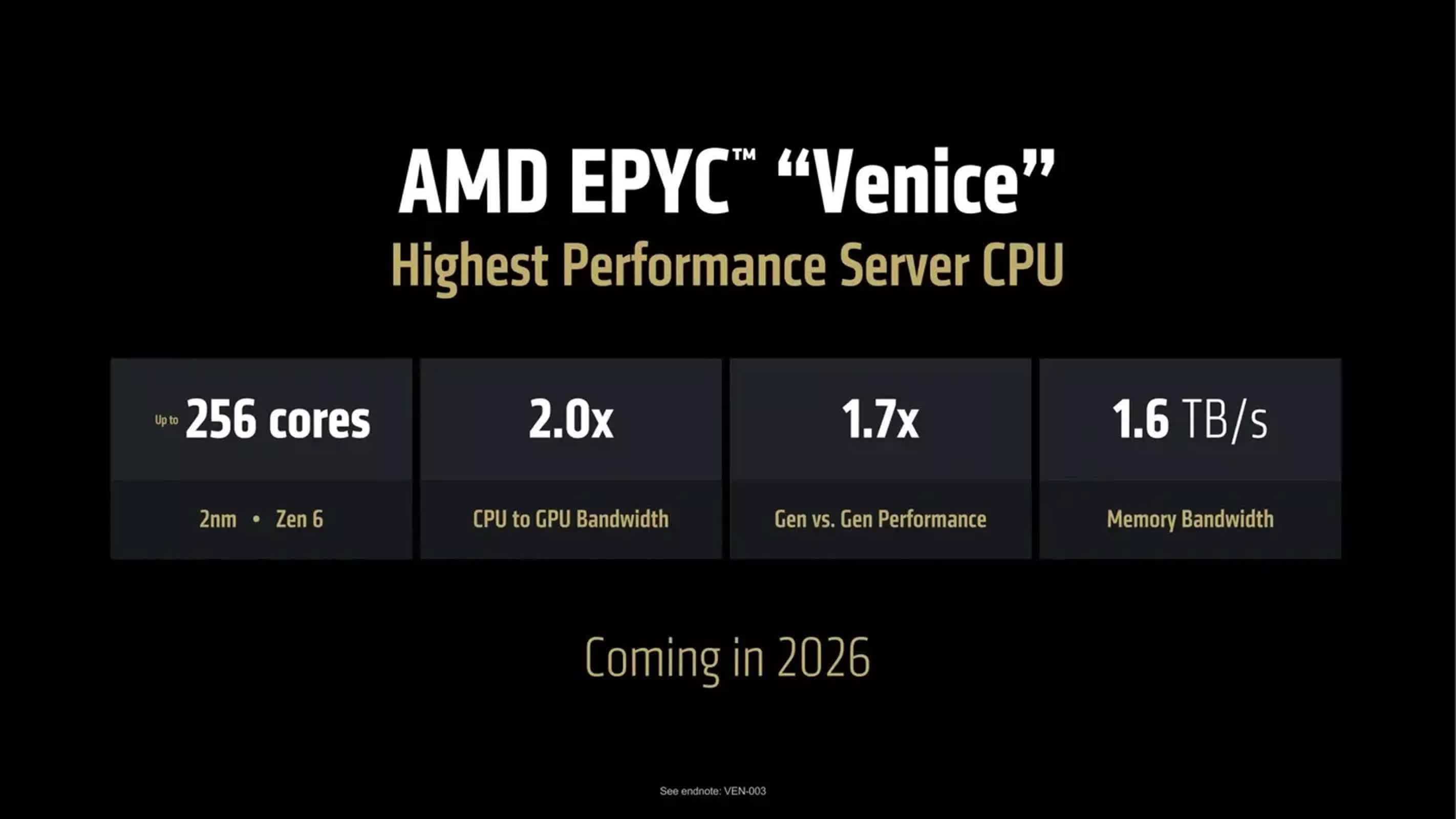
Samsung will also deliver optimized DDR5 memory for AMD's upcoming sixth-generation Epyc server chips, a move expected to bolster AMD's position against Nvidia and Intel in the data center market.
What makes the deal particularly notable is its potential expansion beyond memory. The two companies said they plan to explore a foundry partnership that could see Samsung fabricating AMD's future chips. While no formal manufacturing contract has been announced, these discussions signal AMD's continued interest in diversifying production away from a single source.
For Samsung, the collaboration offers a stronger role in the AI memory supply chain at a time when demand for HBM chips is outpacing production. The South Korean company already provides AMD with HBM3E chips used in current MI350X and MI355X accelerators. Becoming the key supplier for the new HBM4 generation would further solidify that relationship, even as major competitors ramp up their own AI offerings.
The timing of the agreement is notable. It was announced the same week that Nvidia CEO Jensen Huang used the company's annual GTC event to showcase new AI chips and confirm a separate foundry partnership with Samsung.
Nvidia's endorsement of Samsung's HBM4 technology drew attention to the memory maker's progress in a market long dominated by SK Hynix. According to Counterpoint Research, SK Hynix holds roughly 57% of the high-bandwidth memory market – more than double Samsung's estimated 22%.
For AMD, securing memory supply is increasingly critical. The chipmaker has recently landed large, long-term contracts to provide AI accelerators to major data center players. In February, it agreed to sell up to $60 billion in AI chips to Meta Platforms over five years in a deal that gives Meta the option to acquire up to a 10% stake in AMD. AMD reached a similar deal with OpenAI in late 2025.
The Samsung partnership reinforces that trend. As more companies compete for limited HBM capacity, alliances between chip designers and memory specialists are becoming as much a competitive strategy as a logistical necessity. For Samsung, the agreement not only helps it gain ground on its biggest rival but also underscores its ambitions to be integral to the AI computing ecosystem, rather than merely a supplier.