
What we know so far: Walmart is developing algorithmic tools to shape how it sets prices, even as US lawmakers intensify scrutiny of data-driven pricing in grocery and retail. The retailer has secured two US patents this year covering automated markdowns and machine learning-based demand forecasting, adding to a broader portfolio of nearly 50 US patents granted to the company so far in 2026.
Walmart says the new systems are not designed for surge or individualized pricing, but their capabilities arrive at a moment when lawmakers are moving to restrict precisely those practices.
One of the patents, issued in January, describes what Walmart calls an "end-to-end price markdown system" for its e-commerce platforms, including Walmart.com. According to the filing, the system would dynamically and automatically update item prices to implement markdowns based on data such as predicted demand and consumers' price sensitivity.
The company's e-commerce business generated more than $150 billion in sales last year, and the new tools are meant to fine-tune discounts across that volume rather than change base prices in real time. Walmart told the Financial Times that this patent is unrelated to dynamic pricing and is limited to markdown activity.
A second patent, granted last week, outlines a "demand forecasting and price recommendation" engine that uses machine learning to suggest prices that will move inventory within specific time frames, such as a week, a month, or a quarter. The filing describes a system that can ingest data on purchases, historical prices, methods of payment and customer identifiers such as passport or driver's license numbers, and then generate recommendations for merchant teams.
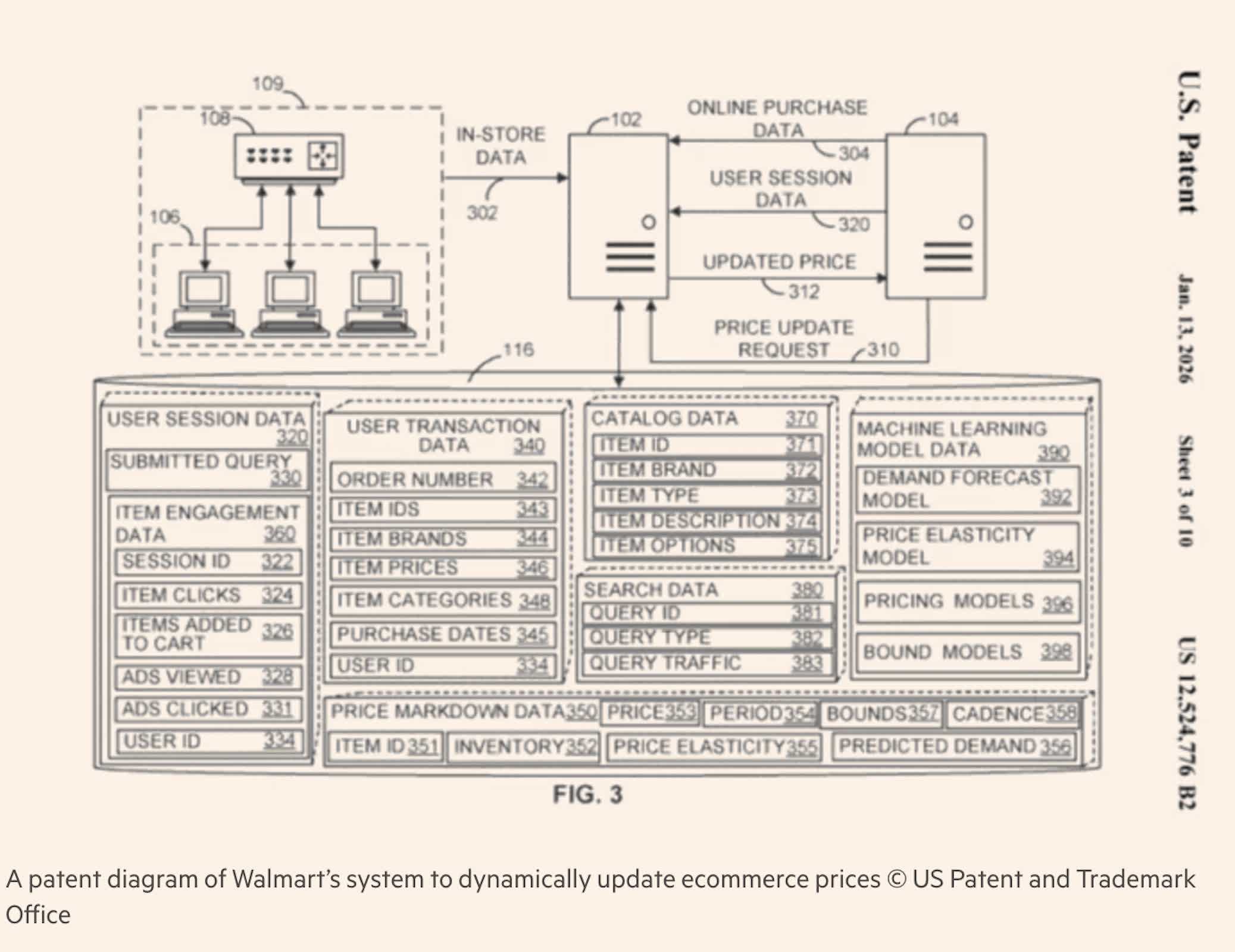
Image credit: Financial Times
The tool is designed to work across a wide range of categories, including food, outdoor equipment, clothing, housewares, toys, workout equipment, vegetables and spices, according to the patent. Walmart says that the second patent is intended to support merchant decision-making rather than automatically execute price changes. "We don't participate in surge pricing," a Walmart spokesperson said. The company has characterized its new pricing tools as mechanisms to manage markdowns and inventory more efficiently.
Those assurances come as algorithmic pricing in grocery and consumer goods becomes a political target. Lawmakers in Maryland, Pennsylvania and Minnesota have introduced measures aimed at banning or limiting dynamic pricing in supermarkets and other grocery outlets, reflecting concerns that prices could jump in response to demand spikes or individual shopper data.
According to state officials, Maryland governor Wes Moore has proposed the Protection from Predatory Pricing Act, which would prohibit both dynamic pricing and the use of surveillance data to inform individualized food prices. Consumer advocates and unions have warned that retailers could eventually adjust prices at the individual shopper level, even though industry groups argue there is little evidence of that happening today.
The debate over Walmart's patents is sharpened by the company's long-standing "everyday low price" positioning. Founder Sam Walton built the chain around the idea of keeping prices consistently below rivals rather than leaning on short-term promotions. Research by Morgan Stanley has found that Walmart's grocery prices have historically been 10 to 25% lower than those of conventional supermarkets.
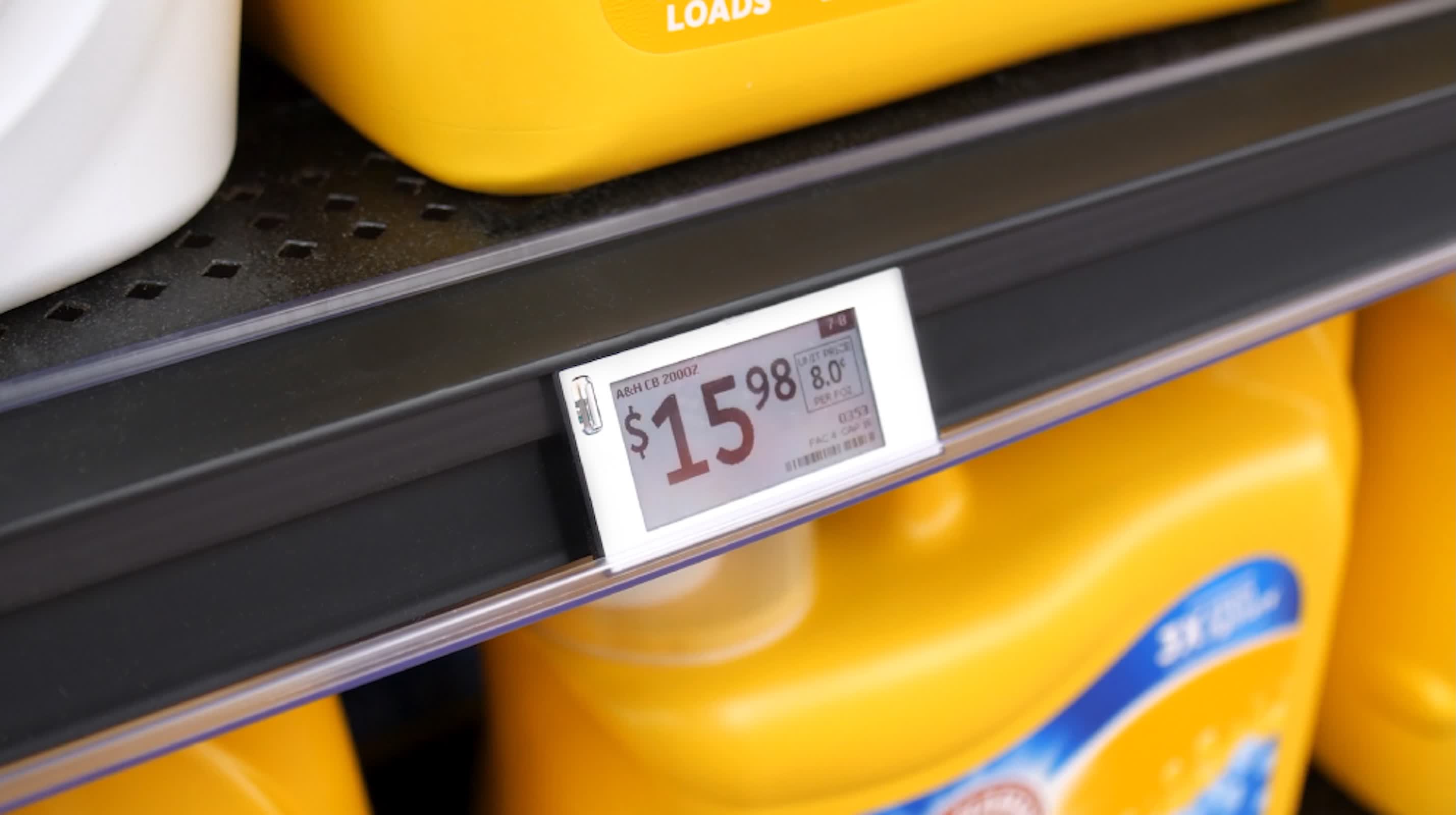
At the physical store level, Walmart is rolling out electronic shelf labels across all 4,600 US stores within the next year, a move that could enable faster, more centralized pricing changes. The company has already installed digital tags in roughly half of its US locations and says the system will replace thousands of paper labels and reduce pricing errors. The electronic labels allow prices to be updated remotely, which has fueled fears among some policymakers and labor groups that they could eventually support algorithmically driven price changes inside stores.
Two Democratic US senators have introduced legislation to bar electronic shelf labels in large grocery stores, a proposal backed by the United Food and Commercial Workers International Union, whose members could see some pricing and labeling tasks automated away.
Critics have argued that digital tags could be used to mislead shoppers by changing prices too often or in ways that are difficult to track, according to the Retail Industry Leaders Association's summary of the debate. However, the trade group has said fears about widespread misuse remain hypothetical, noting that there is little concrete evidence of retailers using the technology for aggressive dynamic pricing today.
Walmart has pushed back on claims that its shelf-label rollout is a step toward algorithmic price discrimination. In a statement this month, the company said electronic labels simply make it easier to keep shelf tags accurate and up to date, and that store prices are "consistent regardless of demand, time of day or who is shopping."