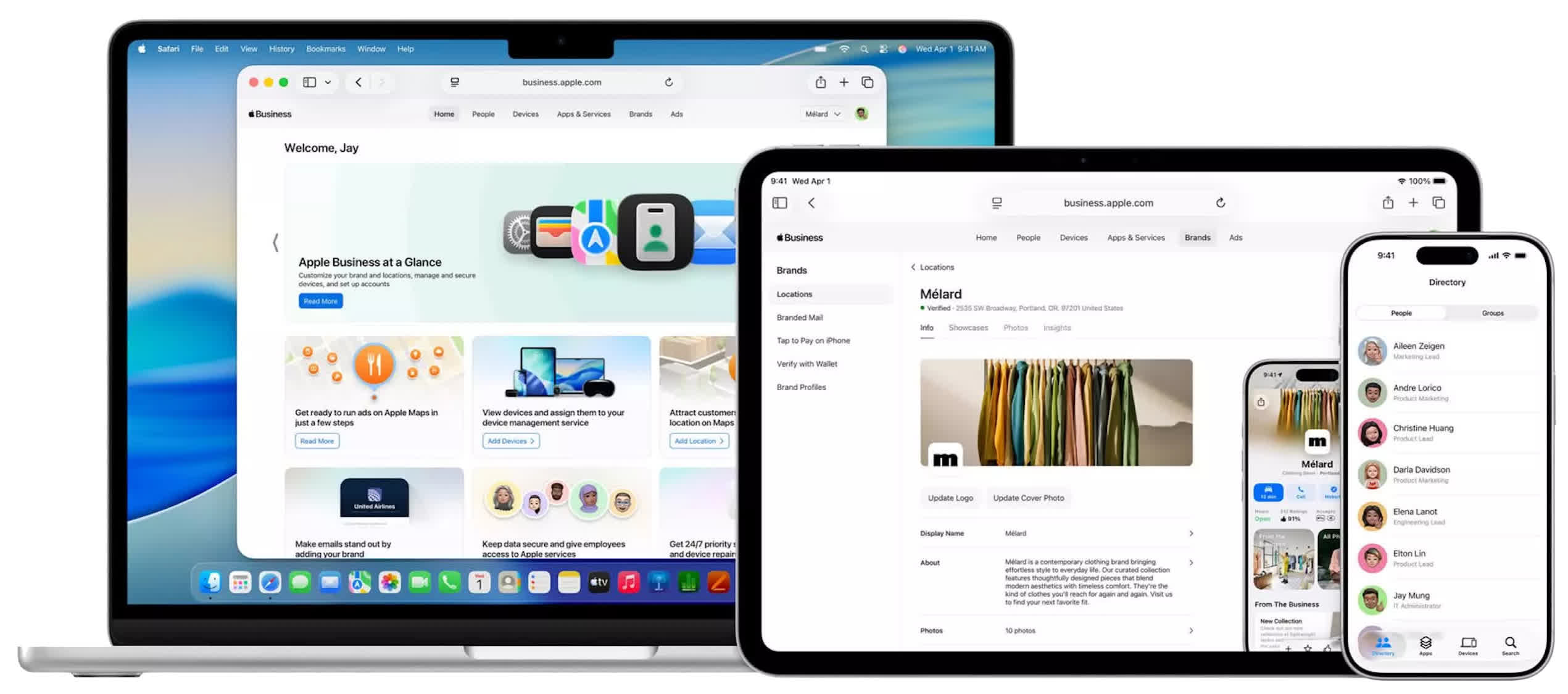
First look: Apple is expanding its enterprise reach with the launch of Apple Business, a platform that consolidates device management and productivity tools into a single global portal. The rollout represents a direct challenge to Microsoft 365 and Google Workspace, which have long dominated business email and collaboration software.
Set to debut on April 14 in more than 200 countries and regions, Apple Business brings together the company's existing enterprise programs – Apple Business Connect, Apple Business Essentials, and Apple Business Manager. The new service represents Apple's most comprehensive effort yet to provide small and mid-sized companies with integrated management and communication tools built around its ecosystem.
Apple's push into SMB-focused device management began in 2021 with the launch of Apple Business Essentials, following the company's acquisition of mobile device management startup Fleetsmith. That subscription-based service offered mobile device management, storage, and support for small businesses. The latest release incorporates these capabilities into a free tier, removing one of the barriers for smaller companies hesitant to adopt formal device management.
The platform gives businesses administrative control over setup and configuration through managed Apple accounts that separate personal and corporate data. Companies can create employee groups, enforce device policies, and deploy apps automatically using pre-configured Blueprints.
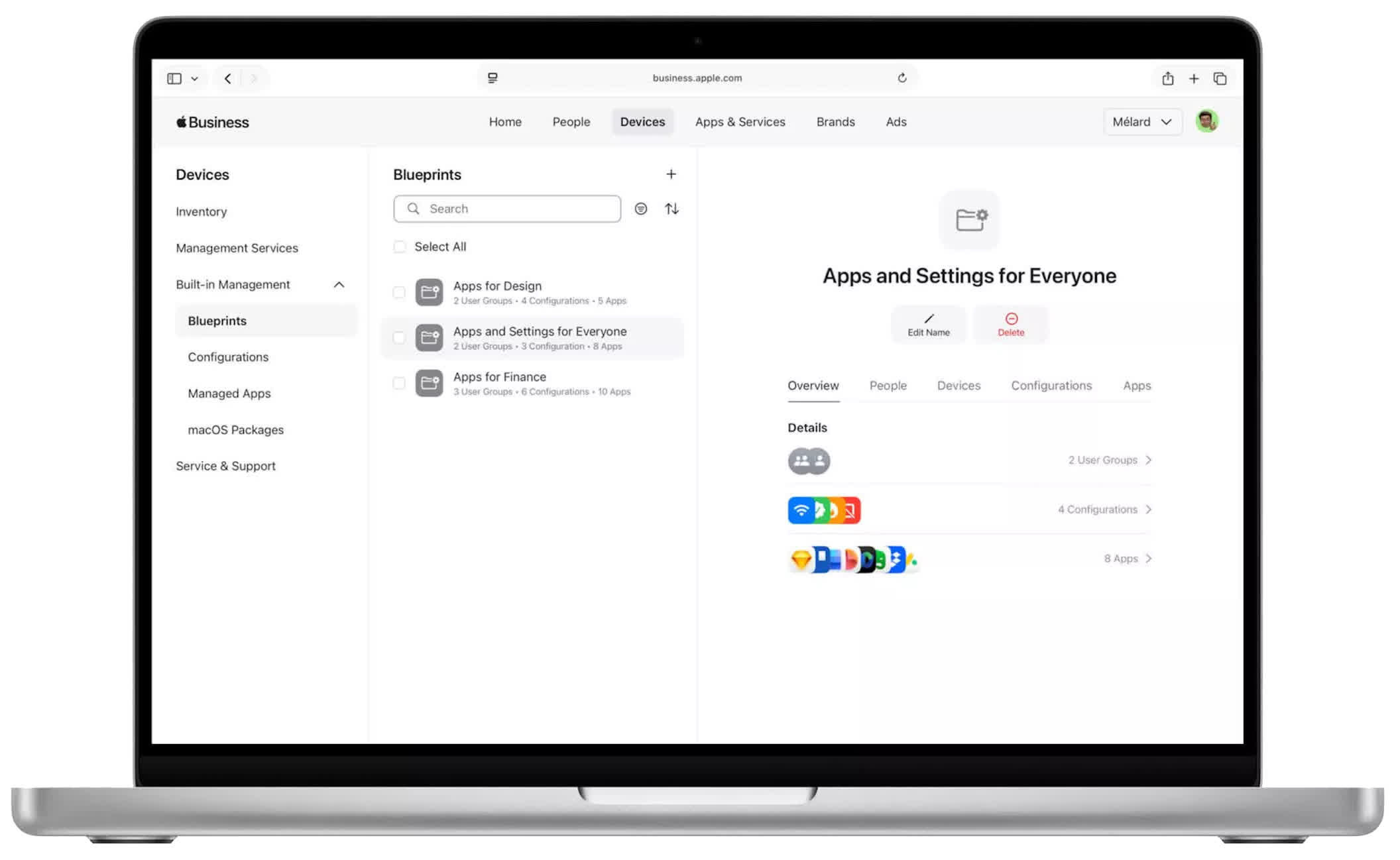
Apple's zero-touch deployment allows IT managers to set up new devices instantly upon activation – similar to approaches already common in enterprise-grade solutions from Jamf or Hexnode, though Apple's tools are aimed at SMBs rather than complex IT environments.
Perhaps the most notable change is Apple's direct entry into business email and calendaring, a space long dominated by Microsoft and Google. Within the Apple Business portal, organizations can host up to 500 users with fully managed email and calendar services tied to their own domain names. Businesses can either import an existing domain or purchase one through Apple.
Each user receives 5GB of free iCloud storage, with optional upgrades up to 2TB starting at $0.99 per month. Features include calendar delegation, company directories, personalized contact cards, and compatibility with IMAP and CalDAV.
Additional offerings include expanded AppleCare+ for Business coverage, available per device or per user starting at $6.99 per month. Plans can cover up to three devices and include 24/7 support, training, and up to two annual repairs.
Apple has also opened APIs that expose device, user, audit, and management data, giving IT departments more flexibility to integrate Apple Business into broader systems.
By combining email, calendaring, device management, and customer-visibility tools into a single system, Apple positions itself to compete more directly with Microsoft 365 and Google Workspace. The launch comes as Apple continues to gain ground in the enterprise market. Its hardware footprint – particularly iPhones and Macs in hybrid workplaces – has made it a familiar presence, but its business services until now have lacked the unified back-end typical of its rivals.