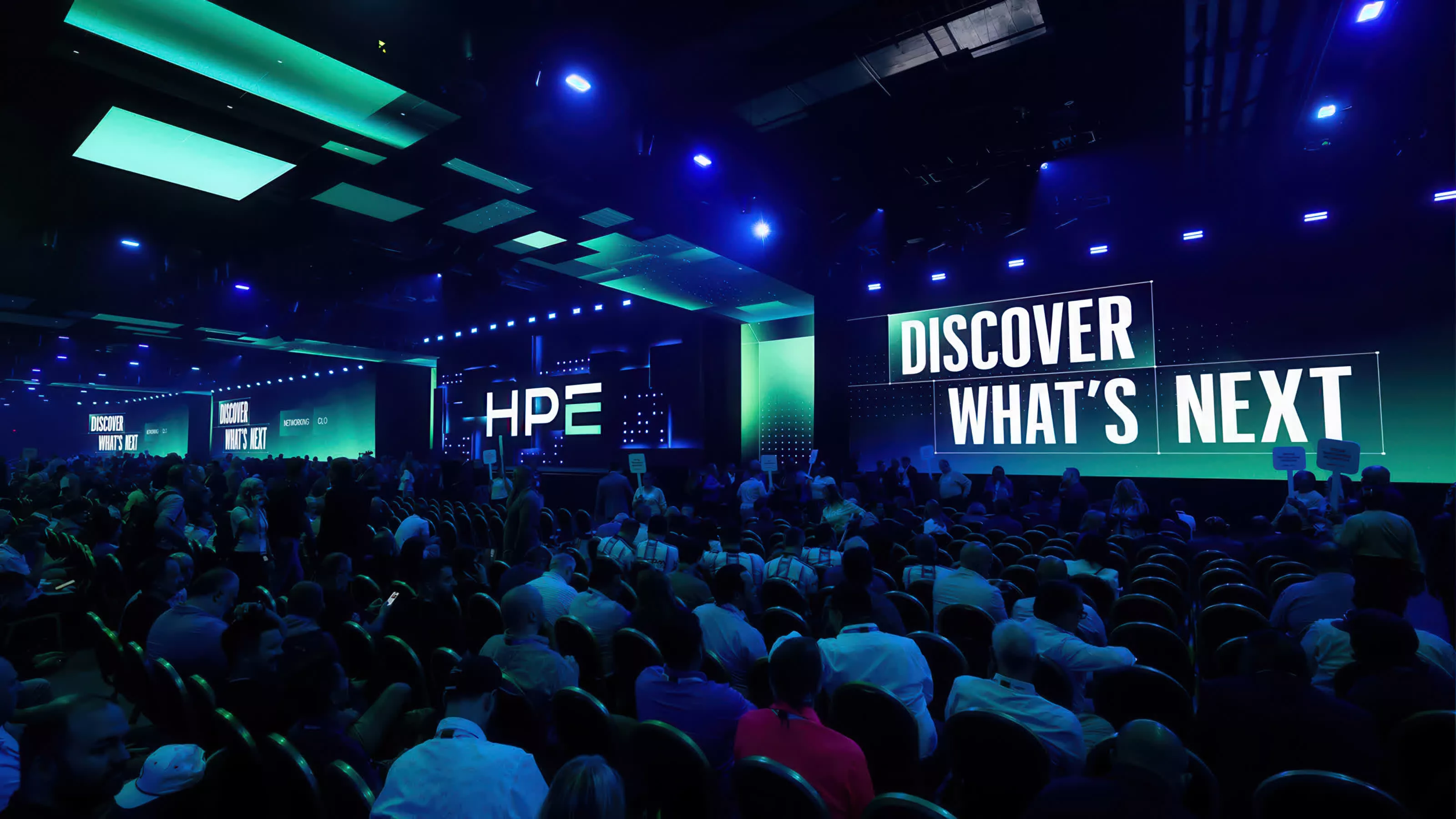
Taking an established company in a new direction is always a challenging task. Doing so in the midst of one of the biggest evolutions the tech industry has witnessed, even more so.
Yet, that's what HPE made clear at its recent Discover event in Las Vegas. In the throes of the rapid shift to agentic AI, HPE's message was that the future opportunity for differentiation and value in these enterprise environments is through networking and everything that it enables.
To put it a different way, instead of concentrating on competing against Dell Technologies, the company seems to be more focused on competing with Cisco.
For long-time observers of the company, this development was a bit surprising. After all, the company's heritage is as the server and enterprise infrastructure part of HP that broke off on its own when HP split into HP Inc and HPE just over 10 years ago.
Like its competitors, much of HPE's recent success has arguably been due to the growing opportunity for on-prem AI infrastructure. However, this was the first Discover event where the company's Juniper acquisition was fully complete, and that company's influence on the overall message and direction of HPE was clearer at this event than it's ever been.
Juniper has brought with it an extensive set of IP, custom silicon, and products that the combined company can now use to generate higher margin products and services. One of the themes from the show was the company's focus on what it called autonomous, self-driving networks that can not only predict and warn about potential network issues, but also leverage AI to perform any necessary fixes automatically.
By leveraging Juniper's Mist technology, the company showed how this AIOps architecture can significantly enhance network performance and stability. The company's newly enhanced SASE (Secure Access Service Edge) capabilities also integrate security capabilities into the autonomous network. As expected, HPE also highlighted how it has combined the capabilities of Aruba Central's wireless network management capabilities with the wired managed solutions from Juniper Mist as part of this new self-driving network.
In addition to the pure networking capabilities the company discussed, another reason for the shift in focus is how AI computing systems are being built.
While individual racks offer a lot of capabilities, it's the multi-rack systems-level approach to computing that is quickly winning the day. At Nvidia's GTC, for example, the message was less about individual chips and racks and more on the system-level capabilities of multiple racks linked together into a more powerful whole.
HPE seems to be building on these developments as well as the incredibly fast developments in "tokenomics," or the creation and consumption of tokens from AI factories in enterprise environments.
Companies are realizing that "tokenomics" is driving organizations to make large investments in their own data centers and create hybrid AI environments. The entirely new cost basis of AI-based token consumption is getting out of hand and changes need to be made to get it under control. Developments like tokenmaxxing, where individuals are using (or encouraged to use) as many AI tokens as possible and leverage today's most powerful LLMs for increased productivity, are adding to the challenge. This is particularly true with agents, which are often set into looping workloads that consume significantly more tokens than human beings could on their own.
Plus, much of the work is being sent to cutting edge LLMs, which are the most expensive per token, even though most of it doesn't require that level of power. The net result is that many companies are reporting that they've spent through an entire year's worth of AI token budget in a quarter or less.
But thankfully developments that enable frontier models to run in on-premises environments are opening up the opportunity to approach the token creation and consumption model in an entirely new way. Hybrid AI architectures – a topic that TECHnalysis Research researched and reported on last year in its "The Future of AI is Hybrid" report – are being developed to allow companies to split the token generation capabilities between locally owned computing resources and the cloud-based tools currently being used. In some organizations, some of the token generation is even being split off to client devices, enabling a potential three-way split of the task.
If just 30% of tokens can be generated locally, that translates directly into a 30% savings on token costs, making the ROI case for on-prem infrastructure extremely easy and compelling.
In this context, HPE announced new Nvidia-powered computing solutions including the Proliant Gen12 server built around Arm-based Vera CPUs, as well as support for Nvidia's new NemoClaw agentic tools. While, Nvidia's overwhelming dominance can make it challenging for companies like Dell, HPE, Lenovo, and SuperMicro to differentiate their AI factory offerings, that's yet another reason why HPE could be shifting its focus toward networking.
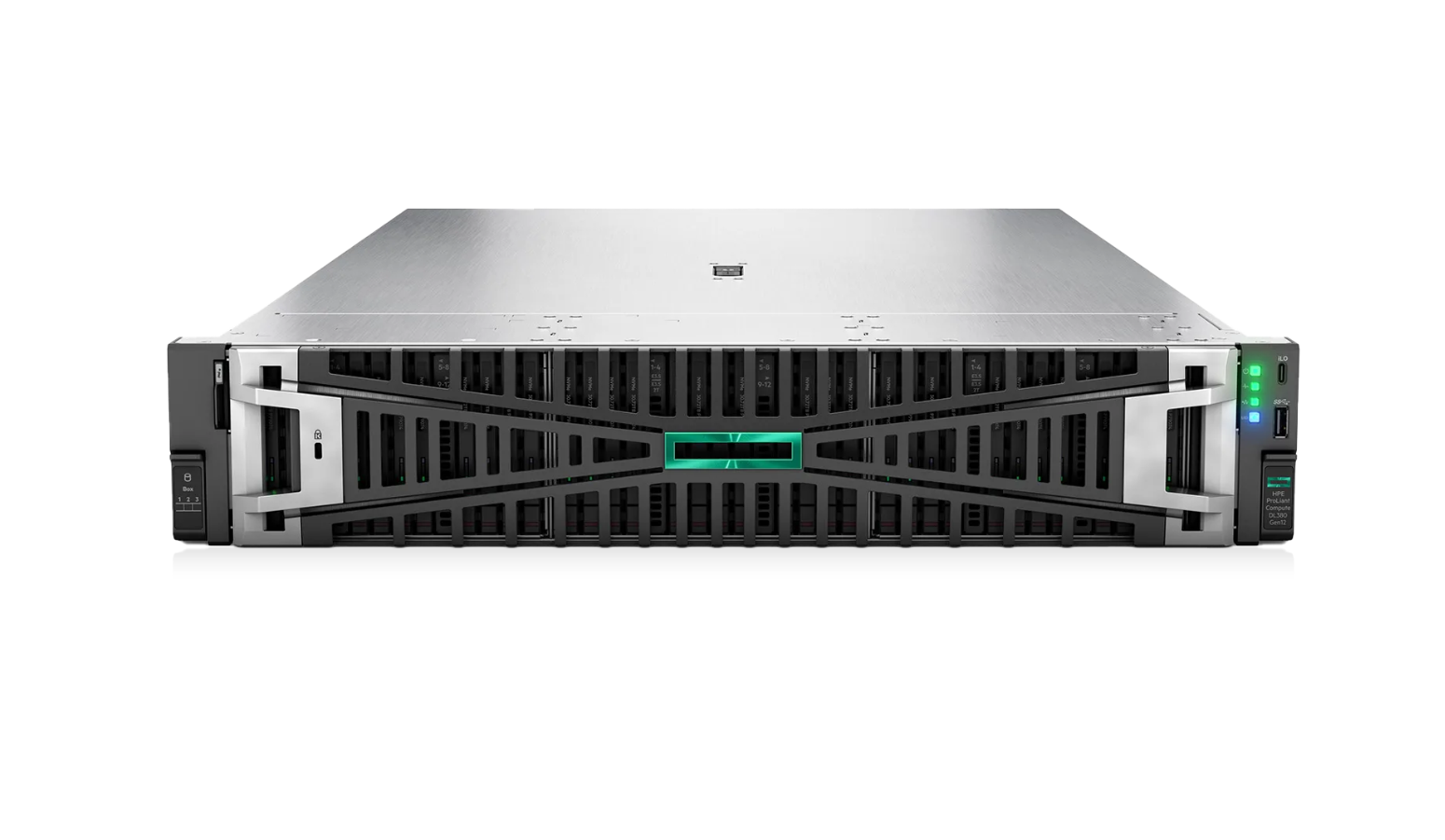
HPE ProLiant Compute DL380 Gen12
To that end, the company highlighted some new Juniper wired networking switches and routers specifically designed for agentic AI computing racks. One of the more interesting announcements was for the QFX5252 switch, optimized for AMD's forthcoming Helios rack architecture, which many organizations hope will provide a viable alternative to Nvidia systems.
Recognizing that while AI workloads are the sexiest part of the enterprise computing world these days, they are far from the largest. HPE also showed other developments focused on more traditional enterprise applications.
The latest version of the company's Morpheus software, for example, provides a virtualization-based alternative for companies looking to break away from the large price hikes that Broadcom has placed on existing VMware deployments. HPE also showed off some impressive new additions to its other software tools, such as GreenLake Intelligence, that can be used to track and manage all types of workloads, including AI-powered agentic ones.
The worlds of enterprise computing and AI infrastructure are coming together in some novel ways, and companies like HPE that are serving these environments are having to adjust rapidly as well. HPE's latest announcements highlight that the company is working to make those adjustments and focus its efforts in the areas where they can make the biggest impact. As with all the latest developments in enterprise computing, how these all play out over the next year or two is going to be very interesting to watch.
Bob O'Donnell is the founder and chief analyst of TECHnalysis Research, LLC a technology consulting firm that provides strategic consulting and market research services to the technology industry and professional financial community. You can follow him on Twitter @bobodtech