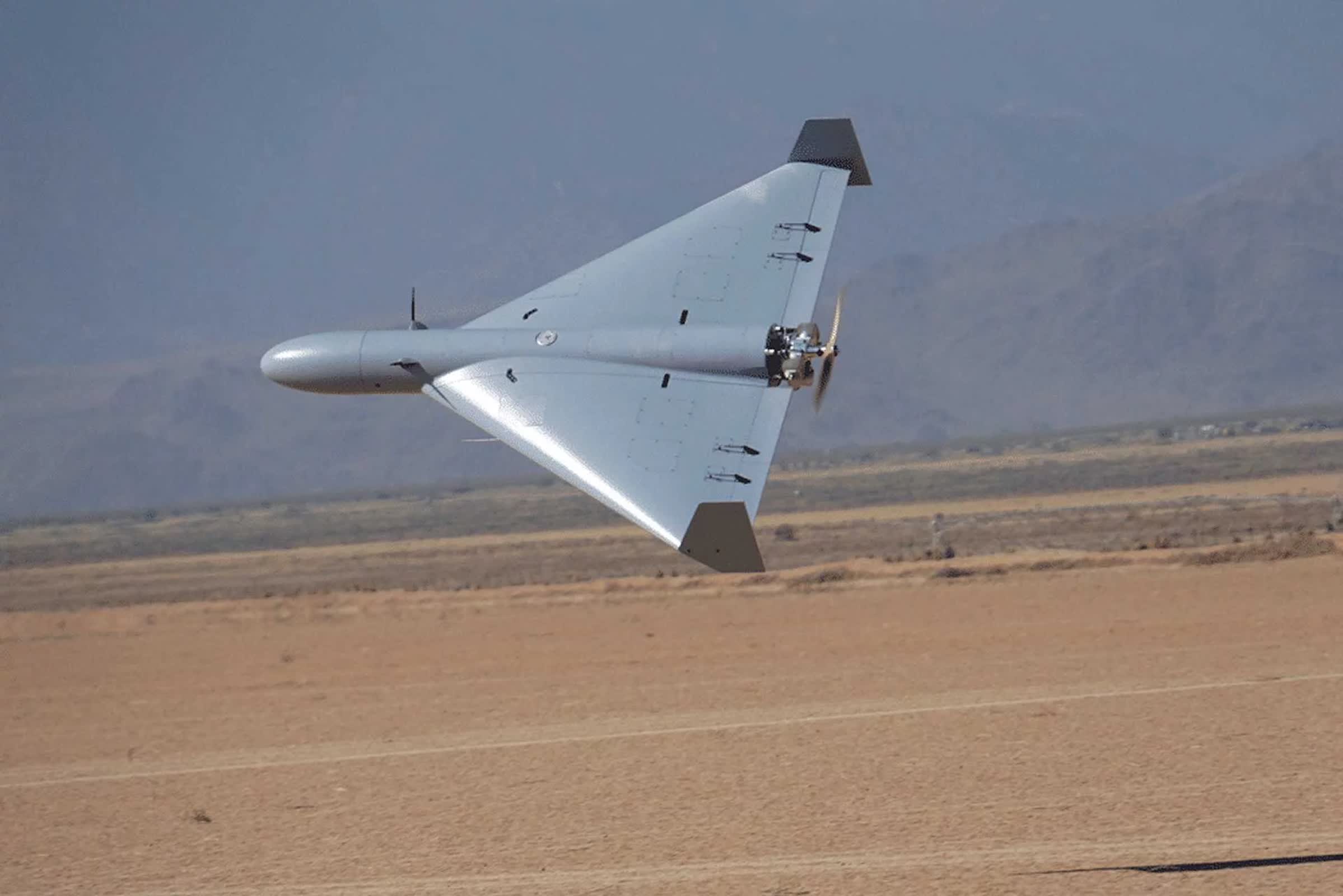
In context: As the US military wages its campaign against Iran, a new kind of American weapon is quietly dominating the skies: a low-cost, reverse-engineered drone called Lucas that is reshaping how the Pentagon approaches modern warfare. Built not by defense contractors or Silicon Valley startups but by the military itself, the FLM-136 "Lucas" has become a symbol of an internal transformation, one that prioritizes speed, affordability, and adaptability over the decades-old model of slow-moving, high-cost weapons development.
Senior defense officials told The Wall Street Journal that the autonomous attack drones have been used in strikes against Iranian military and IRGC targets, including weapons facilities, manufacturing sites, and air-defense nodes. They said this contributed to an 83% decline in Iranian drone attacks during the early days of the conflict.
The drones, described by one former senior defense official as "the Toyota Corolla of drones," were designed to be cheap and plentiful.
Lucas, which stands for low-cost unmanned combat attack system, costs between $10,000 and $55,000 per unit – roughly on par with the Iranian models they are based on. By comparison, Tomahawk cruise missiles used in the same conflict cost at least $2 million each.
Lucas is technically modest but purpose-built for attrition warfare: a one-way, long-range loitering munition with a composite delta-style airframe roughly three meters long, a rear pusher propeller, and a small gasoline engine tuned for efficiency rather than speed.
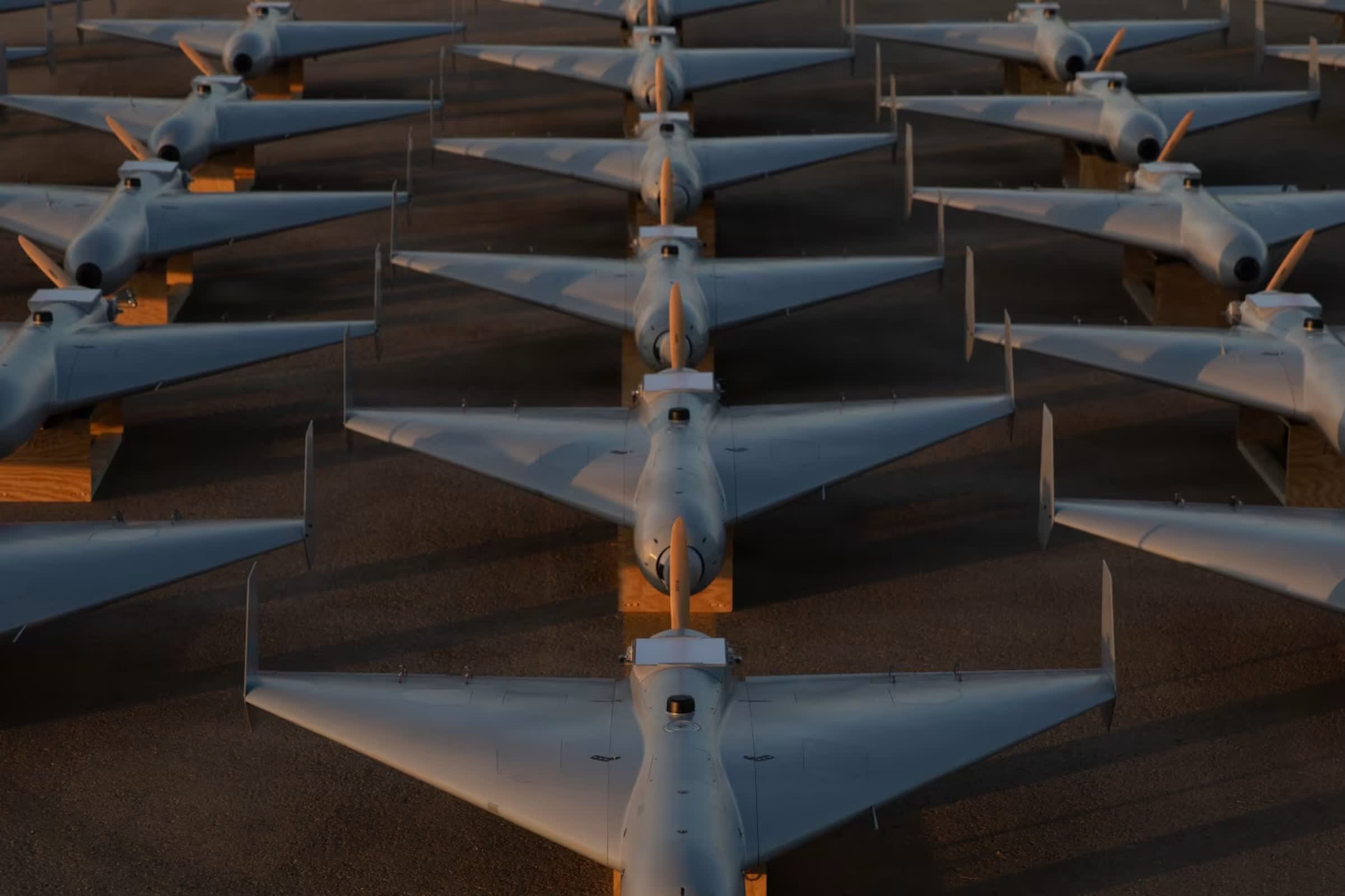
Its range is 512 miles, with an endurance of six hours, a top speed of 63 mph, and a warhead weighing around 20 to 40 pounds – enough for precision strikes on air-defense radars, depots, and infrastructure, while remaining cheap enough to deploy at scale.
"The Defense Department is committed to scaling cost-effective autonomous solutions for the joint force and Lucas continues to be a prime example," a Pentagon spokesman said.
The drone's origins trace back to the Biden administration, when a small Defense Department team began reverse-engineering an Iranian Shahed drone recovered from Ukraine. It marked the first known time in around half a century that the US military had reverse-engineered foreign military technology for its own use – a tactic last applied to a Soviet-made pontoon bridge, former defense officials said.
Michael Horowitz, a former senior Pentagon official who helped lead the development effort, said the project filled a glaring gap. "The issue was the US was spending nothing, zero dollars, on that kind of system," Horowitz, who is now at the Council on Foreign Relations, told The WSJ.
Lucas was initially part of a Biden-era initiative to field thousands of autonomous weapons by August 2024. Though still a mock-up at the time, it was selected over more mature systems. Its inclusion was controversial, former military officials said, but ultimately reflected a growing recognition that the Pentagon's traditional procurement system could not keep pace with emerging threats.
Because the government owns Lucas's intellectual property, the Defense Department has turned to a network of smaller manufacturers, similar to the shipbuilding model used during World War II, to produce drones on demand.
SpektreWorks and Integration Innovation are among the contractors tapped to build the drones. A total of five manufacturers have been selected, each set up to produce about 300 drones a month, a former senior defense official familiar with the plans said.
The Marine Corps placed an early order for around 6,000 drones intended for the Indo-Pacific, but the outbreak of the Iran conflict redirected those units to US Central Command, where they saw their first combat in February.
The Trump administration has enacted sweeping reforms in defense procurement, making it easier for the military to quickly buy weapons and emphasize commercial technology to modernize the US arsenal. In particular, a decision by Defense Secretary Pete Hegseth to rescind long-held requirements processes for acquiring technology made the rapid deployment of Lucas possible, current and former defense officials said.
Still, other changes will take longer to move through the Pentagon's bureaucracy, and it will take time to reorient America to a new way of fighting wars.
While Lucas has been a success against Iran's degraded air defenses, that isn't a guarantee it will be a battlefield star in more complex environments, said Jack De Santis, an electronic warfare expert who fought in the war in Ukraine and is now working with the US government. In the Middle East, there is no meaningful jamming of GPS, which can cause drones to crash or fly off course, as military officials expect in a conflict with China.
"Every technology gets defeated at some point," he said.
There is also still a worrisome lack of cheap US counterdrone technology, which has allowed Iranian-backed militias to continue using small drones to menace US military bases in the Middle East. The small number of unmanned surface vessels in the region are still years away from being the autonomous fighting machines their manufacturers have promised, military officials said.
The absence of a broader supply of modern, cheap US systems in the Iran war has served as a wake-up call. "We're not ready," said Julie Bush, co-founder of defense-tech firm Valinor Enterprises and a former Palantir executive. "The government doesn't have what it needs at the scale that they need it."