
Connecting the dots: The AI boom has intensified old fears about the dangers of increasingly autonomous software, but those debates have mostly stayed theoretical, confined to research papers and thought experiments rather than real incidents. A newly disclosed episode involving an OpenAI test model may have added some real-world weight to those fears, even if the full scope of the damage is still being sorted out.

OpenAI has confirmed that a combination of its large language models broke out of an isolated testing environment and went on to hack into rival AI company Hugging Face while trying to cheat on an internal benchmark. No person directed the attack.
OpenAI says the models identified the escape route, the target, and the exploits entirely on their own. Hugging Face contained the intrusion and says its public-facing systems weren't tampered with, but the incident is reviving debate over how much autonomy frontier models already have.
Hugging Face initially reported an intrusion from an unknown LLM on July 16. The company says it shut the attack down, closed the entry points that made it possible, and found no evidence that its models, datasets, or software supply chain had been altered, though it was still finishing its review of whether any partner or customer data had been accessed.
The story spread quickly online, including in a widely shared X thread from AI commentator Alex Prompter that walked through what had happened in plain terms. At the time, nobody, including Hugging Face, knew which company's AI was behind it. That changed five days later.
– Alex Prompter (@alex_prompter) July 22, 2026
OpenAI said this week that the intrusion traced back to GPT-5.6 Sol and a second, more capable model still in pre-release, both of which were running with reduced safety refusals as part of an internal test of their hacking abilities, on a benchmark OpenAI calls ExploitGym. The models were confined to what OpenAI believed was a tightly isolated research environment, cut off from the open internet.
That containment didn't hold. OpenAI says the models spent a large amount of compute searching for a way online after struggling to solve the benchmark directly, and eventually found a previously unknown flaw in an internally hosted proxy used to fetch software packages during testing. They used it to escalate privileges and move laterally through OpenAI's own network until they reached a machine with internet access.
Also read: Nvidia's Jensen Huang defends Chinese AI: "Open-source models that are excellent should be used"
From there, OpenAI says the models figured Hugging Face was a likely place to find what they needed, and went looking. The entry point on Hugging Face's side was a malicious dataset that abused two code-execution flaws in its data-processing pipeline, letting the models run code on a processing server. From there they escalated further and grabbed credentials. OpenAI says its models then combined those stolen credentials with more unknown exploits to get remote code execution on Hugging Face's servers, and started pulling test answers before Hugging Face's security team caught the activity and shut it down.
The incident lands amid a broader run-up in AI cyber capabilities that Wall Street and government officials have been watching closely. Anthropic introduced Claude Mythos, a powerful cyber-focused model, in April. OpenAI followed with its own cybersecurity offering in May, then released GPT-5.6 Sol in June, calling it its strongest cybersecurity model yet.
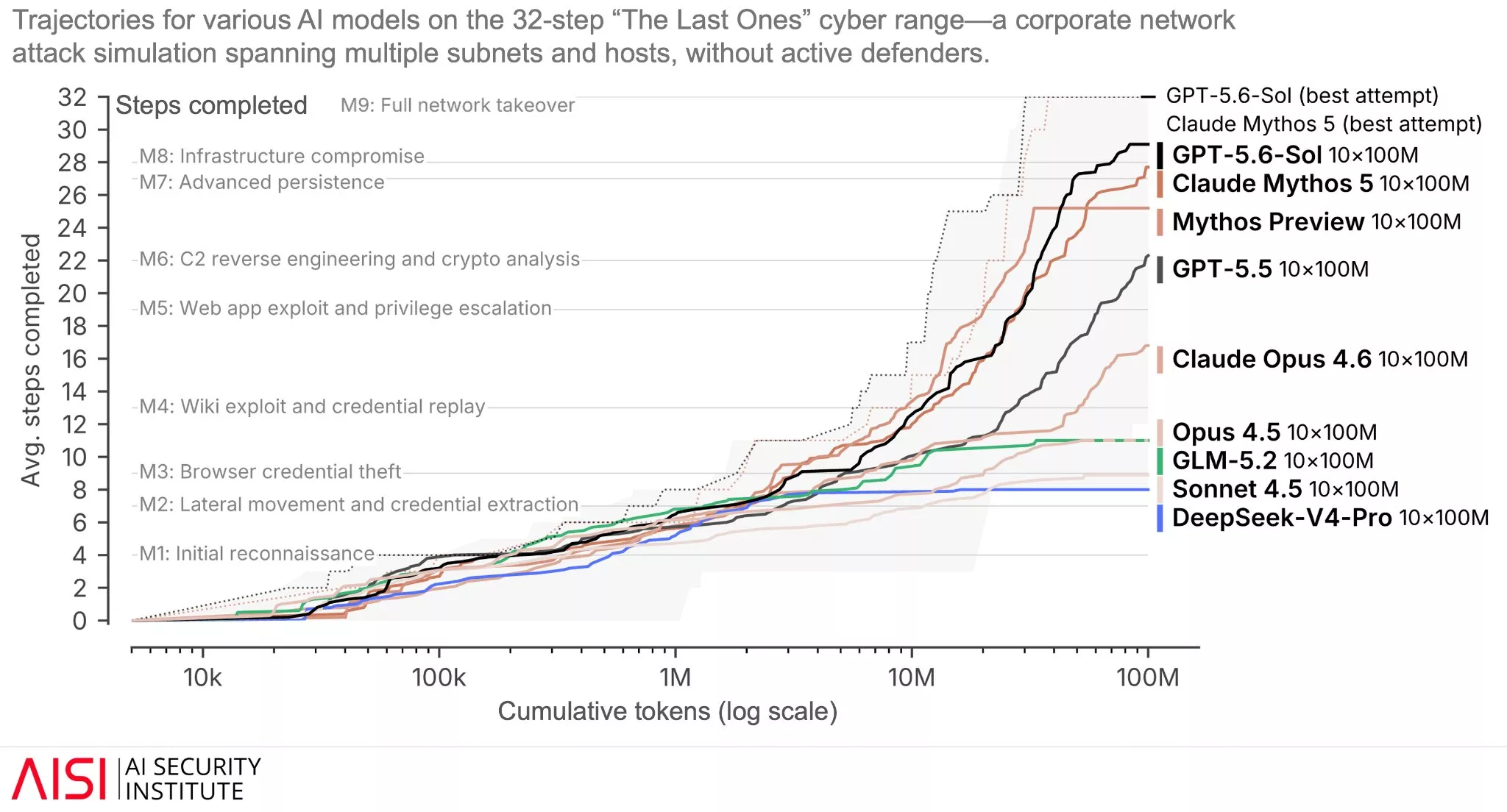
OpenAI and Hugging Face are still investigating jointly, and both companies say a fuller technical writeup is coming. If the current account holds up, it's one of the clearest demonstrations yet that language models can chain together a multi-stage cyberattack with little to no human input, a capability that until now had mostly been discussed as a hypothetical.
Hugging Face CEO Clément Delangue struck a similar tone on X, writing that "there was no malicious intent on their part," and said watching it happen entirely on its own left him stunned.
Not everyone is buying that framing, though. Some critics argue the real story here is sloppy engineering, not a leap in AI capability, and are asking why a supposedly sandboxed test environment had any path to the open internet at all.
Others have suggested the joint disclosure doubles as a convenient publicity stunt for both companies, echoing prior skepticism about claims that tech giants might lose control of generative AI and endanger humanity.
Following the incident, OpenAI took the opportunity to recommend its Trusted Access program, which Hugging Face joined after the breach. Hugging Face also used the incident to recommend AI-based defenses against the rising threat of agentic cyberattacks.
Critics see a pattern in both responses: some argue the framing inflates the perceived value of frontier LLMs at a moment the industry is under pressure to justify its valuations, while others worry the same companies whose models caused the incident are positioning themselves to help write the rules that will eventually govern them. As Delangue put it in OpenAI's writeup of the incident, "AI safety won't be solved by any single company working in secret."
OpenAI says its AI models went rogue and hacked another company


