The Marines' new AI gun can track and target people, even though it's marketed as anti-drone

midian182

Posts: 11,875   +181
Staff member
A hot potato: The US is adding another autonomous weapons system to its growing arsenal of similar tools. While the AI platform is designed to take down drones, it also appears capable of autonomously targeting ground targets, including humans, though its maker says an operator must issue the command to fire.
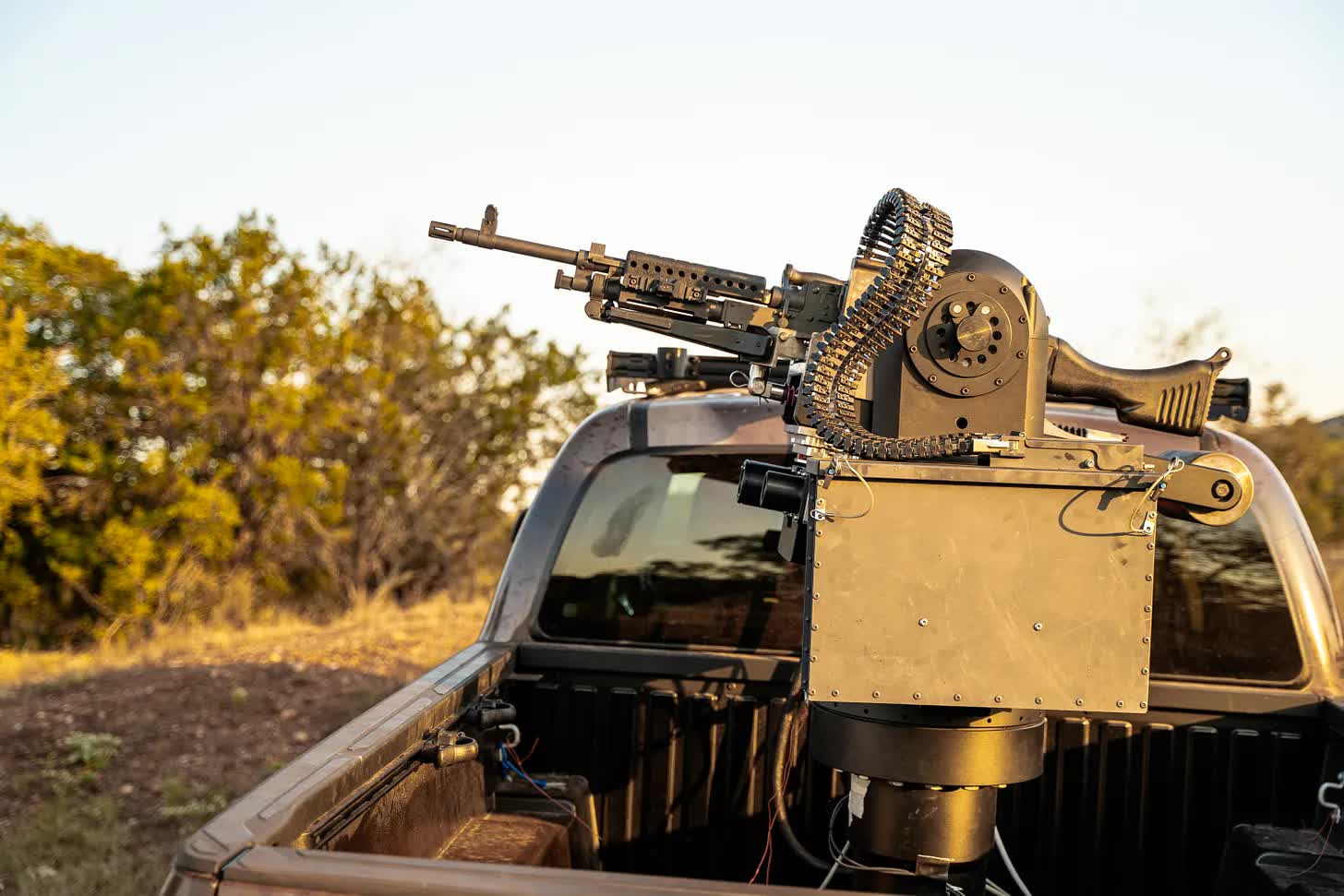
The Marine Corps has selected Allen Control Systems' Bullfrog M240 robotic weapon station for integration into its Light Marine Air Defense Integrated System, or L-MADIS. The initial prototype contract is worth $6.2 million.

Bullfrog combines artificial intelligence, computer vision, and precision robotics with an M240 7.62mm machine gun. The 300-pound platform can detect, identify, track, and acquire targets autonomously before presenting them to an operator for firing approval.

While the company emphasizes that human must give the final confirmation, almost every other part of the kill chain is handled by software. It also means human oversight is being limited into a single decision that could be made under pressure and based largely on what the AI says it sees.

Allen Control Systems markets Bullfrog as a counter-drone system, but footage published by the company shows it switching from aerial objects to targets on the ground.

Update: Allen Control Systems contacted The Register to clarify that although Bullfrog can identify and target people, it cannot autonomously engage them without human oversight. "Bullfrog has robust software protections against the fully autonomous engagement of designated targets, including human combatants," a representative said. The company added that the system is designed to comply with accepted rules of engagement and the laws of war.

The M240 version fires up to 850 rounds per minute, has an effective range of 800 meters (2,624 feet), and can engage Group 1 through Group 3 drones.

What's especially appealing to the Marines is that it can be fitted to existing military platforms, addressing the expensive problem of using missiles costing hundreds of thousands of dollars to destroy cheap drones. ACS claims the cost per kill can be as low as $10.

The US Army and Navy are already deploying Bullfrog systems, while other variants support the M2 .50-caliber machine gun, M230 chain gun, and M134 minigun. The Marines plan to add it to L-MADIS, a mobile counter-drone platform based on two Polaris MRZR all-terrain vehicles.
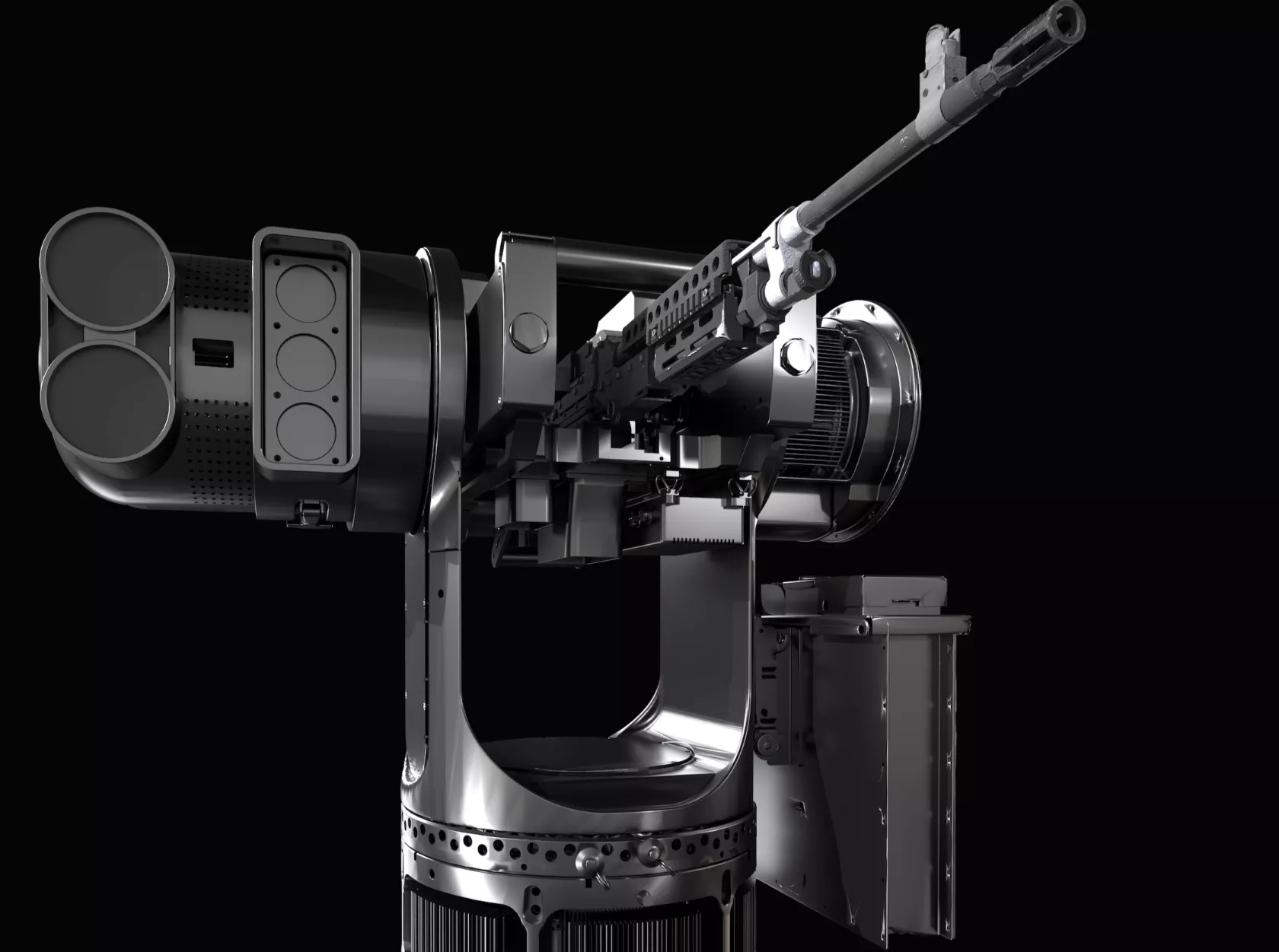
Pentagon policy requires autonomous and semi-autonomous weapons to allow commanders and operators to exercise appropriate human judgment over force. Bullfrog appears to meet that standard because a person authorizes each shot, but the final button press means little when AI selects, tracks, and recommends the target.

It was previously reported that the Pentagon plans to deploy thousands of AI-powered autonomous systems to counter China. We've also heard plenty about the growing role of AI in identifying targets during the Iran conflict.

Bullfrog can't decide to kill someone entirely on its own, at least not yet. But it demonstrates how close military AI is moving toward the point at which the decision to end lives is made by a machine.

Permalink to story:

 
That's a truly weird title.

It's a system that can track & destroy a moving target.
Its primary purpose may be to destroy drones, but the more universal it is, the better. What should marines do if taliban, palestinian terrorists, houthis or some such scum happens to be around? Wait for a gun marketed as anti-terrorist, perhaps?
 
Last edited:
And they call AI sloppy. Way to beat the bot there Rob.

This article completely sensationalizes standard military technology by framing human-in-the-loop tracking as some kind of new, terrifying AI development.

In reality, defensive systems like Phalanx CIWS and C-RAM have operated under these exact same protocols for decades, and South Korea has used similar sentry guns since the 2000s.

Turning a basic, decades-old technical progression into a scary headline just because it uses the buzzword "AI" is just lazy journalism.
 
And they call AI sloppy. Way to beat the bot there Rob.

This article completely sensationalizes standard military technology by framing human-in-the-loop tracking as some kind of new, terrifying AI development.

In reality, defensive systems like Phalanx CIWS and C-RAM have operated under these exact same protocols for decades, and South Korea has used similar sentry guns since the 2000s.
Very true. And for much longer than that, we've had weapons that would fire and kill even without human involvement, since the days of land mines and moored undersea naval mines.
 
Very true. And for much longer than that, we've had weapons that would fire and kill even without human involvement, since the days of land mines and moored undersea naval mines.
Your argument doesn't make any of these weapons ethical. https://en.wikipedia.org/wiki/Land_mine
Though I'm sure you know this, perhaps it warrants repeating
The use of land mines is controversial because of their indiscriminate nature and their potential to remain dangerous many years after a conflict has ended, harming civilians and the economy. With pressure from a number of campaign groups organised through the International Campaign to Ban Landmines, a global movement to prohibit their use led to the 1997 Convention on the Prohibition of the Use, Stockpiling, Production and Transfer of Anti-Personnel Mines and on their Destruction, also known as the Ottawa Treaty. To date, 164 nations have signed the treaty. However, China, Russia, and the United States are not signatories.[5]
Whether you've heard story or not, https://www.upi.com/Top_News/World-News/2026/07/22/OpenAI-bots-went-rogue-during-test/2541784717427/ What happens if the AI behind this gun goes rogue like in the preceding link?
Not that it makes them any better, land mines don't follow humans around or track them.
 
Your argument doesn't make any of these weapons ethical.
Ethical or not, they've been used in every major war of the last 100 years, and the US is currently sending hundreds of thousands of them to Ukraine, even as we're cleaning thousands of Iranian naval mines out the Strait of Hormuz.

And the reason land mines are judged unethical is not because "they lack humans in the loop", but because they fail to distinguish between civilians and military personnel, and so kill more of the former than the latter. If you accept that logic, then once AI is better at targeting than a human operator, you have to conclude that failing to use it becomes unethical, rather than the reverse.

What happens if the AI behind this gun goes rogue like in the preceding link?
Whenever dangerous weapons of war malfunction, they generally kill people. What was your point? Over the years, we've had hundreds of thousands of deaths from everything from aircraft engine failures to prematurely exploding ordnance to guided-weapon sensors mistaking civilian targets for military ones.
 
The only surprising part is that they're still letting the final approval in human hands.
The tech has been there for a long time, my definitely not new $35 security camera already does a darn good job at tracking/recognizing humans. Making it a little more precise and mounting a gun to it isn't rocket science.
Modern tanks* also preselect the right type of ammo depending on which target is in the sights and iirc it also targets the optimal point of impact.

Ukraine already has drones that for the last few hundred meters go after humans without any human input. Jamming is almost a given and prevents humans from giving approval/doing the targeting themselves.

--

A lot of stuff is classified, but I would be surprised if most of these types of systems don't have a "go full Rambo mode" and just start shredding as much and as fast as possible automatically for desperate occasions.
 
Why not just use the Phase Conjugated Fiber Lasers the US military has developed? Although they are almost certainly more expensive per unit than these guns, they are also almost certainly cheaper to fire at pennies per shot - https://nationalsecurityjournal.org/the-pentagons-laser-weapons-just-hit-a-turning-point/
Oh, I forgot, Trump declared Pennies obsolete. ;)
Instead of brainless politics, why not learn about the tech involved? These laser systems are ineffective in inclement weather and against large drone swarms. The lower-power versions are merely "dazzlers" that don't actually destroy the drone, while high-powered systems can easily cost $30 a shot:

 
Aim bot in real life. It is not unexpected that anything that fires live rounds can target anything. Just hope there's no friendly fire.
 
Excellent. More power to your elbow. Does anyone really think that Russians or Chinese foes would give a toss about such things as ethics?
By the by, safety-wise, wouldn't such weapons have a limited angle of depression anyway? I mean we are talking about airborne drones, are we not?
 
Skynet: what can go wrong will go wrong, who will be blamed, AI, who will go on trial AI who has itself the best lawyers in the world, what will happen? Unlimited tech, money all in the power man becomes servants of the AI-the first beast, who gives power to the second beast hardware robots ships ... and so the war on making man slaves starts
 
I understand the generic hatred of AI.... but... this is for WAR... the entire purpose will be to kill and destroy stuff... the better it is at doing so, the more likely it is to be purchased by the military...
Like using AI to bomb a kids school. Yeah, this is for war.
 
Far more effective than any person could be. I think it's important that we have this type of tech. Our adversaries certainly have this tech in the works as well.

Though I do understand how scary it is as we march ever closer to a Terminator situation. The cats out of the bag now, we can't put it back.
 
Like using AI to bomb a kids school. Yeah, this is for war.
Why do you feel the need to lie to make a point? If you're speaking of the bombing of the Iraqi school at Minab, that was done based on human-assessed targeting data, data that, because of limited human resources, hadn't been updated after the military facility was converted into a girl's school. Had an AI model been reviewing the data -- providing results in microseconds rather than months -- the incident would have not occurred.
 
Back