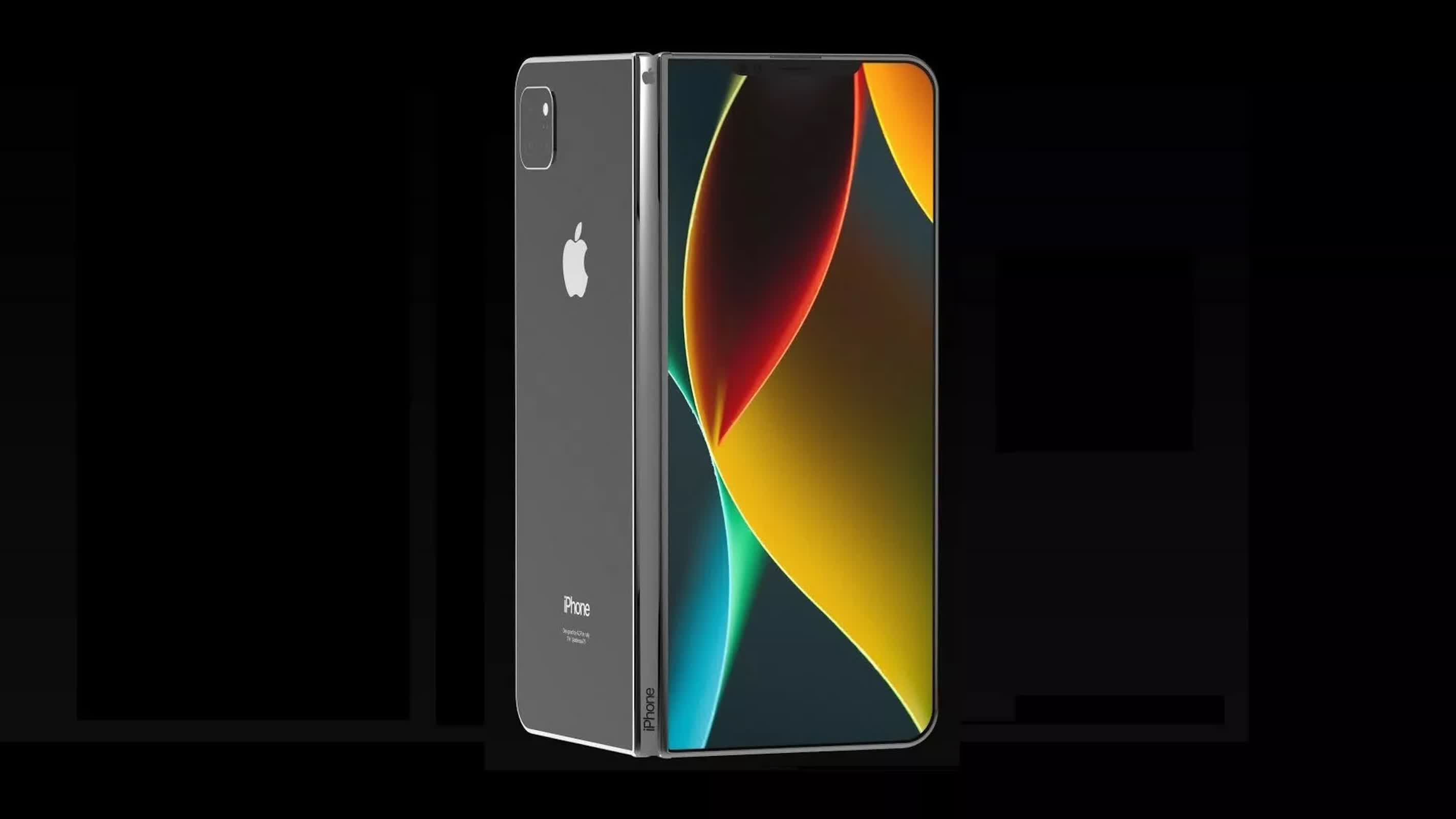
Rumor mill: Apple's long-awaited entry into the foldable smartphone market appears to be entering a critical phase, with new reports offering conflicting signals about the company's progress and production timeline. Some accounts point to unexpected engineering setbacks that could delay the device's debut, while others suggest Apple's manufacturing partners are already laying the groundwork for production to begin within months.
Nikkei Asia reported that Apple has encountered unexpected setbacks during the engineering test phase of its first foldable iPhone, raising the possibility of production delays. Sources familiar with the matter told the publication that the early test production phase has thrown up more problems than anticipated and will require extra time to work through. The report suggested that the first shipments could be pushed back by several months in a worst-case scenario.
But a separate account from Chinese leaker Instant Digital, cited by MacRumors, paints a more optimistic picture. The report claimed that Apple manufacturing partner Foxconn has already begun trial production of the foldable model, a precursor to full-scale manufacturing expected to start in July – assuming no new technical problems arise.
According to that account, Apple remains on track for a 2026 launch, though the rollout may be staggered and come after the release of the iPhone 18 Pro lineup.
The foldable iPhone – sometimes referred to by the rumor mill as the "iPhone Fold" – represents Apple's first major leap into new form factors since the introduction of the iPhone X in 2017. Internally, the effort appears to be pushing Apple's hardware engineering to its limits.

Design leaks indicate that the device will fold from a roughly 5.5-inch external screen into a larger 7.8-inch display, with a 4:3 aspect ratio closer to an iPad than to a conventional phone. Planned to be as thin as 4.5 millimeters when unfolded, the model reportedly sacrifices certain high-end iPhone features, such as the triple-lens camera system and Face ID sensors, which reportedly do not fit in the device's narrow housing. Instead, Apple may include an iPad-style Touch ID button positioned on the side.
Apple's engineers are said to have devoted particular attention to the crease – the perennial design challenge for foldable devices – and are reportedly approaching a design where the central fold is nearly invisible when open. That feat, if achieved, could position Apple's device differently in a market where durability and wrinkle-free displays remain elusive.
For now, it remains unclear whether Nikkei Asia's sources or Instant Digital's timeline will prove more accurate. Both agree, however, that Apple is deep into the most complex hardware development effort in its iPhone history – a project that will either redefine the company's product design language or remind it why it has been cautious to fold.