
First look: Anker is attempting to shift how artificial intelligence runs on small devices by moving computation out of the cloud and directly into the hardware people carry every day. Its newly announced Thus processor is designed to run larger neural networks locally in compact, battery-constrained products such as earbuds, where tight power budgets have traditionally limited what on-device AI can do.
The processor's compute-in-memory architecture departs from the conventional separation between processing and storage. Traditional chips shuttle data back and forth between memory and compute units, a process that consumes both time and energy. In Thus, computation happens directly inside the NOR flash cells themselves, so models run in the same place where they are stored.
This architectural shift is not new in theory, but it has seen limited real-world deployment. CIM has long been explored as a way to reduce energy consumption, particularly for neural networks, which mirror the parallel, localized processing patterns of biological systems. Anker's implementation uses NOR flash, which trades slower write speeds for faster read performance and low power consumption.
The company is positioning Thus as a way to bring larger models onto devices that typically rely on smaller neural networks or offloading to the cloud. In earbuds, that constraint is especially pronounced. Those limitations have historically kept on-device models relatively small – on the order of hundreds of thousands of parameters – rather than the multi-million-parameter range Anker now targets.
The first application will be Soundcore-branded wireless earbuds expected to debut at Anker Day on May 21. The company is deliberately starting with earbuds because of their tight power and compute constraints.
Those demands are most visible in real-time audio processing. Conventional call noise-cancellation systems often struggle in complex environments, where multiple sound sources can interfere with voice isolation. Smaller onboard models can introduce artifacts such as compressed or distorted speech, or allow background noise to leak through.
Anker's approach combines a larger on-device neural network with a multi-sensor hardware stack that includes eight MEMS microphones and two bone-conduction sensors. The system is designed to better isolate the speaker's voice and suppress ambient noise without relying on cloud processing. The company says its "Clear Calls" feature will make conversations significantly clearer even in difficult acoustic environments. Additional features, including "Signature Sound" and "Voice Control," are planned but have not yet been detailed.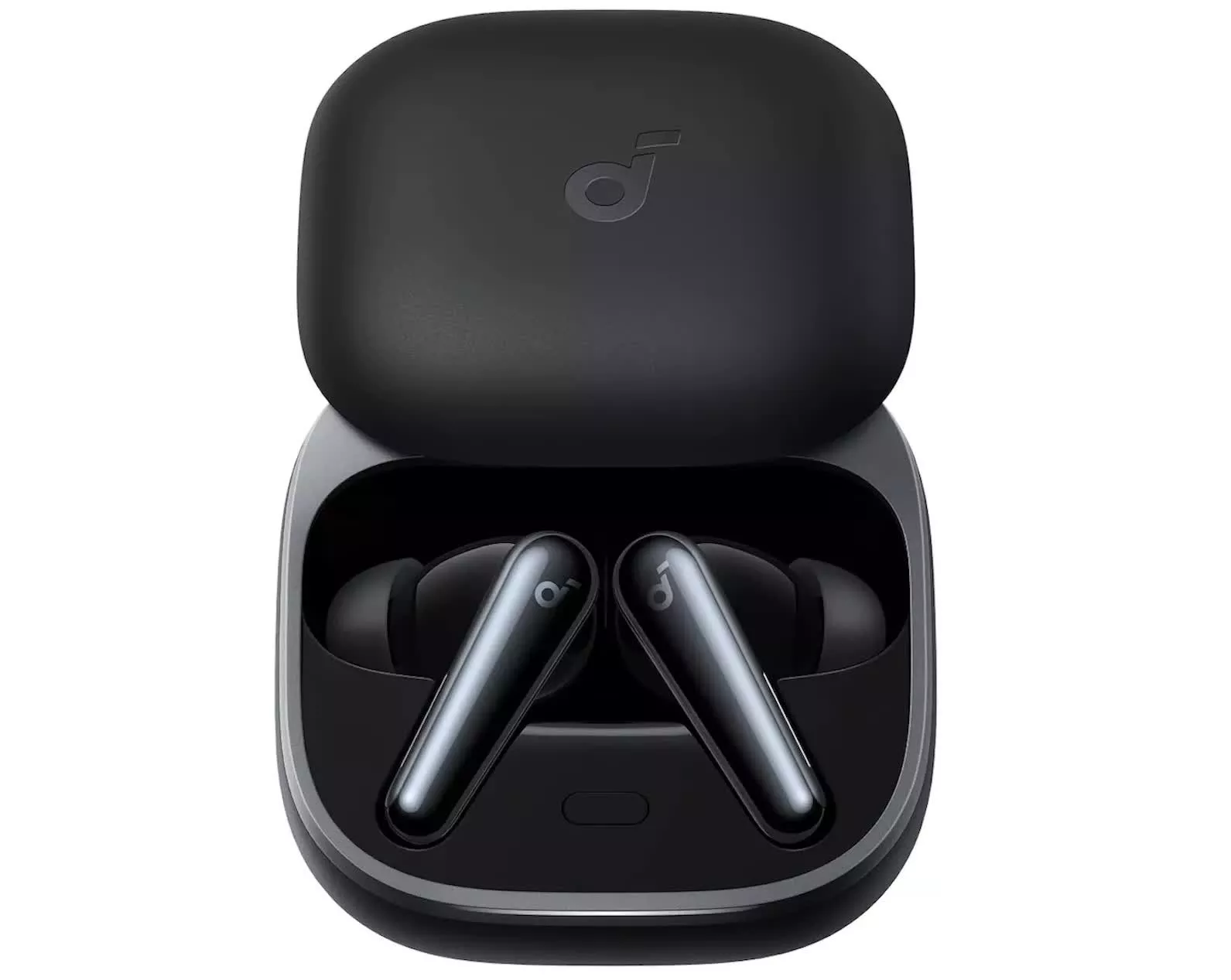
The broader goal extends beyond audio. Anker describes Thus as the first step in a longer-term effort to bring local AI processing to mobile accessories, wearables, and IoT devices – categories that have traditionally depended on cloud-based models due to power and size limitations.
f it works as advertised, the approach could influence other device makers. Local inference reduces latency, improves privacy, and lowers reliance on network connectivity – all of which are increasingly important as AI features expand across consumer hardware. The question is whether CIM, a concept often sidelined in favor of scaling traditional architectures, can deliver consistent performance at scale.
For now, the answer will depend on how Thus performs in shipping products. The upcoming earbuds – rumored to include models such as the Liberty 5 Pro Max and Liberty 5 Pro – will provide the first real-world test against established competitors like Apple and Sony. Anker plans to release full details alongside the product launch in May.