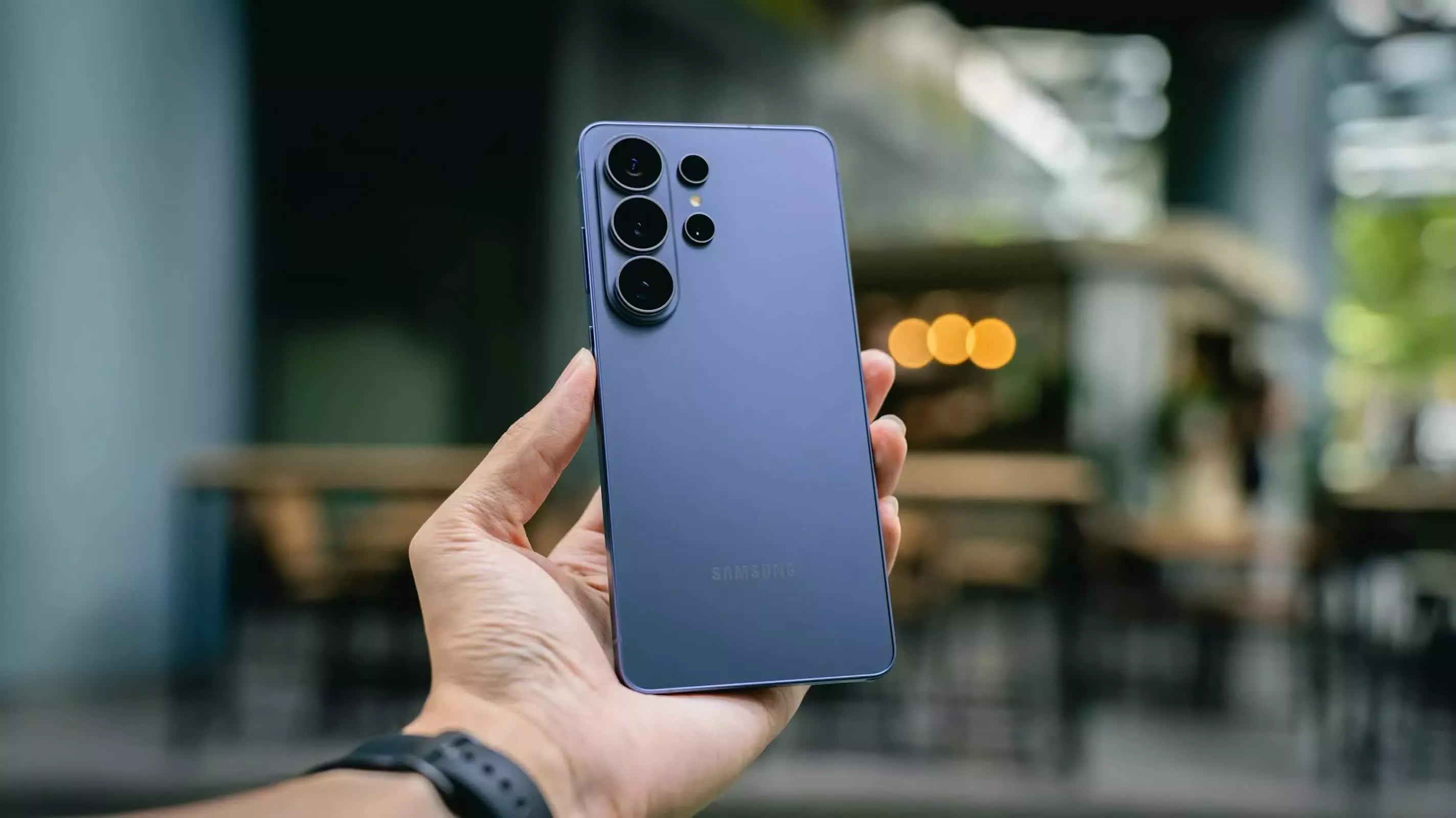
Bottom line: Samsung's mobile division faces an unprecedented financial threat not from competition or weak sales, but from the AI industry's insatiable appetite for memory components. TM Roh, head of Samsung MX, has alerted company leadership that the division could post its first net loss in the division's history. The culprit is LPDDR5X memory and NAND storage, components now commanding premium prices.
The financial pressures stem from a fundamental shift in smartphone bill of materials. DRAM and NAND used to be minor costs but now dominate device expenses.
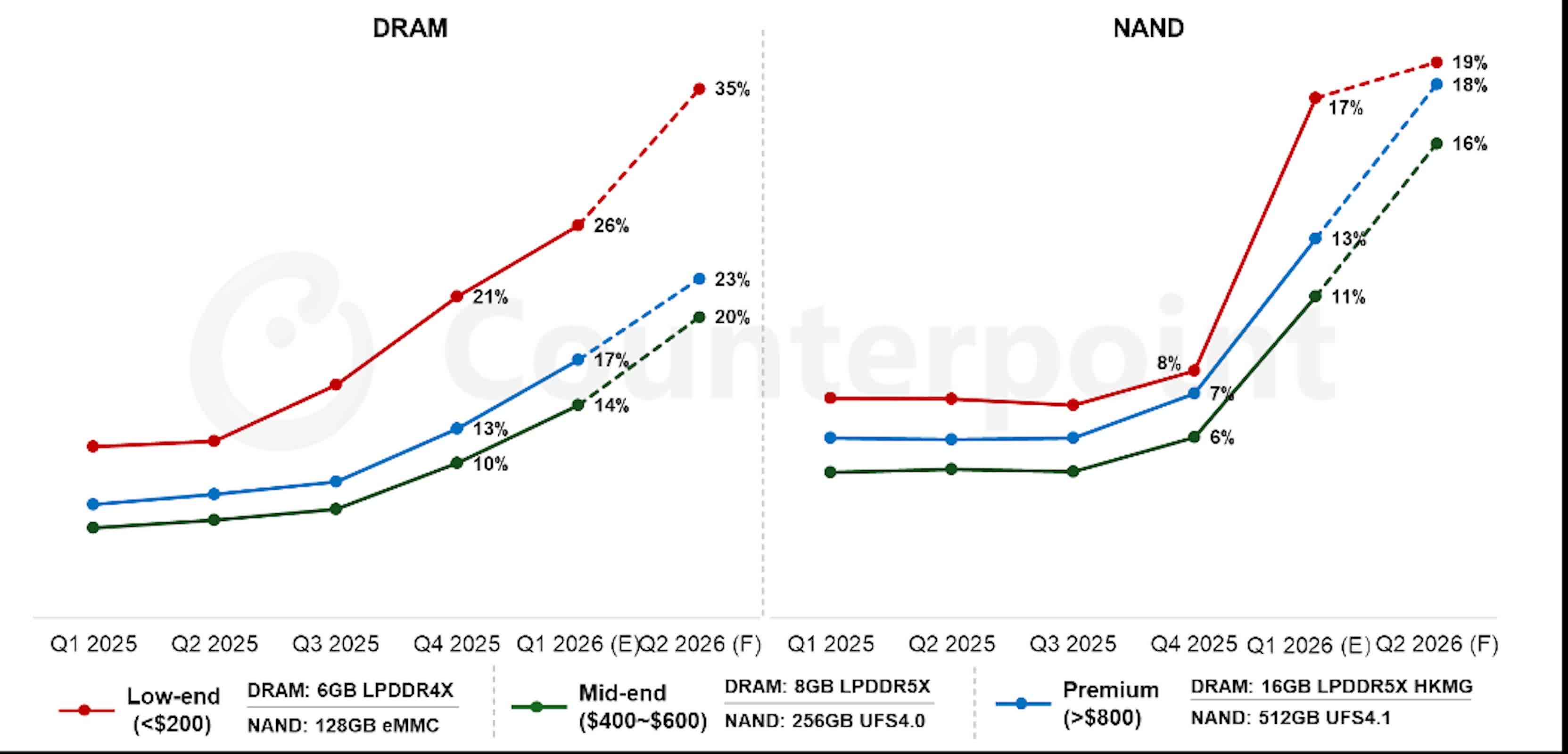
Counterpoint Research projects that RAM will represent over one-third of total manufacturing costs for budget phones by mid-2026, while even flagship devices see memory accounting for more than 20% of their build expense. This marks a dramatic reversal from the recent past, when application processors and displays commanded the largest cost shares.
The memory shortage affects computing hardware across categories, from consumer laptops to enterprise servers. LPDDR5X has become particularly critical for AI applications. Nvidia's Vera AI CPU will pack up to 1.5 TB of LPDDR5X memory. The company's forthcoming rack-scale AI platforms will deploy 36 Vera CPUs alongside 72 Rubin GPUs, a single server configuration that would consume as much RAM as roughly 4,600 Galaxy S26 Ultra smartphones, each containing 12GB of RAM.
Samsung has begun phasing out LPDDR4 production to allocate more capacity to LPDDR5, while competitors Micron and SK Hynix are similarly ramping output. Despite these efforts, Nikkei Asia forecasts that DRAM supply in 2027 could meet only about 60% of projected demand, even under optimistic production scenarios.
Source: Counterpoint Research
Handset manufacturers are now passing memory cost increases to consumers. Motorola raised prices on its Moto G budget line by up to 50%, while Samsung added $50 to the Galaxy A37 and A57 mid-range models compared to their predecessors.
Premium devices also cost more: the 512GB Galaxy Z Flip 7 and both the 512GB and 1TB Galaxy Z Fold 7 variants carry an additional $80, and the Galaxy Tab S11 increased by $100.
These price adjustments come as Samsung's Galaxy S26 maintains strong sales performance, yet the mobile division still faces potential losses due to memory and storage component costs that have roughly doubled.
Samsung's smartphone business faces margin pressure, but its semiconductor division is posting record profits. Samsung's semiconductor division reportedly generated an estimated $38 billion profit in Q1 2026, more than seven times its Q1 2025 earnings.
The divergence highlights how AI infrastructure investment has created winners and losers within Samsung's business portfolio, with memory production benefiting from the same market dynamics squeezing the mobile division.