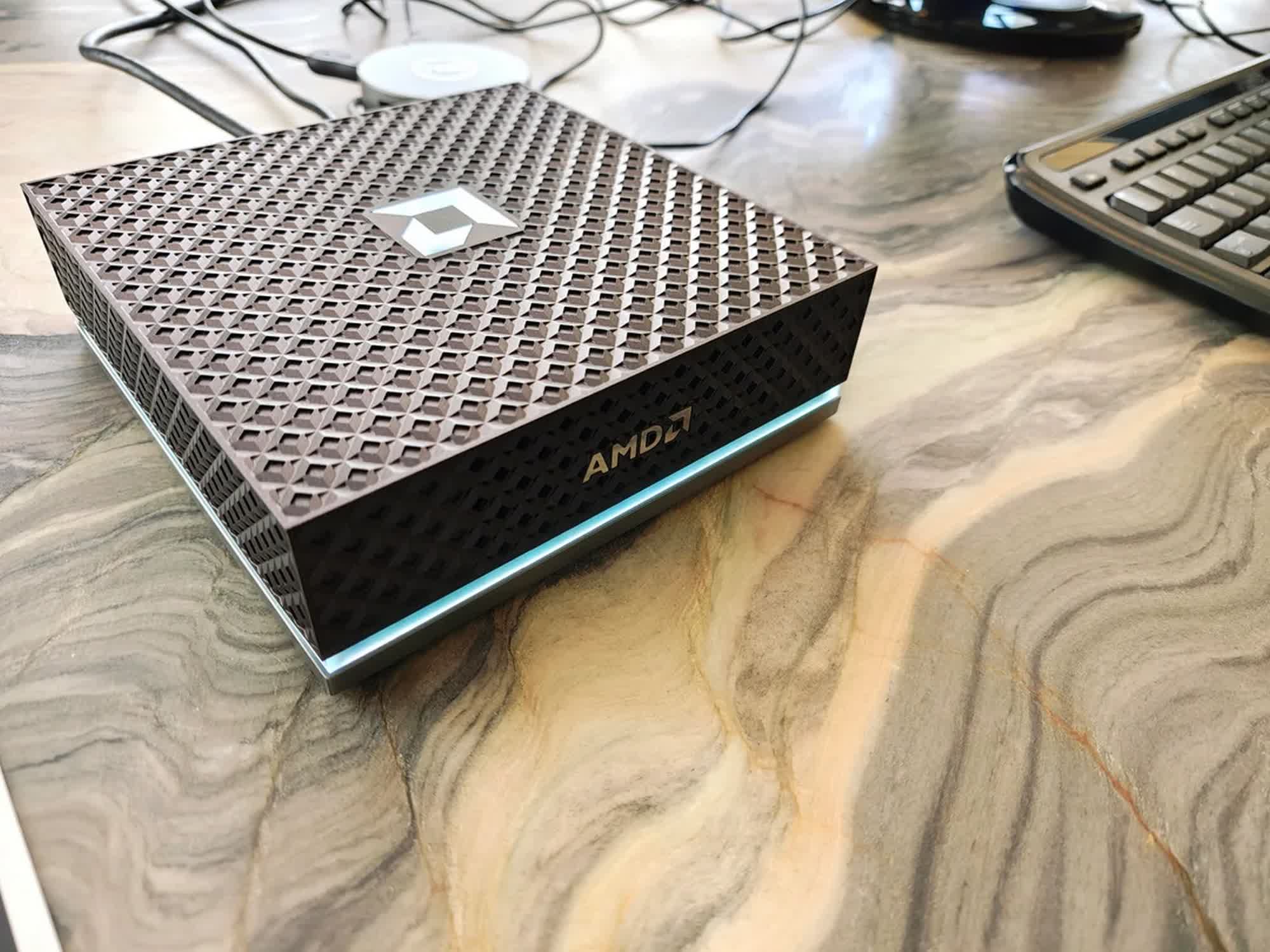
Forward-looking: AMD is reportedly set to launch its Ryzen AI Halo mini PC in June. Unveiled at CES 2026 in January, the device is designed as an AI developer platform optimized for applications such as LM Studio, ComfyUI, and Visual Studio Code. According to Reddit user 1ncehost, the Halo mini PC was showcased at AMD's recent AI DevDay event in San Francisco by the company's senior vice president and general manager, Jack Huynh.
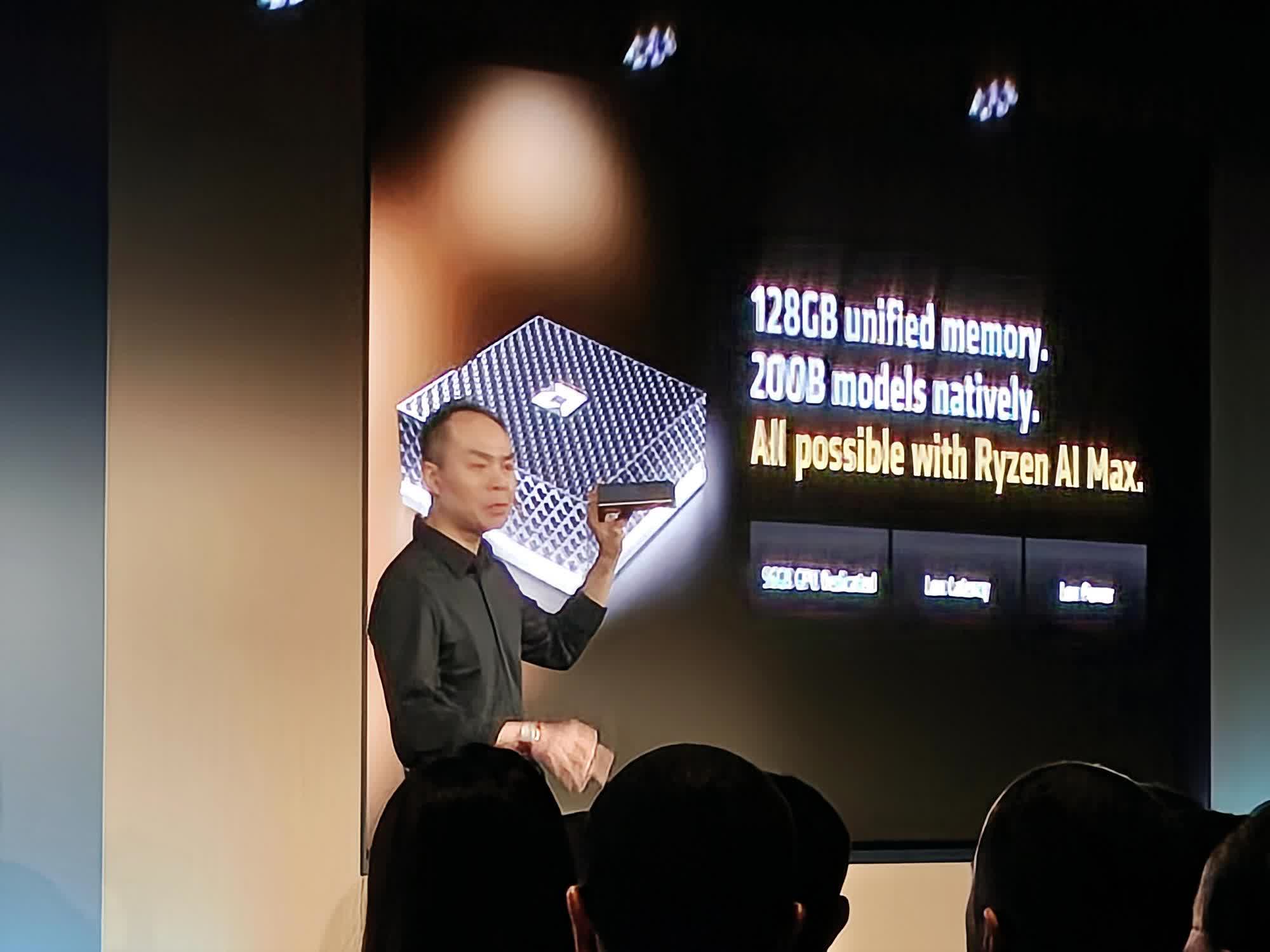
The Redditor, who claims to have attended the event, posted photos of Huynh holding the device on stage, along with what appear to be key specifications displayed on a background screen. Huynh reportedly confirmed that the Halo will launch in June, but did not provide any details on pricing.
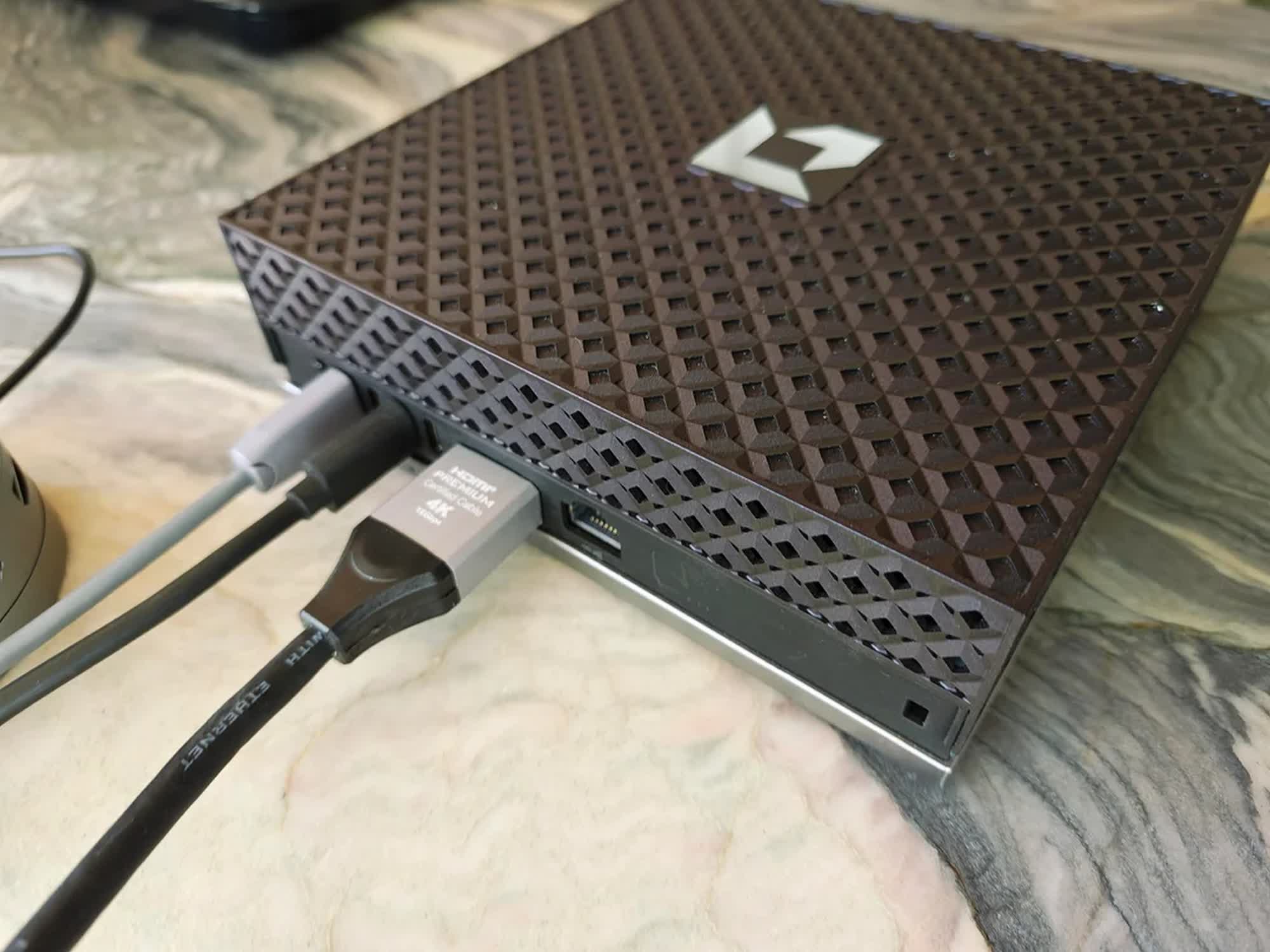
Based on information provided by Huynh, the Halo will be powered by the Ryzen AI Max+ 395, the flagship SoC in AMD's Strix Halo lineup. The chip already ships in several high-performance Copilot+ laptops and mini PCs from a range of OEMs, including Asus, HP, and Acer. The demo unit used on stage was configured with 128GB of unified memory, ran Ubuntu, and included a programmable RGB light strip on the front.
The Ryzen AI Max+ 395 features 16 Zen 5 CPU cores and 32 threads, running at a base clock of 3GHz with boost speeds of up to 5.1GHz. It integrates a Radeon 8060S RDNA 3.5 integrated GPU with 40 compute units, along with an XDNA 2 NPU delivering 50 TOPS of AI compute. The chip includes 64MB of L3 cache and has a default TDP of 55W. It supports 256-bit LPDDR5X memory at up to 8,000 MT/s with a quad-channel interface and is manufactured by TSMC on its 4 nm process node.
It is worth noting that mini PCs powered by the Ryzen AI Max+ 395 are already available for purchase online. For example, the GMKtec EVO-X2, featuring 96GB of LPDDR5X RAM and 2TB of storage, is currently listed on Amazon for $2,349. In comparison, the Nvidia DGX Spark is listed at $4,699 for the top-end configuration with 128GB of RAM and 4TB of storage.
AMD's impending foray into the mini PC market is receiving a mixed response from potential customers. Some are questioning whether there is sufficient demand for a first-party AMD mini PC, while others believe the company should have launched the device last year, shortly after the Strix Halo announcement. However, some commentators have noted that additional competition could eventually force third-party vendors to lower prices, potentially benefiting consumers.
Image credit: 1ncehost